
Sign up to save your podcasts
Or

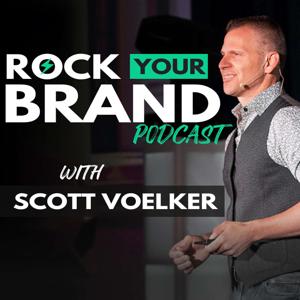


There’s a lot of talk in the Amazon sales communities that the market is getting saturated, that Amazon is getting flooded with sellers and that opportunities are diminishing. Is it true? If you simply throw a generic product on the Amazon sales engine and there is lots of competition for identical or similar products, maybe so. But you don’t have to stop there. In this episode Scott Voelker is going to walk you through some very simple things you can do to make your private label products stand out in a crowded market. This episode is loaded with practical ideas and tips to make your products different and attractive even if this market is crowded.
You need to think about your market, not just one product.
When offering products on Amazon you’ve got to keep in mind that you’re not just selling a product, you’re entering a market and you want to DOMINATE that market by offering products that meet the needs of the market in unique and truly helpful ways. What does that mean practically? It means you don’t just want to load up your seller account with products, you want to make your products themselves unique so that they get more eyes on them, more attention, and eventually more sales. You want your product to be the top selling product, the most popular product, and you do that by making sure that your items are customized in ways that matter to the end user, the customer. In this episode of The Amazing Seller Scott walks through 5 ways you can make your products stand out so they can be positioned to take over your market.
The text you put on your product page matters - a lot.
Product descriptions are one of your main opportunities to make your product stand out, to outline and specifically highlight the difference between yours and those of your competition. You’ve got to become adept at telling about your product in ways that catch attention and draw people to give your product a second look. You can do that through the use of words like “professional” or "heavy duty.” Those words communicate quality and value that is not true of every product in the niche. That way you can appeal to certain groups of buyers, like those who use your type of product in a professional capacity. There’s a ton more that can be said about this issue, and Scott covers a lot of it on this episode, so give it a listen.
Oversized items can expand your sales in ways you’ve never considered.
Most Amazon sellers don’t stock oversized items for many reasons. They may have a higher cost so it’s a more difficult place to enter a market. They typically cost more to ship to Amazon so there’s another barrier. But if you can get your mind around one simple fact you’ll see that oversized items might be your ticket to success. What’s that fact? It’s that most other Amazon sellers are staying away from oversized products for the same reasons you are. That leaves a huge hole in the market that you can fill. So as your business becomes more profitable, consider investing in oversized items as an addition to your product line. You could be stepping into a vacuum that’s been left in the market that will set your company apart in your niche, and begin capturing sales that nobody is currently meeting. Scott’s got more to say about oversized items, so be sure to listen.
Customizing your products means more than just putting your logo on it.
Lot’s of Amazon sellers understand the need to have products that are difficult to copy or imitate. But there’s more to it than simply putting your logo on it. You’ve got to research your market niche to find out what customers are looking for and figur
Welcome to this episode of The Amazing Seller. Today Scott’s got a couple of very important things to cover and he doesn’t waste any time getting to them. Both come from today’s guest, Matt Ward. The first has to do with some tweaks he’s making to the process he recommends for introducing your very first Amazon product to the market. The other issue has to do with a unique strategy that Matt is using to get reviews for his products. It’s an interesting idea and Scott’s not sure what he thinks about it yet, but he wanted to you to hear about it so you can make up your own mind. We’re also going to hear what Matt’s doing to prepare for a smooth exit from his private label business when he’s ready to sell it. All of that and lots more details are on this episode.
There is more than one way to launch your Amazon product.
Today’s guest, Matt Ward is living proof of that. One of Matt’s strongest beliefs is that Facebook is one of the greatest email list building services in the world. How does that work? Matt has become a member of many FB groups and builds his relationships inside those groups with an eye toward making connections that could eventually get people onto his email list for product discounts, purchases, and announcements about new products he’s developing. Within a matter of days he found himself building a pretty substantial email list simply by making a 50% discount offer to anyone who sent him their email address. It’s how he builds a list to help him not only with one product but with a series of products that are in the same niche. Hear more about his approach to using Facebook in this episode.
“I would never sell a product that didn’t connect with other products.”
That’s what Matt Ward said when Scott asked him if his products were related within a specific niche on Amazon. He’s convinced that it makes the most sense to build a business, not just a few scattered or unrelated products that bring in money. The business approach enables him to tie the products together in a way where cross promotion is natural and the same people who buy one of his products would naturally be interested in the others. It’s smart business and it works. You can hear more of what Matt’s got to say about his approach to Amazon Private Label sales on this episode of The Amazing Seller.
Do you have a follow up sequence for your email list?
For that matter, do you even have an email list at all? Scott’s long said that building an email list of people who are interested in what you have to offer is essential to making future product sales and launches happen much faster and with greater overall success. Matt Ward, today’s guest, agrees. He’s been able to use some of his blog content as trickle-out content that he sends through is email list to keep his customers or interested prospects engaged with his brand. That way he’s able to stay top of mind… and when a new product comes out, they are used to hearing from him already. That’s just one of the gold nuggets Matt shares on this episode so make sure you take some time to listen to how he’s running his FBA business, on this episode.
How important are Amazon reviews for your product ranking?
Matt Ward (today’s guest) is convinced that product reviews are essential, but not because they help your product rank higher in Amazon. He’s got a few products that are going up against competition that has thousands of reviews, but his product, which only has 50 reviews, outranks theirs at times. What’s the catch? He’s outselling them most of the time. He’s convinced that ranking on the search page in Amazon has to
Welcome, welcome, welcome! You’ve found the place where Amazing Amazon sellers come together to get their Amazon private label sales questions answered by someone who’s becoming increasingly successful doing exactly that. This is the Friday “Ask Scott” session of The Amazing Seller podcast, where Scott Voelker answers your questions about selling on Amazon. The questions today are all over the board - what to do in a crowded market - how to go about setting up a brand to sell in a few years - what to do about sea freight issues - and how to use the new Amazon PPC. As you can see, there’s a lot to learn on this episode so stick around and hear Scott’s advice!
Does a crowded market automatically mean I shouldn’t try to introduce a new product?
Scott gets this question all the time and he says that whether or not the market is crowded is not the thing that matters. Why? Because many people will make the attempt at selling on Amazon on a whim, or will introduce a product into a hot market on a hunch without doing the research and work needed to ensure that their product is going to rise to the top in that market. What winds up happening is that those sellers have sent in lots of products to their Amazon warehouse and they’re just sitting there. So when you look at a category that has 100 competitors, it’s likely that many of those are not selling at all. So how do you discern the right thing to do? Scott’s got a clear answer to that question on this episode!
I want to set up an entire product line on Amazon for the purpose of selling the entire business 3 to 5 years from now. Do you have any tips for me?
It’s becoming more and more common that savvy sellers are recognizing the opportunities that could come of building a very competitive and popular brand for the very purpose of selling the entire business they’ve built sometime in the future. Why does that strategy work? Because there are many, many people out there who have the money to get into a good, steady-income business but don’t have the skill (or don’t want to learn the skill) to build that business themselves. It’s THOSE kinds of people who are ideal candidates for buying an Amazon private label business like this listener is asking about. So what tips and tricks would position this seller to best sell his business when the time comes? Scott’s got plenty to say about this and you can hear the entire thing on this episode.
My supplier is insisting that they will ship to my local port… but my city doesn’t have a port. What should I do?
Sometimes sourcing products from China or other foreign places brings with it a certain set of difficulties that you don’t always expect. One of those is the misunderstandings that come from the challenges associated with language barriers. It can become very difficult to communicate exactly what you want or need and you’ve got to know how to be clear, patient, and kind as you work out those details. This seller is running into that issue regarding shipping and isn’t sure what to do. Scott’s advice is pretty simple: You take the lead and tell the supplier how you want the product shipped to you. If they are unwilling you may need to find a new supplier. OR, if you want to go the sea route, Scott’s got a resource for you to consider. Check it out on this episode.
Amazon PPC has changed… do you know how to use the match types?
Amazon Pay Per Click used to be set up so that the only way you could position your ads was on a “broad” match type. That approach costs you more money for ads that aren’t going to convert and gets you less s
There are very big companies that have made private labeling on Amazon their sole source of income and revenue. Wouldn’t it be great to get a behind-the-scenes look at how these big companies that create multiple brands go about doing business on Amazon? Well in today’s episode of The Amazing Seller that’s exactly what we have. Scott’s guest is Jason Brunson. Jason is not only an Amazon Private Label seller himself, he’s also worked for one of those large companies for a number of years and walks us through the step by step process of how these companies go about doing everything, from product research, to optimization of their listings and product fulfillment. It’s a great episode with lots of tips and encouragement. Be sure you give it a listen!
Getting started on Amazon with Arbitrage through used book sales.
Jason and his wife heard about the possibility of selling products on Amazon and decided to give it a try. Their first venture was using the arbitrage model. They chose to find good used books to sell on Amazon and actually made a decent amount of income each month. That’s when Jason saw an advertisement on Craigslist that was offering positions to people to work for a company that sold a variety of products on Amazon. He applied and was hired. At first he worked in the customer service area but very quickly was moved to marketing, where he worked on Amazon listing and product sales. He eventually took what he learned at his place of employment and started applying it to his own Amazon business and now is doing his own private label sales. As usual, Scott’s got lots of questions so be sure you listen so you can glean from Jason’s experience.
How does a company with 8 brands and 1500 SKUs operate on Amazon?
Believe it or not, the larger companies appear to do their product selection and research as well as their marketing and product sales very similar to what the “little guy” Amazon sellers do. The main variables have to do with the company’s willingness to try products and order larger batches to find those winner products. But in the end, the result is the same. They eventually find products that will sell consistently and use them as a basis to build a new brand. From there, you guessed - they add products to the product line and build out the brand. What do they do with all the products they’ve tried but haven’t turned out to be good sellers? You’ll have to listen to the episode to find out, PLUS hear lots more tips and insights Jason gives us, on this episode of The Amazing Seller.
Filling in the income gaps during slow times of the year.
One of the things Jason Brunson shares with Scott on this episode of The Amazing Seller is that the larger companies are pretty strategic at making attempts to balance out their product sales throughout the year. That means, for example, that since fall time is a slow part of the sales cycle, they’ll intentionally search for products that sell better in the fall time to add to their product line. This enables them to start generating income during a time when sales are usually down. Naturally, that balances out their income stream. Can you do this in your business? Scott thinks it’s not only possible, but necessary. You can hear his comments and Jason’s insights from what his company does by listening.
How can you find gaps in a market that you can fill?
Today’s guest, Jason Brunson, has worked for a company that has over 1500 SKUs in their Amazon account. They’ve worked hard to choose products that fill gaps in their existing markets. This enables them to get sales that others are missing by offerin
From the publisher's feed
Brand Creators is the podcast for coaches, consultants, and service professionals who want to build a business people know, trust, and buy from.
Hosted by Scott Voelker…
You'll learn how to leverage YouTube, podcasting, email marketing, partnerships, referrals, and evergreen content to create authority assets that generate leads and clients long after they're published.
If you're ready to stop chasing algorithms, posting every day, and wondering where your next client is coming from, you're in the right place.
Stop creating content. Start building authority.
3,442 Listeners

16,836 Listeners

4,575 Listeners
1,571 Listeners
192 Listeners

21,194 Listeners

14,171 Listeners

3,263 Listeners

3,066 Listeners
884 Listeners
317 Listeners
143 Listeners
945 Listeners

930 Listeners
154 Listeners