
Sign up to save your podcasts
Or

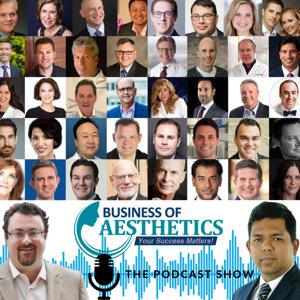


In this episode of the Business of Aesthetics Podcast, host Don Adeesha is joined by Alana Dzurek, Founder and CEO of Beverly Hills Hairfree, to challenge the limits of the industry's gold standard: laser hair removal. They discuss the "laser ceiling" the frustration practice owners face when turning away patients with gray, white, blonde, or red hair. Alana argues that as the patient demographic ages, this untreatable segment is growing and represents a massive leak in potential revenue for clinics relying solely on lasers.
Alana introduces multi-probe galvanic electrolysis, a modernized technology that transforms the only FDA recognized method for permanent removal from a slow, tedious process into a high speed, scalable profit center. She breaks down the math, explaining how treating up to 5,700 follicles per hour allows clinics to generate significant revenue ($220/hour) with minimal consumables, effectively competing with laser room profitability while delivering the "permanent" results laser often promises but cannot legally guarantee.
A critical part of the conversation focuses on safety and ethics, specifically the rise of Paradoxical Hypertrichosis, where laser stimulates dormant follicles to grow, particularly in patients with hormonal imbalances like PCOS. Alana contends that for facial and upper arm areas, electrolysis shouldn't just be an option, but a mandatory protocol to protect patients from worsening conditions. Finally, she advocates for a "Hybrid Protocol" using laser for bulk reduction and electrolysis to finish the final 20% or treat non candidates allowing clinics to capture the 50% of the market that laser misses and future proof their retention strategy.
In this episode of the Business of Aesthetics Podcast, host Don Adeesha is joined by Rebecca Landriault, CEO of Apex Aesthetic Consulting, to tackle the reality of operating in a hyper-competitive, high-density market. As the industry shifts away from a "growth at all costs" mindset, Rebecca argues that 2026 will be defined by operational discipline and capital efficiency. She challenges owners to pivot from an "acquisition obsession" to a mastery of retention, warning that in a saturated landscape, differentiation comes not from the newest device, but from comprehensive, lifetime treatment planning.
A major focus is identifying the "silent capacity killers" that cause revenue plateaus. Rebecca reveals that the bottleneck is rarely marketing, but often lies in underutilized providers and an untrained front desk unable to credential services. She provides a strict financial framework for staffing, advising that no new revenue-generating hires should be made until existing providers are generating 5x their payroll and are booked 80% of the time. Furthermore, she dissects the "napkin math" of capital equipment sales, urging owners to calculate true ROI based on existing patient volume rather than hypothetical growth before signing any lease.
From a strategic perspective, Rebecca redefines the concept of scaling, asserting that "growth is not expansion, it is a duplication of excellence". She cautions against the financial collapse often caused by premature scaling, advising that a practice must achieve a 25% net profit margin and hold six months of cash reserves before considering a second location. Finally, she offers a compelling analogy for membership models, positioning the provider as the "dentist" and the membership as the "toothbrush," to ensure patients protect their investment in high-ticket regenerative procedures through consistent maintenance.
In this episode of the Business of Aesthetics Podcast, host Don Adeesha convenes an expert panel featuring Plastic Surgeon Dr. Gregory Buford, Entrepreneur Tiffany DiGiuseppe, Marketing CEO Naren Arulrajah, and Aesthetic Nurse Sonya Ellis to decode the future of practice growth. The conversation tackles the critical challenge of distinguishing between profitable innovation and "shiny object syndrome." Dr. Buford warns against investing in fleeting "trends" (likening them to Beanie Babies) versus sustainable "trending" technologies. He introduces the powerful strategy of "pre-marketing", generating patient demand and a waitlist six weeks before a device is even purchased, to ensure immediate ROI and prevent expensive equipment from becoming a "coat hanger" in the device graveyard.
On the operational and digital front, the discussion shifts to navigating the age of AI. Naren Arulrajah explains that while AI is transforming search, Google still prioritizes "human content" and authority (E-E-A-T) over AI-generated text. He urges owners to abandon vanity metrics like website visits in favor of hard ROI metrics, such as call volume and booking conversions, to survive the rise of "zero-click" searches. Complementing this, Tiffany DiGiuseppe argues that technology fails without culture. She outlines a blueprint for hiring based on core values rather than just clinical skills and retaining top talent through shared experiences and group bonuses that foster collective ownership of the practice's mission.
Finally, Sonya Ellis provides a candid look at the changing clinical landscape, noting a significant 15-20% dip in traditional filler usage due to economic shifts. She argues that the future of profitability lies in the pivot toward "regenerative medicine", biostimulators, lasers, and functional health, driven by a patient desire to be "pretty on the inside and out". The panel also explores how to capitalize on the "Ozempic effect," which has surged demand for body tightening and hair restoration, and highlights the massive, underserved potential of the menopausal demographic as a key driver for future revenue.
In this episode of the Business of Aesthetics Podcast, host Don Adeesha is joined by Sara Shikhman and Samara Bell of Langea Law to discuss the seismic shift in the regulatory landscape as we approach 2026. With the FDA moving from a reactive stance to proactive enforcement, the attorneys explain why compliance can no longer be an afterthought, specifically highlighting the new federal scrutiny on RF microneedling devices and compounded GLP-1 medications.
Sara and Samara break down the dangerous misconception that popular treatments like RF microneedling are merely "cosmetic add-ons". They clarify that these are medical procedures requiring strict medical oversight and scope of practice, warning that the recent wave of FDA warning letters is a direct result of thousands of patient complaints regarding burns and scarring. They urge practice owners to abandon "one-size-fits-all" consent forms and manufacturer-provided protocols, advocating instead for procedure-specific legal documentation to protect against liability.
From a business perspective, the conversation frames compliance as a critical driver of valuation. Samara warns that in the world of mergers and acquisitions, buyers are increasingly walking away from "fixer-upper" practices with poor legal structures or unlicensed activity. The duo provides actionable advice on fortifying supply chains for biologics and hiring the correct talent, arguing that the cost difference between hiring an RN versus an esthetician is a small price to pay to avoid catastrophic legal exposure and ensure a "turnkey" exit.
In this episode of the Business of Aesthetics Podcast, host Don Adeesha sits down with Morgan Curry, CEO and founder of Refine Aesthetics, to explore the pivotal transition every founder must face: evolving from a solo "artisan" to a scalable "architect". A former cardiac ICU nurse, Morgan shares her journey of rebuilding her career in a new city where she knew no one, transforming her practice into a trusted name in natural, regenerative aesthetics. She challenges the common founder trap of thinking "it's easier if I do it myself," arguing instead that true growth begins when you codify your personal authenticity into systems that allow your brand's soul to thrive without your presence in every room.
A key focus of the conversation is Morgan's counterintuitive approach to leadership and retention. Rather than fearing that training staff will lead them to leave, she views deep mentorship as the ultimate retention strategy, noting that "people don't leave when you pour into them". She details how she operates with transparency to turn employees into collaborators and hires for shared values and personality over just resume credentials. Morgan also breaks down her "education over sales" philosophy, explaining how using storytelling to lower patient guards and focusing on restoration rather than alteration builds implicit trust, allowing her to command loyalty in a conservative market without ever feeling "salesy".
Looking ahead, Morgan discusses the industry's shift away from "filler-heavy" approaches toward regenerative aesthetics and functional medicine, which requires "intentionality" and deep education. She advises practice owners to "nail down their niche" and invest heavily in their team to pivot effectively for the future. The episode serves as a masterclass for any aesthetic leader ready to stop relying on personal grit and start building a business designed to endure.
In this episode of the Business of Aesthetics Podcast, host Don Adeesha is joined by Naren Arulrajah, CEO of Ekwa Marketing and a veteran strategist for over 500 healthcare practices. The discussion tackles a critical and growing threat: what happens when social media shuts you down?. With platforms like Instagram and Facebook tightening rules on before-and-after photos and cosmetic surgery ads, many plastic surgeons are seeing their primary marketing channel unravel overnight. Naren provides an essential blueprint for building resilience and "digital sovereignty", ensuring a practice can thrive long-term without being at the mercy of sudden policy changes.
Naren breaks down the critical difference between the passive mindset of a social media user—who is just "flipping channels" and the active, high-intent mindset of a patient using Google to find a doctor. He argues that over-relying on ads is a costly mistake, revealing that ad-driven leads are 18 times less serious than leads from organic search and that practices relying on ads spend 10 times more money. The core solution is a long-term strategy focused on Search Engine Optimization (SEO), owning your website, and building unshakable trust through a consistent flow of patient reviews.
Finally, Naren reframes SEO and reputation management not as "extra work" but as a foundational business asset. He explains that while this strategy takes time to build, it saves 90% of marketing costs long-term and attracts higher-quality patients who trust the doctor before they even walk in the door. This organic foundation of trust and visibility, he reveals, adds "at least a few hundred thousand dollars" to the value of a practice, making it the essential strategy for any surgeon who is in it for the long game.
In this episode of the Business of Aesthetics Podcast, host Don Adeesha is joined by Audrey Neff, Chief Marketing Officer at Aviva Aesthetics, to discuss a critical industry paradox: why, in a booming $25.3 billion market, do so few practices build sustainable, scalable value? Audrey lays out a blueprint for long-term success, arguing that the practices that win will be those who master generational behavior, patient experience, and recurring revenue. She identifies major industry shifts, including the intersection of wellness with functional medicine and the acceleration of private equity consolidation, which is forcing owners to think strategically about their exit from day one.
A major focus is on the rise of the millennial consumer, now the largest demographic in aesthetics. Audrey explains that this group values human interaction and experiences above all else, and studies show they will pay more for a provider they trust. This makes "experience-driven marketing" the new invisible engine for growth. She provides actionable strategies for building this trust online, where millennials conduct their research, emphasizing the need to dominate Google Reviews (aiming for "triple digits") and Instagram, a platform used by 83% of millennials to research aesthetic providers.
From a business perspective, Audrey advises owners to "begin with the end in mind" and operate "as if it were for sale" from the start. She warns against selling too early out of fear, noting that in a valuation, "culture is everything" because aesthetics is a human-to-human business, a nuance many investors miss. She also identifies a massive "profit leak" in most practices: retail. She urges owners to target 15-20% of gross revenue from retail, up from the common 2-5%, framing it not as being "pushy" but as a critical tool for delivering better clinical results, which in turn creates happier, more loyal patients.
Finally, Audrey looks to the future, predicting that as competition increases and treatments become commoditized, differentiation is paramount. She reminds listeners, "competition only exists if you're doing the same thing as everybody else." Her key takeaway for all practitioners is to "put the noise on mute" to ignore the social media drama and "shiny new toys" and instead focus with intensity on what is happening inside their own business, with their own patients, and with their own team.
In this episode of the Business of Aesthetics Podcast, host Adeesha is joined by Dr. Gregory Buford, a nationally recognized board-certified plastic surgeon, author, and speaker known for his forward-thinking business strategy and entrepreneurial approach to practice management. The discussion, titled "The Entrepreneurial Edge in Aesthetic Medicine," tackles a critical vulnerability in the industry: the fact that most highly-trained medical professionals are never taught how to actually run a business. Dr. Buford warns that in a field changing at a "logarithmic" pace, a static, "business as usual" approach is a recipe for failure, and provides an essential blueprint for why cultivating an entrepreneurial mindset is the single most critical factor for success in the modern aesthetics market.
Dr. Buford defines this essential mindset as a "constant strival for growth, change, and evolution" that "never accepts the word no". He outlines practical strategies for sharpening this skill, emphasizing "constant education" not just in medicine, but voraciously across disparate fields like philosophy, art, and business to develop the ability to "think out of the box". He explains that entrepreneurs must be receptive, know how to pivot, and actively create opportunities rather than waiting for them. This relentless drive for learning is captured in his core belief, which he once shared with a patient: "The day that in any profession that you think you know it all, hang up your hat because you don't".
From a practice management perspective, Dr. Buford identifies professional relationships as one of the most "underappreciated aspects" of success, noting "it's not about always what you know, it's who you know". He shares his strategy for building this network by "paying it forward" and offers a key negotiation tactic from his time at Kellogg: always "leave a few crumbs behind for your opponent", as it's a small world and you will likely work with them again. Looking to the future, he demystifies AI, advising practitioners to use it as an "assistant" to augment their work, not a "crutch" that replaces critical thinking.
Finally, Dr. Buford tackles the biggest hurdle for high-achievers: the fear of failure. He reframes failure not as an endpoint, but as a "call to action and... a pivot point", revealing that his own biggest early mistake was "the arrogance of thinking that I could do it all by myself". He makes a powerful case that true success comes from humility, the ability to "ask for help", and the wisdom to "put your ego on the shelf". His key takeaway is that in the rapidly evolving world of aesthetics, the greatest risk isn't failing, but becoming complacent.
In this episode of the Business of Aesthetics Podcast, host Don Adeesha is joined by Dr. Alexis Delobaux, a world-renowned plastic surgeon, pioneer in high-definition body contouring, and the creator of the groundbreaking SMART BBL. The discussion, titled "Beyond Blind Injections: How Dr. Delobaux's SMART BBL is Redefining Safety and Liability," tackles the immense patient safety and liability risks associated with one of the industry's most in-demand procedures, the Brazilian Butt Lift. Dr. Delobaux provides an essential blueprint for how pioneering a new standard of care isn't just about offering what's popular, but about pioneering what's safe.
Dr. Delobaux details the specific anatomical dangers of the traditional "blind" BBL, explaining how the risk of a fatal pulmonary fat embolism (PFE) comes from accidentally injecting fat into the large veins within and below the gluteal muscle. He shares the story of how a patient's question about safety sparked his journey to find a solution. The answer was the SMART BBL, a revolutionary technique that uses real-time ultrasound to transform the procedure from a tactile, feel-based surgery into a precise, visually-guided, and data-driven one. This shift allows surgeons to see every anatomical layer, ensuring fat is placed exclusively in the safe subcutaneous space and never in the muscle.
Beyond preventing catastrophic complications, Dr. Delobaux explains how this visual precision leads to superior aesthetic outcomes, including better fat survival, symmetry, and contour regularity by targeting specific deep compartments. From a business perspective, adopting this technique is presented as essential for future-proofing a practice. Dr. Delobaux discusses how the state of Florida now mandates ultrasound for BBLs, signaling a new legal standard of care that significantly impacts a clinic's liability and enhances patient trust during the informed consent process.
Finally, Dr. Delobaux addresses the resistance to new technology within the surgical community and outlines the manageable learning curve for mastering the ultrasound-guided technique. His key takeaway for all practitioners is an unwavering focus on "Safety, safety, safety". He makes a powerful case that when technology exists to lower the risk of an aesthetic procedure, there is an ethical obligation to adopt it, because no patient should risk their life for the sake of beautification.
In this episode of the Business of Aesthetics Podcast, host Adeesha Pemananda is joined by Dr. Shino Bay Aguilera, a world-renowned dual board-certified cosmetic dermatologist and a pioneer in bioregenerative techniques and the number one provider of Sculptra aesthetics in the U.S. The discussion, titled "Breaking the Regenerative Plateau: How Clinics Can Differentiate, Diversify, and Scale Beyond Biostimulators in 2026," provides a visionary roadmap for clinics looking to move past traditional biostimulation and into the future of cellular longevity and orchestration.
Dr. Shino Bay emphasizes that the next wave of aesthetics isn't about adding more biostimulators; it's about activating the body's own cellular intelligence through orthomolecular signaling, like polyrevitalizing micronutrients, to improve tissue structure and function. He explains the difference between these micronutrients and PRP, detailing how combining them with traditional biostimulators like Sculptra or Radiesse can amplify results, leading to a total rejuvenation of the dermis's structure and function. He shares his practice's financial success, showing a massive return on investment from integrating these inexpensive micronutrients.
To stand out in a crowded regenerative space, Dr. Shino Bay advises clinics to educate and elevate their patients' understanding, positioning the body as an ecosystem, not a canvas. He urges practitioners to adopt a philosophy of achieving true bio-restoration—not just external rejuvenation, by integrating functional aesthetic medicine principles like orthomolecular diagnostics, mitochondrial optimization, and hormonal balance into a unified, evidence-based system.
Finally, he provides strategic advice on scaling, focusing on diversity through depth, not volume. He covers the financial, operational (investing in full-team training), and regulatory obstacles, stressing the need for compliance, transparency, and partnering with credible, ethical suppliers. Dr. Shino Bay's key takeaway is that every cell is a conscious, living entity that needs nutrition, protection, and hydration; when practitioners deliver this locally, they amplify all other treatment results.
From the publisher's feed

3,563 Listeners

4,348 Listeners

4,458 Listeners

8,527 Listeners

57 Listeners
8,001 Listeners

84 Listeners
24 Listeners
39 Listeners

133 Listeners

43 Listeners

183 Listeners

16 Listeners

23 Listeners