
Sign up to save your podcasts
Or



Based on Podcast App listening data
Most change programs get the sequence backwards; uncertainty secretly sabotages willpower; and using your non-dominant hand might triple your success rate.
My guest, Roy Baumeister, is one of psychology's rock stars, and he's spent decades studying what actually works when it comes to willpower and behaviour change. Turns out, we've (mostly) been doing it wrong.
Here's the thing: everyone assumes you need to change minds before you change behaviours. Roy's research suggests the opposite. Get people acting differently first, and their attitudes will follow.
Here's where it gets really interesting. Your people aren't running out of willpower during change — they're hoarding it. When uncertainty creeps in, our brains go into conservation mode, making everyone look resistant when they're actually just being smart.
There’s a surprising way around that. Start ridiculously small. Roy's former student had people practice tiny willpower exercises — like opening doors with their non-dominant hand — before tackling smoking cessation. The success rate tripled.
If you're leading transformation in a large organization, this episode will flip your assumptions about human behaviour, willpower, and what actually drives lasting change. Sometimes the smallest interventions create the biggest shifts.
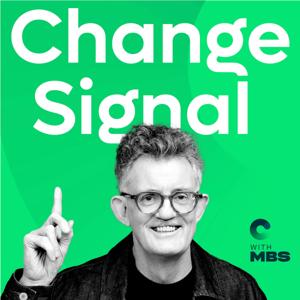
Change Signal. Cut through the blather, the BS, and the noise to find the good stuff that works in change, transformation, and growth.
***
WHEN YOU’RE READY
🎧 A new episode every week (and sometimes two!)
The Change Signal newsletter. Short, practical, weekly
***
CONNECT
💼Connect on LinkedIn
***
SAY THANKS
💜Leave a review on Apple Podcasts
💚Leave a review on Spotify
What if the pain you're pushing through is actually the data you need; resilience programs are burning billions on the wrong problem; and there's a psychological theory that could transform your change work, but almost no one in business knows about it?
Here's the uncomfortable truth: we're living in a "chaos era" of chronic, compounding stress that our bodies weren't designed for. Traditional resilience — that "bounce back" mentality — was built for isolated crises, not the relentless multi-domain pressure your people face daily.
As a change leader, it’s time to go beyond resilience … for you, your team, and for the people who you’re inviting through change.
Dr. Tasha Eurich’s new book "Shatterproof" challenges the foundation of how we approach resilience.
She reveals why 95% of large organizations are investing in resilience programs that aren't working. The real issue? We're ignoring three fundamental human needs rooted in Self-Determination Theory: confidence, choice, and connection.
When these needs get frustrated, people develop "shadow" behaviours that sabotage your change efforts. But there's a four-step process to help your people become "shatterproof" — not just surviving change, but growing forward through it.
This isn't about adding more wellness programs. It's about fundamentally reimagining how transformation actually works in the human psyche.Change Signal. Cut through the blather, the BS, and the noise to find the good stuff that works in change and transformation.
***
WHEN YOU’RE READY
🎧 A new episode every week (and sometimes two!)
The Change Signal newsletter. Short, practical, weekly
***
CONNECT
💼Connect on LinkedIn
***
SAY THANKS
💜Leave a review on Apple Podcasts
💚Leave a review on Spotify
Could it be that the biggest barrier to change isn't resistance from others, but three voices in your own head? And what if taking action too quickly is actually making everything worse?
Otto Scharmer, creator of Theory U and MIT lecturer, reveals why most transformation efforts fail at the deepest level. The problem isn't strategy or resources—it's that we're fighting internal enemies we don't even recognize.
Scharmer identifies three forces that sabotage every change leader: the voice of judgment (killing creativity), the voice of cynicism (creating emotional disconnect), and the voice of fear (keeping us trapped in old patterns). Recognizing these voices is literally fifty percent of the battle.
But here's the real kicker: he argues that our obsession with action is backfiring. When we jump from challenge to immediate response, we're just reacting—and reactive responses are the number one problem in organizations today.
The alternative? Learning to "let go and let come"—creating space for genuinely new solutions to emerge rather than recycling the same old approaches.
This isn't fluffy theory. Scharmer shares practical exercises (including one "brutal" MIT practice) and explains why the interior condition of the change leader determines whether interventions actually work.
If you're tired of change initiatives that create more problems than they solve, this conversation will shift how you think about transformation forever.
Change Signal. Cut through the blather, the BS, and the noise to find the good stuff that works in change, transformation, and growth.
***
WHEN YOU’RE READY
🎧 A new episode every week (and sometimes two!)
The Change Signal newsletter. Short, practical, weekly
***
CONNECT
💼Connect on LinkedIn
***
SAY THANKS
💜Leave a review on Apple Podcasts
💚Leave a review on Spotify
Learn why trust is contextual, resistance signals engagement, and successfully navigating change requires embracing uncertainty.
In this episode of Change Signal, I dive deep with Rachel Botsman, the world's expert on trust and Oxford University fellow, to explore how trust enables change — and how change can damage trust.
Rachel challenges us to identify our organization's "trust states" and segment our communication accordingly, just as marketers would.
What if those resistant employees aren't difficult, but deeply invested? What if your real trust influencers aren't who you expect?
I love Rachel's definition of trust as "a confident relationship with the unknown."
It elegantly captures the tension at change's heart and invites us to develop what Keats called "negative capability" — holding space for ambiguity instead of rushing toward false certainty.
For change leaders obsessed with acceleration and momentum, Rachel offers a provocative counterpoint: perhaps fragility, care, and patience need to become part of your change vocabulary.
Because as she memorably puts it, "Move fast and break things. Worst mantra ever. Don't break people."
Change Signal. Cut through the blather, the BS, and the noise to find the good stuff that works in change, transformation, and growth.
***
WHEN YOU’RE READY
🎧 A new episode every week (and sometimes two!)
The Change Signal newsletter. Short, practical, weekly
***
CONNECT
💼Connect on LinkedIn
***
SAY THANKS
💜Leave a review on Apple Podcasts
💚Leave a review on Spotify
Discover how a simple three-role model can reveal dysfunctional patterns, what your least-played role says about your biggest triggers, and which powerful questions can transform strained relationships during change.
In this LinkedIn Live, I dive into the Karpman Drama Triangle—a model I've used for 30+ years as both a self-management and change management tool.
We all play Victim, Persecutor, and Rescuer roles, especially when stress levels rise during transformation initiatives. The question isn't if you'll fall into these patterns, but how quickly you can notice and exit them.
Here’s a killer insight: The Rescuer might seem heroic, but this role creates victims and disempowers those around you. (Sound familiar?)
Listen to the full interview to find the three questions that can pull you out of the Drama Triangle.
Change Signal. Cut through the blather, the BS, and the noise to find the good stuff that works in change, transformation, and growth.
***
WHEN YOU’RE READY
🎧 A new episode every week (and sometimes two!)
📰The Change Signal newsletter. Short, practical, weekly
***
CONNECT
💼Connect on LinkedIn
***
SAY THANKS
💜Leave a review on Apple Podcasts
💚Leave a review on Spotify
Collaborating across differences, embracing unpredictability, and balancing power with love: these are the keys to transforming your organization's most challenging dilemmas.
Adam Kahane teaches us that meaningful change often demands working with people we don't agree with, like, or trust. He calls it "radical collaboration."
Think you need alignment before taking action? Think again.
Kahane's most counterintuitive insight is that you need far less agreement than you think to collaborate effectively. Simply connecting as fellow humans provides enough foundation to move forward together.
For change leaders navigating complex transformation, Kahane offers a powerful framework: integrate power (self-realization), love (unity), and justice (fair relationships).
Without this balance, power becomes "reckless and abusive," while love remains "sentimental and anemic."
Kahane's wisdom from transforming social systems — from organizations to entire countries — will challenge your assumptions about collaboration and control.
Change Signal. Cut through the blather, the BS, and the noise to find the good stuff that works in change, transformation, and growth.
***
WHEN YOU’RE READY
🎧 A new episode every week (and sometimes two!)
The Change Signal newsletter. Short, practical, weekly
***
CONNECT
💼Connect on LinkedIn
***
SAY THANKS
💜Leave a review on Apple Podcasts
💚Leave a review on Spotify
Emotion in business, slowing down to speed up, and regular check-ins that boost engagement—these are the game-changers for leading transformation.
In this short but powerful episode, Cassandra Worthy challenges the outdated notion that feelings have no place in organizational change.
Why do we still pretend emotions don't exist in the workplace? It's absurd—and counterproductive.
Cassandra argues that when we leave emotion at the door, we leave humanity behind too. Her research proves that engagement skyrockets when people can express their true feelings about change.
I love her counterintuitive approach: deliberately slow down at first so you can ultimately accelerate progress. Give your team space to process and contribute before charging ahead.
For experienced change leaders, this episode offers refreshing wisdom that cuts against conventional practice. Those regular emotional check-ins aren't just nice-to-haves—they're strategic tools for maintaining momentum through transformation.
Change Signal. Cut through the blather, the BS, and the noise to find the good stuff that works in change management.
🎧 New episodes every two weeks. Subscribe to our weekly newsletter at thechangesignal.com.
Create to inspire forward motion, link your work to winning, and clarify who makes what decisions—these are the power moves that can elevate change work from frustrating to focused.
David Lancefield brilliantly reframes "change" and "transformation" as words that trigger apathy or fear, suggesting we talk instead about creation.
When you lead change initiatives, David insists you trace a clear line from your project to how the organization will win against competitors and better serve customers. Otherwise, what are you even doing?
I was delighted by his practical insight on decision-making: most people with important roles can't name their top three decisions! Getting this clarity reduces bottlenecks and empowers your team.
Stop being the "downstream person" waiting for strategy to drop on you. Show your relevance earlier and pitch yourself into the process with "unbridled positivity."
Change Signal. Cut through the blather, the BS, and the noise to find the good stuff that works in change management.
🎧 New episodes every two weeks. Subscribe to our weekly newsletter at thechangesignal.com.
Tension drives innovation, productive conflict is essential for change, and effective listening helps you understand what truly matters to people.
Dr. Liane Davey reveals how to use conflict as a catalyst for positive change in organizations where most teams have too little productive tension, not too much.
As a change leader, it turns out that your job isn't to avoid conflict but to create the right kind of "yoga uncomfortable" stretch that makes everyone stronger. Davey's tent metaphor brilliantly illustrates how teams should balance multiple tensions to achieve optimal solutions where "everyone sleeps dry tonight."
I particularly love her advice on giving people an obligation to disagree rather than permission, transforming resistance into purposeful contribution. She shows us how to ask "open drawbridge questions" that help us understand the treasure people are protecting when they breathe fire.
This conversation will fundamentally change how you approach resistance in your next change initiative. The skills Davey shares will help you create the forums where good fights happen and better solutions emerge.
Change Signal. Cut through the blather, the BS, and the noise to find the good stuff that works in change management.
🎧 New episodes every two weeks. Subscribe to our weekly newsletter at thechangesignal.com.
Here's prototype testing, hypothesis-driven change leadership, and the power of radical differentiation all rolled into one fascinating conversation.
I'm SO over slow, overplanned, change management disconnected from reality. That's why I brought in John Zeratsky, former design leader at YouTube and Google, who pioneered a process for testing new ideas in just five days.
John reminds us that every change initiative is "just a hypothesis until you test it." There's always something unknowable in anything new.
The magic happens when you move quickly from abstract to concrete — creating prototypes you can test rather than spending months in planning meetings. This approach builds clarity and enthusiasm across your team, and helps to persuade your stakeholders to commit.
Most change efforts fail because they're not different enough. Your team thinks it's revolutionary, but stakeholders barely notice anything's changed. John's differentiation process helps identify truly transformative approaches worth the inevitable disruption.
Want to make your next change project succeed? Stop with the jazz hands and vague promises. Test your hypotheses early, build quick prototypes, and ensure your change is genuinely different.
Change Signal. Cut through the blather, the BS, and the noise to find the good stuff that works in change management.
🎧 New episodes every two weeks. Subscribe to our weekly newsletter at thechangesignal.com.
From the publisher's feed
Ranked by our users in the last 21 days

1,158 Listeners

1,457 Listeners

140 Listeners

1,022 Listeners

706 Listeners

9,064 Listeners
208 Listeners
186 Listeners
561 Listeners

2,199 Listeners

671 Listeners

637 Listeners
214 Listeners

156 Listeners

368 Listeners