
Sign up to save your podcasts
Or

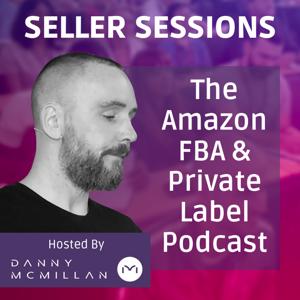

In this third installment of Claude Sessions, Danny is joined by Subash from Not A Square, who helps e-commerce brands scaling past seven figures implement AI without scaling headcount. Subash walks through real client case studies -- including a TikTok brand that boosted its customer satisfaction score from 4.2 to 4.5 in four weeks using a customer support agent built in Claude.
Danny then breaks down OpenClaw, the open-source personal AI agent that exploded in popularity, explains why he chose not to use it despite the temptation, and reveals Claude Flow -- his custom operating system built inside Claude Code with 11 engines, 300+ features, and a persistent memory layer powered by ChromaDB. The episode drives home one core message: document your operations first, pick one platform, go deep, and stop chasing every new tool.
Key Topics View all episodes
 By Danny McMillan

4.8
6262 ratings
In this third installment of Claude Sessions, Danny is joined by Subash from Not A Square, who helps e-commerce brands scaling past seven figures implement AI without scaling headcount. Subash walks through real client case studies -- including a TikTok brand that boosted its customer satisfaction score from 4.2 to 4.5 in four weeks using a customer support agent built in Claude.
Danny then breaks down OpenClaw, the open-source personal AI agent that exploded in popularity, explains why he chose not to use it despite the temptation, and reveals Claude Flow -- his custom operating system built inside Claude Code with 11 engines, 300+ features, and a persistent memory layer powered by ChromaDB. The episode drives home one core message: document your operations first, pick one platform, go deep, and stop chasing every new tool.
Key Topics
381 Listeners
210 Listeners

1,258 Listeners
582 Listeners

4,469 Listeners

529 Listeners

2,654 Listeners
37 Listeners

29,207 Listeners
214 Listeners
111 Listeners
52 Listeners
88 Listeners
269 Listeners

6 Listeners