
Sign up to save your podcasts
Or

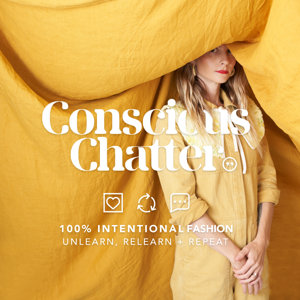


In episode 185, Kestrel welcomes Amanda Parkes, the Chief Innovations Officer at Pangaia, to the show. A materials science company, Pangaia is on a mission to save our environment.
"We are moving into the bioeconomy, which is this very notion that biomass is at the base of both agriculture, materials and energy. So, we can think about the circle and the interchange between all of those systems — it's the basis of the true circular economy." -Amanda Parkes, Chief Innovations Officer at PangaiaOn this week's show, Amanda shares more on her multidisciplinary background, and how she's found a way to bridge her expertise in science, tech, and art with her work at Pangaia.
She talks about the unique attributes of Pangaia's business model — how they bring together scientists, technologists, and designers in their work; and the way they make an R&D plan that goes 8 years out, which no fashion companies are doing today.
Additionally, Amanda breaks down more on Pangaia's newest innovation — FLWRDWN™, what it's really made of, and how it keeps you warm.
Pangaia's t-shirts, made with seaweed fiber and organic cotton, dyed with natural botanical dyes, and treated with peppermint oil to allow you to wash your shirt less
FLWRDWN™ is a fully biodegradable material, created with natural wild flowers, a biopolymer and infused with aerogel for performance and durability
Global Fashion Exchange, host clothing swap events around the world
This week's episode is brought to you by Dough, a one stop shop to discover products by women-owned brands. As a member, you'll unlock thousands of dollars in discounts and drive your purchase power back into the hands of women.
In episode 184, Kestrel welcomes Kelly Phenicie + Ellen Saville, the cofounders of The Endery, to the show. A brand born in Lima, Peru, The Endery plays with color using quality fibers to create lifelong knits that would otherwise have become waste.
"And just the whole manufacturing system has always been built around making what you need or want, rather than using what already exists. So, it is a lot of work to get people to think and work differently. There's certainly not a blueprint for using deadstock, so we really just have to learn as we go." -Kelly Phenicie, Cofounder of The EnderyOn this week's show, Kelly and Ellen share more about how their work in the knitwear industry led them to want to find a creative way to address the excess and leftovers building up around them. Ellen breaks down some of the reasons why for The Endery, they believe alpaca is one of the most sustainable fibers.
Also, Kestrel, Kelly and Ellen discuss what makes a garment last in your wardrobe, and whether colorful designs can tout qualities like versatility and longevity. When it comes to their design process, Kelly and Ellen share more on the ways they are getting innovative, to be able to recycle their designs, depending on what deadstock yarn is available to them at any given time.
The below thoughts, ideas + organizations were brought up in this chat:
Green Design Link, separate company that Kelly owns and operates that specializes in producing hand knits on a large scale for sustainable clothing brands
Inca Tops, an alpaca mill that Ellen does consulting work for
In Peru alone, at least 15+ tons of yarn leftovers are piling up from different yarn suppliers and factories every year
"It's about going offscript with fashion manufacturing and encouraging color to be unruly, clashing and expressive. To make stuff that makes us feel good about ourselves, the way we buy and the mark we leave on our society and earth. All of it packaged into a killer knit."
This week's episode is brought to you by Dough, a one stop shop to discover products by women-owned brands. As a member, you'll unlock thousands of dollars in discounts and drive your purchase power back into the hands of women. Get your exclusive 50% off and become a Dough member today!
In episode 183, Kestrel welcomes Megan Villa, the cofounder and creative content director of Svn Space, to the show. A female-focused multimedia platform, Svn Space is dedicated to educating the mainstream on the lifestyle benefits of Hemp, and how the plant can feed you, house you, clothe you, heal you and beautify you.
"We were kind of dumbfounded when we realized how incredible hemp is — you know, it has over 25,000 known uses. Like our motto is: hemp is a plant that can feed you, house you, clothe you and heal you, which is pretty incredible that one plant can do all of that." -Megan Villa, Cofounder + Creative Content Director of Svn SpaceOn this week's show, Megan breaks down more on why she and her cofounders are pushing to rebrand hemp, and give it a modern facelift. On their platform, they strive to showcase clear, easy-to-digest information, in an effort to "reverse stigmas, reveal the truth, and modernize the perception of this often-misunderstood plant".
In addition to sharing some of the 25,000 known uses of the hemp plant, Megan clears the air on some of the confusion around hemp and CBD when it comes to labeling amidst today's minimally regulated space.
The below thoughts, ideas + organizations were brought up in this chat:
The hemp plant has 25,000 known uses
"CBD: Isolate, Broad Spectrum, Full Spectrum. What's the Difference?"
"How To Read A Certificate Of Analysis" (COA)
"Hemp is a bioaccumulator, so when it grows, it sucks all of the toxins and heavy metals out of the soil and into the plant, so that potentially can go into the product, so that's why it's of dire importance that hemp is grown organically and without chemicals."
Jungmaven, one of the pioneers in hemp clothing
Brianna of ANACT Towels + hemp farming in Florida — listen to our show with her here >
BMW uses hemp in the interior for their i3 electric car
Hempcrete, a sustainable building material
Wholistic Research & Education Foundation, dedicated to exploring the health benefits of CBD-rich therapeutics through funding medical and clinical research
This week's episode is brought to you by Dough, a one stop shop to discover products by women-owned brands. As a member, you'll unlock thousands of dollars in discounts and drive your purchase power back into the hands of women. Get your exclusive 50% off and become a Dough member today!
In episode 182, Kestrel welcomes Brian Linton, the founder of United By Blue, to the show. A sustainable apparel brand, United By Blue removes one pound of trash from U.S. oceans and waterways for every product sold.
"This year, we'll have sold over a million products for the first time, and we'll pick up, therefore, over a million pounds of trash next year." -Brian Linton, Founder of United By BlueOn this week's show, Brian shares more on what led him to have such an interest in ocean conservation from a young age. Turns out, he wasn't hanging out on the beach, hiking in the woods, or spending tons of time outdoors — he was spending time in his bedroom with his 30 fish tanks, learning about the importance of clean water for their survival.
Kestrel and Brian also talk about how much United By Blue has evolved over the last decade since they launched, and what they are focusing on moving forward. One of UBB's newest initiatives is the #QuitSingleUsePlastic pledge, where they are working to remove plastic from their supply chain, including poly bags, bubble wrap sleeves, fabric roll packaging and more.
The below thoughts, ideas + organizations were brought up in this chat:
UBB has removed over 2 million pounds of trash from oceans and waterways through their 1 for 1 pledge to shoppers (1 product purchased = 1 pounds of trash removed)
#QuitSingleUse Pledge
BisonShield Collection, outerwear and accessories made with salvaged American Bison fiber
Ethical manufacturing at UBB is just as critical as the materials they use — "We accomplish this by partnering with factories that hold the highest standards for facilities and personnel, with the third-party certifications to back it up."
UBB on Instagram >
This week's episode is brought to you by Dough, a one stop shop to discover products by women-owned brands. As a member, you'll unlock thousands of dollars in discounts and drive your purchase power back into the hands of women. Get your exclusive 50% off and become a Dough member today!
In episode 181, Kestrel welcomes New York-based author, journalist, and expert on consumer culture, fast fashion, sustainability and labor rights, Elizabeth Cline, back to the show. You may already know of Elizabeth from her widely read book, Overdressed: The Shockingly High Cost of Cheap Fashion; and she recently released a follow-up book called The Conscious Closet: A Revolutionary Guide to Looking Good While Doing Good.
"The book in a lot of ways is very informed by moving away from fast fashion — so, really remembering that clothing is not a disposable good, because it just requires too many resources and too much energy to create." - Elizabeth Cline, Author of Overdressed + The Conscious ClosetOn this week's show, Elizabeth shares with us what she's been working on, as well as her perspective on how much the fashion industry has shifted, since the last time she was on the show, almost 4 years ago.
Kestrel + Elizabeth dive into some of the inspiration and details about her new book, The Conscious Closet. For Elizabeth, a lot of what drove the direction for her new book was her education on the secondhand market globally, and how clothing cannot be considered a disposable product.
Also, in this chat, Elizabeth reveals some of her favorite ways to personally build a conscious closet.
The below thoughts, ideas + organizations were brought up in this chat:
"I understand the power of personal style because of conscious fashion, not in spite of it."
"And over time, it became more about, 'wait — if we question the industrial food system, then the result of that, is that we also get to rebuild our food culture,' and that is what's happening with fashion — we are deciding as a community that clothing can be about more than mindless consumption and chasing the lowest price and buying whatever companies tell us to buy."
The Buyerarchy Of Needs by Sarah Lazarovic
Some of Elizabeth's favorite places to shop secondhand online: Poshmark, thredUp + The RealReal
LA FRIENDS | Get Tickets for The Conscious Closet event featuring Elizabeth Cline at The Helms Design Center on October 27th from 2-4pm
In episode 180, Kestrel welcomes Kat + Ryan Huston. the cofounders of Huston Textile Company, to the show. With a focus on making high quality, small-batch cloth, Huston Textile Company uses vintage American-made machines in their manufacturing process.
"The main concept for me, at least as a kid, that I took away was — you can't expect to have a manufacturing job in the U.S. if you're constantly buying things that are manufactured outside of the U.S." - Ryan Huston, Cofounder of Huston Textile CompanyOn this week's show, Kat and Ryan share more on their backstory, and how anticipating the birth of their first child was what instigated them to go down this path of manufacturing textiles in the United States. They also explain more on the sorts of challenges they face on a regular basis, going against the grain, and using vintage machines.
For Kat + Ryan, the goal is the build out an entirely local / region textile chain from the fiber to the finished textile, and while they are able to source some fibers in the U.S. currently, they are consistently working further toward this big dream.
The below thoughts, ideas + organizations were brought up in this chat:
The closing of Cone Mills, an article about this in Men's Journal
Huston Textile Company's fabrics >
Factory Tours at Huston Textile Company >
Videos on Huston Textile Company's YouTube channel >
In episode 179, Kestrel welcomes Maya Spaul Johnson, the Vice President of Apparel and Home Goods at Fair Trade USA, to the show. Certifying and promoting fair trade products, Fair Trade USA enables sustainable development and community empowerment by cultivating a more equitable global trade model that benefits farmers, workers, fishermen, consumers, industry, and the earth.
"I joined Fair Trade in 2004 — like 7% of people knew what Fair Trade was in the surveys we would do and the marketing testing, and now we're over 60% of people in North America recognize that Fair Trade label." - Maya Spaul, VP of Apparel and Home Goods at Fair Trade USAOn this week's show, Maya shares more on her background and how ethnobotany eventually led her to Fair Trade. She also guides us through a bit of history on Fair Trade USA, and how much the organization has grown and evolved over the last 21 years.
Also, Maya shares more on where we are at today with shopper recognition of the Fair Trade label. Kestrel + Maya talk about how bigger, so-called mainstream brands are now offering Fair Trade certified products today. Kestrel asks Maya whether she believes these brands are testing the waters with Fair Trade for their shoppers, or if they are truly in it for the long haul.
The below thoughts, ideas + organizations were brought up in this chat:
Ethnobotany, what Maya originally studied / is trained in; it's basically the study of people and their relationship to plants and agricultural systems
Over Fair Trade USA's 21 years in operation, companies have contributed over $500 million back to families in 72 countries that grow or produce these products
About 40 million certified products made in Fair Trade factories have been sold
At the end of last year (2018), about $11 million dollars in additional income had actually gone back to the factories
"You know, the retail landscape is changing so fast, and what I am seeing is that the companies that are investing in sustainability, they're investing in a better product, in an innovative product — they are winning."
We Wear Fair Trade campaign lookbook, styled by Rachel Wang
In episode 178, Kestrel welcomes Tina Hedges, the founder of LOLI Beauty, to the show. Short for "Living Organic Loving Ingredients," LOLI is the first ZERO Waste beauty brand that is completely waterless and uses food grade reusable containers and compostable plastic to package their products.
"I had a crisis of consciousness. I said to myself, wow — for 15 years, in the big corporate beauty world, my whole job was to come up with ideas of products, develop them, position them, and convince you that this was the holy grail, and then whatever ingredient I was talking about in that product was going to transform your skin and your life." - Tina Hedges, Founder of LOLI BeautyOn this week's show, Tina shares more on her background in the corporate beauty industry, as well as how growing up in the Blue Mountains of Jamaica influenced her beliefs around the ingredients we use in products.
She also shares more on what led her to build LOLI, and what she felt like was missing from the mainstream beauty market. For LOLI, less is more when it comes to products (they build products for multiple purposes), and their packaging is built on a foundation of sustainability and asking a ton of questions.
The below thoughts, ideas + organizations were brought up in this chat:
Most beauty brands out there are making their products of 80-95% water while creating tons of waste along the way.
In the beauty industry, the packaging usually costs more than what's in the actual product.
"192 billion beauty packages end up in landfills a year."
LOLI's Plum Elixir — "the ultimate multitasker" — it replaces your moisturizer, your serum, you can use it on your face and your hair, your lips, your neck, your nails.
MadeSafe, certification body that LOLI uses to certify all of their ingredients and products
LOLI's Date Nut Brûlée — "miracle melting balm" — can be a solid oil cleaner, works like an aquaphor or vaseline, can minimize scars or stretch marks, or be used for chapped lips and elbows
Tina's top go-to products: Chamomile Lavender Water + Plum Elixir
From the intro — "25 Of The Funniest Signs From The Global Climate Strike" via Reconsidered Newsletter
CURIOUS TO TRY LOLI?
Tina has offered you 20% OFF your first purchase. Use the code CONSCIOUS20
In episode 177, Kestrel welcomes Elizabeth Paton, a reporter for The New York Times Styles section, to the show. Covering the fashion and luxury sectors in Europe, Lizzie's writing focuses on business, tech and sustainability, along with Fashion Week coverage from London, Milan and Paris.
"For me, it's about being fair in my reporting, but it's also about not being afraid of blowback from a brand for writing the truth." - Elizabeth Paton, Reporter For New York Times StyleOn this week's show, Lizzie shares more on her background, and how she originally planned to be a lawyer, but the recession among other events led her to become a fashion journalist.
Kestrel + Lizzie also dive deeper into some of her articles on The New York Times, including her writing about whether using prison labor in fashion supply chains can be ethical, and her questions around the new Fashion Pact.
The below thoughts, ideas + organizations were brought up in this chat:
Vanessa Friedman, Fashion Director for The New York Times, who reached out to Lizzie about joining their team
"The Biggest Fake News In Fashion", one of The New York Times most successful stories last year, debunking the "fashion is the 2nd most polluting industry in the world" statement
Extinction Rebellion, organized several events around London Fashion Week (an international movement that uses non-violent civil disobedience in an attempt to halt mass extinction and minimize the risk of social collapse)
"Made On The Inside, Worn On The Outside" - story by Lizzie focused on fashion and prison labor
Carcel, Danish company that uses prison labor, featured in Lizzie's above article
"Will A 'Fashion Pact' Make Fashion Greener?" - story by Lizzie on the unveiling of the new Fashion Pact at the end of August 2019
40% of consumers now consider the resale value of an item before buying it (via thredUp Resale Report 2019)
"Fashionopolis" by Dana Thomas, Book Review by NPR, mentioned in introduction
In episode 176, Kestrel welcomes Brianna Kilcullen, a sustainability and supply chain expert + the founder of ANACT, to the show. A brand new sustainable towel company, ANACT is all about taking simple acts to make an impact.
"I chose hemp because it has these natural performance features that don't need any manipulation with putting a chemical or a treatment or a finish on it. And so it made sense to me to use earth's natural resources to solve these problems." - Brianna Kilcullen, Founder of ANACTOn this week's show, Brianna shares more on her journey into sustainability, and how she built her own role at Under Armour, to become the first full-time sustainability employee on their team.
She also walks us through the inspiration behind ANACT — basically, her search for a solution for smelly towels. :)
Brianna explains several of the superpowers of hemp, and where we are currently in the United States when it comes to the industrialization of hemp.
The below thoughts, ideas + organizations were brought up in this chat:
Fair Labor Association, the FLA believes that all goods should be produced fairly and ethically, and brings together universities, civil society organizations and companies - to find sustainable solutions to systemic labor issues
Notre Dame + worker rights
HEMP is biostatic, meaning it prevents the growth of microorganisms
The average person uses a towel 10 times per day
Hemp Farming Act Bill of 2018
Hemp Bound by Doug Fine, book Brianna suggests
2014 Farm Act Bill, allowed universities to cultivate industrial hemp
By purchasing one of ANACT's towels, you save 526 days of drinking water.
From the publisher's feed

11,569 Listeners

270 Listeners

260 Listeners

111,866 Listeners

577 Listeners
203 Listeners

1,493 Listeners

9,155 Listeners

4,089 Listeners
538 Listeners

4,832 Listeners

717 Listeners

15,908 Listeners

45 Listeners

19,163 Listeners