
Sign up to save your podcasts
Or

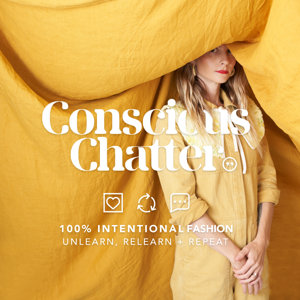


In episode 175, Kestrel welcomes Sloane, the founder and makers behind Eliza Sloane Jewelry, to the show. Handcrafting jewelry for over 7 years, and collecting crystals and sea glass for over 20, Sloane is a master maker, and creates all of her cast pieces for Eliza Sloane Jewelry from recycled metals.
"I just think that not boxing ourselves in or pigeon-holing ourselves too much — that's just what ultimate creative freedom is." - Sloane, Founder + Maker Behind Eliza Sloane JewelryOn this week's show, Sloane shares more of her journey, and how an internship sourcing vintage gems in New York City motivated her to build an Etsy shop, and eventually inspired her to start making her own jewelry.
Sloane dives into more on how surfing inspires her creative work, and vice versa — and how they seem to feed each other consistently, helping her maintain a fluidity in both her lifestyle and creative work.
Kestrel and Sloane also chat about the idea of scaling, how complicated it can be, and the challenges that come with it when you are the actual maker behind the brand.
The below thoughts, ideas + organizations were brought up in this chat:
Rio Grande, where Sloane sources all her recycled metals
Esmeralda Turquoise Company, where Sloane sources turquoise
American Gem Trade Association, promotes the highest ethical standards for gemstones
"I don't know, it's just really hard to gracefully scale up, with keeping to your morals and your beliefs and your style."
EcoEnclose, sustainable packaging Sloane uses
Trader Joe's produce bags are actually compostable (more on their sustainability efforts in Food and Wine + Real Simple)
In episode 174, Kestrel welcomes Rachel Faller, the founder of Tonlé, as well as Sreyoun, the General Manager of Tonlé's production operations in Cambodia, to the show. A zero waste, ethical fashion brand, Tonlé is on a big mission, to reduce waste generated by larger factories and change the way business is done in the fashion industry.
"Lots of people define zero waste in different ways, and for us, it's basically about reducing the waste that's already being created in the fashion industry, and using every piece of our own waste." - Rachel Faller, Founder of TonléOn this week's show, Rachel shares more on her journey, and how a Fulbright fellowship to Cambodia helped plant the seeds for her to build Tonlé.
Also, we explore more in depth what zero waste means to the brand, and how for Tonlé, it naturally overlaps with their approach to manufacturing, and addressing social issues.
Sreyoun, the General Manager of Tonlé's production operations in Cambodia, also shares how she started working with Tonlé, originally as an accountant. She had the opportunity to move into other positions, learn a lot about the business and sustainable fashion, and now has moved into the General Manager role.
The below thoughts, ideas + organizations were brought up in this chat:
"Zero waste" at Tonlé
Production practices at Tonlé
Srey Oun Sweater, one of Rachel's favorite styles
In episode 173, Kestrel welcomes Ethan Song, the cofounder of Frank and Oak, to the show. Inspired by ethical and sustainable thinking and with an eye to the future, Frank And Oak has set out to create clothing that is made for good living.
"So I think that for us, the idea is actually to create a deeper relationship with our customers, and make sure that we really understand them before we create something."On this week's show, Ethan shares more on how his entrepreneurial dreams led him to the fashion industry, and how Frank and Oak was initially the response to he and his cofounder not being able to find brands that shared their values.
Also, Ethan dives into what sustainability really means to Frank and Oak, and how for them, it's about: first —minimizing impact, second — restore.
Kestrel asks Ethan to comment on sustainability when it comes to subscription box services. For Ethan and Frank and Oak, they believe their subscription service can help them learn more about their shoppers, and in turn, produce more accurately, reducing waste.
The below thoughts, ideas + organizations were brought up in this chat:
SeaCell, a new fabric that Frank and Oak recently launched in their collection
StylePlan, Frank and Oak's subscription box service
Frank and Oak's Circular + Hydro-Less Denim
In episode 172, Kestrel welcomes Jen Long, the CEO and Creative Director of Noble Carriage, to the show. A thoughtfully curated store, Noble Carriage offers a collection of organic & sustainably made baby goods.
"I think as a new mom, you're told that you need to buy all of these things — that you need all of these things to make raising your child easier or just to survive, and I don't believe that. I think you need fewer, better things." -Jen Long, CEO of Noble CarriageOn this week's show, Jen shares more on what led her to starting her own curated shop for little ones. She also talks about how she thinks sustainability as a lifestyle can really start with moms, as they are already tuned into starting fresh and doing whatever they can to provide a safe, healthy environment for their babies.
The below thoughts, ideas + organizations were brought up in this chat:
Watch more on Noble Carriage's story >
"You need to lead with good design — good design I think can change the world. I felt like that was what was missing, and I felt like I could bring that to this world."
Factory45, Jen worked with Shannon Lohr of Factory45 in the early development stages of her business
Noble Journal, where Jen features Noble Babe Rituals and more
In episode 171, Kestrel welcomes Anabel Maldonado, the founder of The Psychology of Fashion™, to the show. A platform that explores why we wear what we wear, and the relationships between emotions, personality and aesthetic, The Psychology of Fashion™ also examines current issues in the fashion industry through the lens of psychology.
"You know, if we get away from this sort of like trends just because, buy it because all these people have it — if we think about who we are, why we like what we like, the way that fashion actually can be powerful for us, I think we're going to buy less but buy better, and invest in things because we're sure." -Anabel Maldonado, Founder of The Psychology of Fashion™On this show, Anabel shares more on her background, and how she has fused her interests to build The Psychology Of Fashion™. When she realized she wanted to build this platform and write about these topics together, she started a research project, to develop a framework to better talk about fashion through the lens of psychology.
The below thoughts, ideas + organizations were brought up in this chat:
"We believe that personal style is not random. The clothes that feel best tap into our truest qualities, are a consequence of our different inner needs, and reflect our most deep-seated narratives about ourselves."
"6 Reasons Why Fashion Is Losing Its Appeal" on The Psychology Of Fashion
Alain de Botton, writer and philosopher who has inspired Anabel
"It's funny because it's not just about the optical effect or making an impression on others — it's about triggering a certain mindset in yourself."
Enclothed Cognition: how clothes affect your cognitive process, anything cerebral (thinking, feeling, anything that happens in the brain)
"Self knowledge is the antidote to mindless consumption."
Big 5 Personality Test
PSYKHE, a new e-commerce platform Anabel is launching, that is powered by personality science, machine learning and the psychology of fashion.
Article in the Washington Post Kestrel referred to, "Kamala Harris embraced black. That was both unremarkable and theatrically powerful."
In episode 170, Kestrel welcomes Nicole Rattner, the founder of Sourcery The Label, to the show. A brand focused on cleaning up fashion with beautifully designed, naturally sourced garments, Sourcery is known for their Innovative Machine Washable silk.
"I think it's important that we start to offer the customer, the consumer, something that works for her too, and invite her into this world of sustainability through better functionality. So, for me, a washable silk kind of did both of those things." -Nicole Rattner, Founder of Sourcery The LabelOn this week's show, Nicole shares more on her past experiences working in design and textile development with larger brands like Victoria's Secret, Polo Ralph Lauren, Urban Outfitters, Nordstrom and others. Through working on more of a global scale with these bigger brands, Nicole started to realize that, as the designer, she had a larger responsibility to start working to clean up fashion.
The below thoughts, ideas + organizations were brought up in this chat:
"60% of the clothing that hangs on the racks of major retailers is made of polyester, a petroleum-based synthetic fabric."
"First and foremost, I believe we have to start focusing on natural materials. I really believe the future of fashion is going to be in innovative takes on those natural materials."
"Silk is such an under-appreciated and underexposed product."
Vogue article mentioned in the intro — "As Zara Announces Its Latest Sustainability Goals, Three of Its Design Team Weigh In on Going Slower and Creating Responsibly"
In episode 169, Kestrel welcomes Adam Taubenfligel, the designer + creative director at Triarchy, to the show. An LA-based sustainable denim brand, Triarchy has a focus on conserving water, and reducing the massive consumption that is typically used to make jeans.
"We're trying to be as sustainable as possible, but then, if we bring something to market that's not giving you those things you love about the jeans that hold you in and do all this stuff, then they won't sell, and then you're not running a business. And so, you have to also remember this is a business and not a not-for-profit sustainable thing." -Adam Taubenfligel, Creative Director + Cofounder of TriarchyOn this week's show, Adam shares more on what led him from film to fashion, and how he discovered the destructive nature of the apparel industry. He also elaborates on how he believes mindfulness could be the key to transforming the fashion industry. After being on a month-long Instagram cleanse, Adam describes the power in disconnecting, when it comes to enhancing our creativity and productivity.
The below thoughts, ideas + organizations were brought up in this chat:
Ozone Denim Systems
e-flow Technology
"When you go into every major department store in the world, it's basically the same 5 brands that are on that wall. And so, I really do think there's room on those walls for brands that really are dedicated to making the denim industry as good as possibly can be, and that maybe have the ability to do that because they aren't juggernauts, yet."
In episode 168, Kestrel welcomes Erin Wallace, the brand director at thredUp, to the show. The world's largest tech-powered resale marketplace, ThredUp's platform gives you the chance to buy and sell high-quality secondhand clothes.
"I mean if everyone in the U.S. bought just 1 item used instead of new this year, it would save around 6 billion pounds of carbon emissions, which is the equivalent of taking half a million cars off the road for an entire year." -Erin Wallace, Brand Director at thredUpOn this week's show, Erin shares more on how the secondhand world brought her into the sustainability conversation — she got her start working at Crossroads years ago. We also chat about the thrill of the hunt when it comes to secondhand, and how we both got into thrift shopping, in search of those extra special pieces that nobody else would have.
The below thoughts, ideas + organizations were brought up in this chat:
thredUp processes up to 100,000 items per day
At this time, thredUp lists over 2 million unique items on their website
"We have definitely felt the Marie Kondo effect. We had an 80% spike in our clean-out kits, when 'Tidying Up' aired on Netflix."
Choose Used, thredUp's partnership with Olivia Wilde + Conscious Commerce
The Circular Fashion Fund, 501(c)(3) under thredUp, that invests in the next generation of non-profits and businesses pushing to transform the fashion industry
thredUp's 2019 Resale Report
In episode 167, Kestrel welcomes Chrissie Lam, the founder of the Love Is Project, to the show. Connecting people around the world through a universal message of LOVE, the Love Is Project empowers artisan communities through an ethical supply chain.
"There's sometimes a lot of negative media and portrayals of people, and I wanted to show the positivity and humanize people. And I think the word love is very universal and it connects people." -Chrissie Lam, Founder of Love Is ProjectOn this week's show, Chrissie shares more on her past adventures, and how she came up with this random idea to ask people what love means to them while on a flight to Russia. This led her to continue asking this question to strangers all over the world throughout her travels.
Chrissie also shares more on how quickly the Love Is Project has evolved since the beginning. After starting in Kenya almost 5 years ago, the brand has now grown through their "pay it forward" social enterprise model, to be working with artisans in 10 different countries.
Additionally, Chrissie shares more background on her new book, The Greatest Love Story Ever Told.
The below thoughts, ideas + organizations were brought up in this chat:
It Gets Better, organization that the Love Is Project has partnered with
Stoneman Douglas High School, Love Is Project has partnered with them
"Love is proportional to your will." -an answer Chrissie got from a girl in North Siberia, early in asking the question throughout her travels
Support the launch of Chrissie's new book, The Greatest Love Story Ever Told, here >
In episode 166, Kestrel welcomes Marielle Elizabeth, a body positive blogger, writer, photographer + self-proclaimed social media monster, to the show. A standout Instagrammer, Marielle is also known for her #slowfashionforall hashtag and blog Something Copper.
"The conversation of ethical fashion already comes from a place of immense privilege, and if we are not making space for everyone, we are failing." -Marielle Elizabeth, Founder of Something CopperOn this week's show, Marielle shares more on her slow fashion journey, and how it was inspired at a young age by a cool, local shop in the town she grew up in.
She also dives into more on the idea that revolutions must be inclusive. As Marielle said in an interview with Clothed In Abundance, "Revolutions are for everyone and the biggest disservice we can do is to make it exclusive."
Marielle reveals some of the results from the Size Inclusive Survey that she hosted through her Instagram in March 2019, and how she intends to utilize these numbers to help challenge the industry.
The below thoughts, ideas + organizations were brought up in this chat:
Something Copper, Marielle's blog
"We can't have 300 people perfectly nailing ethical fashion, and the rest of the world completely closed off from it because they won't hit that 'perfect standard'."
"I think so much work needs to be done in activating change and helping encourage other people to change behavior from a positive standpoint vs a shaming standpoint — from a place of the most ethical wardrobe you have is the one you already own, and it's just caring for it and mending it and reusing those pieces."
"I'm so passionate about calling someone in vs calling someone out."
"I also think ethical fashion / sustainable fashion has a long way to go in terms of calling people into the revolution vs shaming them for already not doing better."
"For me, one of my biggest fears is that if brands keep misappropriating this term, and saying size inclusive when it's maybe only going up to a size 16, people that are larger than that will get frustrated and assume that they have no place in ethical fashion, and then will stop trying."
Findings from Marielle's Size Inclusive Survey — (responses from over 3,000 people) + 53% of responses said that to be '"size inclusive" you need to be above a size 22 + 41% of responses said that to be "size inclusive" you need to be at least up to a size 22 + So 94% of the survey results say you need to carry at least up to a size 22 to be considered "size inclusive"
Some of Marielle's favorite brands — Elizabeth Suzann Sotela Block Shop Textiles State The Label Beaton Linen The Perennial ClosetHackwith Design House Basics Alice Alexander — listen to our show with founder Mary Alice >
"I think that a big part of clothing waste right now is coming from people hoping one day something will fit properly or settling."
This week's show is brought to you by ANA LUISA JEWELRY. Explore more about the brand + get your exclusive discount code here >
From the publisher's feed

11,569 Listeners

270 Listeners

260 Listeners

111,866 Listeners

577 Listeners
203 Listeners

1,493 Listeners

9,155 Listeners

4,089 Listeners
538 Listeners

4,832 Listeners

717 Listeners

15,908 Listeners

45 Listeners

19,163 Listeners