
Sign up to save your podcasts
Or

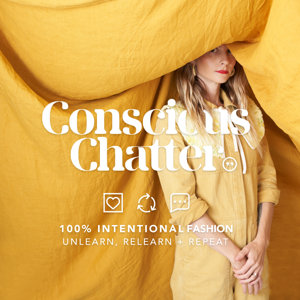


In episode 275, Kestrel welcomes Liz Ricketts (the cofounder and Director of The Or Foundation), alongside Sammy Oteng (a fashion designer, researcher, and the Community Design Lab Manager at The Or Foundation), to the show. A nonprofit based in the USA and Ghana, The Or Foundation's primary goal is to catalyze what they call a justice-led circular economy.
"What's so unfair about what fast fashion has done is that it's created a situation where every single garment that's created, whether it was from me or from Sammy or if it's upcycled or recycled — it's still waste until proven otherwise, because we just have so much excess in circulation right now, and it's just very unfair to anyone who's trying to do the right thing." -Liz
Extended Producer Responsibility (EPR)
Before we get into it, there's one thing I want to contextualize. And it's probably something you've heard about - maybe something you've even heard a lot about recently. That thing is – Extended Producer Responsibility or EPR.
EPR policy would ideally ensure that producers are required to assume the costs of collection, treating, and recycling of their end-of-life products. Basically, it puts the financial burden of the waste management on the actual brands to deal with their products after citizens are done with them.
In 2007, France was the first country to declare a legal framework for managing textile waste through EPR policy with the goal of holding textile producers responsible for the collection and recycling of end-of-use clothing, linen, and shoes. The EU also recently announced EPR schemes to help address textile waste from fast fashion.
However – France and the EU's policies fail to compensate the communities where the majority of that waste ends up. So, the tax is supposed to go to waste management, but when a great deal of that textile waste ends up being exported to countries in Africa as a part of that so-called "waste management", AND those tax funds stay within France or Europe, these policies are only continuing to perpetuate a long history of waste colonialism.
This is only a very brief overview – but it gives you a little context on EPR before we get deeper into it.
The Or Foundation x Shein Agreement To Create EPR Fund
There were shockwaves sent across the fashion industry, after an announcement at the Global Fashion Summit this year (2022). The Or Foundation unveiled their agreement with SHEIN to receive $15 million over three years, as the first grant recipient of SHEIN's new Extended Producer Responsibility (EPR) Fund to help manage textile waste.
The commentary and discussions across social media and the web have been intense, with a lot of very emotionally-charged reactions from varying vantage points. Here's just a glimpse of some of the feedback that has been shared –
Concerns about the way this is blatant greenwashing by SHEIN, considering that their ultra fast fashion business model is largely to blame for the waste being dumped in Ghana and other areas of the Global South
Concerns about how SHEIN will be able to use this partnership as a way to *look good* while continuing to perpetuate a savorist mindset
Concerns over the criticism of this partnership being directed at The Or Foundation instead of at SHEIN
Concerns about what this showcases with regard to the nonprofit industrial complex
Concerns about the apparent need for wealth redistribution, but the question of when and why the origin of those funds should matter
Concerns over when and how SHEIN will address the root causes of its impact, instead of simply throwing cash at the problem, which some have identified as only offering a bandaid solution
And so many more. In this week's conversation, I had the privilege to speak with the folks at The Or Foundation to get their take on it all. And more importantly, to hear some of the responses of the community in Kantamanto, and how this money will be and already is being used.
Quotes & links from the conversation:
Watch video celebrating Kantamanto's contribution to the "circular economy"
"The fashion industry is not only linear in terms of material flow, it's also linear in terms of power dynamics and wealth — where you have countries in the Global North using the Global South as a waste management system, and folks in the Global South and people that we work with in Kantamanto doing the actual work of circularity in terms of reuse and repair and upcycling, but not having any of the language that is sanctioned in the Global North to describe what they do. And so, there's this big disconnect between rhetoric and impact." -Liz (18:18)
"Kantamanto has two truths — Kantamanto makes visible fashion's waste crisis but it's not the cause of the waste crisis, and Kantamanto itself is the largest reuse and upcycling economy in the world." -Liz (20:00)
"If you think about the work that is being done here and the discussions that are going on around these topics within the fashion space in the Global North, there is such a huge disconnect — it almost seems like there is more interest in talking about all of these topics than actually doing the work." -Sammy (22:40)
"The work that we are doing here is not about the Global North. We are not doing all this work in our community to give back to the Global North." -Sammy (28:55)
"I don't want to dismiss the complexity and some of the reactions that I think are very important; I think it's provoked some productive dialogue in the Global North. But for us, it's very simple — it's not about me, it's not about our organization. It's about the community that we are accountable to which is Kantamanto, and they have been trusting us since 2016 to deliver tangible change and frankly, we've failed them for a long time. It's been really hard to find money to do the things that need to be done, and every single week — retailers, tailors, girls working as kayayai have asked us if anyone has acknoeweldged them and if any of the brands has stepped up to take responsibility, or if anyone from the Global North has stepped up to take responsibility. I have to be very honest that for me, it's a big relief to finally be able to say "yes, someone has." We've been calling on this — a lot of people in our community, folks in the Global North have joined us in calling for brands to pay for the waste that ends up here, for the waste that we are processing ourselves. And I understand that maybe this is not how people imagined that looking, but for us again, it's very simple — it's not about Shein, it's not about us, it's about the fact that finally we can have the resources that the community has been calling for." -Liz (40:38)
"The conversation here is very different when you talk to the retailers — they are not concerned about what brand is bringing the money or who is the CEO, they don't care about that. They just believe that white people or people from the Global North should take some responsibility for the problem that has been caused here. And for them, that is the one thing they appreciated — knowing that after all this long while of waiting … people in the Global North have actually taken responsibility that their stuff has may be ending up here and causing problems." -Sammy (42:22)
"For me, that should have been the focus of all of these shock and waves or whatever going around the fashion space. I think that should have been the real question, the real interest — finding out what it meant to the community." -Sammy (45:37)
"I don't think that our community, the sustainability community, really talks about the lack of resources, but it's very real. For instance, I've gone to brands that are considered very "sustainable", asking them to support our kayayei programs — which it only takes a $1,000 dollars per girl to transition them out of this job that literally is killing them into a dignified career. And people have responded by saying "oh that's very sad, but we would like to fund a documentary" because people want to have things that they can put their logo on or that they can sponsor." -Liz (47:01)
Article on The Or Foundation's work with kayayei (written by Liz)
Watch video on The Or Foundation's Chiropractic Research and Treatment Program
Recent IG Live where Sammy and Chloe talk about how challenging it is for Ghanaian citizens to travel outside of Ghana while millions of garments flood into Accra from outside every week
Watch video tour of the No More Fast Fashion Lab
Waste Landscape Report by The Or Foundation
The Or Foundation's 2021 Annual Report
Follow The Or Foundation on Instagram >
TAKEAWAY: look into the EPR policies in your local area, and figure out if the policies that are being considered are globally accountable — if waste is going to be exported as part of that policy, is money going to be able to flow with it? If not, fight for this.
In episode 274, Kestrel welcomes Michelle Zhu, the CEO & cofounder of Huue, to the show. In an effort to replace toxic chemical dyes in apparel, Huue are developing biosynthetic dyes — their initial focus is to provide an alternative to synthetic indigo.
"We are creating a biosynthetic solution that is a one-to-one drop-in replacement into the textile supply chain. We're creating these bio-identicals that can minimize the footprint of production of these dyes and pigments, but without disrupting the supply chain process that is required to make the authentic look and feel of denim that everybody knows and loves." -Michelle Zhu
Are you familiar with biosynthetics? If so, do you understand what they are or how they operate? So often terms like this get thrown around in the *sustainability* space, without a lot of context or definitions. They are assumed to fall into the good box or the bad box, when yet again – there is a lot more information needed to understand the bigger picture.
So, here's the super basics – biosynthetics are made of renewable materials, instead of being petroleum based. We often hear about them from a fiber stance, so fabrics made up of biopolymers from corn or sugar or other ingredients. But on this week's show, we're diving into more on how biosynthetics are being used for textile dyeing.
Today, the majority of our clothes are colored with synthetic dyes. If we look back, the first synthetic dye was accidentally discovered in the 1850s when an 18-year old chemist was searching for a treatment for malaria. And since then, they've gradually taken over due to their speed and efficacy.
But take indigo – the color that we align with denim. Today, every kilogram of synthetic indigo produced uses 75x the amount of petroleum. And it involves the use of dangerous chemicals like benzene, formaldehyde, and sodamide.
This week's guest cofounded a company that's leveraging biosynthetics to address the extreme toxicity across the textile dye industry. They've started with indigo blue, and are building one-to-one solutions that can be inserted directly into the current manufacturing infrastructure.
Quotes & links from the conversation:
"This Melinda Gates-backed biotech startup is growing bacteria that make sustainable dye for denim", article in Fast Company
"How These Founders Are Detoxifying the Denim Industry--and Saving the Planet", article in Inc.
"Using synthetic biology platforms to clean up indigo dye-making", article in Axios
"Best Inventions of 2021 - Huue: Blue Jeans Go Green", article in TIME
Huue's Website >
Follow Huue on Instagram >
In episode 273, Kestrel welcomes Kesiena Onosigho, a textile and mixed-media artist, to the show. Through the study of materials and patterns, Kesiena intuitively explores textiles and a range of media to create atmospheric abstractions focused on intersectionality, as coined by Kimberle Crenshaw, engaging in themes of social & environmental justice. "My work really is about reclaiming and retelling these narratives around Black cultural contributions to textiles and crafts and sustainability. And really dedicating my work to uplifting and centering Black women in particular, but Black people in general, their work and their history across the African diaspora." -Kesiena
This week's guest is a natural dyer, a knitter, a botanical ink-maker and beyond. An exceptional textile and mixed media artist, Kesiena's work is grounded in historical context and lived experiences, and focused on themes around social and environmental justice.
Growing up within a very matriarchal family, surrounded by a community of Black women, she has collected experiences and knowledge, and navigated her way to discovering that art is a tool for liberation – in particular slow art.
As she says, "for Black people today, finding that space is an act of rebellion."
Through her work, she creates what she calls "atmospheric abstractions" – I love this so much. And it's beyond accurate because so often with art, we end up being able to feel it before we actually understand it. And when it comes to her process, sustainability is woven into each step along the way – as she says: sustainability isn't passive, it's something you live, and something you are.
Quotes & links from the conversation:
Gist Yarn's upcoming textile residency (starting in July) that Kesiena was selected to be a part of this year
Garbage Goddess — a great resource for natural dyers that Kesiena recommended, after the recording. They sometimes offer free flowers for natural dyers in NYC, and Kesiena sometimes freelances with them.
Teju Adisa-Farrar's Black Material Geographies Podcast (Kesiena mentions)
Sustainable Brooklyn (organization to support that Kesiena mentions)
The Root Series with Dominique Drakeford
Kesiena encourages folks to check out and support the work of Lisa Betty (who was featured on episode 1 of The Root series)
Conscious Chatter episode 228 with Catherine McKinley >
Kesiena's website >
Follow Kesiena on Instagram >
In episode 272, Kestrel welcomes Angela Weinberg, the cofounder of Kolorete, to the show. A luxury color cosmetics brand, KOLORETE is focused on creating hydrating lipsticks made with organic ingredients.
"Lip balms and lip products are traditionally very underregulated. So, when we think of this organic, consumerism ecosystem and conversation, what do we usually think about? I think we usually think about food … it's less common, less mainstream to think about how the lipstick that we apply to our lips or even the makeup we apply to our face — you know, our skin is an organ, and especially with lipstick, it's connected to our mouth so we can really consume lipstick the same way we would consume our food."
This week, we're talking lipstick … that oh-so-fun tint so many of us don our lips with.
Taking a step back — you could say lipstick is popular. According to Allied Market Research, the lipstick market size was valued at $8.2 billion in 2018, and is expected to reach $12.5 billion by 2026.
But just like fashion – the beauty industry is largely unregulated, making it another prime space notorious for greenwashing its way into the "sustainability scene".
This week's guest is working to build a more thoughtful lipstick brand – it's made of 98% organic ingredients, and she actually dreamed up the recipe in her own kitchen. But most lipsticks today aren't that clean.
In a 2013 study done at UC Berkeley, 32 different lipsticks and lip glosses commonly found in drugstores and department stores were tested. Through this research, they detected lead, cadmium, chromium, aluminum and five other metals, some of them being at levels that could raise potential health concerns.
Alarming? For sure. As this week's guest points out, synthetic ingredients dominate conventional beauty product recipes. Can you guess one of the recurring synthetic ingredients in lip colors? Yup, it's petroleum, AKA oil, again — petroleum fashion and petroleum beauty.
What can we watch for when we seek out beauty products? What can we do to advocate better options in the marketplace? What regulation is missing from the equation in the U.S. today? These are just a few of the questions we explore with Angela.
Quotes & links from the conversation:
"One of the things I wanted to bring to KOLORETE is that idea that quality matters — the quality of the ingredients, the quality of the manufacturing, the materials, the people, the messaging — and quality should be available at any price point and it should be very accessible." -Angela
*Kestrel misspoke on the documentary she recently started watching — it was actually called Toxic Beauty
Kolorete's Website >
Follow Kolorete on Instagram >
This week's episode is brought to you by Organic Basics is a carbon-neutral, Copenhagen-based brand creating underwear, activewear and everyday essentials. If you're interested in checking them out, you can use code CONSCIOUS10 to get 10% off. FYI – I don't receive any commissions.
In episode 271, Kestrel welcomes Anuj Sharma, an innovative designer, to the show. Anuj developed a unique method to make clothing called Button Masala, which does not require any cutting or sewing to construct a garment. "So, how come such a beautiful material like fabric has only one joining system? I realized that it's so visual-based. So, I decided to teach — largely because I thought it was important to have everybody knowing the idea of what is design and what it can do to you and what you should be asking for and why you should be asking for it." -Anuj
When we talk about shaking up fashion or reimagining new systems, why don't we ever question cutting and sewing? Aren't there other ways to bind fabric together?
The short answer is – yes.
Historically, many garments were draped, especially in warmer climates, to ensure air flow. As this week's guest points out — in India, where he is from, fashion designers didn't even exist until the 1980s. Before then, there was only a need for textile designers, because stitching was never needed.
But with the globalization of quote unquote fashion, cut and sew has become king.
If fashion wants to claim to be an innovative industry, shouldn't we also welcome alternative ways of connecting fabric – beyond the cutting and sewing system?
This week's guest, Anuj, thinks so. He has created one alternative way to bind fabric together, called Button Masala, and for him, it's all about sharing this technique with anyone and everyone so they can utilize it for themselves.
Quotes & links from the conversation:
"I said, oh it looks like a mistake if you do that. But what if there are many buttons and many button holes. If there's one man making noises and shouting in a building, then it's his fault and you can take him to jail. But if the whole building is shouting, then it's not a problem — it becomes a festival. If one button is wrong, it's a mistake, but if many buttons are wrong, then it's alright — it'll become a pattern. So that's how I decided to put many buttons on a fabric in a day." (11:55) -Anuj
"In a way, I created LEGO of garment making." (12:57) -Anuj
"The whole idea of consumerism is so beautifully brought into peoples' life, that people feel unfulfilled if they don't buy something for a few days. This whole idea of beauty — that every time you wear a new garment, it makes you look better. And I keep constantly telling my students and I keep trying to break the myth of what is beauty. Because it's all connected to the myth of beauty. Because what we need, we already have." (19:25) -Anuj
Follow Button Masala on Instagram >
This week's episode is brought to you by Organic Basics is a carbon-neutral, Copenhagen-based brand creating underwear, activewear and everyday essentials. If you're interested in checking them out, you can use code CONSCIOUS10 to get 10% off. FYI – I don't receive any commissions.
In episode 270, Kestrel welcomes Timnit Kefela, a doctoral candidate in environmental science and management at the University of California, Santa Barbara, to the show. Timnit's research is focused on the sources, pathways and fates of microplastics in urban environments. "Much of the solutions that are being brought out are very consumer-forward, which I think is unfair, because a lot of them are not accessible. So you end up putting the brunt of environmental destruction on the people who have the least access to the solutions. So I think it's incredibly important to pay attention to how we can have things change from an infrastructural level to be able to tackle this problem, and not necessarily just blame it on people who cannot afford leading, you know, zero-waste or low-waste lifestyles." -Timnit
We're talking about plastic. Yup, plastic. I know, it's everywhere. Literally everywhere. It feels like we can't escape it these days. And as you probably know, our clothing is no different. Plastic is a primary fiber for today's fashion.
In Changing Markets' Fossil Fashion report, they state that: "It is now estimated that synthetic fibers will grow from 69% to 73% of total fiber production globally by 2030, with polyester accounting for 85% of this."
That's a lot of clothes dripping in … oil? Cringe.
Where did it all start? How did plastic become the fabric of our lives?
From what I could discover, it sounds like the first fully synthetic plastic was created in the early 1900s – what we would call *Bakelite*. From there, a lot has transformed with plastics and our incessant use of it, especially since the 1950s – the dawn of synthetic fiber mass production.
I don't know about you, but with all this plastic fashion, all I can think about is the excessive microfiber emissions that come with it. We hear about microplastics all the time nowadays – but do we really understand how they function? Where do they start, how do they travel, and how are they truly impacting communities?
Timnit, this week's guest, is a doctoral candidate who has done extensive research examining the impact of apparel and other sources, on global microplastics pollution. Timnit shares insights from her research, and ways she believes we can be working to mitigate microplastics emissions.
Quotes & links from the conversation:
"Synthetic microfiber emissions to land rival those to waterbodies and are growing", paper co-authored by Timnit
"Microplastics are in our bodies." article in National Geographic that discusses the recent research about how microplastics have been found in human blood and lungs
"Fossil Fashion", report by Changing Market that Kestrel mentions
"California Adopts Nation's First Microplastics Strategy to Reduce Microplastic Pollution", article about CA microplastic reduction strategy that Timnit mentions
Timnit's website >
In episode 269, Kestrel welcomes Ngozi Okaro, the founder and executive director of Custom Collaborative, to the show. Custom Collaborative trains, mentors, and advocates for and with no/low-income and immigrant women to build the skills necessary to achieve economic success in the sustainable fashion industry and broader society.
"I think that if workers owned the business, if the people who are actually putting in the labor are also owners, then they're less inclined to overproduce, because it's just their time and their resources that they're wasting. So, I think that cooperative is important for both local economies, I think also for the environment and also for human rights." -Ngozi
This week, we are talking about cooperatives, and the ways that worker-led fashion production can truly shake up the industry.
Power dynamics are a topic that comes up a lot on the show – and something that was discussed in depth throughout The Root, the 6-part series co-produced and hosted by Dominique Drakeford. Conversations around the distribution of power within the fashion space are imperative, but in the mainstream space, they often lead back to this assumption that well, we exist within a capitalistic system, and this is how the fashion system works, so we have to work within it.
Ok – yes, agreed that we must work within it to transform the way that big business is operating – through advocating for transformation and through regulation. But also – I'm super interested in the ways in which alternative business models can literally showcase in practice the ways in which other frameworks work.
This week's guest is the founder and executive director of an organization that is building alternative models – in her case, through a New York-based worker-led cooperative.
As she reminds us, cooperative ownership can actually counter overproduction – so it's not simply a model that is important for human rights, it's also a framework that can address the industry's waste issues and support local economies.
Quotes & links from the conversation:
Dennis Derryck, Professor at The New School, who has become a mentor to Ngozi
"So, for us, cooperative is good because workers are owners — they can make the desicisions and share equity. And secondarily, it's helpful because if there are people who don't have work authorization, cooperative owners are legally able to work in the U.S." -Ngozi (18:04)
"How Employee-Owned Fashion Co-Ops Are Challenging Sweatshop Production", article in The Good Trade Kestrel mentions
"People who work in worker cooperatives generally have greater satisfaction, the businesses have more insights because people who are actually doing the work feel like they can bring to light ideas, they can make suggestions for making the business better." -Ngozi (20:52)
Opportunity Threads, a worker cooperative in North Carolina that Ngozi spoke to early in Custom Collaborative's development
"I think that if workers owned the business, if the people who are actually putting in the labor are also owners, then they're less inclined to overproduce, because it's just their time and their resources that they're wasting. So, I think that cooperative is important for both local economies, I think also for the environment and also for human rights." -Ngozi (25:24)
"Where fashion is failing women, and where it's showing up", article in Vogue Business which features quotes from Ngozi
"It's great to acknowledge women and to celebrate them, but I do think it's a year round thing — it's not just March 8th or the month of March. It's really about including women in decision making and centering women when we're thinking about what to do next with a company." (29:29)
"When Custom Collaborative started in 2016, and even when I was planning in 2014 and '15, I didn't hear anybody talking about human rights and fair wages being part of sustainability. And I remember when I used to talk about it on panels and in interviews and just with people in general, a lot of times people would look at my oddly like I didn't know what I was talking about. But I feel like now in 2022, it's more a part of the conversation." -Ngozi (33:21)
An interview with Ngozi for the CFDA
An interview with Ngozi for Musings Magazine
Custom Collaborative
Donate To Custom Collaborative >
Follow Custom Collaborative on Instagram >
In episode 268, Kestrel welcomes Venetia La Manna, to the show. The host of All The Small Things podcast and the co-founder of Remember Who Made Them, Venetia uses her platforms to challenge fashion brands who are costing the earth and calls out retailers on their unethical practices in the fashion supply chain.
"Fashion brands are so willing to talk about organic cotton and to talk about their latest recycled range. There are two things that fashion brands refuse to commit to — the first is paying their garment makers a fair living wage, and the second is a drastic reduction in overall output. But these are the two things that would actually, truly change the industry." -Venetia
Here's a question I've posed on Instagram:
Is it OK to buy fast fashion secondhand?
I was watching Venetia's YouTube channel recently, and in one video, she talks about this question. She says: "I think it's worth us interrogating – but I'm not sure it's worth us giving ourselves a hard time about."
So, back to that question – is it OK to buy secondhand fast fashion?
Out of curiosity, I did a poll on Instagram the other day, and 96% of the respondents said *Yes, it's ok to buy it*, with only 4% saying *No it's not OK*.
On the show, Venetia and I do interrogate it a bit, along with other questions like – why aren't garment makers centered in the ways we talk about and act on changing fashion? And how can we creatively share intense information about the unfair fashion industry to welcome more people into the conversation?
Quotes & links from the conversation:
All The Small Things, Venetia's podcast
"I think the thing that has driven that is that focusing more on the environmental impact of fashion lets the majority of brands off the hook and allows them to continue to produce at a rate that our planet can't sustain, let alone, the people creating our clothes and the people carrying our clothes at the end of the supply chain." (22:48)
"Fashion brands are willing to talk about sustainability and the environment if it means more money for them." (24:55)
"Fast fashion brands have literally hijacked the language of the slow fashion movement and incorporated it in their marketing campaigns." (29:54)
Munya Chawawa, content creator Venetia admires
CC with Timo Rissanen (ep 47) about how creativity thrives with constraints
The Or Foundation
Follow Venetia on Instagram >
This week's episode is brought to you by Tradlands, a small business focused on timeless style, slow fashion principles, and small-batch production. If you're interested in checking them out, you can use code CONSCIOUSCHATTER20 for 20% off. FYI — I don't receive commissions from this partnership.
In episode 267, Kestrel welcomes farmer and scientist, Sally Fox, to the show. Known for her work in developing strong genetics in organic, naturally-colored cotton, Sally also has experience in raising heritage Merino sheep and a variety of crops, including Sonora wheat.
"I viewed the misuse of ag chemicals and the overuse of dyes — I see them as the same thing. I don't see why we're using dyes on products, on the colors we can grow ourselves. I want to see materials that are expensive and precious and costly in terms of energy and water use, to be used where you have to use them — not just on a whim." -Sally
One of the most environmentally and socially detrimental stages in the textile supply chain is the DYEING PROCESS – where we add colors to our textiles. As highlighted in Rita Kant's article Textile dyeing industry an environmental hazard, "The World Bank estimates that 17 to 20 percent of industrial water pollution comes from textile dyeing and finishing treatment given to fabric. Some 72 toxic chemicals have been identified in water solely from textile dyeing, 30 of which cannot be removed."
Yes, there are natural dyes which can be an amazing option. And yes, there are lower-impact dyes, which can often be a so-called better option.
But what if we could grow fibers that were bred for many distinct attributes, including COLOR?
Well, we can. It's something that Sally Fox has been working on for the last 40 years – from breeding to growing to harvesting to spinning to yarn design, to many other layers in between, she's a legend in the cotton industry.
Her work planted a lot of the seeds that have grown into today's organic industry in the U.S.
And through her closeness to so many pieces of the cotton supply chain, she has incredible insight on many of the complexities of growing organic that are often overlooked.
Quotes & links from the conversation:
"The USDA had been giving them to to all the breeders because they were sources of innate insect and pest and disease resistance. They were very very vigorous, but they had this fiber that wasn't usable. So, I asked him 'why don't we just improve the fiber and make it usable?' And he said 'there's no market for naturally colored cottons'. And I said, 'well why don't we make a market?' And this guy was in his 70s and I was in my 20s and he started laughing and he said, 'here you can have the seeds and you can even have part of the greenhouse so start it up.' -Sally (11:11)
"Breeding is about focusing on where you want to go and then growing as many plants as you can afford that allow for the plants to express themself with the greatest diversities, so you can pick the ones that are going the direction that you want." -Sally (28:03)
Dr. Jane Dever, cotton breeder
"No that many people who breed cotton have a deep understanding of the use of the fiber. Most breeders are breeding for yield because farmers buy seeds by how much the yield is. They need to make enough money to stay in business and yield is the thing they look for." -Sally (49:35)
"If there's ever been a product that entered the world because of the support of people who were devoted to their craft, it is this." (51:19)
Vreseis, Sally's Website
Follow FoxFibre® on Facebook >
Follow Sally on Instagram >
"I like to look at sort of the bigger picture of what I'm creating. So, I think a lot about the supply chain and the people that I work with, and where our materials come from — who's making them, who's knitting them, and all the pieces along the way. But then, also, in terms of design and making products, I try to think a lot about things that people are gonna want to wear for a long time, things that are gonna feel good to put on, things that you're gonna want to reach for again and again in your closet." -Leah
Have you ever heard the minimums conundrum from smaller brands, or even mid-sized brands, working in the sustainability space? It's a conversation that comes up on repeat in my circles – I hear about the challenges with minimums for mills, for fabric sourcing, for cut and sew production, for accessing new materials, and the list goes on.
These co-called minimums are a direct reflection of the way in which the fashion system has been built on VOLUME, and SCALE and an obsession with growth on all accounts.
This leads me to the idea of sharing ownership – I feel like regularly people are saying: I wish someone would coordinate a way for smaller brands to bond together to meet these minimums, to help each other be able to access what they're looking for, through a collective approach.
But it's challenging because fashion is notorious for being SECRETIVE, and brands and designers are notorious for not wanting to share their resources, their suppliers, pieces of their supply chain, etc, etc. When it comes to pushing the needle in the sustainability space, why not share?
Leah has a smaller label (Wol Hide), and is working diligently to build thoughtful supply chains. She shares some of her insights when it comes to navigating these minimum challenges, and ways she thinks we need to continue to come together to work more cooperatively across the industry.
Quotes & links from the conversation:
Sally Fox (who Wol Hide works with for their Colorgrown cotton)
NY Textile Lab (this is who Won Hide works with for the regional Climate Beneficial yarn)
Fibershed on Climate Beneficial Agriculture >
Follow Wol Hide on Instagram >
From the publisher's feed

11,569 Listeners

270 Listeners

260 Listeners

111,866 Listeners

577 Listeners
203 Listeners

1,493 Listeners

9,155 Listeners

4,089 Listeners
538 Listeners

4,832 Listeners

717 Listeners

15,908 Listeners

45 Listeners

19,163 Listeners