
Sign up to save your podcasts
Or

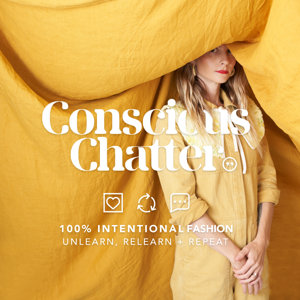


In episode 265, Kestrel welcomes Summer Dean (AKA @ClimateDiva), a writer, content creator and model, to the show. Both a fashion lover and climate justice advocate, Summer has a distinct way of making these conversations educational, intersectional and fun. "My goal this whole time has been to communicate to people who aren't already in these spaces, and I think it's really important to make the climate and sustainable fashion movement as big as possible. So, for me, that means making my content funny and nuanced and stylish and accessible. But you know, I really think my personality does shine through in a lot of these videos, and it's really just about bringing as many people as possible along for the ride." -Summer
This week, we're reminded of some of the ways that the systems intend to control our unique paths.
For example – capitalism makes us feel that we must hone in on one specific aspect of our personality or our interests – so we can more easily monetize that particular skill.
The patriarchy tells us that as women, we should dim ourselves down and blend in – in other words, we shouldn't be *showy* in the way we dress, in order to be quote unquote taken seriously in our professions.
This week's guest has resisted both in the way she's crafted her distinct career path.
By welcoming her whole *self* into her work, she's found a niche at the intersections of fashion and climate justice. From educating us about science and big data to curating sustainable fits, she's literally showing us how it's possible to build protest through self expression.
Quotes & links from the conversation:
Interview with Summer On Atmos (by Yessenia Funes)
"My goal is to just really bring a sense of light heartedness into this. I think that when we feel a little lighter and a little more joyful in these movements, I think it just really brings a sense of longevity, and I think that is what is going to make these movement last and ultimately win and build a better world." (19:43) -Summer
"My biggest rule for brands that I work with is — are they ok with talking about degrowth and reducing consumption, because if they're not, then I don't really feel comfortable working with them … I have to see that they stand for the same things I stand for, which is reducing overconsumption and overproduction, ending exploitation of people and the planet, and rebuilding our relationship with the earth." (23:58, 24:26) -Summer
Conscious Chatter episode 238 with Jazmine Rogers and Gabby Sage (Kestrel mentions)
*Slow Fashion Means Slowing Down Media* — post Kestrel did on IG in the past
"I also do think that clothing and style and self expression has a huge role to play in the climate movement and building a better world." (34:42) -Summer
"We shouldn't have to even have sustainability influencers — this whole career that I have in and of itself — the fact that I am even a sustainability influencer shows that there is something inherently wrong with our system. We shouldn't have to decide between buying something that is causing people to essentially be enslaved or buying something that is a little bit more expensive that isn't." (42:17) -Summer
Reel Summer did about the lack of size accessibility in sustainable fashion
"There is something fundamentally wrong with the inaccessibility in sustainability." (44:17) -Summer
"These algorithms really tend to promote environmental content that is very disheartening and leaves the viewer in a state of complete dread. I notice that the most viral videos about climate change are ones that really just don't paint a picture of a better future or a hopeful future or a future that includes everyone at all … I think there does also need to be a conversation about how these algorithms are promoting content that leaves us feeling hopeless and leaves us feeling powerless." (47:10) -Summer
"The Solutions to the Climate Crisis Lie Within An Intersectional Approach" by Summer for Blueland
YouTube video of "Intersectional & Inclusive Environmentalism Panel featuring Climate Diva & Climate Daisy"
ACE Interview with Summer On Why Social Media Isn't All Bad
Follow Summer on Instagram >
This week's episode is brought to you by Defunkify, a household cleaning products company that is on a mission to get toxic chemicals out of the products we wash our clothes with and clean our homes with. If you're interested in checking them out, you can use code KESTREL25 for 25% off.
In episode 264, Kestrel welcomes George Harding-Rolls (the Campaigns Advisor at Changing Markets Foundation) and Amy Nguyen (a strategist, researcher and writer focused on the nexus between sustainable business, fashion, innovation and technology) to the show. George and Amy are part of the team behind the recently launched website – Greenwash.com.
"We need to completely rethink about how we're gonna shift this system — it's gotta be about changing the rules of the game, like rip up the rules of the current way that we buy fashion and the current way that we produce fashion, and think about — what does this look like in a fashion system that works within planetary boundaries?" -George
I imagine you may have noticed it — but, fashion has a greenwashing problem.
This week's guests, George and Amy, are behind a new platform called GREENWASH.com that is powered by Changing Markets Foundation. They are dedicated to exposing the greenwashers across fashion.
For a little context on how this new platform is framing the conversation – when you land on GREENWASH.com (or a virtual laundrette as they call it) – this is what you'll read:
"59% of green claims are misleading or unsubstantiated. For some of the worst offenders, this is as much as 90%. Greenwashing is a smokescreen that makes people believe change is really happening … when it's not. In reality, fashion's toll on the planet is getting worse."
Quotes & links from the conversation:
Greenwash.com Website >
Changing Markets Synthetics Anonymous Report >
UK Green Claims Code (utilized largely as framework for Greenwash.com brand analyzation)
"We're giving customers all of this information so that they can make that choice, but is customer choice really what this is all about? Is the solution to sustainable fashion about more sustainable choices or is it actually that this whole activity is the wrong tool, and that we should be looking instead to mandatory measures and regulation, which in the short answer is yes." (25:25) -George
CIRCULARITY WASHING — "We've seen such a big drive in circular fashion and most of the time, it is B.S. The limitations of take-back schemes, we see circular jeans that have actually got polyester thread and elastane, so it means that they can't be repurposed." (42:14) -Amy
"I think we need to be a bit aggressive in our approach — we have to remember that we're really limited in amount the time we have left. You know, we are hurdling through the climate decade, and I think sometimes it's about not taking no for an answer, and just using your influence." (51:56) -Amy
Changing Markets Campaign Resources Page >
Follow Changing Markets on Instagram >
Sustainable & Social Website >
Follow Sustainable and Social on Instagram >
Amy's Forbes Page >
Find Amy on LinkedIn >
Find George on LinkedIn >
This week's episode is brought to you by Defunkify, a household cleaning products company that is on a mission to get toxic chemicals out of the products we wash our clothes with and clean our homes with. If you're interested in checking them out, you can use code KESTREL25 for 25% off.
In episode 263, Kestrel welcomes Dr. Sandra Niessen, a cultural anthropologist, fashion scholar and activist, to the show. In 2020, Sandra published a notable article titled: "Fashion, its Sacrifice Zone and Sustainability", which we explore on the show. She currently works closely with Fashion Act Now. "The loss of fashion or the degrowth in fashion — people think of that as a closing down of our fashion system or our clothing system. And I think of it as an incredible enrichment — the opportunity to throw open the windows and throw open the doors, and be creative in ways we've never thought of before and that are written out there in the world in Indigenous clothing systems and we've ignored all the time." -Sandra
I first discovered this week's guest, through a YouTube interview she did with Extinction Rebellion. It was focused on "Fashion & Degrowth, and exploring the link between decolonization and sustainability in fashion".
In it, our guest said – "Try to imagine colonialism without fashion".
This really struck me – of course, we have deconstructed and broken down several layers of how fashion's foundation is colonial, but this quote in particular really struck me, because I feel like the industry is rarely contextualized this way.
It's rarely even contextualized from a historical lens as far as the systems of power that have led to the construction of the current fashion system. Like what we worked to unpack through The Root series with Dominique Drakeford.
But I guess what I'm getting at here is that suddenly, OTHERING was written across the sky in flashing lights for me.
Imagine the ways that dress or clothing or FASHION have been used as tools to OTHER people – to indicate who has power and who doesn't have power. To show who is welcome and who is not. To perpetuate power dynamics.
As this week's guest highlights, this idea of OTHERING is another way of saying ERASURE.
Erasure is what fashion was built on and what it continues to thrive off of – and according to this week's guest, it could be the achilles heel of fashion if we truly want to change it.
Quotes & links from the conversation:
Fashion Act Now, activist group Sandra works with
"Fashion, its Sacrifice Zone, and Sustainability", article by Sandra
"We know that it's the people — the people who live on the land, who are the maintainers of the land, they look after the land, they understand the land, they're living in close association with it, sustainably with the land. And when we sacrifice those people along with the land, we're losing that knowledge, that Indigenous wisdom that we could really benefit from in this world of crisis that we're currently in where we're trying so desperately to find sustainability and yet at the same time, we're erasing the peoples that could help us learn about sustainability." (21:34) -Sandra
"Fashion is turning us (the consumer) into a sacrifice zone, it's turning the cognitive aspects of other cultures into a sacrifice zone, so that we all become somehow entranced and begin to follow this strange mentality that's associated with fashion. So, in that sense, fashion is producing sacrifice zones as well as being fundamentally based on sacrifice zones in its production systems." (23:53) -Sandra
Podcast with Trabian Shorters on "Asset Framing" that Kestrel mentions
"Fashion teaches us to make ourselves hollow and to just be this superficial display. Whereas, the satisfaction comes from the inverse, and the inverse is what's erased." (37:20) -Sandra
"The only way fashion can separate from growth is to stop being fashion." (40:14) -Sandra
Earth Logic (2019), book by Kate Fletcher and Mathilda Tham (free to download) — Sandra mentioned how it offers a paradigm in which the earth (carrying capacity) is central
Two useful resources Sandra recommends, regarding alternative economic arrangements: The Wellbeing Economy Alliance & David Bollier's website
"Regenerative Fashion, there can be no other", article by Sandra
"RANGSA NI TONUN" - The Sacred Batak Weaving Tradition — film by Javanese artist MJA Nashir, that Sandra helped produce
Sandra's Blog >
In episode 262, Kestrel welcomes Roland Geyer, Professor of Industrial Ecology at the University of California, Santa Barbara, to the show. Roland is also the author of a recently released book titled "The Business Of Less: The Role Of Companies and Households On A Planet In Peril".
If you are familiar with corporate social responsibility, if you work in the field, or if you have an understanding of some of the general narratives within the space, this show may come as somewhat of a shock to you. Or maybe not – maybe you're already asking some of these questions for yourself.
One thing is clear — we're doing a lot of reimagining on this show.
As this week's guest points out in his recent book – "The Business Of Less" — the sustainability narrative (and the corporate sustainability conversation in particular) has been dominated by two primary tenants.
The idea of the win/win paradigm – which is basically the idea that you can have your cake and eat it too. It aligns doing good with both saving the planet and saving money. In other words, sustainability only works when there's a business case for it (one that in the end, puts more profits in the pockets of the corporation).
And the other focus has been on eco efficiency or decoupling. You might be familiar with the life cycle assessment or LCA, which quantifies the environmental impact per unit of product or service. This ignores the question of volume or quantity, and instead, only evaluates products on an individual level.
So, while you may or may not be familiar with the above ideas – they have driven the way sustainability has been spoken about and addressed from a mainstream lens over the last few decades.
Turns out, these approaches HAVE NOT WORKED. Over the last 30 years, with all the investment in CSR departments and sustainability marketing and the focus on eco and organic and recycled and circularity, we are still standing in the same place. Or maybe even worse. Our total material or resource use has not decreased – instead, it has actually gone up.
According to this week's guest, there are many ways to get us back on track – but one of the keys involves focusing on LABOR, not MATERIALS.
Quotes & links from the conversation:
"A Friedman Doctrine — The Social Responsibility Of Business Is To Increase Its Profits", article by Milton Friedman that changed the focus of how business operates
"H&M Plans to Double Sales, Halve Carbon Footprint by 2030"
"Factor Four: Doubling Wealth, Halving Resource Use", book published in 1997 that aligns with H&M's recent plans to double sales & halve footprint (basically, this shows how the "make more and reduce impact" approach isn't a new concept
"Could Living Wages Help Solve Fashion's Climate Crisis? New Research Says Yes", article by Elizabeth Cline for Forbes
"There Is No Such Thing as a Green Product", article co-written by Roland
Nisolo's Sustainability Facts Label that Kestrel mentions
Video about apparel recycling that Patagonia did in collaboration with Roland
"Upset about the plastic crisis? Stop trying so hard", op-ed that Roland wrote for The Guardian
"Humans have made 8.3bn tons of plastic since 1950. This is the illustrated story of where it's gone", illustrated story by Susie Cagle
Follow Roland on Twitter >
Follow Bren School at UCSB on Instagram >
"Degrowth is not about austerity, it's not about living in a primitive way in a cave — nothing like that. And of course degrowth is not COVID-19 lockdown. It's about happiness, it's about wellbeing, it's about living happy with less things. And what real happiness is for each and every one of us — I think I will leave it up to all of you to decide, what real happiness means for you." -Marula
For many people, a degrowth world is a utopia – and to some, that means it's totally unrealistic. Yet to others, it means we can strive to reconstruct a world with many of these ideals at the core of how we exist, and while it may take time, it is possible.
This week's guest is a degrowth advocate and also a lover of fashion. Many may instantly think that the two cannot coexist.
Even other degrowth advocates in our guest's field have in a sense turned their noses up at her, scoffing at the idea of degrowth and fashion coinciding.
At one event that she organized, a fellow degrowther said, "there will be no high heels in a degrowth world."
No high heels? Really?
For our guest – high heels are totally welcome in a degrowth world. As she reminds us, high heels don't have to be made in a fast fashion way – they could be a form of art and if someone wants to wear high heels and they feel good in them, they should be able to wear them.
As our guest reminds us, there's a misconception that the fashion industry and fashion art are synonymous – but she definitely doesn't buy into that.
Quotes & links from the conversation:
"Degrowth means the abolition of economic growth as the main goal of our society … in other words, it means liberating ourselves from the idea of growth that mistakenly, we have made the religion, the dogma, of our societies." (8:38) -Marula
"We cannot discuss climate change without discussing capitalism, and we cannot discuss degrowth without discussing alternatives to capitalism and social transformation." (9:08) -Marula
"Scale can be different for everyone, but I think for me, what we need to do is move to a lower scale, so start talking more about the local level, about the community level. We don't need all of us to have access to the same clothes at the same time. We don't need 25 different fashion seasons. I think that what we need to do is actually to descale, go lower, and start supporting our local store, our local designer, and understand that there's no way that a local designer can produce of course this amount of clothes at the same time frame that a bigger company was doing. I don't know, we expect a writer to write 2 books during their own life, but we expect a designer to produce 25 different seasons in one year. So, I think we need to scale down a bit our expectations and start focusing more on our community level, on our local level." (26:10) -Marula
"Rethinking Fashion: A Confession Of A Degrowth Advocate", article by Marula on Resilience
I CAN MAKE SHOES, IG account that teaches you how to make shoes (Kestrel mentions it)
"Why Degrowth Is The Only Responsible Way Forward", article coauthored by Marula on Open Democracy
Research & Degrowth (R&D) Organization
Explore more of Marula's work here >
Follow Marula on Twitter >
Episode 260 is a special edition recap episode that highlights what we learned in season 5. This show is intended to help us gain perspective, so we can move more intentionally into season 6.
"We need everybody pursuing intersectionality, environmentalism, sustainability — like, whatever you're latching onto in terms of progress, latch onto it, but do it in a healthy way that's manageable in the longterm." -Diandra Marizet, ep 211As I reflect on season 5, I would say there was a lot of GROWTH. Now, when I say growth, I'm doing my best to separate it from the capitalistic-driven mindset that surrounds us that aligns growth solely with economics and $$$$$.
The growth I felt through season 5 was very contextual – it was about stepping back and truly understanding what is happening in fashion. The incredible guests that joined me through these episodes really challenged me to think beyond the fashion industry bubble, and to further understand how systems of oppression operate, how they impact the way fashion functions today, and how fashion in and of itself perpetuates these harmful systems through its origins and structure.
Concluding Season 5 feels like an important step for me. It featured interviews with many guests that I admire deeply, and it really reminded me that if we don't slow down to understand how far we've come, we can't move forward with clarity and intention.
The special episode weaves us through some of the highlights from the season – some of the quotes that made an impact on me, and that I continue to circle back to, in my continual quest to unveil and discover more about the intersections of fashion and sustainability.
Quotes & links from the conversation:
The Root: Decolonizing The Sustainable Fashion Agenda with Dominique Drakeford >
"We need everybody pursuing intersectionality, environmentalism, sustainability — like, whatever you're latching onto in terms of progress, latch onto it, but do it in a healthy way that's manageable in the longterm." -Diandra Marizet on episode 211
"I really push for the narrative of 'you are your own environmentalist' that includes Indigenous experiences, ancestral knowledge if you are Indigenous, cultural-based experiences for BIPOC individuals or just lived experiences that you've had that you don't resemble to environmentalism." -Isaias Hernandez on episode 214
"Another thing that I love to always mention is to just not feel so lost in the consumerism part of sustainability, because that goes back to colonialism, that goes back to the mindset of capitalism where people think they have to purchase in order to be a part of something, and I always love to mention that we were brought to think that we were the problem because corporations didn't want to take accountability for their mistakes, but in actuality, we are the solution." -Reza Cristián on episode 213
"Angela Davis said in a recent conversation she had with Yara Shahidi that there's a difference between having information and having knowledge … you can Google something and have information about avocado pits but you're not suddenly the expert or the most knowledgeable on the subject — and I think people need to start to reflect on that and the differences there and really pay homage and give credit to and space to the actual experts and the actual folks who hold the knowledge and the understanding of these practices." -Katie Pruett on episode 217
"Especially now, with things really coming to a tipping point of sorts, with so many different environmental and social issues — I think people still need to continue to have hope, because the main point of destructive or oppressive systems is for people to become weary and to become hopeless." -Maya Penn on episode 218
"For me, disruption is about recognizing systems because you study them, and then committing in the perennial marathon effort to see where there's room and a need for radical reimagining." -Kimberly McGlonn on episode 219
"Fashion is in the business of creating culture — we are culture creators — that is an immense power that we have is the influence of creating communities in culture. And, the fact that we have an opportunity to shape what the next culture becomes is a tremendous privilege, yet unfortunately I constantly see that we are taking that privilege for granted — we are not using it to the best of its ability. And that is why now that I'm slowly building this brand, I want to make an impact toward the change this industry deserves." -Selina Sanders on episode 222
"Really the biggest achievement of all to-date was making this sort of bold decision to pivot our business model to operate entirely direct-to-consumer, and I think really now — our values and our business model actually align." -Maggie Hewitt on episode 223
"In sciences, and especially the environmental sciences, we think of everything as a system. Everything is interconnected and there are ramifications for every decision made, every act that's taken, every resource used, and even social systems play into that — which is part of the reason why I loved the environmental sciences so much, because you see how this theory or this phenomena impacts people on a day-to-day, and then you can figure out — is this a balanced system or is this co-beneficial and things like that. And so, in my business, I look at it exactly the same way." -Gina Stovall on episode 224
"We pride ourselves in providing tools, resources, highlighting thought leaders, sharing about changemakers and being a source for Indigenous perspective on society's current events — and that is us providing our community with what's needed to reclaim one's culture, reclaim identity and reclaim Indigenous story through accurate representation." -Chantel Keiko Ricks on episode 225
"So much of what we do is working with frontline organizers, so that they can tell their own stories — inviting them to come write for us, creating space so that they're not just quoted in an article, but they're writing the article. And I think that there's sometimes hesitance to do that in the media industry, out of this sort of obsession with objectivity — I think is honestly what sometimes drives some of that. And we do that in a way that, we're not here to necessarily push an agenda, but we're here to give people space to tell their truth, tell their stories and to educate the public about the battles that many of these people are fighting." -Yessenia Funes on episode 227
"In most of the societies, cloth is just, it's essential, it's considered something that contains the human spirit and it's the layer next to the skin — you know, it has all those meanings. And cloth is essential from what you're wound in the moment of birth to what you're wound in at the grave." -Catherine McKinley on episode 228
"Because engineering is often about innovation and about the future, we're never told to study the past or even the current systems — it's always about create, create, create more, innovate more and think about the future. But again, if we don't take into account that context and that history, then we're just going to perpetuate those same problems over and over again." -Kiana Kazemi on episode 230
"I think the narrative of the sustainable fashion world when it first became trendy was that you had to be disciplined in your approach to sustainable fashion, and I think that sort of also paralleled the need to streamline your color. But, now that people are starting to realize that sustainable fashion doesn't only mean shopping from curated capsule wardrobe brands — they're also seeing that they can go thrifting, and find these really cool, fun textures and repurpose the stuff that they're already wearing … it's really cool to see that color and those textures playing out right now in sustainable fashion, because it feels in a way with all of this color, more inclusive." -Kara Fabella on episode 232
"We're gonna be really vocal with our platform to show people that we don't need to be following these trends. I think trends is what has pushed this overconsumption in massive amounts. And there's the misconception that trends are the only fun clothes you can use — like trendy clothes equal fun and sustainable clothes equal boring, which is absolutely not the case at all." -Lottie Bertello on episode 234
"I'm trying to reclaim the word influence because I think the word is so special and so powerful. Like I said earlier — it's such an honor to be able to influence others to do things. Like with all things with capitalism, it just takes it and commodifies it, but I think we can go back to the definition of what influence is, which is to have an effect on others, and I want to be a positive influence and a good influence to encourage others to think new ways and try new things and be encouraged and be empowered." -Jazmine Rogers on episode 238
"Nowadays, sustainable or sustainability — it means different things to different people. To you, it might mean plastics and to me, it might mean human rights or circularity or carbon. You know — it's so broad. I just think we need to move away from this broad brush approach to the subject and I guess, be more specific with which issues actually we're trying to tackle." -Lauren Bartley on episode 239
"The society in which we live in is very much a result of the rules of our society — in that, it is people who change the rules, who create them and can change them, I should say. And so, I think that was definitely my biggest takeaway, is like, nothing about this system that we live in right now is inevitable. You know, where women garment workers are exploited and we're just trashing rivers and throwing up climate change-causing emissions into the air and creating this product that isn't making us happy — that's not an inevitability, it's just the systems of rules that we create and have to change." -Maxine Bédat on episode 240
"This is where I feel the creativity is lacking — because generally, when you're making a product, your creativity is only bound and limited to what's viable to commerce, to how you can sell that creativity, so therefore, you cannot be fully creative if it doesn't sell, if it's something that doesn't make money." -Akilah Stewart on episode 241
"It's about connection, connecting to everything you do and having an alternative way of looking at things. Whether it be a relationship with another being or another person or a relationship with the plants or a relationship with any aspect — anything that you interact with in the supply chain. So, when we talk about agriculture, it's about the soil, it's about ecosystems, it's about the biodiversity, it's about the animals. You know, it's not just about *not* adding chemicals — it's about recreating something which we have destroyed for years and years and years." -Nishanth Chopra on episode 242
"Self care should be an everyday thing, and it almost should be an every moment thing — like every thing that you're doing is with intention to support yourself, to preserve yourself, so that you can then continue to go on to live your life's purpose, whatever that may be." -Julia Perez on episode 243
"I wanted to fill the gap of showing that you can consume less and it can actually be fun and it doesn't have to be a sacrifice — which, like society has made it out that way — like we have to be in this constant search of more, when in fact, the opposite can actually be a very fruitful and rewarding endeavor." -Alyssa Beltempo on episode 244
"I think no one's really attempted to make fashion rental about the sharing economy, to make it about women sharing with each other. It's always been seen more as a "oh, I want to wear designer clothing" or "oh, I want to wear something new" or "oh, I have a charity gala or a ball to go to". It's always been for those sort of reasons — it's never really addressed the fact that we all have enough fashion in our existing wardrobes." -Eshita Kabra-Davies on episode 245
"Fashion was never just about the garment or the clothes — I felt like it really is an ethos. Like fashion is about the restaurants you like to eat, the movies you like to watch, the museums you go to with your friends on the weekend, where you like to travel to on holiday. And creating this world of evolution, because as we get older, we change; we're evolutional beings, and how our wardrobe is affected by that." -Nia Thomas on episode 246
"I think of something like ribbon work in my culture — like every color of the ribbon means something, or maybe it represents someone in your life or like you said, intention is first and foremost. How it looks is important, but why it's there is even more important. And so, I'm drawn to anyone who also approaches design that way." -Christian Allaire on episode 247
"While it's mainstream now, it's important to recognize where it comes from, and the adversity that was faced from doing so back in the day. You know, we're at a point where it's a little more accepted, which is amazing, but before we go into marketing everything as genderless, I think it's important to know the struggle that came from crossdressing or drag or even participating in genderless fashion to begin with." -Isiah Magsino on episode 249
"We have these brands, and we have people kind of saying — ok, I need to tick this box and I need to do this and I need to make sure that I have women of color in our photo shoots and our editorial campaigns, and I need to make sure x, y and z. And that to me is why diversity is tokenistic, because it's not happening from the roots, it's not happening from the foundation, it's not happening from a system that was built by BIPOC and for BIPOC." -Natalie Shehata on episode 250
"I think right now — what nonbinary fashion means to me is just dressing the way that I want to dress without worrying about how the fashion industry would label it or how the person that maybe created it would label it, and just focus more about how it feels on my body or how it aligns with how I want to express myself at the time. So, sort of living outside of any of the labels and just focusing on what feels great to me." -Francisco Diaz on episode 251
"Part of the sourcing is seeing what's abundant out there and kind of designing around that." -Sara Gourlay on episode 252
"You think about all the different areas that touch fashion and fashion, in respect, it touches as well. You've got immigration, you've got trade, you've got tax issues, you've got water resource issues, you have sustainability issues, you have labor issues, you have a myriad of issues that are currently handled in Washington in a dozen different agencies. So, the idea of the fashion czar was to pull someone who could look at all these different spaces (sort of at the 30,000 foot level) and say — 'okay, here's where we need to have everyone come together'." -Hilary Jochmans on episode 253
"Preloved is very much a word down here — we don't understand the term deadstock. There is no such thing. If it can hold together, it can be used in a quilt. If it doesn't shred in your hand, it can be used in a quilt, you know. It just depends on the person and their personal taste for doing things. Like I said, we grew up — if your zipper tore, we fixed it. If you had a hole in your pocket, we mended it. If your pants were too short, we lengthened it. If they were too long, we hemmed them. If you had a hole in your knee, we took our time, found a really old pair that were no good anywhere else, and we took time and we patched them. So, sustainability down here is just basically a way of life." -Mary Margaret Pettway on episode 255
"We want to offer products that are going to last for decades and for generations and that are well made, and those are the values that we want to enforce and support as a company. And so, we have made that choice — that's the kind of promise that we want with the products that we sell. On the other hand, I don't shame anybody who feels that they need to shop some of these [fast fashion] brands, because sometimes, the people who are the most price-constrained, they are the best at taking care of their clothes for a long time." -Shilla Kim-Parker on episode 256
"The people that are currently in the industry — they say diversity and inclusivity, they say sustainability but they don't really know what it is, so for me — let me catch the kids when they're younger, right? So that when they get into the industry, they're not cultural appropriating, they are thinking about hiring diversity within their teams, they are thinking about, you know, what are some systems that I can put into place to make sure that this brand that I'm working for is ethical, has a corporate social responsibility, and is sustainable all at the same time." -Farai Simoyi on episode 257
"We have to ask ourselves — on a planet where there is not endless resources, is this the attitude that we want to lead ourselves into the future on? If we are really approaching planetary limits, I think it's actually time for us to maybe have some cultural shifts in how we view what is enough and what we should want out of life." -Aja Barber on episode 258
"Our thirst for change is unquenchable — and the more that people feel like they have agency in that, is the more that degrowth becomes possible." -Georgina Johnson on episode 259
"We have to be willing to discuss how the human experience is so much more nuanced than just — this is good, this is bad, and you gotta be on either side of the aisle or you're wrong. It's: we're all human, we all need to do better, and the ways we're gonna dismantle the system are by changing the way we approach consumption, being more mindful to reuse the things in our lives, but also being patient with ourselves as we slowly make that transition." -Mikaela Clark on episode 235
In episode 259, Kestrel welcomes Georgina Johnson, London-based artist, curator and social thinker, to the show. Georgina is the founder of arts and curation platform The Laundry and the editor of The Slow Grind: Finding Our Way Back to Creative Balance.
"Our thirst for change is unquenchable — and the more that people feel like they have agency in that, is the more that degrowth becomes possible." -Georgina
Conversations around degrowth are beginning to infiltrate the fashion space – but thus far, I have been pretty skeptical when I see it discussed in mainstream publications or by bigger brands, because it feels strangely familiar, like it's quickly going to become the next *buzzword* the industry co-opts for marketing purposes.
I discovered this week's guest in a somewhat desperate Google attempt to uncover anything about fashion and degrowth with substance on the interwebs.
In the article I found – "It's Time For Brands To Engage With Degrowth" – Georgina writes that growth is taking a backseat to a pursuit of equity and balance, and I was instantly enthralled and wanted to learn more.
Turns out, she is also the author of a beautiful new book called The Slow Grind.
While the book explores ideas to help us find our way back to creative balance, through a multitude of lenses – something that really struck me was how it weaves mental health into the sustainability or regenerative narrative – something I rarely see directly linked.
For example – the book reminds us to reflect on what we currently value in our society.
We revere things like – speed, working all the time, doing jobs beyond our pay grade, and keeping our mental health a secret – so yeah, the aspects that we quote unquote value seem to be inevitably leading us down a path to eventual burnout … AKA a mandatory slow down.
Centering an awareness of our current pace – this week's guest reminds us that expanding our views on what a path to a better world looks like is key to lasting transformation.
Quotes & links from the conversation:
"It's Time For Brands To Engage With Degrowth", article Kestrel mentions that Georgina wrote for The Future Laboratory
"Sometimes I really think like -- why do you need to grow so much? Why does there need to be 4 H&Ms on Oxford Street? Why? Why do there need to be multiple Zaras? This is one street. And there are multiples of one store on this one road. To me, it doesn't make sense. The growth agenda is really just rooted in greed, because you don't need to own everything." -Georgina
Order Georgina's book The Slow Grind >
The Slow Grind press >
Follow Georgina on Instagram >
Follow The Slow Grind on Instagram >
In episode 258, Kestrel welcomes Aja Barber, a writer, stylist & consultant, to the show. Aja's new book, Consumed - The Need For Collective Change: Colonialism, Climate Change & Consumerism is mandatory reading for anyone who wears clothes.
"We have to ask ourselves — on a planet where there is not endless resources, is this the attitude that we want to lead ourselves into the future on? If we are really approaching planetary limits, I think it's actually time for us to maybe have some cultural shifts in how we view what is enough and what we should want out of life." -Aja
In her new book, Aja writes: "Please stop referring to this system as affordable. The planet cannot afford the environmental costs, and neither can most of its inhabitants."
This is something I noticed woven across several chapters – the idea of *affordability* and the nuanced detriment that this sentiment can have on the overall fashion conversation.
When we say affordability, who are we really thinking about? Probably primarily ourselves. What can I say, we do live in a very ME-oriented society.
Are we thinking about who made our clothes? Are we thinking about the impact those clothes had on the environment in which they were made? Probably not.
And while privilege is absolutely wound up into this – the idea that sustainable fashion must be *affordable* is just another way that we're trying to cut and paste a better option into an already crappy system.
We can't just replace fast fashion with sustainable fashion, and move on. We can't expect that to remedy the absolute mess that we are living in.
As Aja says, WE NEED A CULTURE SHIFT.
Quotes & links from the conversation:
"What do we have to gain by being credited by all the things?" -Aja
"I don't read one news site only — I read a lot of different news sites. And I just think — you know, when we silo ourselves, obviously, we're missing out." -Aja
"I think what people forget is that existing in a marginalized body and existing in a world that is ultimately a white supremacy that doesn't like fat people, that doesn't really care for Black people — there's so many strikes against me. And when I am out there in the larger world, I have to deal with people who do not share my views on a lot of things, always. You can't avoid that, and so people act like because you have boundaries on social media, that you just want to live in an echo chamber, while not realizing that people like me don't actually get the right to ever live in an echo chamber. You don't get to pick your coworkers, you don't get to pick your family, and you don't get to pick your classmates, but you do get to pick your friends and you get to pick your online spaces, so, I'm gonna make online spaces as boundaried as I possibly can, because for every other space that I exist in, I'm gonna run up against some stuff that quite frankly I'm tired of." -Aja
"The one thing we all can do is SLOW DOWN." -Aja
Order Aja's book Consumed >
Follow Aja on Instagram >
In episode 257, Kestrel welcomes fashion entrepreneur, Farai Simoyi, to the show. Having designed and consulted for many notable names — including Beyonce, Jay-Z and Justin Timberlake — you may also recognize Farai from Netflix's "Next In Fashion". Since that appearance, she has continued to promote her design work while elevating global artisans and designers through her company, The Narativ House.
"Fashion is going in a space where it's like — how does it feel? I think fashion is going into more of a feeling space. Like does this feel good? Yes or no? Does this design make sense? Am I just creating to create or am I creating with a purpose?" -Farai
This week's guest is a designer, an educator, an entrepreneur … and you may recognize her from Netflix's "Next In Fashion". When she spoke up on stage during the judging of episode 4, AKA the streetwear competition, it resonated far and wide.
So a little backstory: her partner in the competition, Kiki, helped launch FUBU's womenswear line in the '90s, so they were instrumental in the history of streetwear. Farai and Kiki were criticized pretty harshly on this episode by the judges, but guest judge Kerby of Pyer Moss stood up for them and wouldn't agree to vote them off the show.
In the end, the judges didn't send anyone home after the streetwear competition, but then, the following week, they were sent home in the lingerie challenge.
For those who haven't seen it — this is what Farai said on stage:
"The thing that I've noticed in the fashion industry — it's mostly one voice that's heard. The high end brands and designers are taking ideas from us every single day."
And mic drop. These words were heard far and wide, and as many young people told Farai, they finally felt SEEN and HEARD.
That continues to inspire Farai's work today — as an educator and through her brand, The Narativ.
Quotes & links from the conversation:
"Once people saw the show, it blew up — my DMs were flooded with young people who were crying saying — 'Farai, I feel the same way right now, but I don't know how to be seen; nobody sees me'.' -Farai
"Go where you're celebrated." -Farai
"If you're gonna use me, I'm gonna use you too. If you wanna blast my face on this because it's making your company look good — how can I use that to leverage myself at the same time … it's hard to decipher who's being real and who's not, but if the opportunity presents itself, yeah I'm gonna use it — to leverage myself so that I can also leverage my COMMUNITY." -Farai
Conscious Chatter episode with Akilah Stewart that Kestrel mentions — listen here >
"I'm really big about human-centered design, and how objects or items feel on your body or in your space, and I just always have felt good having things from home to fill my house, as opposed to going to IKEA or Crate and Barrel to fill my house." -Farai
"I think handmade items travel more — they travel amongst friends, amongst family members, amongst households, and they continue to have a good connection." -Farai
Conscious Chatter episode with Julia Perez that Kestrel mentions — listen here >
Dr. Dawnn Karen, fashion psychologist that Farai mentions
Fashion Design Program Director at Thomas Jefferson University
"The people that are currently in the industry — they say diversity and inclusivity, they say sustainability but they don't really know what it is, so for me — let me catch the kids when they're younger, right? So that when they get into the industry, they're not cultural appropriating, they are thinking about hiring diversity within their teams, they are thinking about, you know, what are some systems that I can put into place to make sure that this brand that I'm working for is ethical, has a corporate social responsibility, and is sustainable all at the same time." -Farai
"I want them to create voices for themselves." -Farai
"Don't be afraid to go for it. Don't be afraid to ask questions. Don't be afraid to make mistakes, because there's beauty in all that. Some of the best creations and innovations in the world came from somebody's mistake. Don't worry about doing things right or doing things a certain way." -Farai
"You learn more from your failures than you do from your successes … sometimes when you learn, you fail forward." -Farai
The Narativ Website >
Follow Farai on Instagram >
Follow The Narativ on Instagram >
This week's episode is brought to you by Wisdom, a new Black-owned app that's being called a mix between Clubhouse and MasterClass. It's a space to chat with experts and listen to live or playback recordings. Join me for a little hang session on their platform on Friday, December 10th at 10am PST. You can find me by searching my username @CONSCIOUSCHATTER :)
In episode 256, Kestrel welcomes Shilla Kim-Parker, the co-founder and CEO of Thrilling, to the show. The first dedicated online marketplace for secondhand and vintage stores across the U.S., Thrilling has already helped digitize more than 600 stories across the country.
"We put a lot of thought into — how do we present vintage and secondhand, because I don't want secondhand to be thought of as a lesser, marginalized shopping experience. The goal is to get everyone in the habit of shopping secondhand and vintage, and I really believe you can't force people to like spinach — you have to make it delightful." -Shilla
So, we've definitely touched on this in the past, but when it comes to the secondhand market — there is no doubt that the sector is going through a GROWTH SPURT.
According to ThredUp's 2021 Resale Report, the $36 billion secondhand market is projected to double in the next 5 years, reaching $77 billion, while the fast fashion market share is expected to stay relatively flat.
As you may have seen, many brands are now building an in-house secondhand arm into their businesses, as everyone seems to be trying to find a way to capitalize on some of this explosive market.
Is this helpful or is it just another way for bigger brands to make another buck off of us?
There are a lot of hands reaching in to try to grab a piece of this secondhand pie.
This week's guest isn't solely looking at secondhand as a *profit opportunity* — as an advocate for small business, she's very intentional about how secondhand is presented, because she doesn't want it to be thought of as a lesser, marginalized shopping experience.
Her platform has already helped digitize over 600 thrift stores across the U.S. — 95% of them being women and/or Black and Indigenous People Of Color - owned. As she shares, vintage and secondhand can be exciting not just to the vintage shopper, but to every shopper.
Quotes & links from the conversation:
"There are more of these stores across the U.S. than Starbucks and McDonald's combined, easy. And they collectively have billions of already hand picked, curated inventory. Each store has thousands of individual items. And getting them online for a store owner who is usually the sole proprietor, they're usually the sole bread winner of their household. You know, the store owners that we work with are 95% women, People of Color. They're the janitor, they're the accountant, they're the customer service, they're the sourcer for the stores, they're already juggling so much, they don't feel like they have a lot of time." -Shilla (15:28)
"We want to offer products that are going to last for decades and for generations and that are well made, and those are the values that we want to enforce and support as a company. And so, we have made that choice — that's the kind of promise that we want with the products that we sell. On the other hand, I don't shame anybody who feels that they need to shop some of these [fast fashion] brands, because sometimes, the people who are the most price-constrained, they are the best at taking care of their clothes for a long time." -Shilla (29:00)
Thrilling's Website >
Follow Thrilling on Instagram >
From the publisher's feed

11,569 Listeners

270 Listeners

260 Listeners

111,866 Listeners

577 Listeners
203 Listeners

1,493 Listeners

9,155 Listeners

4,089 Listeners
538 Listeners

4,832 Listeners

717 Listeners

15,908 Listeners

45 Listeners

19,163 Listeners