
Sign up to save your podcasts
Or



Based on Podcast App listening data
It’s almost the Fourth of July, and that means it’s time for our annual grilling episode. This year, I’m talking with Big Green Egg CEO Dan Gertsacov, who has big plans for using very modern fan-based marketing techniques to expand the market for the company’s old-fashioned, fire-burning, aspirational product.
Links:
Transcript:
https://www.theverge.com/e/23952121
Credits:
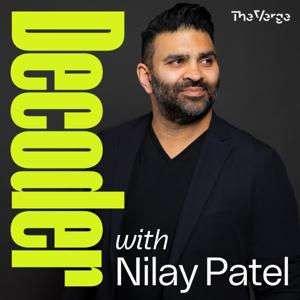
Decoder is a production of The Verge, and part of the Vox Media Podcast Network.
Our producers are Kate Cox and Nick Statt. Our editor is Callie Wright. Our supervising producer is Liam James.
The Decoder music is by Breakmaster Cylinder.
Learn more about your ad choices. Visit podcastchoices.com/adchoices
Today, we’re talking about politics and lobbying in America. It’s hard to imagine a time when the influence of big corporations and billionaires didn’t touch every part of American politics, but the kind of lobbying we have now didn’t really exist before the 1970s. Now, our political debates about everything from energy, finance, and healthcare are deeply intertwined with corporations and their money — and new big players in tech now spend tons of political money of their own.
To understand the structure of today’s political lobbying and how we go here, I brought Pulitzer Prize winner Brody Mullins on the show. Brody has a new book he co-wrote with his brother Luke Mullins called The Wolves of K Street: The Secret History of How Big Money Took Over Big Government, which came out last month. It’s a definitive history of modern lobbying in America, told through the lens of some of the industry’s most unsavory characters and the influence they’ve exerted on DC politics across decades.
Links:
Credits:
Decoder is a production of The Verge, and part of the Vox Media Podcast Network.
Today’s episode was produced by Kate Cox and Nick Statt and was edited by Callie Wright.
The Decoder music is by Breakmaster Cylinder.
Learn more about your ad choices. Visit podcastchoices.com/adchoices
Today, I’m talking with Greg Peters, the co-CEO of Netflix. I caught up with Greg while he was at the Cannes Lions festival in France, which is basically the world’s biggest gathering of advertisers and marketers. It’s an increasingly important place for Greg to be, as Netflix’s new ad tier has nearly doubled in six months to more than 40 million subscribers and feels increasingly pivotal to the future of the company.
On top of that, Netflix is updating its famous culture memo, and I wanted to chat with Greg about the changes he’s making to that document, and how he’s thinking about maintaining that culture as Netflix grows into things like advertising and gaming.
Links:
Transcript: https://www.theverge.com/e/23946561
Credits:
Decoder is a production of The Verge, and part of the Vox Media Podcast Network.
Today’s episode was produced by Kate Cox and Nick Statt and was edited by Callie Wright. Our supervising producer is Liam James.
The Decoder music is by Breakmaster Cylinder.
Learn more about your ad choices. Visit podcastchoices.com/adchoices
We’ve got a special episode of the show today – I was traveling last week, so Verge deputy editor Alex Heath and our new senior AI reporter Kylie Robison are filling in for me, with a very different kind of episode about AI. We talk a lot about AI in a broad sense on Decoder — it comes up in basically every single interview I do these days. But we don’t spend a ton of time on the day-to-day happenings of the AI industry itself.
So we thought it would be a good idea to take a beat and have Alex and Kylie actually break down the modern AI boom as it exists today: The companies you need to know, the most important news of the last few months, and what it’s actually like to be fully immersed in this industry every single day.
Links:
Credits:
Decoder is a production of The Verge, and part of the Vox Media Podcast Network.
Today’s episode was produced by Kate Cox and Nick Statt and was edited by Callie Wright.
The Decoder music is by Breakmaster Cylinder.
Learn more about your ad choices. Visit podcastchoices.com/adchoices
Tubi is a free and very rapidly growing streaming TV platform — according to Nielsen, it had an average of a million viewers watching every minute in May 2024, beating out Disney Plus, Max, Peacock, and basically everything else, save Netflix and YouTube. All those streaming service price hikes are driving people to free options, and Tubi is right there to catch them.
CEO Anjali Sud joins Decoder to explain why she thinks Tubi's model "could be" profitable, and how Tubi competes not only against the premium streamers, but also against the big competitors for viewers' time: TikTok and Youtube.
Links:
Transcript:
https://www.theverge.com/e/23942621
Credits:
Decoder is a production of The Verge, and part of the Vox Media Podcast Network.
Our producers are Kate Cox and Nick Statt. Our editor is Callie Wright.
The Decoder music is by Breakmaster Cylinder.
Learn more about your ad choices. Visit podcastchoices.com/adchoices
Private equity is a simple concept — a PE firm uses some combination of money and debt to buy a company, then makes a profit — but the reality of what happens to the companies that get acquired is anything but. It's everywhere, and it's not going away. In this summer remix, we're talking with Brendan Ballou, author of Plunder: Private Equity’s Plan to Pillage America, about how we got here and what happens next.
Links:
Credits:
Decoder is a production of The Verge, and part of the Vox Media Podcast Network.
Our producers are Kate Cox and Nick Statt. Our editor is Callie Wright.
The Decoder music is by Breakmaster Cylinder.
Learn more about your ad choices. Visit podcastchoices.com/adchoices
Cohere is one of the buzziest AI startups around right now. It's not making consumer products; it's focused on the enterprise market and making AI products for big companies. And there's a huge tension there: up until recently, computers have been deterministic. If you give computers a certain input, you usually know exactly what output you’re going to get. There’s a logic to it. But if we all start talking to computers with human language and getting human language back, well, human language is messy. And that makes the entire process of knowing what to put in and what exactly we’re going to get out of our computers different than it ever has been before.
Links:
Transcript: https://www.theverge.com/e/23937899
Credits:
Decoder is a production of The Verge and part of the Vox Media Podcast Network.
Our producers are Kate Cox and Nick Statt. Our editor is Callie Wright. Our supervising producer is Liam James.
The Decoder music is by Breakmaster Cylinder.
Learn more about your ad choices. Visit podcastchoices.com/adchoices
The art of video game design is flourishing, but it feels like a really grim time to be in the business of making and distributing games. Huge global publishers and tiny indie studios alike are facing huge financial pressures, and it doesn’t seem to be letting up anytime soon.
So where did this enormous pressure come from, if consumer interest is high and sales are great? Verge video game reporter Ash Parrish joins Decoder to explain.
Links:
Credits:
Decoder is a production of The Verge, and part of the Vox Media Podcast Network.
Our producers are Kate Cox and Nick Statt. Our editor is Callie Wright.
The Decoder music is by Breakmaster Cylinder.
Learn more about your ad choices. Visit podcastchoices.com/adchoices
Today, I’m talking with Zoom CEO Eric Yuan — and let me tell you, this conversation is nothing like what I expected. It turns out Eric wants Zoom to be much, much more than just a videoconferencing platform. Zoom wants to take on Microsoft and Google and now has a big investment in AI – and Eric’s visions for what that AI will do are pretty wild.
See, Eric really wants you to stop having to attend Zoom meetings yourself. You’ll hear him describe how he thinks one of the big benefits of AI at work will be letting us all create something he calls a “digital twin," essentially a deepfake of yourself that can go attend meetings on your behalf and even make decisions for you. I’ll just warn you: I tried to ask a bunch of the usual Decoder questions during this conversation, but once we got to digital twins going to Zoom meetings for people, well, I had a lot of followup questions.
Links:
Transcript: https://www.theverge.com/e/23932774
Credits:
Decoder is a production of The Verge, and part of the Vox Media Podcast Network.
Today’s episode was produced by Kate Cox and Nick Statt and was edited by Callie Wright.
The Decoder music is by Breakmaster Cylinder.
Learn more about your ad choices. Visit podcastchoices.com/adchoices
For nearly 20 years now, the web has been Google’s platform; we’ve all just lived on it. I think of Decoder as a show for people trying to build things, and a lot of people have built their things on that platform. For a lot of small businesses and content creators, that’s suddenly not stable anymore. The number one question I have for anyone building things on someone else’s platform is: What are you going to do when that platform changes the rules?
Links:
Credits:
Decoder is a production of The Verge, and part of the Vox Media Podcast Network.
Today’s episode was produced by Kate Cox and Nick Statt and was edited by Callie Wright.
The Decoder music is by Breakmaster Cylinder.
Learn more about your ad choices. Visit podcastchoices.com/adchoices
From the publisher's feed
Ranked by our users in the last 21 days

7,845 Listeners

10,721 Listeners

2,680 Listeners

9,613 Listeners

3,646 Listeners
3,714 Listeners

1,092 Listeners
3,143 Listeners
554 Listeners

2,146 Listeners
506 Listeners

1,461 Listeners
10,263 Listeners

2,163 Listeners
39 Listeners
23,553 Listeners

734 Listeners
553 Listeners

513 Listeners

5,554 Listeners

6,478 Listeners

2,319 Listeners

1,217 Listeners

194 Listeners

3,451 Listeners

1,779 Listeners

1,440 Listeners

452 Listeners

26 Listeners

51 Listeners