
Sign up to save your podcasts
Or



Based on Podcast App listening data
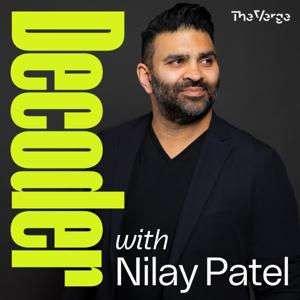
Today, I’m talking with Casey Newton, the founder and editor of the Platformer newsletter and co-host of the Hard Fork podcast. Casey is also a former editor here at The Verge and was my co-host at the Code Conference last year. Most importantly, Casey and I are also very close friends, so this episode is a little looser than usual.
I wanted to talk to Casey for a few reasons. One, the media industry overall is falling apart, with huge layoffs at almost every media organization you can think of happening weekly, but small newsletters seem to be a bright spot. So I wanted to talk about how Platformer started, how Casey got it to where it is, and how much farther he thinks it can go. And then, I wanted to talk about Substack. It’s the newsletter platform Paltformer used to call its home, but content moderation problems — including its decision to allow Nazis to monetize on the platform — have pushed away a number of its customers, including Platformer.
This episode goes deep, but it’s fun — Casey is just one of my favorite people, and he is not shy about saying what he thinks.
Links:
Transcript: https://www.theverge.com/e/23823565
Credits:
Decoder is a production of The Verge and part of the Vox Media Podcast Network.
Today’s episode was produced by Kate Cox and Nick Statt and was edited by Callie Wright.
The Decoder music is by Breakmaster Cylinder.
Learn more about your ad choices. Visit podcastchoices.com/adchoices
Today, I’m talking with Senator Brian Schatz, of Hawaii. We joke that Decoder is ultimately a show about org charts, but there’s a lot of truth to it. We talked about the separate offices he has to balance against each other, and the concessions he has to make to work within the Senate structure.
We also talked a lot about two of the biggest issues in tech regulation today. One is Europe, which is doing a lot of regulation while the US does almost none. How does a senator think about the U.S. all but abdicating that space? The other is one of the few places the US is trying to take action right now: children’s online safety. Schatz is involved with two pieces of child safety legislation, the Kids Online Safety Act and the Protecting Kids on Social Media Act, that could fundamentally reshape online life for teens and children across the country. But the big stumbling block for passing any laws about content moderation is, of course, the First Amendment.
Links:
Transcript: https://www.theverge.com/e/23818699
Credits:
Decoder is a production of The Verge and part of the Vox Media Podcast Network.
Today’s episode was produced by Kate Cox and Nick Statt and was edited by Callie Wright.
The Decoder music is by Breakmaster Cylinder. Our Executive Producer is Eleanor Donovan.
Learn more about your ad choices. Visit podcastchoices.com/adchoices
Today, I’m talking with Representative Ro Khanna, a Democrat from California. He’s been in Congress for eight years now, representing California’s 17th District, which is arguably the highest-tech district in the entire country. You’ll hear him say a couple of times that there’s $10 trillion of tech market value in his district, and that’s not an exaggeration: Apple, Intel, and Nvidia are all headquartered in his district, along with important new AI firms like Anthropic and OpenAI.
I wanted to know how Khanna thinks about representing those companies but also the regular people in his district; the last time I spoke to him, in 2018, he reminded me that he’s got plenty of teachers and firefighters to represent as well. But the politics of tech have changed a lot in these past few years — and things are only going to get both more complicated and more tense as Trump and Biden head into what will obviously be a contentious and bitter presidential election.
Links:
Transcript: https://www.theverge.com/e/23810838
Credits:
Decoder is a production of The Verge and is part of the Vox Media Podcast Network.
Today’s episode was produced by Kate Cox and Nick Statt and was edited by Callie Wright.
The Decoder music is by Breakmaster Cylinder. Our Executive Producer is Eleanor Donovan.
Learn more about your ad choices. Visit podcastchoices.com/adchoices
Today, I'm talking to Dana Rao, who is General Counsel and Chief Trust Officer at Adobe. Now, if you're a longtime Decoder listener, you know that I have always been fascinated with Adobe, which I think the tech press largely undercovers. If you're interested in how creativity happens, you're kind of necessarily interested in what Adobe's up to. And it is fascinating to consider how Dana's job as Adobe's top lawyer is really at the center of the company's future.
The copyright issues with generative AI are so unknown and unfolding so fast that they will necessarily shape what kind of products Adobe can even make in the future, and what people can make with those products. The company also just tried and failed to buy the popular upstart design company Figma, a potentially $20 billion deal that was shut down over antitrust concerns in the European Union. So Dana and I had a lot to talk about.
Links:
Transcript: https://www.theverge.com/e/23791239
Credits:
Decoder is a production of The Verge, and part of the Vox Media Podcast Network.
Today’s episode was produced by Kate Cox and Nick Statt and was edited by Callie Wright.
The Decoder music is by Breakmaster Cylinder. Our Executive Producer is Eleanor Donovan.
Learn more about your ad choices. Visit podcastchoices.com/adchoices
2023 will go down as the year that Elon Musk killed Twitter. First he did it in a big way, by buying the company, firing most of the employees, and destabilizing the platform; then he did it in a small, but important, symbolic way, by renaming the company X and trying to make a full break with what came before. So now that the story of the company named Twitter is officially over, it felt important to stop and ask: What was Twitter, anyway, and why were so many powerful people obsessed with it for so long?
In this special episode, I sat down with Marty Baron, former executive editor of The Washington Post, and Zoe Schiffer, managing editor of Platform and author of Extremely Hardcore: Inside Elon Musk’s Twitter. We discussed how two of Twitter’s most dedicated power users – Donald Trump and Elon Musk — were addicted to the platform, defined it, changed it, broke it, and then put it to rest.
Links:
The year Twitter died: a special series from The Verge
Extremely softcore
Inside Elon Musk's “extremely hardcore” Twitter
How Twitter broke the news
Trump vs. Twitter: The president takes on social media moderation
Martin Baron recounts leading The Washington Post during the Trump era
Credits:
Decoder is a production of The Verge and is part of the Vox Media Podcast Network.
Today’s episode was produced by Kate Cox and Nick Statt. It was edited by Callie Wright.
The Decoder music is by Breakmaster Cylinder. Our Executive Producer is Eleanor Donovan.
Learn more about your ad choices. Visit podcastchoices.com/adchoices
Ryan Petersen is the founder and CEO of Flexport, which makes software to optimize shipping everything from huge containers to ecommerce deliveries. It’s a fascinating company; we had Ryan on to explain it last year.
Right around the first time we spoke, Ryan handed off the CEO role to 20-year Amazon veteran Dave Clark. Then, barely a year later, Dave got fired, and Ryan returned after CEO. I always joke that Decoder is a show about org charts… so why did Ryan make and then unmake the biggest org chart decision there is?
Links:
Can software simplify the supply chain? Ryan Petersen thinks so - The Verge
Amazon consumer chief Dave Clark to join Flexport as its new CEO
Flexport CEO Dave Clark resigns from logistics startup after one year in the role
Flexport founder publicly slams his handpicked successor for hiring spree, rescinds offers
Ousted Flexport CEO Dave Clark strikes back
The real story behind a tech founder's 'tweetstorm that saves Christmas'
Panama Canal has gotten so dry and backed up after brutal drought that shippers are paying up to $4m to jump the queue
When Shipping Containers Sink in the Drink | The New Yorker
Transcript:
https://www.theverge.com/e/23770977
Credits:
Decoder is a production of The Verge, and part of the Vox Media Podcast Network.
Today’s episode was produced by Kate Cox and Nick Statt and was edited by Callie Wright.
The Decoder music is by Breakmaster Cylinder. Our Executive Producer is Eleanor Donovan.
Learn more about your ad choices. Visit podcastchoices.com/adchoices
The US Digital Service has a fascinating structure: it comprises nearly 250 people, all of whom serve two-year stints developing apps, improving websites, and streamlining government services. You could call USDS the product and design consultancy for the rest of the government.
The Obama administration launched the USDS in 2014, after the disastrous rollout of healthcare.gov and the tech sprint that saved it. USDS administrator Mina Hsiang explains to Decoder how it all works, and what she hopes it can do next.
Links:
Here’s Why Healthcare.gov Broke Down (2013)
Obamacare's 'tech surge' adds manpower to an already-bloated project (2013)
Decoder: Barack Obama on AI, free speech, and the future of the internet
Jeff Bezos Confirmed the "Question Mark Method"
A comprehensive list of 2023 tech layoffs
Tech to Gov
U.S. Digital Corps
Presidential Innovation Fellows
AI.gov
United States Digital Service
Transcript: https://www.theverge.com/e/23761681
Credits:
Decoder is a production of The Verge, and part of the Vox Media Podcast Network.
Today’s episode was produced by Kate Cox and Nick Statt and was edited by Callie Wright.
The Decoder music is by Breakmaster Cylinder. Our Executive Producer is Eleanor Donovan.
Learn more about your ad choices. Visit podcastchoices.com/adchoices
IBM made some announcements this week about its plans for the next ten years of quantum computing: there are new chips, new computers, and new APIs. Quantum computers could in theory entirely revolutionize the way we think of computers… if, that is, someone can build one that’s actually useful.
Jerry Chow, director of quantum systems at IBM, explains to Decoder just how close the field is to actual utility.
Links:
What is a Qubit? | Microsoft Azure
IBM Quantum Summit 2023
The Wired Guide to Quantum Computing
IBM Makes Quantum Computing Available on IBM Cloud to Accelerate Innovation (2016)
Multiple Patterning - Semiconductor Engineering
IBM Quantum Roadmap (2023)
That viral LK-99 ‘superconductor’ isn’t a superconductor after all - The Verge
NIST to Standardize Encryption Algorithms That Can Resist Attack by Quantum Computers
Transcript: https://www.theverge.com/e/23752312
Credits:
Decoder is a production of The Verge, and part of the Vox Media Podcast Network.
Today’s episode was produced by Kate Cox and Nick Statt and was edited by Callie Wright.
The Decoder music is by Breakmaster Cylinder. Our Editorial Director is Brooke Minters and our Executive Producer is Eleanor Donovan.
Learn more about your ad choices. Visit podcastchoices.com/adchoices
Today I’m talking with Avishai Abrahami, the CEO of Wix. You might know Wix as a website builder. It’s a competitor to WordPress and Squarespace. Tons of sites across the web run on Wix. But the web is changing rapidly, and Wix’s business today is less about web publishing, and more about providing software to help business owners run their entire companies. It’s fascinating, and Avishai has built a fascinating structure inside of Wix to make all that happen.
Wix is also an Israeli company. Avishai joined from the company’s headquarters in Tel Aviv. And I’ll just tell you right up front that we talked about Israel’s war with Hamas and its impact on the company. And that this conversation was not always comfortable. But the main theme of our conversation was, of course, the future of the web, especially a web that seems destined to be overrun by cheap AI-generated SEO spam.
Links:
Transcript: https://www.theverge.com/e/23742026
Credits:
Decoder is a production of The Verge and is part of the Vox Media Podcast Network.
Today’s episode was produced by Kate Cox and Nick Statt. It was edited by Callie Wright.
The Decoder music is by Breakmaster Cylinder. Our Executive Producer is Eleanor Donovan.
Learn more about your ad choices. Visit podcastchoices.com/adchoices
What actually happened at OpenAI in the last three days? Decoder host and Verge editor-in-chief Nilay Patel talks with Verge editors Alex Heath and David Pierce to break it down and try to work out what's next.
Further reading:
We’re doing a survey on how people use The Verge (and what they’d want from a Verge subscription). If you’re interested in helping us out, you can fill out the survey right here: http://theverge.com/survey
Credits:
Decoder is a production of The Verge and is part of the Vox Media Podcast Network.
Today’s episode was produced by Liam James, Kate Cox, and Nick Statt. It was edited by Andru Marino.
Learn more about your ad choices. Visit podcastchoices.com/adchoices
From the publisher's feed
Ranked by our users in the last 21 days

7,845 Listeners

10,721 Listeners

2,680 Listeners

9,613 Listeners

3,646 Listeners
3,714 Listeners

1,092 Listeners
3,143 Listeners
554 Listeners

2,146 Listeners

506 Listeners

1,461 Listeners

10,263 Listeners

2,163 Listeners
39 Listeners
23,553 Listeners

734 Listeners
553 Listeners

513 Listeners

5,554 Listeners

6,478 Listeners

2,319 Listeners

1,217 Listeners

194 Listeners

3,451 Listeners

1,779 Listeners

1,440 Listeners
452 Listeners

26 Listeners

51 Listeners