
Sign up to save your podcasts
Or

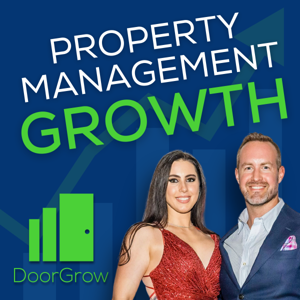

When trying to manage properties, have you ever thought to yourself, "Man, it would be great if I just had fewer emergencies?
In this episode of the #DoorGrowShow, Jason Hull, founder and CEO of DoorGrow, and Ryan Cadwell, managing partner at Resolute RDM, discuss how property managers can stop operating reactively and start thinking like true asset managers. The discussion includes the difference between market value and investment value, why understanding that gap is key to long-term wealth, how to structure smarter deals to increase returns, and the leadership habits that drive sustainable business growth.
You'll Learn
[02:06] The Myth of Needing More Leads
[11:39] Leaks in Your Sales Pipeline
[22:41] The Future of SEO with AI
Quotables"Why do we call it the leads myth? Well, the myth is this lie that we believe that you just need more leads. And the assumption in that is that all leads are the same."
"The more clarity you have, the less wrong stuff you're going to be doing."
"Not all clients are equal, right? Which means not all leads you get are equal. You need to qualify them."
ResourcesDoorGrow and Scale Mastermind
DoorGrow Academy
DoorGrow on YouTube
DoorGrowClub
DoorGrowLive
TranscriptJason Hull (00:01)
All right, five, four, three, two, one. Welcome everybody. I'm Jason Hull, the founder and CEO of DoorGrow, the world's leading and most comprehensive coaching and consulting firm for long term residential property management entrepreneurs. For over a decade and a half, we have brought innovative strategies and optimization to the property management industry. At DoorGrow, we are on a mission to transform property management business owners and their businesses.
We want to transform the industry, eliminate the BS, build awareness, change perception, expand the market and help the best property management entrepreneurs win. Now let's get into the show. All right, so today's episode, I'm hanging out with Ryan Cadwell, managing partner at Resolute RDM. And we're gonna dive deep into how property managers can stop operating reactively and start thinking like true asset managers. So Ryan, welcome to the show.
Ryan Cadwell, CPM (00:57)
Thanks Jason for having us, we're glad to be here.
Jason Hull (01:00)
Awesome. So Ryan's going to break down. This is our notes, right? So Ryan's going to break down the critical difference between market value and investment value and why understanding that gap is the key to building long term wealth. And he's going to share why so many investors overpay, how to structure smarter deals that actually increase returns and the leadership habits that drive sustainable business growth. All right. Cool. So let's get into that. So, Ryan, I'd love people to get a little bit of background.
on you, how you got into entrepreneurism and how you got into developing this business and maybe how this connects to property management and then we'll get into everything.
Ryan Cadwell, CPM (01:40)
Sure, background is we've been in the game for 18 years. ⁓ Wife and I started it and we started the overall ⁓ idea of it in 08. ⁓ Actually it was 06 when we were kicking it around and perfect time to get into all this, 08 right during the financial crisis. ⁓ Third generation entrepreneur, ⁓ both my dad and my grandfather on his side.
were entrepreneurs. that's, mean, that's how it got drawn into that world. Originally was going to be just an investor. ⁓ but my dad had apartments with another business that he ran and I, I grew up around it. ⁓ I was cutting grass and I was around tenants, ⁓ that whole time. when, we were in the investment world and wanting to grow that, you know, in the ⁓ eight through
Jason Hull (02:09)
Yeah.
Ryan Cadwell, CPM (02:36)
2012 market, I started looking for property managers. did some interviews, ultimately. mean, property management has come a long way since then. I know it's been a thing for a while, 30 or 40 years, but I think in the SFR space, it was kind of the Wild West for a while, at least in our market it was. ⁓ And we had done some... ⁓
Jason Hull (03:00)
Yeah, it still might be, yeah, in most markets.
Ryan Cadwell, CPM (03:06)
And so when we had done some interviews with some property managers, turned out, I think, like, we were like, why don't we just build it? Like, we have enough experience. I grew up doing it. So that's what drew us into the property management world. And then it gradually grew, turned into a few hundred doors. And then we fluctuate. We fluctuate with market times. We're a boutique firm, and we really focus on
adding investor value ⁓ and then we're adding additional components with ⁓ understanding market trends, understanding what overpayment is ⁓ and trying to help investors get ahead of that. we're not always helping investors that are in a reactive position try to.
Weighed out time so that they're, know, the amount they paid for it can then finally start cash flowing in those kinds of positions. We try to come at it with a, with an eyes wide open, you know, if you buy it here, you're in negative leverage and what that means and how that's going to translate as far as cash flows. I mean, some investment perspectives, that's what they want. They don't necessarily mind the time. ⁓ If they've got cash flow from other things, that might be how they're going to get in. But,
Yeah, that's how we got to where we are in the entrepreneurial world and then in owning and operating a real estate services firm.
Jason Hull (04:38)
Yeah, and you said we, meaning.
Ryan Cadwell, CPM (04:41)
We
so I mean, I treat anything we do well is it's a team. It's our four brokers. It's our two managers. It's our, you know, contractors. It's all the guys that have helped us get and it's even some of my other partners on development deals. So there's always a we piece. I'd be remiss if I stood up here and acted like, you know, this was me. Yeah.
Jason Hull (05:06)
It's all Ryan, yeah.
So, but this started as like kind of you're in the family business of entrepreneurism, it sounds like, so.
Ryan Cadwell, CPM (05:14)
Yeah, and we could talk about that too, how to work with your family. How to work with your family and how to get ahead of that too ⁓ so that you don't damage the relationships and those kinds of things.
Jason Hull (05:18)
Yeah, that could be a challenge.
Cool. let's chat about this because property managers, they are a lot of times reactive. They're just reacting to everything. They feel like they're not going to react to everything that every tenant calls them, every owner calls them. They're just managing, putting out fires all the time. how do we start getting to think like true asset managers and get them out of this?
Ryan Cadwell, CPM (05:38)
Mm-hmm. It's a reactive business.
I think the goal is to be an asset manager because at that point you're planning decisions ahead of time. Property management is always going to have a reactive piece to it. You're always going to have emergencies. You're always going to have things that need to be done day of. The real answer to that is a lot of those things don't need to be reactive.
They could have been planned, proper expectations could have been set. ⁓ Having conversations like the way you onboard, the way you train, you educate and how you communicate in the time, know, the times that they're gonna receive statements or anything you get on a repeat basis, it just needs to be kind of be walked through. Now, if you haven't started your clients out in that, I mean, we're.
We've learned that the hard way we've had to kind of modify some of some of the things when we onboard. So we've got, you know, we have clients that, that were raised in our old ways that we've had to kind of push out educational pieces, marketing pieces that are here's how we operate. Here's what we do and, send out reminders. Hey, you know, this is when stuff's happening. So to get proactive, you've got to start looking at all the things that you do, all the things that.
Jason Hull (07:11)
Yeah.
Ryan Cadwell, CPM (07:21)
they need and then start educating them ahead of time. And you educate them ahead of time, knowing that they're not going to read everything. They're not going to pay attention. ⁓ And then you just have a gentle reminder. the, and you know, our, ops staff is way better at this even than I am. I, I was way more reactive and figuring it out on the fly and
Jason Hull (07:33)
Yeah, people generally don't.
Ryan Cadwell, CPM (07:48)
And they were always like, there's no reason this is this stressful. How do we get ahead of this? How do we start educating? ⁓ Your statements will come out on this day. Your payments come out on this day. ⁓ Here's the way that our system works. If you've got an emergency, here's what to expect. and by the way, here's what qualifies as an emergency. That's another thing too. ⁓ But no matter what, it's still a people business.
Jason Hull (08:11)
Mm.
Ryan Cadwell, CPM (08:16)
It's still, you're still going to have people that aren't going to necessarily follow all of your patterns. And sometimes, sometimes you got to decide whether or not that means they stay as a client or, you know, you work on that relationship. See if you can't kind of get them in line. Other times you're going to part ways with that client just because it, it's going to be better for both of you to do that.
Jason Hull (08:40)
Yeah, so some of the things I'm hearing is like, you know, there's things that could have been planned. having good planning, setting expectations, having good onboarding, defining what emergencies are, setting boundaries. Right. And if they're not willing to play ball, then firing some clients for sure. Cool. So tell me about that. What's the difference between market value and investment value? For those listening, I'm doing air quotes. So.
Ryan Cadwell, CPM (08:52)
Go.
Market value and investment value, think is the difference in those two terms is where money is made and lost every single time. The buyer wants to buy on investment value and then they want to sell on market value. That gap is truly where a lot of money can be made. Truly,
Jason Hull (09:16)
Okay.
Ryan Cadwell, CPM (09:34)
Investment value is different for every investor. have to know what your opportunity cost is. If you didn't put your money into here, where else, how much more can you make? And then evaluate whether or not this deal works for your portfolio. Everybody's money is different. Everybody's opportunities are different. So if you don't know those numbers, you typically just default to market value because
Jason Hull (10:02)
Hmm.
Ryan Cadwell, CPM (10:03)
Because appraisers, I mean, appraisers walk in and it's income approach, it's cost approach, and then it's comp approach, right? That's the most common three ways that they value it. And then brokers are gonna tell you what, if they're selling for the seller's agent, they're gonna tell you usually market value. This is what market is. Even on the bigger stuff, the multifamily stuff, they're always gonna be pushing whatever is gonna.
generate the most value for their client. For you, you have to know in your underwriting, what can you financially absorb? One of the biggest things going on right now is if you're getting into the market right now, everybody's financial projections are this is gonna be long-term place. Like the fast money that we just came out of, that's most likely not gonna be in the next five years, the next five, 10, 15 years.
Jason Hull (10:35)
Right.
Ryan Cadwell, CPM (11:02)
You can't say always, because there will be some stuff that'll pop. There'll be a few home runs. Most of what's going to happen is going to be fundamentals. It's going to be operational, which means underwriting investment value is going to be key. Because if you're not doing that, you're most likely going to default to, well, if I want to put my money to work in this, I'm going to have to...
I'm gonna have to overpay a little bit. And by overpay, I even mean in a negative leverage position where your desk costing you more than you're getting on your return. And if that's the case, you've got to have enough cash to weather the storm. And there are some people that are doing that. And that's their investment strategy and thesis. But if you don't...
Jason Hull (11:47)
Sure.
Like you mean maybe
like in the short term, it's not cash flowing, but as an asset or an investment in long term, it's a great play.
Ryan Cadwell, CPM (12:01)
Yeah, as long as you're in a position to be able to absorb that. I mean, we've run into some owners. We've, we've had, and I think this is the reason why I've come out more and started talking about this is, is a lot of the relationships where we were, where they're strained with our clients is usually when we're brought in after they bought it, we don't know how they underwrote it.
They bring it to us and somebody else told them what it's going to rent for. We take it to market. It doesn't rent for that. They're in a negative cashflow position and they planned on being positive and having money for reserves. And now they're pulling money out of their paycheck to make sure everything gets paid.
Jason Hull (12:34)
Right.
Right, because they were operating from the beginning with false assumptions or incorrect assumptions. And so the expectations are off and then you have to be the bearer bad news, but also you're the person that's finally giving them the truth and you know. Yeah.
Ryan Cadwell, CPM (13:01)
And
that's hard to be in because it's like spent cost fallacy. It's where they spent the money on this. They bought into whatever the underwriting was and they were super excited. There was the emotional attachment. And then they get to where, no. And then with us.
Jason Hull (13:24)
Yeah, Spend cost analysis
sums up, think, the whole state of California and how they spend money. So they're like, we bought this. They buy, they're like, they invest all this stuff into metros and buses and whatever. And everybody wants to drive cars. And yeah, like, but we put so much money into this. Yeah.
Ryan Cadwell, CPM (13:31)
You
Right.
Yep. Yep. And because we put money into it, therefore it's valid. Yeah.
Jason Hull (13:50)
Right.
Yeah. Got it. So, ⁓ So. ⁓ So we need to understand the difference between market value and investment value. ⁓ Understand that gap is how we understand long term wealth, because if the gap's off, it's either profit or loss. That's what the gap is. So it could go either way. And so we want to make sure there's there's profitability there. And even if it's in the short term.
Ryan Cadwell, CPM (14:09)
And that's
Jason Hull (14:19)
Maybe it's loss. The long-term, it still could be profitable. Maybe it can make sense. okay, so a lot of investors, they're overpaying. You want to structure smarter deals to increase the returns. ⁓ And we're also going to chat about the leadership habits that drive sustainable business growth. So where do we go from here, you think?
Ryan Cadwell, CPM (14:45)
I mean, I love talking about habits because habits are what good habits and sound habits create sound fundamentals. And it helps avoid a lot of the, ⁓ the, well, it helps expose a lot more of the, of the mistakes that we can get into. ⁓ it helps maintain discipline. It helps, ⁓ it helps expose us. Like if you're, mean, if you're getting emotional about a deal, I'm in an investor group and
Jason Hull (15:03)
Yeah.
Ryan Cadwell, CPM (15:14)
And it's funny when, you know, one of the guys pitches the group a deal. We all kind of have this joke. it, if it feels emotional to the person, we always poke at that. We always bring that up. Are you emotionally attached to this deal? Like, are you okay walking away? ⁓ because you don't want to get your, like money is very emotional thing. And if you're not honest about it, when you're evaluating, ⁓ it's a good way to get.
Jason Hull (15:30)
Hmm.
Ryan Cadwell, CPM (15:43)
you know, to get into that.
Jason Hull (15:44)
So, so Ryan, what I'm hearing is like when you talk about habits, it sounds like you've got like some rules, some guidelines that you sort of have learned to follow when it comes to these to make sure this works. And one of these is, you know, reason over emotion is like, like making sure you're not making this, you know, taking a step back and questioning yourself. Am I emotionally too attached to this and why and.
Ryan Cadwell, CPM (15:55)
Mm-hmm.
Jason Hull (16:12)
I I think at the end of the day, every decision we make at some point connects to something that connects to emotion, right? Like why do you have investment properties? Well, I want to take care of my family. Cool. Well, you want to take care of family because I want to feel like a good provider. OK. And what is that? Why is it important to be a good provider? Because I want to feel like I'm doing good in the world, like I'm doing the right thing. So you want to feel good, you know?
Ryan Cadwell, CPM (16:20)
Right. Agreed.
Yep. Yep.
Jason Hull (16:40)
So ultimately
it always boils down to this feeling. We just got to make sure that we recognize the feeling because sometimes there's a totally different path to get to that feeling than having that rental property, for example.
Ryan Cadwell, CPM (16:51)
100%. And I think that right there is probably the number one thing to always remember. It doesn't have to be a rental property to accomplish the same goal. ⁓
Jason Hull (17:01)
Okay.
Right.
Yeah. So maybe just working it backwards to figure out, why do I think I want these investments? Well, I want to invest. Why do I want to invest? I want more money. Why do you think this is the best vehicle? So if we just question our assumptions all the way down, we'll eventually probably connect to some sort of feeling. Can I get this feeling another way? Can I invest another way? Is this the best vehicle for me to get what I'm trying to achieve? And sometimes it might be yes. Sometimes it might be no.
Ryan Cadwell, CPM (17:33)
And there's ways to diversify your portfolio with REIT stocks. Those are attached to the real estate market. have those diversify your portfolio too. Now I'm not licensed to sell those. So I'm not giving advice. I'm just saying there are.
Jason Hull (17:48)
Explain for
newbie investors what restocks are.
Ryan Cadwell, CPM (17:52)
REIT stocks are ⁓ a REIT is a real estate investment trust. it is REIT stocks. Yeah. R-E-I-T. REIT stocks. Nope. Just REIT stocks. Just a different way for you to invest. It's more cash cash in and out because it's a stock you can
Jason Hull (17:58)
you said re-stocks. Okay. Okay. I thought you were making something totally new called re-stocks, like re-stocking a shelf. So was like, ⁓ well tell me about this.
Ryan Cadwell, CPM (18:20)
If the market's open, you can trade it, put your money in, get your money back out. It's not like sitting on a rental house or a rental apartment complex and you've got to wait on the market to show up. And then if you've got to sell fast, you got to take a bath. ⁓ All that happens within the entity, but yeah.
Jason Hull (18:23)
Yeah.
you
Mm-hmm.
Got it. What are some other habits or rules you think are important in these scenarios to follow?
Ryan Cadwell, CPM (18:49)
⁓ I think it's truly understand like starting from a place of really understanding your financial position. I mean, how much, what's your, you know, what's your tax percentage? I've, I've, I've asked some people, they don't, they don't actually know. If you don't know how much, if you don't, you know, how much you're paying annually in taxes, then it makes it harder to plan if you're going to sell and whether to do a 10 31 exchange for instance, or.
Jason Hull (19:17)
Yeah.
Ryan Cadwell, CPM (19:18)
whether to take the, you know, take the gain. Everybody would normally say, oh, you don't, you never want to pay the government. That's not always true. You got to run the numbers. Sometimes, sometimes if you sell, like for instance, when the market was super hot and 22, I would have told you, probably need to really reconsider at 1031, cause you might be buying peak of the market and you're going to lose way more money than you're, what you would have paid in a, in a game.
Jason Hull (19:43)
and you can make.
Yeah.
Ryan Cadwell, CPM (19:47)
So if you don't know your true financial position, like what is your opportunity cost? If you were to take the same cash you're going to put down and you're going to put it into, whether it's savings, bonds, other investment vehicles, what is your average return on that money? And knowing those numbers, just in knowing them, and then when you look at your next investment, it starts to change the way you think about it because now it's...
Jason Hull (20:03)
Yeah.
Ryan Cadwell, CPM (20:17)
Not necessarily am I getting into real estate, you know, am I getting into real estate for the right reason to accomplish the right goal? Because at the end of the day, I think everybody wants real estate for the same reason, and that's to create the biggest pile of money.
Jason Hull (20:33)
Do you think, so you got to understand your financial position. Sometimes people see somebody else doing something investment wise, their friends doing it. They're like, maybe I should do it. But what makes sense for them might not make sense for you because your tax situation is different. Your tax liabilities are different. Your like the cash on hand is different. Your long-term goals might be different, right? Maybe they're at a completely different place than where you're at financially.
and you're trying to play like the big boy, but maybe you're not there yet, right? And ⁓ there's also the factor, though, of you're talking about all these different investments. What do you think about the phrase people say, invest in what you know?
Ryan Cadwell, CPM (21:16)
I mean, I preach that all the time. If you don't know it, the only real way to get into it is to partner with somebody who does, ⁓ who knows it really well. ⁓ that usually means they've lost money in it in some way. ⁓
Jason Hull (21:37)
Yeah, they've made some mistakes so you don't have to. Okay.
Ryan Cadwell, CPM (21:47)
So partner with somebody who does or I mean, the easiest example for me has always been something like Apple. Like, I think Warren Buffett and Charlie Munger taught the same thing. Like if you, if you already like something, you're going to naturally know, you're probably going to naturally know market cycles without realizing it. I mean, Apple's easy for me because they have their thing in September, they launch and sell all their new products in October and then
As long as all that goes well, they usually have a price increase December, January. So if you want to go in and out of Apple, that's typically a pretty good up and down. Everything in real estate is very similar. If you like houses and you want to flip or you like hospitality and houses, that's Airbnb. There are things that are going to be where you're not.
working as much or things you're naturally retaining information about the market. There's a lot of advantages right now for investors that know their local market and know where there's value. Cause some of the big boys are getting out of stuff that they can't run spreadsheets on from New York, California, Florida, wherever they're based. And you're sitting there in the local market. You see what's going on. There's advantages to
Jason Hull (22:56)
Mm-hmm.
Ryan Cadwell, CPM (23:13)
to pull in the trigger on stuff because you're in that market. that is a big thing right now for investors to see value that other people can't because a lot of the value that was clearly visible, it gets bought up by the people with cheaper money. I mean, to be honest.
Jason Hull (23:36)
Got it. Okay. Well, Ryan, sounds like you've made a few mistakes yourself over the years. You've learned some things. You have a lot of knowledge regarding this. you coming and sharing here on the DoorGrowth show. How can people maybe get in touch with you if they're curious or want to learn a little more? maybe you could tell everyone just a little bit about your business.
Ryan Cadwell, CPM (23:43)
Yeah, yeah
Sure, check us out online, resoluteRDM.com or look me up on LinkedIn. We're also on Facebook, TikTok. ⁓ We put out videos all the time trying to help everybody. So look us up there. ⁓ And then if you're interested in different ⁓ investment types, different products, you can reach out to us too. We have developments going on. do have... ⁓
We do have a big duplex development happening right now that people can get involved into.
Jason Hull (24:36)
Cool, awesome. Ryan, thanks for coming and hanging out with us here on the DoorGrowth show.
Ryan Cadwell, CPM (24:41)
Thank you, Jason, for having me.
Jason Hull (24:43)
Awesome. OK, so for those of you that maybe you're struggling in your property management business, you know, reach out to us. You can check us out at door grow dot com and for free training on how to get unlimited leads for free text the words the word leads to five one two six four eight four six zero eight. Also be sure to join our free Facebook community just for property management business owners.
by going to door grow club dot com. And if you want tips, tricks, ideas to learn about our offers or any of that about door, go subscribe to our newsletter by going to door grow dot com slash subscribe. And if you found this episode even a little bit helpful, don't forget to subscribe and leave us a review. We'd really appreciate it. Until next time. Remember, the slowest path to growth is to do it alone. So let's grow together. Bye, everyone.
 View all episodes
 By DoorGrow | #1 Property Management Growth Experts with Jason & Sarah Hull

4.9
4545 ratings
When trying to manage properties, have you ever thought to yourself, "Man, it would be great if I just had fewer emergencies?
In this episode of the #DoorGrowShow, Jason Hull, founder and CEO of DoorGrow, and Ryan Cadwell, managing partner at Resolute RDM, discuss how property managers can stop operating reactively and start thinking like true asset managers. The discussion includes the difference between market value and investment value, why understanding that gap is key to long-term wealth, how to structure smarter deals to increase returns, and the leadership habits that drive sustainable business growth.
You'll Learn
[02:06] The Myth of Needing More Leads
[11:39] Leaks in Your Sales Pipeline
[22:41] The Future of SEO with AI
Quotables"Why do we call it the leads myth? Well, the myth is this lie that we believe that you just need more leads. And the assumption in that is that all leads are the same."
"The more clarity you have, the less wrong stuff you're going to be doing."
"Not all clients are equal, right? Which means not all leads you get are equal. You need to qualify them."
ResourcesDoorGrow and Scale Mastermind
DoorGrow Academy
DoorGrow on YouTube
DoorGrowClub
DoorGrowLive
TranscriptJason Hull (00:01)
All right, five, four, three, two, one. Welcome everybody. I'm Jason Hull, the founder and CEO of DoorGrow, the world's leading and most comprehensive coaching and consulting firm for long term residential property management entrepreneurs. For over a decade and a half, we have brought innovative strategies and optimization to the property management industry. At DoorGrow, we are on a mission to transform property management business owners and their businesses.
We want to transform the industry, eliminate the BS, build awareness, change perception, expand the market and help the best property management entrepreneurs win. Now let's get into the show. All right, so today's episode, I'm hanging out with Ryan Cadwell, managing partner at Resolute RDM. And we're gonna dive deep into how property managers can stop operating reactively and start thinking like true asset managers. So Ryan, welcome to the show.
Ryan Cadwell, CPM (00:57)
Thanks Jason for having us, we're glad to be here.
Jason Hull (01:00)
Awesome. So Ryan's going to break down. This is our notes, right? So Ryan's going to break down the critical difference between market value and investment value and why understanding that gap is the key to building long term wealth. And he's going to share why so many investors overpay, how to structure smarter deals that actually increase returns and the leadership habits that drive sustainable business growth. All right. Cool. So let's get into that. So, Ryan, I'd love people to get a little bit of background.
on you, how you got into entrepreneurism and how you got into developing this business and maybe how this connects to property management and then we'll get into everything.
Ryan Cadwell, CPM (01:40)
Sure, background is we've been in the game for 18 years. ⁓ Wife and I started it and we started the overall ⁓ idea of it in 08. ⁓ Actually it was 06 when we were kicking it around and perfect time to get into all this, 08 right during the financial crisis. ⁓ Third generation entrepreneur, ⁓ both my dad and my grandfather on his side.
were entrepreneurs. that's, mean, that's how it got drawn into that world. Originally was going to be just an investor. ⁓ but my dad had apartments with another business that he ran and I, I grew up around it. ⁓ I was cutting grass and I was around tenants, ⁓ that whole time. when, we were in the investment world and wanting to grow that, you know, in the ⁓ eight through
Jason Hull (02:09)
Yeah.
Ryan Cadwell, CPM (02:36)
2012 market, I started looking for property managers. did some interviews, ultimately. mean, property management has come a long way since then. I know it's been a thing for a while, 30 or 40 years, but I think in the SFR space, it was kind of the Wild West for a while, at least in our market it was. ⁓ And we had done some... ⁓
Jason Hull (03:00)
Yeah, it still might be, yeah, in most markets.
Ryan Cadwell, CPM (03:06)
And so when we had done some interviews with some property managers, turned out, I think, like, we were like, why don't we just build it? Like, we have enough experience. I grew up doing it. So that's what drew us into the property management world. And then it gradually grew, turned into a few hundred doors. And then we fluctuate. We fluctuate with market times. We're a boutique firm, and we really focus on
adding investor value ⁓ and then we're adding additional components with ⁓ understanding market trends, understanding what overpayment is ⁓ and trying to help investors get ahead of that. we're not always helping investors that are in a reactive position try to.
Weighed out time so that they're, know, the amount they paid for it can then finally start cash flowing in those kinds of positions. We try to come at it with a, with an eyes wide open, you know, if you buy it here, you're in negative leverage and what that means and how that's going to translate as far as cash flows. I mean, some investment perspectives, that's what they want. They don't necessarily mind the time. ⁓ If they've got cash flow from other things, that might be how they're going to get in. But,
Yeah, that's how we got to where we are in the entrepreneurial world and then in owning and operating a real estate services firm.
Jason Hull (04:38)
Yeah, and you said we, meaning.
Ryan Cadwell, CPM (04:41)
We
so I mean, I treat anything we do well is it's a team. It's our four brokers. It's our two managers. It's our, you know, contractors. It's all the guys that have helped us get and it's even some of my other partners on development deals. So there's always a we piece. I'd be remiss if I stood up here and acted like, you know, this was me. Yeah.
Jason Hull (05:06)
It's all Ryan, yeah.
So, but this started as like kind of you're in the family business of entrepreneurism, it sounds like, so.
Ryan Cadwell, CPM (05:14)
Yeah, and we could talk about that too, how to work with your family. How to work with your family and how to get ahead of that too ⁓ so that you don't damage the relationships and those kinds of things.
Jason Hull (05:18)
Yeah, that could be a challenge.
Cool. let's chat about this because property managers, they are a lot of times reactive. They're just reacting to everything. They feel like they're not going to react to everything that every tenant calls them, every owner calls them. They're just managing, putting out fires all the time. how do we start getting to think like true asset managers and get them out of this?
Ryan Cadwell, CPM (05:38)
Mm-hmm. It's a reactive business.
I think the goal is to be an asset manager because at that point you're planning decisions ahead of time. Property management is always going to have a reactive piece to it. You're always going to have emergencies. You're always going to have things that need to be done day of. The real answer to that is a lot of those things don't need to be reactive.
They could have been planned, proper expectations could have been set. ⁓ Having conversations like the way you onboard, the way you train, you educate and how you communicate in the time, know, the times that they're gonna receive statements or anything you get on a repeat basis, it just needs to be kind of be walked through. Now, if you haven't started your clients out in that, I mean, we're.
We've learned that the hard way we've had to kind of modify some of some of the things when we onboard. So we've got, you know, we have clients that, that were raised in our old ways that we've had to kind of push out educational pieces, marketing pieces that are here's how we operate. Here's what we do and, send out reminders. Hey, you know, this is when stuff's happening. So to get proactive, you've got to start looking at all the things that you do, all the things that.
Jason Hull (07:11)
Yeah.
Ryan Cadwell, CPM (07:21)
they need and then start educating them ahead of time. And you educate them ahead of time, knowing that they're not going to read everything. They're not going to pay attention. ⁓ And then you just have a gentle reminder. the, and you know, our, ops staff is way better at this even than I am. I, I was way more reactive and figuring it out on the fly and
Jason Hull (07:33)
Yeah, people generally don't.
Ryan Cadwell, CPM (07:48)
And they were always like, there's no reason this is this stressful. How do we get ahead of this? How do we start educating? ⁓ Your statements will come out on this day. Your payments come out on this day. ⁓ Here's the way that our system works. If you've got an emergency, here's what to expect. and by the way, here's what qualifies as an emergency. That's another thing too. ⁓ But no matter what, it's still a people business.
Jason Hull (08:11)
Mm.
Ryan Cadwell, CPM (08:16)
It's still, you're still going to have people that aren't going to necessarily follow all of your patterns. And sometimes, sometimes you got to decide whether or not that means they stay as a client or, you know, you work on that relationship. See if you can't kind of get them in line. Other times you're going to part ways with that client just because it, it's going to be better for both of you to do that.
Jason Hull (08:40)
Yeah, so some of the things I'm hearing is like, you know, there's things that could have been planned. having good planning, setting expectations, having good onboarding, defining what emergencies are, setting boundaries. Right. And if they're not willing to play ball, then firing some clients for sure. Cool. So tell me about that. What's the difference between market value and investment value? For those listening, I'm doing air quotes. So.
Ryan Cadwell, CPM (08:52)
Go.
Market value and investment value, think is the difference in those two terms is where money is made and lost every single time. The buyer wants to buy on investment value and then they want to sell on market value. That gap is truly where a lot of money can be made. Truly,
Jason Hull (09:16)
Okay.
Ryan Cadwell, CPM (09:34)
Investment value is different for every investor. have to know what your opportunity cost is. If you didn't put your money into here, where else, how much more can you make? And then evaluate whether or not this deal works for your portfolio. Everybody's money is different. Everybody's opportunities are different. So if you don't know those numbers, you typically just default to market value because
Jason Hull (10:02)
Hmm.
Ryan Cadwell, CPM (10:03)
Because appraisers, I mean, appraisers walk in and it's income approach, it's cost approach, and then it's comp approach, right? That's the most common three ways that they value it. And then brokers are gonna tell you what, if they're selling for the seller's agent, they're gonna tell you usually market value. This is what market is. Even on the bigger stuff, the multifamily stuff, they're always gonna be pushing whatever is gonna.
generate the most value for their client. For you, you have to know in your underwriting, what can you financially absorb? One of the biggest things going on right now is if you're getting into the market right now, everybody's financial projections are this is gonna be long-term place. Like the fast money that we just came out of, that's most likely not gonna be in the next five years, the next five, 10, 15 years.
Jason Hull (10:35)
Right.
Ryan Cadwell, CPM (11:02)
You can't say always, because there will be some stuff that'll pop. There'll be a few home runs. Most of what's going to happen is going to be fundamentals. It's going to be operational, which means underwriting investment value is going to be key. Because if you're not doing that, you're most likely going to default to, well, if I want to put my money to work in this, I'm going to have to...
I'm gonna have to overpay a little bit. And by overpay, I even mean in a negative leverage position where your desk costing you more than you're getting on your return. And if that's the case, you've got to have enough cash to weather the storm. And there are some people that are doing that. And that's their investment strategy and thesis. But if you don't...
Jason Hull (11:47)
Sure.
Like you mean maybe
like in the short term, it's not cash flowing, but as an asset or an investment in long term, it's a great play.
Ryan Cadwell, CPM (12:01)
Yeah, as long as you're in a position to be able to absorb that. I mean, we've run into some owners. We've, we've had, and I think this is the reason why I've come out more and started talking about this is, is a lot of the relationships where we were, where they're strained with our clients is usually when we're brought in after they bought it, we don't know how they underwrote it.
They bring it to us and somebody else told them what it's going to rent for. We take it to market. It doesn't rent for that. They're in a negative cashflow position and they planned on being positive and having money for reserves. And now they're pulling money out of their paycheck to make sure everything gets paid.
Jason Hull (12:34)
Right.
Right, because they were operating from the beginning with false assumptions or incorrect assumptions. And so the expectations are off and then you have to be the bearer bad news, but also you're the person that's finally giving them the truth and you know. Yeah.
Ryan Cadwell, CPM (13:01)
And
that's hard to be in because it's like spent cost fallacy. It's where they spent the money on this. They bought into whatever the underwriting was and they were super excited. There was the emotional attachment. And then they get to where, no. And then with us.
Jason Hull (13:24)
Yeah, Spend cost analysis
sums up, think, the whole state of California and how they spend money. So they're like, we bought this. They buy, they're like, they invest all this stuff into metros and buses and whatever. And everybody wants to drive cars. And yeah, like, but we put so much money into this. Yeah.
Ryan Cadwell, CPM (13:31)
You
Right.
Yep. Yep. And because we put money into it, therefore it's valid. Yeah.
Jason Hull (13:50)
Right.
Yeah. Got it. So, ⁓ So. ⁓ So we need to understand the difference between market value and investment value. ⁓ Understand that gap is how we understand long term wealth, because if the gap's off, it's either profit or loss. That's what the gap is. So it could go either way. And so we want to make sure there's there's profitability there. And even if it's in the short term.
Ryan Cadwell, CPM (14:09)
And that's
Jason Hull (14:19)
Maybe it's loss. The long-term, it still could be profitable. Maybe it can make sense. okay, so a lot of investors, they're overpaying. You want to structure smarter deals to increase the returns. ⁓ And we're also going to chat about the leadership habits that drive sustainable business growth. So where do we go from here, you think?
Ryan Cadwell, CPM (14:45)
I mean, I love talking about habits because habits are what good habits and sound habits create sound fundamentals. And it helps avoid a lot of the, ⁓ the, well, it helps expose a lot more of the, of the mistakes that we can get into. ⁓ it helps maintain discipline. It helps, ⁓ it helps expose us. Like if you're, mean, if you're getting emotional about a deal, I'm in an investor group and
Jason Hull (15:03)
Yeah.
Ryan Cadwell, CPM (15:14)
And it's funny when, you know, one of the guys pitches the group a deal. We all kind of have this joke. it, if it feels emotional to the person, we always poke at that. We always bring that up. Are you emotionally attached to this deal? Like, are you okay walking away? ⁓ because you don't want to get your, like money is very emotional thing. And if you're not honest about it, when you're evaluating, ⁓ it's a good way to get.
Jason Hull (15:30)
Hmm.
Ryan Cadwell, CPM (15:43)
you know, to get into that.
Jason Hull (15:44)
So, so Ryan, what I'm hearing is like when you talk about habits, it sounds like you've got like some rules, some guidelines that you sort of have learned to follow when it comes to these to make sure this works. And one of these is, you know, reason over emotion is like, like making sure you're not making this, you know, taking a step back and questioning yourself. Am I emotionally too attached to this and why and.
Ryan Cadwell, CPM (15:55)
Mm-hmm.
Jason Hull (16:12)
I I think at the end of the day, every decision we make at some point connects to something that connects to emotion, right? Like why do you have investment properties? Well, I want to take care of my family. Cool. Well, you want to take care of family because I want to feel like a good provider. OK. And what is that? Why is it important to be a good provider? Because I want to feel like I'm doing good in the world, like I'm doing the right thing. So you want to feel good, you know?
Ryan Cadwell, CPM (16:20)
Right. Agreed.
Yep. Yep.
Jason Hull (16:40)
So ultimately
it always boils down to this feeling. We just got to make sure that we recognize the feeling because sometimes there's a totally different path to get to that feeling than having that rental property, for example.
Ryan Cadwell, CPM (16:51)
100%. And I think that right there is probably the number one thing to always remember. It doesn't have to be a rental property to accomplish the same goal. ⁓
Jason Hull (17:01)
Okay.
Right.
Yeah. So maybe just working it backwards to figure out, why do I think I want these investments? Well, I want to invest. Why do I want to invest? I want more money. Why do you think this is the best vehicle? So if we just question our assumptions all the way down, we'll eventually probably connect to some sort of feeling. Can I get this feeling another way? Can I invest another way? Is this the best vehicle for me to get what I'm trying to achieve? And sometimes it might be yes. Sometimes it might be no.
Ryan Cadwell, CPM (17:33)
And there's ways to diversify your portfolio with REIT stocks. Those are attached to the real estate market. have those diversify your portfolio too. Now I'm not licensed to sell those. So I'm not giving advice. I'm just saying there are.
Jason Hull (17:48)
Explain for
newbie investors what restocks are.
Ryan Cadwell, CPM (17:52)
REIT stocks are ⁓ a REIT is a real estate investment trust. it is REIT stocks. Yeah. R-E-I-T. REIT stocks. Nope. Just REIT stocks. Just a different way for you to invest. It's more cash cash in and out because it's a stock you can
Jason Hull (17:58)
you said re-stocks. Okay. Okay. I thought you were making something totally new called re-stocks, like re-stocking a shelf. So was like, ⁓ well tell me about this.
Ryan Cadwell, CPM (18:20)
If the market's open, you can trade it, put your money in, get your money back out. It's not like sitting on a rental house or a rental apartment complex and you've got to wait on the market to show up. And then if you've got to sell fast, you got to take a bath. ⁓ All that happens within the entity, but yeah.
Jason Hull (18:23)
Yeah.
you
Mm-hmm.
Got it. What are some other habits or rules you think are important in these scenarios to follow?
Ryan Cadwell, CPM (18:49)
⁓ I think it's truly understand like starting from a place of really understanding your financial position. I mean, how much, what's your, you know, what's your tax percentage? I've, I've, I've asked some people, they don't, they don't actually know. If you don't know how much, if you don't, you know, how much you're paying annually in taxes, then it makes it harder to plan if you're going to sell and whether to do a 10 31 exchange for instance, or.
Jason Hull (19:17)
Yeah.
Ryan Cadwell, CPM (19:18)
whether to take the, you know, take the gain. Everybody would normally say, oh, you don't, you never want to pay the government. That's not always true. You got to run the numbers. Sometimes, sometimes if you sell, like for instance, when the market was super hot and 22, I would have told you, probably need to really reconsider at 1031, cause you might be buying peak of the market and you're going to lose way more money than you're, what you would have paid in a, in a game.
Jason Hull (19:43)
and you can make.
Yeah.
Ryan Cadwell, CPM (19:47)
So if you don't know your true financial position, like what is your opportunity cost? If you were to take the same cash you're going to put down and you're going to put it into, whether it's savings, bonds, other investment vehicles, what is your average return on that money? And knowing those numbers, just in knowing them, and then when you look at your next investment, it starts to change the way you think about it because now it's...
Jason Hull (20:03)
Yeah.
Ryan Cadwell, CPM (20:17)
Not necessarily am I getting into real estate, you know, am I getting into real estate for the right reason to accomplish the right goal? Because at the end of the day, I think everybody wants real estate for the same reason, and that's to create the biggest pile of money.
Jason Hull (20:33)
Do you think, so you got to understand your financial position. Sometimes people see somebody else doing something investment wise, their friends doing it. They're like, maybe I should do it. But what makes sense for them might not make sense for you because your tax situation is different. Your tax liabilities are different. Your like the cash on hand is different. Your long-term goals might be different, right? Maybe they're at a completely different place than where you're at financially.
and you're trying to play like the big boy, but maybe you're not there yet, right? And ⁓ there's also the factor, though, of you're talking about all these different investments. What do you think about the phrase people say, invest in what you know?
Ryan Cadwell, CPM (21:16)
I mean, I preach that all the time. If you don't know it, the only real way to get into it is to partner with somebody who does, ⁓ who knows it really well. ⁓ that usually means they've lost money in it in some way. ⁓
Jason Hull (21:37)
Yeah, they've made some mistakes so you don't have to. Okay.
Ryan Cadwell, CPM (21:47)
So partner with somebody who does or I mean, the easiest example for me has always been something like Apple. Like, I think Warren Buffett and Charlie Munger taught the same thing. Like if you, if you already like something, you're going to naturally know, you're probably going to naturally know market cycles without realizing it. I mean, Apple's easy for me because they have their thing in September, they launch and sell all their new products in October and then
As long as all that goes well, they usually have a price increase December, January. So if you want to go in and out of Apple, that's typically a pretty good up and down. Everything in real estate is very similar. If you like houses and you want to flip or you like hospitality and houses, that's Airbnb. There are things that are going to be where you're not.
working as much or things you're naturally retaining information about the market. There's a lot of advantages right now for investors that know their local market and know where there's value. Cause some of the big boys are getting out of stuff that they can't run spreadsheets on from New York, California, Florida, wherever they're based. And you're sitting there in the local market. You see what's going on. There's advantages to
Jason Hull (22:56)
Mm-hmm.
Ryan Cadwell, CPM (23:13)
to pull in the trigger on stuff because you're in that market. that is a big thing right now for investors to see value that other people can't because a lot of the value that was clearly visible, it gets bought up by the people with cheaper money. I mean, to be honest.
Jason Hull (23:36)
Got it. Okay. Well, Ryan, sounds like you've made a few mistakes yourself over the years. You've learned some things. You have a lot of knowledge regarding this. you coming and sharing here on the DoorGrowth show. How can people maybe get in touch with you if they're curious or want to learn a little more? maybe you could tell everyone just a little bit about your business.
Ryan Cadwell, CPM (23:43)
Yeah, yeah
Sure, check us out online, resoluteRDM.com or look me up on LinkedIn. We're also on Facebook, TikTok. ⁓ We put out videos all the time trying to help everybody. So look us up there. ⁓ And then if you're interested in different ⁓ investment types, different products, you can reach out to us too. We have developments going on. do have... ⁓
We do have a big duplex development happening right now that people can get involved into.
Jason Hull (24:36)
Cool, awesome. Ryan, thanks for coming and hanging out with us here on the DoorGrowth show.
Ryan Cadwell, CPM (24:41)
Thank you, Jason, for having me.
Jason Hull (24:43)
Awesome. OK, so for those of you that maybe you're struggling in your property management business, you know, reach out to us. You can check us out at door grow dot com and for free training on how to get unlimited leads for free text the words the word leads to five one two six four eight four six zero eight. Also be sure to join our free Facebook community just for property management business owners.
by going to door grow club dot com. And if you want tips, tricks, ideas to learn about our offers or any of that about door, go subscribe to our newsletter by going to door grow dot com slash subscribe. And if you found this episode even a little bit helpful, don't forget to subscribe and leave us a review. We'd really appreciate it. Until next time. Remember, the slowest path to growth is to do it alone. So let's grow together. Bye, everyone.

16,712 Listeners
834 Listeners
1,396 Listeners
41 Listeners
62 Listeners

72 Listeners
557 Listeners
13 Listeners
48 Listeners

318 Listeners
7 Listeners

901 Listeners
845 Listeners
45 Listeners
2 Listeners