
Sign up to save your podcasts
Or

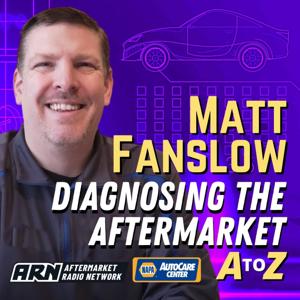
By Matt Fanslow


4.8
1717 ratings


The podcast currently has 266 episodes available.
The most played episodes among Podcast App listeners.
Thanks to our Partners, Pico Technology and Autel Watch Full Video Episode Percentages Don’t Pay Bills A prospective hire wants a meaningful increase in income. Riverside Automotive’s base wage would already beat what he currently earns, and the shop’s profit-sharing program could take him beyond his stated goal. Still, he struggles to trust the opportunity. Is the problem the compensation plan, the way it is being explained, or the uncertainty created by years of disappointing pay systems? In this episode of Automotive Field Theory, Matt explains how Riverside’s profit-sharing system works and why the percentage assigned to each employee matters far less than the actual dollars produced. Adding another productive person may reduce everyone’s individual percentage while enlarging the total profit pool enough that everyone takes home more money. Matt also explores:Why revenue, gross profit, and money left after expenses are not interchangeableWhy a business must retain profit for equipment, facilities, reserves, training, and future needsHow ethical profitability can grow through efficiency, inspections, communication, customer relationships, and reduced expensesWhy charging more does not automatically make a shop unethicalHow every employee can influence overall shop profitabilityWhy individual production incentives may discourage collaborationHow poorly implemented flat-rate systems create lasting distrustWhy a technically good compensation plan can still feel unsafe or unfairThe responsibility leaders have to understand an employee’s previous experiencesWhy shared profit can compensate people for helping the entire organization succeed, not merely for their individual billed hours The central point is simple: percentages do not pay anyone’s bills. Dollars do. A smaller percentage of a substantially larger and healthier business can be worth far more than a larger percentage of a smaller pool. Matt closes by asking listeners to share how they are currently compensated, what works, what creates problems, and what their ideal compensation system would look like. Are you chasing elusive automotive problems? Pico Technology empowers you to see what's really happening. Their PicoScope oscilloscopes transform your diagnostic capabilities. PicoAuto.com From drivability diagnostics and TPMS service to ADAS and advanced safety systems, Autel helps technicians follow OEM procedures and repair with confidence. Autel.com Contact InformationEmail Matt: [email protected] on YouTube: @automotivefieldtheory The Automotive Repair Podcast Network: https://automotiverepairpodcastnetwork.com/ Download and Listen on Our Mobile App: https://automotiverepairpodcastnetwork.com/app/ Remarkable Results Radio Podcast with Carm Capriotto: https://remarkableresults.biz/ Business by the Numbers with Hunt Demarest: https://huntdemarest.captivate.fm/ The Auto Repair Marketing Podcast with Kim and Brian Walker: https://autorepairmarketing.captivate.fm/ The Weekly Blitz with Chris Cotton: https://chriscotton.captivate.fm/ Speak Up! Effective Communication with Craig O'Neill: https://craigoneill.captivate.fm/

Thanks to our Partners, Pico Technology and Autel Watch Full Video Episode A high school student considering a career in the skilled trades recently asked Matt for advice about entering the automotive repair profession. Should someone begin with a college or technical program, or find a shop willing to train them? In this episode, Matt explains why the answer depends partly on the experience a person already brings with them. Many newcomers have had little exposure to tools, machinery, or basic repair work. Knowledge that experienced specialists consider “common sense” is often the product of decades spent fixing bicycles, lawn equipment, cars, and anything else that broke. Technical education can help build that missing foundation, but even a strong program can only go so far. The workplace must continue the development process. Too many newcomers are placed on the lube rack, buried under oil changes and tires, and expected to somehow develop advanced skills on their own. A good shop should be able to show a new specialist a realistic development path. That might include supervised work, scheduled opportunities to shadow experienced specialists, progressive responsibility, and exposure to different vehicle systems. The goal does not have to be producing another “master technician.” The profession needs excellent maintenance specialists, chassis specialists, heavy-line specialists, diagnostic specialists, and many other forms of expertise. Matt also discusses the responsibility on both sides of that relationship. The business must recognize training as an investment and create room for learning. The developing specialist must respect that investment, remain engaged, accept responsibility for mistakes, and learn from them without allowing guilt to become shame. If the first shop cannot provide opportunities to grow, it may be worth following the path of a chef: work in different environments, learn under different people, and collect a broader range of techniques and experiences. That could mean spending time at a dealership, an independent shop, or facilities specializing in Asian, domestic, or European vehicles. The best path into this profession is not necessarily the shortest one. It is the path that gives someone the foundation, support, experience, and opportunity to discover where they can become most capable and valuable. Topics include:College and technical-school programs versus learning on the jobThe disappearance of early mechanical experienceWhy “common sense” is usually learned experienceThe limitations of leaving newcomers on the lube rackWhat a legitimate development path should look likeSpecialization without treating every role as a hierarchyThe shared responsibilities of the shop and the developing specialistMaking mistakes, accepting responsibility, and continuing to growMoving between shops to broaden skills and experienceFinding the work you enjoy, the work you perform well, and the work that can support a career Thanks to the Automotive Repair Podcast Network and to the sponsors of Automotive Field Theory, Autel and Pico Technology. Are you chasing elusive automotive problems? Pico Technology empowers you to see what's really happening. Their PicoScope oscilloscopes transform your diagnostic capabilities. PicoAuto.com From drivability diagnostics and TPMS service to ADAS and advanced safety systems, Autel helps technicians follow OEM procedures and repair with confidence. Autel.com Contact InformationEmail Matt: [email protected] on YouTube: @automotivefieldtheory The Automotive Repair Podcast Network: https://automotiverepairpodcastnetwork.com/ Download and Listen on Our Mobile App: https://automotiverepairpodcastnetwork.com/app/ Remarkable Results Radio Podcast with Carm Capriotto: https://remarkableresults.biz/ Business by the Numbers with Hunt Demarest: https://huntdemarest.captivate.fm/ The Auto Repair Marketing Podcast with Kim and Brian Walker: https://autorepairmarketing.captivate.fm/ The Weekly Blitz with Chris Cotton: https://chriscotton.captivate.fm/ Speak Up! Effective Communication with Craig O'Neill: https://craigoneill.captivate.fm/
Thanks to our Partners, Pico Technology, and Autel Watch Full Video Episode A monologue from Jelly Roll prompted a simple but powerful idea: It is never too late to do the right thing. That does not mean “the right thing” is always obvious. People can look at the same situation from different perspectives, reach different conclusions, and each possess part of the truth. The challenge is remembering that the client, employee, employer, or competitor across from us is a human being before they are a problem to solve or a category to assign. In this episode, Matt considers how quickly automotive professionals can label a client as a “price shopper” when price may simply be the only part of the conversation the client understands. He also discusses clients arriving with information from Google or artificial intelligence, and how shops can use that information to create a better conversation about the time and access genuinely required for diagnostic testing. The episode then turns toward leadership, accountability, and hindsight. If we recognize that we mishandled a situation yesterday, last year, or many years ago, the passage of time does not prevent us from acknowledging it, apologizing, or trying to make it right. Finally, a physics thought experiment involving a bouncing ball and two reference frames illustrates how two observers can accurately describe the same event differently. Understanding another person’s perspective does not require agreeing with it, but it may help us judge them less quickly and respond more thoughtfully. Topics include:Why clients often default to asking about priceInformation asymmetry between repair professionals and vehicle ownersResponding constructively when clients bring in AI-generated informationWhy diagnostic testing takes more time than a list of possible causes suggestsThe difference between understanding someone and agreeing with themRevisiting past decisions as a leaderApologies, accountability, and making amendsHow perspective changes what we observeRemembering the humanity of clients, coworkers, employers, and competitorsDoing the right thing for others and for yourself Are you chasing elusive automotive problems? Pico Technology empowers you to see what's really happening. Their PicoScope oscilloscopes transform your diagnostic capabilities. PicoAuto.com From drivability diagnostics and TPMS service to ADAS and advanced safety systems, Autel helps technicians follow OEM procedures and repair with confidence. Autel.com Contact InformationEmail Matt: [email protected] on YouTube: @automotivefieldtheory The Automotive Repair Podcast Network: https://automotiverepairpodcastnetwork.com/ Download and Listen on Our Mobile App: https://automotiverepairpodcastnetwork.com/app/ Remarkable Results Radio Podcast with Carm Capriotto: https://remarkableresults.biz/ Business by the Numbers with Hunt Demarest: https://huntdemarest.captivate.fm/ The Auto Repair Marketing Podcast with Kim and Brian Walker: https://autorepairmarketing.captivate.fm/ The Weekly Blitz with Chris Cotton: https://chriscotton.captivate.fm/ Speak Up! Effective Communication with Craig O'Neill: https://craigoneill.captivate.fm/
Thanks to our Partners, Pico Technology, and Autel Watch Full Video Episode Matt Fanslow returns from WORLDPAC’s STX 2026 with a greater appreciation for everything required to make a major training event happen, especially the hands-on classes. Vehicles, tools, simulators, soldering stations, ventilation systems, safety requirements, instructors, support personnel, and countless late nights all have to come together before an attendee ever walks into the room. He also challenges a persistent myth about oscilloscopes: that you must become an expert at interpreting tiny waveform anomalies before a scope becomes useful. Most failures are not nearly that subtle. Comparison testing, known-good examples, manufacturer support, training resources, and a little experience can make the scope useful much sooner than many specialists believe. But the greatest value of an event like STX may extend beyond the classroom. Matt reflects on time spent with Jorge Menchu, Brin Kline, and other longtime friends and colleagues, and on how conferences create professional networks that can become genuine lifelong friendships. For shop owners and managers, sending team members to training events is more than an educational expense. It is an investment in their skills, perspective, professional network, and connection to the industry. Matt encourages everyone to find a conference they can attend…and challenges shop leaders to help their people get there. Topics include:The enormous amount of work behind hands-on automotive trainingRecognizing the people working behind the curtainTeaching introductory PicoScope classes with Scott ShottonAndrew Sexton’s introduction to key cutting and programmingKevin Suttorp’s hands-on soldering and EEPROM trainingWhy oscilloscopes are more approachable than many specialists assumeUsing comparison waveforms and known-good examplesFinding technical support and training resourcesThe professional and personal value of industry conferencesBuilding relationships outside your own shopWhy owners and managers should help their teams attend training eventsLearning that other shops often face many of the same problems Matt also recognizes Keith DeFazio, Isaac and Christina Rudell, Lonnie Horn, Justin Morgan, George Menchu, Bryn Klein, Richard Velko, Andrew Sexton, Kevin Sudor and his wife, and the many WORLDPAC employees, instructors, spouses, vendors, and support personnel whose work made STX 2026 possible. Thanks to our Partner, Pico Technology Are you chasing elusive automotive problems? Pico Technology empowers you to see what's really happening. Their PicoScope oscilloscopes transform your diagnostic capabilities. PicoAuto.com Thanks to our Partner, Autel From drivability diagnostics and TPMS service to ADAS and advanced safety systems, Autel helps technicians follow OEM procedures and repair with confidence. Autel.com Contact InformationEmail Matt: [email protected] on YouTube: @automotivefieldtheory The Automotive Repair Podcast Network: https://automotiverepairpodcastnetwork.com/ Download and Listen on Our Mobile App: https://automotiverepairpodcastnetwork.com/app/ Remarkable Results Radio Podcast with Carm Capriotto: https://remarkableresults.biz/ Business by the Numbers with Hunt Demarest: https://huntdemarest.captivate.fm/ The Auto Repair Marketing Podcast with Kim and Brian Walker: https://autorepairmarketing.captivate.fm/ The Weekly Blitz with Chris Cotton: https://chriscotton.captivate.fm/ Speak Up! Effective Communication with Craig O'Neill: https://craigoneill.captivate.fm/
Thanks to our Partners, Pico Technology, and Autel Watch Full Video Episode For episode 250, Matt is joined by his wife, Danielle Fanslow, MSW, LGSW, LADCS, for a conversation about diagnostics...just not entirely the automotive kind. Danielle works in behavioral health, mental health, and substance use treatment. Matt diagnoses cars. On the surface, those worlds seem pretty far apart, but both require professionals to gather incomplete information, recognize patterns, separate symptoms from causes, make recommendations, and earn enough trust for someone to act on those recommendations. The conversation explores what happens when the process isn't as simple as following a flowchart. A trouble code doesn't automatically identify a failed component, just as a behavior or symptom doesn't necessarily reveal the underlying problem. In both fields, experience matters...but experience can also create shortcuts, assumptions, and confirmation bias. Matt and Danielle compare diagnostic processes, the role of published procedures and best practices, and what happens when professionals deviate from them. They also discuss how a diagnosis can evolve as new information becomes available, why the label itself may matter less than addressing the actual problem, and how trust affects whether a client or customer accepts a professional recommendation. The discussion also moves into some of the system-level pressures surrounding both industries. Insurance reimbursement, workload, time constraints, business survival, and administrative requirements can all influence professional decisions...sometimes creating situations where doing what is financially rewarded and doing what is actually best for the client are not perfectly aligned. In this episode:The similarities between automotive diagnostics and behavioral health assessmentWhy symptoms are not necessarily causesGathering information before reaching a conclusionDiagnostic procedures versus understanding how the system actually worksWhy professional experience can improve a process...and sometimes bias itConfirmation bias and the danger of deciding what the problem is too earlyCommunicating not only what you found, but why you believe itBuilding trust when the customer or client cannot independently evaluate your diagnosisGoogle, YouTube, AI, and the newly "educated" customerWhy transparency becomes especially important when trust is already lowThe difference between a diagnosis and the problem someone actually wants solvedHow behavioral-health diagnoses can evolve as a clinician learns moreStandardized procedures versus individualized careEthical pressure created by insurance reimbursement and business economicsWhen financial incentives begin influencing what services get recommendedSimilar pressures between insurance-driven behavioral health and collision repairWhy good professionals sometimes deviate from prescribed diagnostic proceduresThe responsibility that comes with making your own diagnostic strategyAccepting that even a well-supported diagnosis can occasionally be wrongWhy being able to explain your reasoning matters when that happensAnd, appropriately for episode 250...a fair amount of Matt and Danielle giving each other a hard time About Danielle Fanslow Danielle Fanslow holds a Master of Social Work and is a Licensed Graduate Social Worker and Licensed Alcohol and Drug Counselor Supervisor in Minnesota. Her experience includes substance use treatment, mental health, assessment, treatment planning, and behavioral-health systems. Thanks to our Partner, Pico Technology Are you chasing elusive automotive problems? Pico Technology empowers you to see what's really happening. Their PicoScope oscilloscopes transform your diagnostic capabilities. Visit PicoAuto.com Thanks to our Partner, Autel From drivability diagnostics and TPMS service to ADAS and advanced safety systems, Autel helps technicians follow OEM procedures and repair with confidence. Learn more at Autel.com Contact InformationEmail Matt: [email protected] on YouTube: @automotivefieldtheory The Automotive Repair Podcast Network: https://automotiverepairpodcastnetwork.com/ Download and Listen on Our Mobile App: https://automotiverepairpodcastnetwork.com/app/ Remarkable Results Radio Podcast with Carm Capriotto: Advancing the Aftermarket by Facilitating Wisdom Through StoryTelling and Open Discussion. https://remarkableresults.biz/ Business by the Numbers with Hunt Demarest: Understand the Numbers of Your Business with CPA Hunt Demarest. https://huntdemarest.captivate.fm/ The Auto Repair Marketing Podcast with Kim and Brian Walker: Marketing Experts Brian & Kim Walker Work with Shop Owners to Take it to the Next Level. https://autorepairmarketing.captivate.fm/ The Weekly Blitz with Chris Cotton: Weekly Inspiration with Business Coach Chris Cotton from AutoFix - Auto Shop Coaching. https://chriscotton.captivate.fm/ Speak Up! Effective Communication with Craig O'Neill: Develop Interpersonal and Professional Communication Skills when Speaking to Audiences of Any Size. https://craigoneill.captivate.fm/
The podcast currently has 266 episodes available.
70 Listeners
24 Listeners
45 Listeners

75 Listeners
442 Listeners
46,920 Listeners
112 Listeners
25 Listeners
79 Listeners
6 Listeners
44 Listeners
28 Listeners
4 Listeners
12 Listeners
52 Listeners
0 Listeners