
Sign up to save your podcasts
Or



Based on Podcast App listening data
Send a question or comment via text message
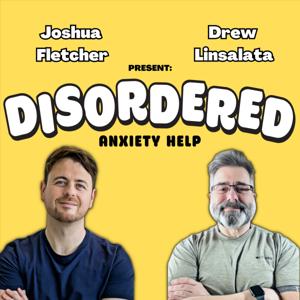
This week on Disordered, Josh and Drew talk about the all-important attitude shift that has to happen as part of recovery from an anxiety disorder. Recovery is spearheaded by behavioral change but that behavioral change also has to foster an attitudinal shift that moves you from trying to eliminate your anxiety to a consistent intentional tolerance of discomfort that will teach you that you can handle anxiety and don't have to fear it any longer. That's a key step toward decreasing your anxiety levels over time and a shift in attitude is important in this respect.
You'll also hear both Josh and Drew have realizations about the missing attitudinal shift that kept both of them stuck in the early stages of recovery. The guys both come to the conclusion that the "relapses" they experienced were based primarily on relying on technique without allowing that important shift in attitude.
If you're feeling like you're constantly being pulled back to "square one" this might resonate with you.
----
Want to talk about this episode, interact with us, and communicate with others that are sharing your experience? We're hanging out in the Disordered Community Space
https://disordered.fm/community
----
The Disordered Guide to Health Anxiety is available now:
https://www.disordered.fm/the-disordered-guide-to-health-anxiety/
---
Struggling with worry and rumination that you feel you can't stop or control? Check out Worry and Rumination Explained, a two hour pre-recorded workshop produced by Josh and Drew.
-----
Got questions or did it anyways to share? Send us an email or voicemail on our website.
https://disordered.fm
---
Disclaimer: Disordered is not therapy or a replacement for therapy. Listening to Disordered does not create a therapeutic relationship between you and the hosts or guests of the podcast. Information here is provided for psychoeducational purposes. As always, please consult your mental health and/or medical care providers. If you are having a mental health crisis, always reach out immediately for in-person help.
Send a question or comment via text message
In this episode of Disordered, Josh and Drew discuss why recovery is so dependent on learning that when you handle anxiety, fear, and uncertainty, YOU GET THE CREDIT FOR DOING THAT. Recovery hinges on seeing, then dropping all the safety devices and rituals so you can see through actual experience that YOU handled the discomfort without needing anything or anyone to save you.
The guys talk about the idea of unconditional OK-ness, and learning that in all the time that you've been searching for tools and techniques and methods for managing your anxiety, it's always just been you getting the job done. All those other things deserve no credit because in the end, you are all you need and you are capable even without all the magic things that you think protect you.
----
Want to talk about this episode, interact with us, and communicate with others that are sharing your experience? We're hanging out in the Disordered Community Space
https://disordered.fm/community
----
The Disordered Guide to Health Anxiety is available now:
https://www.disordered.fm/the-disordered-guide-to-health-anxiety/
---
Struggling with worry and rumination that you feel you can't stop or control? Check out Worry and Rumination Explained, a two hour pre-recorded workshop produced by Josh and Drew.
-----
Got questions or did it anyways to share? Send us an email or voicemail on our website.
https://disordered.fm
---
Disclaimer: Disordered is not therapy or a replacement for therapy. Listening to Disordered does not create a therapeutic relationship between you and the hosts or guests of the podcast. Information here is provided for psychoeducational purposes. As always, please consult your mental health and/or medical care providers. If you are having a mental health crisis, always reach out immediately for in-person help.
Send a question or comment via text message
This week on Disordered, Drew and Josh look at the relationship between body and mind when it comes to anxiety. Anxiety is absolutely something that one experiences physically, in the body, but the guys discuss how disordered states of anxiety are driven by interpretation and cognition. Highlights include a chat about how so many people experience things like scary thoughts and panic attacks without ever developing anxiety disorders, and an examination of how its the reaction to those experiences drive the disordered state.
----
Want to talk about this episode, interact with us, and communicate with others that are sharing your experience? We're hanging out in the Disordered Community Space
https://disordered.fm/community
----
The Disordered Guide to Health Anxiety is available now:
https://www.disordered.fm/the-disordered-guide-to-health-anxiety/
---
Struggling with worry and rumination that you feel you can't stop or control? Check out Worry and Rumination Explained, a two hour pre-recorded workshop produced by Josh and Drew.
-----
Got questions or did it anyways to share? Send us an email or voicemail on our website.
https://disordered.fm
---
Disclaimer: Disordered is not therapy or a replacement for therapy. Listening to Disordered does not create a therapeutic relationship between you and the hosts or guests of the podcast. Information here is provided for psychoeducational purposes. As always, please consult your mental health and/or medical care providers. If you are having a mental health crisis, always reach out immediately for in-person help.
Send a question or comment via text message
WHAT SHOULD I SAY DURING A PANIC ATTACK?
"What is the best thing for me to say to myself during a panic attack?"
This week on Disordered, Josh and Drew talk about strategies for self-talk, framing statements, action prompts, and non-compulsive ways to talk to yourself during a panic attack or high anxiety spike. The guys spend some time addressing the myth that one needs to be "talked down" from a panic attack and also cover how these concepts can be useful when supporting a friend or loved one that's experiencing panic or high anxiety.
Remember that you're supposed to be scared during a panic attack - that's just the mechanism working as designed. Don't judge yourself harshly or negatively for that, and steer clear of trying to find magic words or phrases that will make it go away. That's more harmful than helpful in the long run.
----
Want to talk about this episode, interact with us, and communicate with others that are sharing your experience? We're hanging out in the Disordered Community Space
https://disordered.fm/community
----
The Disordered Guide to Health Anxiety is available now:
https://www.disordered.fm/the-disordered-guide-to-health-anxiety/
---
Struggling with worry and rumination that you feel you can't stop or control? Check out Worry and Rumination Explained, a two hour pre-recorded workshop produced by Josh and Drew.
-----
Got questions or did it anyways to share? Send us an email or voicemail on our website.
https://disordered.fm
---
Disclaimer: Disordered is not therapy or a replacement for therapy. Listening to Disordered does not create a therapeutic relationship between you and the hosts or guests of the podcast. Information here is provided for psychoeducational purposes. As always, please consult your mental health and/or medical care providers. If you are having a mental health crisis, always reach out immediately for in-person help.
Send a question or comment via text message
IT SURE FEELS LIKE AN ATTACK ... BUT IS IT?
This week on Disordered Drew and Josh deconstruct the idea of a panic attack. It sure feels like you're being attacked, but are you? Is there a more useful and accurate way to frame what's happening? Do we find power when we stop looking at panic as a force that swoops in to attack us?
The guys chat about how a panic "attack" is really an adrenaline surge based on natural, expected, bodily functions. It's not dangerous and not indicative of an actual problem, just a misguided threat detection system in your brain. The conversation goes through why panic attacks are all the same from a physiology perspective and how its the context and the interpretation that makes them feel different or sometimes "worse".
This can be a really useful reframe for anyone struggling to overcome recurring panic attacks or panic disorder so grab a beverage and a comfortable chair and have a listen.
----
Want to talk about this episode, interact with us, and communicate with others that are sharing your experience? We're hanging out in the Disordered Community Space
https://disordered.fm/community
----
The Disordered Guide to Health Anxiety is available now:
https://www.disordered.fm/the-disordered-guide-to-health-anxiety/
---
Struggling with worry and rumination that you feel you can't stop or control? Check out Worry and Rumination Explained, a two hour pre-recorded workshop produced by Josh and Drew.
-----
Got questions or did it anyways to share? Send us an email or voicemail on our website.
https://disordered.fm
---
Disclaimer: Disordered is not therapy or a replacement for therapy. Listening to Disordered does not create a therapeutic relationship between you and the hosts or guests of the podcast. Information here is provided for psychoeducational purposes. As always, please consult your mental health and/or medical care providers. If you are having a mental health crisis, always reach out immediately for in-person help.
Send a question or comment via text message
The Symptoms of Anxiety
Anxious people often get completely fixated and consumed by the physical, mental, and emotional symptoms and sensations that come along with anxiety. It's natural to want to talk about them all the time and to keep asking "if anyone else gets" the symptom you are experiencing that scares you at the moment. This week on Disordered, Josh and Drew discuss anxiety symptoms, explaining that they are scary and uncomfortable, but not dangerous and not something to be avoided.
The guys, as usual, share their own experiences with scary and disruptive anxiety symptoms and they even end the episode with a little friendly rapid-fire competition to see who can name the most symptoms. Spoiler alert ... that segment comes complete with cheesy video game background music.
----
Want to talk about this episode, interact with us, and communicate with others that are sharing your experience? We're hanging out in the Disordered Community Space
https://disordered.fm/community
----
The Disordered Guide to Health Anxiety is available now:
https://www.disordered.fm/the-disordered-guide-to-health-anxiety/
---
Struggling with worry and rumination that you feel you can't stop or control? Check out Worry and Rumination Explained, a two hour pre-recorded workshop produced by Josh and Drew.
-----
Got questions or did it anyways to share? Send us an email or voicemail on our website.
https://disordered.fm
---
Disclaimer: Disordered is not therapy or a replacement for therapy. Listening to Disordered does not create a therapeutic relationship between you and the hosts or guests of the podcast. Information here is provided for psychoeducational purposes. As always, please consult your mental health and/or medical care providers. If you are having a mental health crisis, always reach out immediately for in-person help.
Send a question or comment via text message
This week on Disordered Drew and Josh walk you through the biological threat response and how it drives states of disordered anxiety. The guys cover the following important concepts that all anxiety sufferers should understand as part of the recovery process:
Josh and Drew both shared some of their own experiences with respect to how they interacted with the threat response to turn it down over time while they were both working on recovery from anxiety disorders. They did not heal their threat responses … they were teaching them.
As always, the guys answer questions from the community and share a few wins and success stories from listeners. Always inspiring!
Bonus content: Strudel and Copper both chime in today. Clearly, even dogs have opinions about the threat response and anxiety.
----
Want to talk about this episode, interact with us, and communicate with others that are sharing your experience? We're hanging out in the Disordered Community Space
https://disordered.fm/community
----
The Disordered Guide to Health Anxiety is available now:
https://www.disordered.fm/the-disordered-guide-to-health-anxiety/
---
Struggling with worry and rumination that you feel you can't stop or control? Check out Worry and Rumination Explained, a two hour pre-recorded workshop produced by Josh and Drew.
-----
Got questions or did it anyways to share? Send us an email or voicemail on our website.
https://disordered.fm
---
Disclaimer: Disordered is not therapy or a replacement for therapy. Listening to Disordered does not create a therapeutic relationship between you and the hosts or guests of the podcast. Information here is provided for psychoeducational purposes. As always, please consult your mental health and/or medical care providers. If you are having a mental health crisis, always reach out immediately for in-person help.
Send a question or comment via text message
Join Josh and Drew as they share their own experiences of anxiety recovery and what it means to get better when you're struggling with an anxiety disorder. Common themes in this episode include:
The guys also share listener victories and answer a question or two from the audience.
----
Want to talk about this episode, interact with us, and communicate with others that are sharing your experience? We're hanging out in the Disordered Community Space
https://disordered.fm/community
----
The Disordered Guide to Health Anxiety is available now:
https://www.disordered.fm/the-disordered-guide-to-health-anxiety/
---
Struggling with worry and rumination that you feel you can't stop or control? Check out Worry and Rumination Explained, a two hour pre-recorded workshop produced by Josh and Drew.
-----
Got questions or did it anyways to share? Send us an email or voicemail on our website.
https://disordered.fm
---
Disclaimer: Disordered is not therapy or a replacement for therapy. Listening to Disordered does not create a therapeutic relationship between you and the hosts or guests of the podcast. Information here is provided for psychoeducational purposes. As always, please consult your mental health and/or medical care providers. If you are having a mental health crisis, always reach out immediately for in-person help.
Send a question or comment via text message
Drew and Josh take a whistle-stop tour of some of the most common forms of anxiety disorder. The guys take time to explain the difference between regular anxiety that all humans experience, and disordered anxiety which becomes a major life-impacting mental health issue. In this episode Josh and Drew talk about:
This episode also answers the question, "Is it normal to be afraid when thinking about or planning anxiety recovery?"
----
Want to talk about this episode, interact with us, and communicate with others that are sharing your experience? We're hanging out in the Disordered Community Space
https://disordered.fm/community
----
The Disordered Guide to Health Anxiety is available now:
https://www.disordered.fm/the-disordered-guide-to-health-anxiety/
---
Struggling with worry and rumination that you feel you can't stop or control? Check out Worry and Rumination Explained, a two hour pre-recorded workshop produced by Josh and Drew.
-----
Got questions or did it anyways to share? Send us an email or voicemail on our website.
https://disordered.fm
---
Disclaimer: Disordered is not therapy or a replacement for therapy. Listening to Disordered does not create a therapeutic relationship between you and the hosts or guests of the podcast. Information here is provided for psychoeducational purposes. As always, please consult your mental health and/or medical care providers. If you are having a mental health crisis, always reach out immediately for in-person help.
Send a question or comment via text message
Join us for the maiden voyage of Disordered! Josh and Drew talk about what it feels like to be an anxious person and offer a number of suggestions for signs that your anxiety might be more than just "regular" anxiety.
----
Want to talk about this episode, interact with us, and communicate with others that are sharing your experience? We're hanging out in the Disordered Community Space
https://disordered.fm/community
----
The Disordered Guide to Health Anxiety is available now:
https://www.disordered.fm/the-disordered-guide-to-health-anxiety/
---
Struggling with worry and rumination that you feel you can't stop or control? Check out Worry and Rumination Explained, a two hour pre-recorded workshop produced by Josh and Drew.
-----
Got questions or did it anyways to share? Send us an email or voicemail on our website.
https://disordered.fm
---
Disclaimer: Disordered is not therapy or a replacement for therapy. Listening to Disordered does not create a therapeutic relationship between you and the hosts or guests of the podcast. Information here is provided for psychoeducational purposes. As always, please consult your mental health and/or medical care providers. If you are having a mental health crisis, always reach out immediately for in-person help.
From the publisher's feed
Ranked by our users in the last 21 days

2,589 Listeners

1,799 Listeners
1,436 Listeners

1,217 Listeners

829 Listeners

753 Listeners

2,509 Listeners

1,381 Listeners

3,611 Listeners
430 Listeners
585 Listeners
364 Listeners

364 Listeners

18,949 Listeners
198 Listeners