
Sign up to save your podcasts
Or

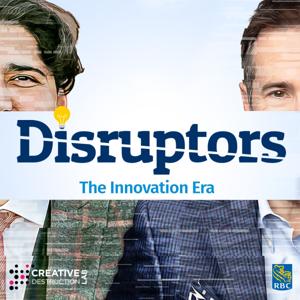


COVID lockdown restrictions have boosted the desire to consume creative content higher than ever. What’s new about this era is where the content is coming from -- a diversity of voices from around the globe, not originally directly linked to traditional publishing firms, production companies, or movie studios.
We explore this phenomenon in this episode of RBC Disruptors by looking into the origin story of Wattpad. As co-founder and CEO Allen Lau tells host John Stackhouse, the company was inspired by the desire for a good app for reading on mobile phones. Now, it’s turned into a content powerhouse, with more than 4 million writers uploading stories in 50 different languages. The most promising are turned into books, T.V. shows, and movies, like The Kissing Booth, After We Collided, and She’s With Me, thanks in part to Wattpad’s custom AI engine.
It’s a global company with global perspectives, but Lau believes it’s also important to represent Canadian perspectives on the world stage. This episode of RBC Disruptorslooks at a whole new viewpoint on Canadian content.
CONNECT & SUBSCRIBE:
• Follow RBC Thought Leadership on LinkedIn
• Follow John Stackhouse on LinkedIn
• For more insights visit RBC Thought Leadership
Hosted by Simplecast, an AdsWizz company. See pcm.adswizz.com for information about our collection and use of personal data for advertising.
It's a branch of molecular biology that humans have been harnessing for centuries, but has come to carry a negative connotation for many Canadians due to concerns about genetically modified organisms: Genomics.
A recent report from the McKinsey Global Institute suggests that as much as 60% of the physical inputs to the global economy could be produced biologically, with potential savings of up to 4 TRILLION dollars per year. And as Canada works to recover from the COVID crisis, bio-manufacturing is also being billed as a massive opportunity to address issues like the supply chain vulnerabilities revealed by pandemic, as well as our reliance on foreign factories.
On this episode of RBC Disruptors, host John Stackhouse sits down with two of the country's top experts on Genomics; Doctor Rob Annan, the President and CEO of Genome Canada, and Doctor Bettina Hamelin, the President and CEO of Ontario Genomics, to learn more about the opportunities presented by the so-called "bio-revolution". He also delves into the regulatory, economic, and ethical barriers that exist, and the risks of being left behind if Canadian entrepreneurs fail to embrace this potentially transformational change.
Show notes:
The McKinsey Global Institute's report on the Bio-Revolution can be found here:
https://www.mckinsey.com/industries/pharmaceuticals-and-medical-products/our-insights/the-bio-revolution-innovations-transforming-economies-societies-and-our-lives
John also references a previous episode of Disruptors featuring Canadian author Alex Lazarow, called "Beyond Silicon Valley: Why We Need a Global Playbook for Innovation," which was originally released on August 4th, 2020.
CONNECT & SUBSCRIBE:
• Follow RBC Thought Leadership on LinkedIn
• Follow John Stackhouse on LinkedIn
• For more insights visit RBC Thought Leadership
Hosted by Simplecast, an AdsWizz company. See pcm.adswizz.com for information about our collection and use of personal data for advertising.
The world is on track to add as many people to cities in the next 40 years as we have in the last 40 centuries. Those new buildings and roads will require a lot of concrete, which historically was an economically and environmentally inefficient building material. However, new innovators are leveraging technology to tackle both of those problems. The challenge they face, though, is around policy and building momentum. Right now, regulations prohibit some concrete manufacturers from innovating, even as more companies are demanding climate action.
Key takeaways:
CONNECT & SUBSCRIBE:
• Follow RBC Thought Leadership on LinkedIn
• Follow John Stackhouse on LinkedIn
• For more insights visit RBC Thought Leadership
Hosted by Simplecast, an AdsWizz company. See pcm.adswizz.com for information about our collection and use of personal data for advertising.
Oceans provide safety, a way of life, economic sustainability, and food for the entire planet, yet over 80% of the world’s oceans are unmapped and unexplored. Now, we have the tools and technology to empower true ocean discovery. The limited knowledge we have of oceans has already produced trillions of dollars in economic benefit and insight that led to life-saving medications. With data and a renewed focus on building a sustainable future, the world’s oceans can yet again provide an unparalleled opportunity for growth.
Key takeaways:
CONNECT & SUBSCRIBE:
• Follow RBC Thought Leadership on LinkedIn
• Follow John Stackhouse on LinkedIn
• For more insights visit RBC Thought Leadership
Hosted by Simplecast, an AdsWizz company. See pcm.adswizz.com for information about our collection and use of personal data for advertising.
Nearly 10 years ago, venture capitalist Marc Andreessen famously claimed that “software is eating the world.” But today, a new crop of “frontier innovators” are straying away from disrupting existing industries with software in favour of building new industries, improving current innovation models, and addressing market gaps that Silicon Valley ignored. In his new book, Out-Innovate: How Global Entrepreneurs--from Delhi to Detroit--Are Rewriting the Rules of Silicon Valley, Alex Lazarow interviews more than 200 entrepreneurs from around the world about their challenges, success stories, and what he calls the "frontier," the growing constellation of startup ecosystems, outside of the Valley. On this episode of RBC Disruptors, Alex and John discuss the shift from the equity model in venture capital, what it means to be born global, and the future of innovation in Canada, and around the world
Key takeaways:
CONNECT & SUBSCRIBE:
• Follow RBC Thought Leadership on LinkedIn
• Follow John Stackhouse on LinkedIn
• For more insights visit RBC Thought Leadership
Hosted by Simplecast, an AdsWizz company. See pcm.adswizz.com for information about our collection and use of personal data for advertising.
Building a successful company takes a community, and SkipTheDishes is no different. A Winnipeg success story, the food delivery platform has over 25,000 restaurants in its community. John Stackhouse sits down with SkipTheDishes CEO Kevin Edwards, who shares the founding story of Skip, how the company is helping its restaurant community with a $24 million commitment during COVID-19, and why the company is so focused on building a supportive environment for the next tech success story.
Key takeaways:
CONNECT & SUBSCRIBE:
• Follow RBC Thought Leadership on LinkedIn
• Follow John Stackhouse on LinkedIn
• For more insights visit RBC Thought Leadership
Hosted by Simplecast, an AdsWizz company. See pcm.adswizz.com for information about our collection and use of personal data for advertising.
The COVID pandemic has brought everyday life online and made us more reliant on technology than ever. Many of us are working from home and glued to our screens all day, and then Zooming with friends or streaming movies in the evenings. Not to mention our shift to online shopping and ordering food. What effect is all this technology having on us? In this episode, we revisit an earlier but still incredibly relevant RBC Disruptors conversation from June 2019 with Dr. Murali Doraiswamy, a physician and brain scientist at Duke University, on how technology is changing the brain and mind.
CONNECT & SUBSCRIBE:
• Follow RBC Thought Leadership on LinkedIn
• Follow John Stackhouse on LinkedIn
• For more insights visit RBC Thought Leadership
Hosted by Simplecast, an AdsWizz company. See pcm.adswizz.com for information about our collection and use of personal data for advertising.
In the midst of a global crisis, getting food from farm to fork has never been more important, and in some ways, more challenging. Nothing has been more essential than keeping Canadians fed and supplied. At the forefront of this is Loblaw, a fourth-generation Canadian company and the largest non-government employer in the country. Through their COVID pivots they are leading the charge on enhancing customer convenience and keeping Canadians safe and stocked up. Instacart is the North American leader in online grocery – they have the largest grocery delivery network in America with more than 500,000 active full-service shoppers. On this episode of RBC Disruptors, John Stackhouse discusses the changes and challenges in grocery commerce with Sarah Davis, President of Loblaw and Nilam Ganenthiran, President of Instacart.
Key Takeaways
CONNECT & SUBSCRIBE:
• Follow RBC Thought Leadership on LinkedIn
• Follow John Stackhouse on LinkedIn
• For more insights visit RBC Thought Leadership
Hosted by Simplecast, an AdsWizz company. See pcm.adswizz.com for information about our collection and use of personal data for advertising.
From the publisher's feed

391 Listeners

207 Listeners

735 Listeners

74 Listeners

105 Listeners

0 Listeners

5 Listeners
81 Listeners

25 Listeners

424 Listeners
27 Listeners

1 Listeners

89 Listeners

17 Listeners

3 Listeners

7 Listeners

40 Listeners

10 Listeners

12 Listeners

106 Listeners

25 Listeners