
Sign up to save your podcasts
Or

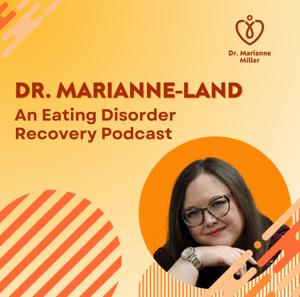

What if the problem is not your motivation to recover, but a system that makes eating disorder treatment almost impossible to afford?
In this conversation, I sit down again with Leslie Jordan Garcia @liberatiwellness. Leslie is a wellness strategist, certified eating disorder recovery coach, and Treatment Access Program Manager at Project HEAL. In this episode, we discuss real, concrete pathways to free and low-cost eating disorder care. We also talk about why you cannot separate eating disorder recovery from social justice, intersectionality, and body hierarchies.
Leslie breaks down how Project HEAL removes financial and systemic barriers, how people from marginalized communities can apply, and how providers can join the Healer’s Circle to offer justice-focused, values-aligned care.
What Project HEAL is and how it works to remove financial and systemic barriers to eating disorder care in the United States
The four major Project HEAL programs and how to apply for:
Community Care groups for BIPOC folks
Cash assistance that covers tertiary costs like rent, pet boarding, and transportation
Outpatient treatment placement with sliding scale and pro bono providers
Insurance navigation support and help with single case agreements
Who qualifies for Project HEAL services, including people in all U.S. states and territories, and how they prioritize folks from communities that are historically and systemically marginalized
How Leslie matches people with “unicorn providers” who are fat positive, HAES aligned, queer affirming, trauma aware, and non Christian based when needed
The difference it makes when someone helps you navigate insurance, access care, and complete applications, especially when executive functioning is low or things feel overwhelming
How economic precarity, layoffs, food insecurity, and shifting insurance policies are driving an uptick in applications for eating disorder treatment assistance
Why intersectional, identity affirming care is not optional in eating disorder recovery, especially for BIPOC, queer, trans, disabled, and fat clients
How Leslie’s social justice consulting work with universities, community colleges, and health organizations helps them:
Reimagine intake forms and client facing processes
Address promotion and salary inequities
Create transformational circles where teams talk about harm, stereotypes, and systemic barriers
How body hierarchies, food moralization, school fitness testing, and lunch shaming fuel eating disorders for kids and adults
Why many people use eating disorders as a survival tool in the context of trauma, capitalism, surveillance, and unsafe systems
What true equity and belonging could mean for decreasing the occurrence and severity of eating disorders
Leslie Jordan Garcia is a wellness strategist, certified eating disorder recovery coach, and social justice consultant dedicated to healing and liberation.
She holds dual master’s degrees in business and public health and has more than a decade of experience across military, public health, and nonprofit sectors. Through her practice, Liberati Wellness, Leslie offers HAES aligned eating disorder recovery support, inclusive movement support, and equity and identity affirming care.
Leslie also partners with organizations like Austin Health Commons and the Hogg Foundation to embed equity and justice into health systems and helping professions. She currently serves as the Treatment Access Program Manager at Project HEAL, where she manages cash assistance and treatment placement and works to match clients with values aligned, culturally responsive providers.
You can find Leslie’s coaching and consulting work at Liberati Wellness and on Instagram at @liberatiwellness.
In this episode, Leslie explains how Project HEAL supports people who are struggling with eating disorders and facing financial and systemic barriers to treatment. She walks us through the main programs:
Informed ED (for professionals)
Community Care
Cash Assistance Program
Treatment Placement
Insurance Navigation
Leslie also mentions a time limited clinical assessment program for people who know they are struggling in their relationship with food and body but have never had a formal diagnosis.
All of these services are free to applicants, and one application can cover multiple programs at once.
Leslie shares that Project HEAL is U.S. based, and that includes all 50 states, Alaska, Hawaii, and U.S. territories such as Guam.
Anyone in those locations can apply. Project HEAL prioritizes people from communities that have been historically and systemically marginalized, including:
BIPOC communities
Queer and trans communities
People in larger bodies
Disabled and chronically ill folks
People navigating religious trauma and other layered identities
Leslie’s role includes reading applications through an intersectional lens, tracking diversity demographics, and making sure that people who face the largest gaps in access are not overlooked.
She also notes that if the application itself feels overwhelming, Project HEAL can connect applicants with someone who will help them complete it, which is especially important when executive functioning is low.
Throughout the conversation, Leslie and I look at how eating disorders are never just about appearance. They are deeply tied to:
Trauma and chronic stress
How we perceive our bodies and how we believe others perceive our bodies
Economic instability, job insecurity, and food insecurity
Surveillance of bodies in workplaces, schools, and medical settings
Racism, anti-fat bias, ableism, transmisia, and other forms of oppression
Leslie talks about clients who restrict food so their children can eat when jobs cut hours, and how people in larger bodies often avoid eating at work because of constant surveillance and judgment, only to experience intense hunger and binge episodes later.
We explore how body hierarchies, moralization of food, school fitness testing, and lunch policing create conditions where an eating disorder can become a primary coping strategy. Leslie describes how, over time, this can become deeply embedded, with the brain chemistry colluding with the eating disorder to create a sense of safety that the larger system fails to provide.
For Leslie, social justice work is inseparable from eating disorder work. If people had secure access to food, safe housing, living wages, and genuine body equity, many would not need to rely on eating disorders to feel safer, visible, or invisible.
Leslie also describes her justice work with institutions, including:
Facilitating Transformational Circles where diverse team members connect as humans and then talk honestly about processes that exclude or harm people
Supporting clinics that operate in queer neighborhoods yet do not see queer clients, and helping them examine what in their client facing processes is pushing people away
Working with community colleges on salary and promotion inequities, examining reviews, ranking systems, and feedback processes that keep certain groups from advancing
Helping organizations rework intake forms, policies, and internal culture so that equity, belonging, and justicebecome real practices rather than buzzwords
She reminds us that what often gets labeled as “DEI” is actually about justice, accessibility, and belonging for everyone, including veterans, people who breastfeed, people who need ramps and accessible bathrooms, and more.
To apply for Project HEAL’s Treatment Access programs
Both individuals seeking care and providers who want to join the Healer’s Circle start on the same site. Providers can share their identities, specialties, body size, languages spoken, and communities they love to serve, which helps Leslie make strong intersectional matches.
To work with Leslie as a coach or consultant
Website: Liberati Wellness liberatiwellness.com
Instagram: @liberatiwellness
She currently has a reduced capacity for one to one clients but continues to support individuals and teams through coaching, collaboration with therapists and dietitians, and organizational justice work.
If you are struggling with an eating disorder and feel blocked by money, insurance, or access, I hope this episode helps you feel less alone and more resourced. There are people and organizations actively working to break financial barriers to care.
If you know someone who could benefit from free or low-cost eating disorder support, especially someone from a marginalized community, please consider sharing this episode with them.
You can also support this work by:
Following @liberatiwellness and @projectheal
Sharing Project HEAL’s application info with your community
If you are a provider, applying to join the Healer’s Circle and offering sliding scale or pro bono care
And as always, thank you for listening and for being part of this conversation about justice, embodiment, and eating disorder recovery.
 View all episodes
 By mariannemillerphd
5
1212 ratings
What if the problem is not your motivation to recover, but a system that makes eating disorder treatment almost impossible to afford?
In this conversation, I sit down again with Leslie Jordan Garcia @liberatiwellness. Leslie is a wellness strategist, certified eating disorder recovery coach, and Treatment Access Program Manager at Project HEAL. In this episode, we discuss real, concrete pathways to free and low-cost eating disorder care. We also talk about why you cannot separate eating disorder recovery from social justice, intersectionality, and body hierarchies.
Leslie breaks down how Project HEAL removes financial and systemic barriers, how people from marginalized communities can apply, and how providers can join the Healer’s Circle to offer justice-focused, values-aligned care.
What Project HEAL is and how it works to remove financial and systemic barriers to eating disorder care in the United States
The four major Project HEAL programs and how to apply for:
Community Care groups for BIPOC folks
Cash assistance that covers tertiary costs like rent, pet boarding, and transportation
Outpatient treatment placement with sliding scale and pro bono providers
Insurance navigation support and help with single case agreements
Who qualifies for Project HEAL services, including people in all U.S. states and territories, and how they prioritize folks from communities that are historically and systemically marginalized
How Leslie matches people with “unicorn providers” who are fat positive, HAES aligned, queer affirming, trauma aware, and non Christian based when needed
The difference it makes when someone helps you navigate insurance, access care, and complete applications, especially when executive functioning is low or things feel overwhelming
How economic precarity, layoffs, food insecurity, and shifting insurance policies are driving an uptick in applications for eating disorder treatment assistance
Why intersectional, identity affirming care is not optional in eating disorder recovery, especially for BIPOC, queer, trans, disabled, and fat clients
How Leslie’s social justice consulting work with universities, community colleges, and health organizations helps them:
Reimagine intake forms and client facing processes
Address promotion and salary inequities
Create transformational circles where teams talk about harm, stereotypes, and systemic barriers
How body hierarchies, food moralization, school fitness testing, and lunch shaming fuel eating disorders for kids and adults
Why many people use eating disorders as a survival tool in the context of trauma, capitalism, surveillance, and unsafe systems
What true equity and belonging could mean for decreasing the occurrence and severity of eating disorders
Leslie Jordan Garcia is a wellness strategist, certified eating disorder recovery coach, and social justice consultant dedicated to healing and liberation.
She holds dual master’s degrees in business and public health and has more than a decade of experience across military, public health, and nonprofit sectors. Through her practice, Liberati Wellness, Leslie offers HAES aligned eating disorder recovery support, inclusive movement support, and equity and identity affirming care.
Leslie also partners with organizations like Austin Health Commons and the Hogg Foundation to embed equity and justice into health systems and helping professions. She currently serves as the Treatment Access Program Manager at Project HEAL, where she manages cash assistance and treatment placement and works to match clients with values aligned, culturally responsive providers.
You can find Leslie’s coaching and consulting work at Liberati Wellness and on Instagram at @liberatiwellness.
In this episode, Leslie explains how Project HEAL supports people who are struggling with eating disorders and facing financial and systemic barriers to treatment. She walks us through the main programs:
Informed ED (for professionals)
Community Care
Cash Assistance Program
Treatment Placement
Insurance Navigation
Leslie also mentions a time limited clinical assessment program for people who know they are struggling in their relationship with food and body but have never had a formal diagnosis.
All of these services are free to applicants, and one application can cover multiple programs at once.
Leslie shares that Project HEAL is U.S. based, and that includes all 50 states, Alaska, Hawaii, and U.S. territories such as Guam.
Anyone in those locations can apply. Project HEAL prioritizes people from communities that have been historically and systemically marginalized, including:
BIPOC communities
Queer and trans communities
People in larger bodies
Disabled and chronically ill folks
People navigating religious trauma and other layered identities
Leslie’s role includes reading applications through an intersectional lens, tracking diversity demographics, and making sure that people who face the largest gaps in access are not overlooked.
She also notes that if the application itself feels overwhelming, Project HEAL can connect applicants with someone who will help them complete it, which is especially important when executive functioning is low.
Throughout the conversation, Leslie and I look at how eating disorders are never just about appearance. They are deeply tied to:
Trauma and chronic stress
How we perceive our bodies and how we believe others perceive our bodies
Economic instability, job insecurity, and food insecurity
Surveillance of bodies in workplaces, schools, and medical settings
Racism, anti-fat bias, ableism, transmisia, and other forms of oppression
Leslie talks about clients who restrict food so their children can eat when jobs cut hours, and how people in larger bodies often avoid eating at work because of constant surveillance and judgment, only to experience intense hunger and binge episodes later.
We explore how body hierarchies, moralization of food, school fitness testing, and lunch policing create conditions where an eating disorder can become a primary coping strategy. Leslie describes how, over time, this can become deeply embedded, with the brain chemistry colluding with the eating disorder to create a sense of safety that the larger system fails to provide.
For Leslie, social justice work is inseparable from eating disorder work. If people had secure access to food, safe housing, living wages, and genuine body equity, many would not need to rely on eating disorders to feel safer, visible, or invisible.
Leslie also describes her justice work with institutions, including:
Facilitating Transformational Circles where diverse team members connect as humans and then talk honestly about processes that exclude or harm people
Supporting clinics that operate in queer neighborhoods yet do not see queer clients, and helping them examine what in their client facing processes is pushing people away
Working with community colleges on salary and promotion inequities, examining reviews, ranking systems, and feedback processes that keep certain groups from advancing
Helping organizations rework intake forms, policies, and internal culture so that equity, belonging, and justicebecome real practices rather than buzzwords
She reminds us that what often gets labeled as “DEI” is actually about justice, accessibility, and belonging for everyone, including veterans, people who breastfeed, people who need ramps and accessible bathrooms, and more.
To apply for Project HEAL’s Treatment Access programs
Both individuals seeking care and providers who want to join the Healer’s Circle start on the same site. Providers can share their identities, specialties, body size, languages spoken, and communities they love to serve, which helps Leslie make strong intersectional matches.
To work with Leslie as a coach or consultant
Website: Liberati Wellness liberatiwellness.com
Instagram: @liberatiwellness
She currently has a reduced capacity for one to one clients but continues to support individuals and teams through coaching, collaboration with therapists and dietitians, and organizational justice work.
If you are struggling with an eating disorder and feel blocked by money, insurance, or access, I hope this episode helps you feel less alone and more resourced. There are people and organizations actively working to break financial barriers to care.
If you know someone who could benefit from free or low-cost eating disorder support, especially someone from a marginalized community, please consider sharing this episode with them.
You can also support this work by:
Following @liberatiwellness and @projectheal
Sharing Project HEAL’s application info with your community
If you are a provider, applying to join the Healer’s Circle and offering sliding scale or pro bono care
And as always, thank you for listening and for being part of this conversation about justice, embodiment, and eating disorder recovery.

7,261 Listeners
2,505 Listeners

133 Listeners
280 Listeners
48 Listeners
105 Listeners

367 Listeners

3,850 Listeners

41,537 Listeners

19,774 Listeners

150 Listeners
3,596 Listeners
21 Listeners
8 Listeners