
Sign up to save your podcasts
Or

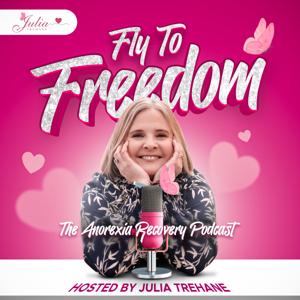


Does Anyone Else Feel Like This? Eating Disorder Recovery Q&A
Have you ever heard someone describe a feeling you thought only you had? That moment of recognition can mean so much, especially when eating disorder recovery feels lonely or difficult to explain.
In this episode of Fly to Freedom – The Anorexia Recovery Podcast, I’m joined by a group of women at different stages of recovery for another warm, honest Q&A. After such a lovely response to our previous group episode, we’ve come together again to answer real questions, share our experiences and make space for the things we’re still working through.
We talk about eating when physical hunger feels absent, hearing about extreme hunger and wondering why your experience seems different. The women share how they’ve approached nourishment when hunger signals feel unclear, including their experiences of regular, structured eating and seeking permission to meet their needs.
We explore compulsive exercise, fear of weight gain and what happens when trying to do “just a little” movement begins taking over again. Alongside this, we discuss the guilt around resting, the pressure to be productive and how general health messages can feel confusing when you’re recovering from a restrictive eating disorder.
We also make space for recovery in midlife: feeling embarrassed to talk about an eating disorder, being dismissed because of age or appearance, and finding reassurance in hearing from other women who understand.
Then we turn towards some deeply personal questions. Who are you beyond exercise, restriction and always getting things done? What if you make the changes and life still feels difficult? How do you move towards something different when familiar eating disorder behaviours seem to offer safety?
There’s tenderness, laughter and plenty of shared recognition as we explore self-compassion, rediscovering enjoyment, navigating fear and allowing connection to include boundaries.
In this episode, we explore:
Whatever stage you’re at, I hope you hear something that helps you feel understood and opens up a little more possibility for yourself.
Find support and connection
Join The Eating Disorder Recovery Circle for a welcoming community where you can ask questions, share your experiences and connect with people who understand.
For information about working with me through 1:1 eating disorder recovery coaching, visit juliatrehane.com.
You can also watch this conversation on my YouTube channel. Follow Fly to Freedom wherever you listen to podcasts, and share this episode with someone who might find comfort in hearing it.
The Fear Beneath the Fear: Why You Don’t Need to Feel Ready for Eating Disorder Recovery
Fear can make eating disorder recovery feel impossible. There may be fear of weight gain, eating more, feeling full, resting, stopping compulsive exercise or allowing your body to change. But what if the biggest thing keeping you stuck is not the feared experience itself, but the belief that you will be unable to cope with how it makes you feel?
In this episode of Fly to Freedom – The Anorexia Recovery Podcast, I explore the fear beneath the fear and why waiting to feel ready can delay anorexia recovery.
For decades, I believed that controlling food, exercise and my body was keeping me safe. Restriction, movement, body checking and rules gave me temporary relief from anxiety. Yet every time I used an eating disorder behaviour to reduce fear, my brain learned that the behaviour had protected me from danger.
It never had the opportunity to discover what might happen if I did not obey the fear.
That is why eating disorder behaviours can remain so compelling, even when you understand that they are keeping you trapped. Eating less, compensating after food, exercising or seeking reassurance may make anxiety fall in the moment, but that relief teaches the brain to ask for the same behaviour again next time.
Recovery begins to change when you create a gap between the fear and the response. That could mean eating the food without compensating, resting without making up for it later, allowing fullness to pass, or noticing a change in your body without checking or trying to undo it.
The goal is not to become fearless before you recover. It is to build evidence that you can experience fear, guilt, uncertainty and discomfort without abandoning yourself.
In this episode, I explore:
The eating disorder will show you the immediate cost of moving forwards, but it rarely shows you the cost of staying where you are. Another year of avoiding restaurants, needing calorie information, exercising through exhaustion or waiting for your body to feel acceptable carries a cost too.
Eating disorder recovery is rarely a choice between fear and no fear. Often, it is a choice between the fear that keeps you trapped and the fear that may eventually set you free.
You can feel frightened and still nourish yourself. You can feel guilty and still rest. You can dislike a photograph and still go out for dinner. You can experience body image distress and continue caring for yourself.
You do not have to know exactly how recovery will feel. Little by little, you can learn that whatever feelings arise, you will remain on your own side.
That is how self-trust grows, and that is where freedom begins.
For compassionate support with anorexia recovery, fear of weight gain, compulsive exercise, body image or letting go of eating disorder rules, visit:
https://www.juliatrehane.com
The Eating Disorder Recovery Circle offers practical recovery resources, courses, workshops, community support, monthly Meetups and a monthly coaching call with me.
https://www.edrecoverycircle.com/join
Eating disorder recovery supportJoin the Eating Disorder Recovery Circle
The Woman I Never Imagined I Could Become: Julia’s Recovery Q&A
This episode of Fly to Freedom – The Anorexia Recovery Podcast is a little different. Instead of answering questions about the struggles you may be facing in recovery, I’m answering your questions about me: the woman I was, how I recovered after living with anorexia for forty years, and what my life looks and feels like now.
I share why eating more, resting and restoring my weight were essential foundations of recovery, but were not enough to give me complete freedom. Although my body was healing, I still carried the beliefs that had fuelled the eating disorder for decades: that I was not good enough, that love had to be earned and that my worth depended upon staying small, being productive and keeping everybody else happy.
Full recovery required me to look beneath the food, exercise and body obsession. It meant replacing judgement with curiosity, separating facts from the painful stories I had attached to them, and gradually building a relationship with myself based on compassion rather than punishment.
In this episode, I explore:
How I moved from forty years of anorexia to complete freedom
Why weight restoration was essential but was not the end of my recovery
How I knew I was fully recovered
Why my experience led me to become an eating disorder recovery coach
How and why I created the Eating Disorder Recovery Circle
Why I stopped exercise completely and how I eventually returned to movement
The difference between choosing to exercise and feeling compelled to exercise
How I respond to diet culture and difficult body-image days
What recovery has changed within my marriage, family and everyday life
How recovery helped me remain present through grief, fear and Dave’s stroke
Why authenticity, simplicity and self-confidence have been some of recovery’s greatest gifts
How I became the woman I could never have imagined becoming
Recovery has not made life perfect or removed sadness, fear, insecurity and loss. It has given me the ability to experience all of life without abandoning myself or returning to restriction, compulsive exercise and control.
I can have a difficult day in my body and continue treating her with care. I can feel grief without needing to numb it, experience fear without imagining every possible disaster and make mistakes without believing they say something terrible about me. I can ask for help, express an opinion, create boundaries and allow myself to be fully present with the people I love.
When I began anorexia recovery, I thought I was fighting for freedom from food rules, exercise and body obsession. I did not realise I was finding my way home to myself.
If you are somewhere in the difficult, uncertain middle of eating disorder recovery, the life ahead may be much bigger than you can currently imagine. The person you are today cannot yet know everything the version of you who keeps going will discover.
If you want to live a life of freedom from an eating disorder, I can help you. You can learn more about working with me and the recovery support available at juliatrehane.com.
What does eating disorder recovery actually feel like when you're the person trying to live it?
Not the theory. Not the neat list of recovery steps. Not the version told from the other side once everything has fallen into place.
This week on Fly to Freedom – The Anorexia Recovery Podcast, I wanted to do something completely different.
I invited six women from within my recovery community to come together and answer questions about eating disorder recovery. Nobody was specially selected, nobody was given the questions beforehand and nobody was asked to tell a particular kind of recovery story.
We actually started chatting before I'd officially begun recording, and the conversation was so open and valuable that I decided to leave that in too.
These women are different ages, from different backgrounds and at very different stages of recovery. Some have lived with anorexia and eating disorders for decades. Some have tried NHS or private treatment. Some know an enormous amount about eating disorders and yet still struggle to translate that knowledge into action.
We talk about feeling not sick enough to deserve support, and the way the eating disorder continually moves the goalposts.
We talk about knowing exactly what you need to do and still finding it incredibly difficult to do it. As one woman puts it, recovery can be simple, but not easy.
We talk about the shame of struggling as a teacher, therapist, professional, mother or middle-aged woman, and why eating disorders do not discriminate by age, intelligence, profession or life experience.
We also talk honestly about recovery communities. What happens if you're having an awful day? Do you need to be positive before you speak? What if you worry about triggering someone or bringing everyone else down? And what happens when somebody challenges something you have believed for years?
Then the conversation moves into self-compassion and something I particularly love: discovering who you actually are underneath the eating disorder.
One woman discovers that perhaps she doesn't love being constantly busy and productive after all. She likes a slower life, pottering and building Lego.
And then there is "holiday Sue".
Sue describes a freer, happier version of herself who appeared on holiday – someone who ate what she wanted, worried less about what other people thought and simply enjoyed life.
She's beginning to realise that holiday Sue may actually be the real Sue.
Perhaps one of the most moving moments comes from a woman who once believed gaining weight would be worse than almost anything she could imagine. Today, she would rather live in a higher-weight body and keep the peace and freedom she has discovered than ever return to the life she had before.
She once thought she might be the special unicorn – the person for whom full recovery simply wasn't possible.
The unicorn doesn't exist.
These aren't six women with everything figured out. There are doubts, fears, frustration, laughter and plenty of swearing.
That's precisely why this conversation matters.
Sometimes eating disorder recovery is questioning something you've believed for decades. Sometimes it is allowing somebody else to believe in you before you can quite believe in yourself.
And sometimes it is discovering that the thoughts and feelings you believed made you different are being experienced by somebody else too.
No scripts. No polished recovery stories. Just six women talking openly about what eating disorder recovery really feels like.
Julia Trehane: https://juliatrehane.com
The Eating Disorder Recovery Circle: https://edrecoverycircle.com
What happens when you desperately want eating disorder recovery, you know what you need to do, and yet fear keeps stopping you?
In this Q&A episode of Fly to Freedom – The Anorexia Recovery Podcast, I answer questions from members of the Eating Disorder Recovery Circle about fear, restriction, body image, changing routines, treatment and that frustrating gap between wanting to recover and actually taking action.
We begin with the constant noise around food, bodies, exercise and "health". Step targets, fitness advice, diets, weight-loss drugs and wellness trends can sound remarkably similar to eating disorder rules. I talk about why public health advice isn't personal healthcare, and why a better question can be: "Is this right for me?"
We also explore helping children develop a healthier relationship with their bodies. One listener shares a painful school uniform shopping experience that left her daughter believing her body was the problem. We can't protect children from every message about body size, but we can teach them to question those messages rather than themselves.
Another question looks at anxiety when routines change. When work stops, holidays begin or life becomes quieter, eating disorder thoughts can suddenly become louder. We explore why nourishment doesn't have to be earned through productivity and why learning to rest can be an important part of recovery.
Then we get onto chocolate! After years of completely restricting it, one listener wonders whether cutting chocolate out again might help her stop restricting everything else. We look at deprivation, rebound eating and whether chocolate is really the problem, or whether it has become a symbol of the fear of losing control.
Following my recent conversation with hypnotherapist Bonnie Killip, I also share my own experience of hypnotherapy. Could it help bridge the gap between intention and action? I believe it can be a useful tool, but ultimately our brains change through new experiences. We still have to take recovery actions and repeatedly show the nervous system that we're safe.
We also talk about moving forwards when previous eating disorder treatment hasn't helped or has made things feel worse. An approach not meeting your needs doesn't mean recovery isn't possible. It may simply help you understand what kind of support you need next.
Finally, we come to the question running underneath so much of this episode:
Do you actually have to feel ready before you recover?
I spent years waiting to feel ready. I thought one day I'd feel brave enough to eat more, rest, gain weight and let go of control. That day never came.
My actions had to come first. I had to recover while I was frightened, and slowly my feelings caught up. Confidence didn't create the recovery actions. The recovery actions gradually created confidence.
In this episode, we explore:
Societal pressure around weight, food, exercise and health
Helping children navigate body image pressures
Anxiety when routine disappears
Why food doesn't need to be earned
Restriction, chocolate and rebound eating
Hypnotherapy and anorexia recovery
Moving forwards when treatment hasn't helped
Fear of weight gain and restriction
Readiness versus willingness in recovery
How recovery actions help rewire the brain
Every question in this episode came from members of the Eating Disorder Recovery Circle.
The Circle is a supportive community where you can ask the questions you're struggling with, celebrate recovery wins with people who understand how significant they are, and find support when taking the next step feels hard.
You'll also find recovery resources, courses, workshops, group coaching calls, challenges and the opportunity to submit questions for future Q&A episodes.
If you'd like people beside you as you build a life bigger than the eating disorder, come and join us at edrecoverycircle.com.
You don't have to feel ready. You only have to be willing to take the next step.
Join the Eating Disorder Recovery Circle
Why Recovery Isn't Just About Willpower: A Compassionate Conversation on Identity, Feelings, Hypnotherapy and Change
So many people tell me they know exactly what they need to do in recovery.
They know they need to eat more consistently. They know they need to challenge the eating disorder. They know they need to rest more, stop compensating or let go of rigid rules.
Yet they still feel stuck.
If you've ever wondered why knowing what to do isn't enough, this conversation is for you.
In this episode, I'm joined by Australian dietitian, clinical hypnotherapist, coach, author and speaker Bonnie Killip, who shares her own journey from spending around 15 years living with anorexia to finding complete recovery.
Together, we explore why recovery is so much more than willpower. We talk about identity, perfectionism, people pleasing, emotions, self-worth and the gap that so often exists between understanding recovery and actually being able to live it.
Bonnie also explains clinical hypnotherapy in a way I've never heard before. If you've ever imagined hypnosis as something involving mind control or stage shows, I think you'll find this conversation incredibly reassuring. Bonnie explains what really happens during a session, why you always remain in control, and how hypnotherapy can help people work with the patterns that keep them stuck.
For me, one of the most powerful parts of this conversation is the reminder that an eating disorder is never simply about food. It's about what the eating disorder has come to represent, the role it plays in protecting us, and how we gradually build enough trust in ourselves to no longer need that protection.
Above all, I hope this episode leaves you with hope. Recovery is possible, even if you've been stuck for many years.
If Bonnie's approach resonated with you, I'd really encourage you to explore her work. She combines professional expertise with lived experience, and I found our conversation both fascinating and incredibly hopeful.
You can find Bonnie here:
Website: https://fuellingsuccess.com
Email: [email protected]
Instagram: https://www.instagram.com/fuelling.success
Book: Ready, Now: Your Guide to Doing Recovery from Anorexia Different This Time
If you're ready to take the next step in your own recovery, I'd love to welcome you into the Eating Disorder Recovery Circle.
Inside the Circle you'll find recovery courses, practical tools, workshops, live coaching and a wonderfully supportive community of people who truly understand what you're going through.
Find out more here:
https://edrecoverycircle.com
If you enjoyed this episode, I'd be so grateful if you could follow Fly to Freedom – The Anorexia Recovery Podcast and leave a rating or review. It really does help more people discover the podcast and reminds others that full recovery is possible.
Sending you lots of love,
Julia x
In this episode we discuss:Connect with Bonnie KillipLooking for extra support?
What if the biggest thing keeping you stuck isn't fear of food... but fear of what life might look like without the eating disorder?
Every month, members of the Eating Disorder Recovery Circle send in thoughtful, honest, and deeply personal questions about recovery. Although each question comes from one individual, they almost always reflect something much bigger. They touch on the fears, doubts, and emotions that so many people carry quietly, often believing they are the only one feeling that way.
This month's questions all seem to centre around one powerful theme: trust.
How do you keep going when hope feels out of reach? Can your body still heal after decades of living with an eating disorder? Why does the eating disorder always seem to find another reason to wait? And what if you recover... only to discover that life is still difficult?
These are important conversations because recovery isn't simply about changing eating behaviours. It's about learning to trust yourself again, even when certainty feels impossible to find.
If you've ever found yourself thinking:
...then this episode is for you.
Recovery rarely asks us to feel certain before taking the next step. More often, it asks us to choose the next meal, the next snack, the next act of self-compassion, or the next moment of courage whilst uncertainty is still sitting beside us. Over time, those seemingly ordinary choices become the foundation of extraordinary change.
Part way through this episode, I mention the Recovery Companion App.
Whether you're struggling with eating disorder thoughts, facing a difficult meal, feeling overwhelmed by emotions, or simply need support in the moment, the app is designed to walk alongside you throughout your recovery.
Find out more and download the app here:
👉 https://www.edrecoverycircle.com/app-landing
If you'd like ongoing support alongside therapy, dietetic support, or your own independent recovery journey, I'd love to welcome you into the Eating Disorder Recovery Circle.
Inside you'll find:
Find out more here:
👉 https://www.edrecoverycircle.com
🌐 Website
https://www.juliatrehane.com
📸 Instagram
https://www.instagram.com/juliatrehane
If this episode helped you, I'd be so grateful if you could follow the podcast, leave a rating or review, and share it with somebody who might need to hear it. Every share helps more people discover that full recovery from an eating disorder is possible.
And if you haven't already, be sure to subscribe so you never miss a future episode of Fly to Freedom – The Anorexia Recovery Podcast, or search Fly To Freedom in your favourite podcast platform.
In this episode of Fly to Freedom, I’m joined by Beverley Atkins, a Guild Certified Feldenkrais Practitioner and founder of Pauseture, a somatic movement platform helping people reconnect with their bodies through gentle, guided movement.
This conversation feels especially important for anyone navigating anorexia recovery, eating disorder recovery, compulsive exercise, body mistrust, or nervous system dysregulation.
Many people in eating disorder recovery spend years trying to think their way to healing.
Trying to understand more.
Trying to control more.
Trying to get recovery “right”.
And yet the body can still feel unsafe, uncomfortable, noisy, or impossible to trust.
What if healing does not always begin with thinking harder?
What if healing can begin by learning to notice the body differently?
Beverley shares her own deeply personal story of growing up in a larger body, beginning dieting as a child, and spending decades trapped in yo-yo dieting and all-or-nothing patterns around food.
In her 30s, that shifted into extreme exercise.
She completed three marathons in 18 months, countless triathlons, and eventually Ironman Hawaii in 2009.
Looking back, Beverley now understands how undiagnosed ADHD shaped much of her experience.
The food noise.
The hyperfocus.
The perfectionism.
The all-or-nothing patterns.
The nervous system dysregulation.
Everything made more sense through that lens.
In 2014, while working at Facebook in a high-pressure environment, her body forced a stop when her back gave out completely.
That crisis led her to Feldenkrais Awareness Through Movement — a gentle, audio-guided somatic practice she initially tried for pain relief.
What she found was something much deeper.
This work gradually transformed her relationship with:
In this conversation, we explore:
One of the most powerful parts of this conversation is Beverley’s perspective on body image.
She explains that healing did not begin with loving her body.
It began with something much simpler.
Paying attention without judgement.
Not fixing.
Not forcing.
Not criticising.
Just noticing.
And sometimes that neutral attention is where healing begins.
This episode is especially for you if:
Recovery does not always require more force.
Sometimes it asks for less.
Less fighting.
Less judgement.
Less performance.
And more curiosity.
Instagram: @pauseture
Facebook: Pauseture on Facebook
Website: Pauseture
If this episode helped you, please share it with someone who may need it.
For deeper support in recovery, come and explore The Eating Disorder Recovery Circle, my recovery membership offering expert guidance, practical tools, courses, workshops, and compassionate community support.
You can also find me at Julia Trehane Coaching
Thank you for listening.
With love,
Julia x
Connect with Beverley Atkins
Groundhog Day Recovery: Why You Keep Ending Up Back Where You Started
How many times have you told yourself that tomorrow will be different?
Tomorrow you’ll eat properly.
Tomorrow you’ll stop compensating.
Tomorrow you’ll stop negotiating with the eating disorder.
Tomorrow you’ll finally do recovery “right.”
And yet somehow… you end up back in the same place.
The same thoughts.
The same rules.
The same exhaustion.
If that feels familiar, this episode of Fly to Freedom is for you.
In this solo episode, I’m talking about one of the most frustrating patterns I see in eating disorder recovery — making progress, only to quietly undo it later.
I call this Groundhog Day recovery.
It’s that exhausting experience of trying so hard to recover while repeatedly finding yourself back in familiar behaviours — restricting, compensating, over-exercising, body checking, tightening rules, or promising yourself that tomorrow will be the day everything changes.
In this episode, I explain why this happens and why it has far less to do with willpower than you may think.
I’ll help you understand how your nervous system becomes attached to familiar patterns, even painful ones, because familiarity feels safe. I also explore why eating disorder behaviours are rarely just about food. More often, they serve a deeper purpose — creating safety, control, certainty, protection, or identity.
Most importantly, I introduce one of the most powerful concepts in recovery:
This is the moment after you do something brave — perhaps eating more, resting, challenging a rule, or allowing discomfort — when anxiety rises and the urge to “fix” everything becomes intense.
That is the moment where the loop either continues… or begins to break.
Recovery doesn’t require perfection.
It asks for something much simpler — and much harder.
To stay with discomfort for just a little longer than you normally would.
That is where change begins.
If you keep asking yourself:
I want you to know something important.
You are seeing a pattern.
And patterns can change.
Inside The Eating Disorder Recovery Circle, I teach a deeper workshop called Groundhog Day, where we map out your personal recovery loop, uncover what is driving it, and begin interrupting the cycle with real support.
Inside The Eating Disorder Recovery Circle, you’ll find:
Join The Eating Disorder Recovery Circle here:
The Eating Disorder Recovery Circle
Explore the Feelings Navigator here:
Feelings Navigator
If this episode resonated, please follow the podcast and leave a review.
One different choice in one difficult moment can begin changing everything.
Recovery can feel deeply uncomfortable, unfamiliar, and at times utterly terrifying. But what if that discomfort is not proof that you are doing recovery wrong… but evidence that your brain and nervous system are learning something new?
In this Q&A episode of Fly to Freedom, I answer real questions from members inside The Eating Disorder Recovery Circle about some of the hardest and most honest parts of eating disorder recovery.
Together, we explore what happens when recovery feels wrong, why fear of weight gain goes far beyond appearance, how trauma can shape restriction and people-pleasing patterns, and what it really takes to keep choosing recovery when everything inside you wants to run back to what feels familiar.
In this episode of Fly to Freedom, I talk about:
✨ How to keep choosing recovery when the unfamiliar feels terrifying
✨ Fear of weight gain, body changes, and the sensory experience of living in a changing body
✨ Autism, sensory processing, clothing struggles, and feeling physically uncomfortable in recovery
✨ Trauma, emotional abuse, people-pleasing, and why boundaries can feel so difficult
✨ Binge eating, extreme hunger, refeeding, and understanding the difference between biology and pathology
✨ Compensating behaviours, exercise, food rules, and how recovery rewires the brain
✨ Why community and nervous system safety matter so deeply in eating disorder recovery
One of the questions explores something I do not think we talk about enough in anorexia recovery and eating disorder recovery: the felt experience of weight gain. Not mirrors. Not scales. The physical sensation of inhabiting a body that feels different — clothes touching differently, movement feeling unfamiliar, heightened body awareness, and the intense sensory experience that can come with body changes, especially for autistic people.
I also answer a powerful question about childhood trauma, emotional responsibility, caregiving, and restriction — and why recovery sometimes involves grieving the love, safety, or acceptance that was never fully received.
We also explore one of the most misunderstood parts of eating disorder recovery: binge eating, extreme hunger, and what happens when a previously undernourished body finally begins asking for what it genuinely needs. I unpack the difference between biological refeeding responses and binge eating disorder, and why context matters so much when understanding hunger in recovery.
And I share parts of my own recovery journey too, including how I challenged compensating behaviours, stopped compulsive exercise, responded to intense hunger, and allowed my body to repair after years of deprivation.
If you are struggling with fear of weight gain, compensating, uncertainty, body discomfort, trauma, binge eating fears, or simply trying to stay committed when recovery feels terrifying, I hope this episode helps you feel seen, understood, and less alone.
I am Julia Trehane, specialist anorexia recovery coach, and after fully recovering from decades of anorexia, orthorexia, and exercise addiction, I now help others navigate the emotions beneath an eating disorder to create lasting freedom. If you would like to find out more about me and my work, please visit https://www.juliatrehane.com/
If you would like more support, deeper conversations like these, live coaching, workshops, courses, and a compassionate community of people who truly understand what recovery is like, you are very welcome inside The Eating Disorder Recovery Circle.
Join The Eating Disorder Recovery Circle here:
https://www.edrecoverycircle.com/join
If you would like more instant support, for free, I recommend my new app - The Eating Disorder Recovery Companion. Click for more info on that.
From the publisher's feed
Ranked by our users in the last 21 days
10,514 Listeners
165 Listeners
230 Listeners
47 Listeners
107 Listeners
404 Listeners
16 Listeners
6 Listeners
47 Listeners
155 Listeners
33 Listeners
23 Listeners
19 Listeners
24 Listeners
98 Listeners