
Sign up to save your podcasts
Or

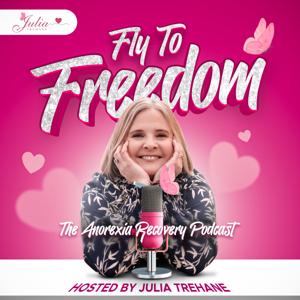


Eating Disorder Recovery Q&A: Body Image, Exercise Addiction, Night Hunger, Shame, and Control
In this episode of Fly to Freedom, I’m answering real, unfiltered questions from people navigating eating disorder recovery.
These aren’t polished situations or neatly packaged problems. They are the honest, often overwhelming experiences that come up when you are in the middle of recovery—when thoughts feel loud, your body feels unfamiliar, and control still feels necessary.
In this episode, I talk through what it actually looks like to keep moving forward when things feel chaotic, and why recovery doesn’t require you to feel ready, calm, or certain before you take action.
If you’ve ever felt stuck between wanting recovery and feeling pulled back by fear, this episode will meet you exactly where you are.
Recovery is not about waiting for the thoughts to quieten or the fear to disappear.
It’s about learning to take the next step while the thoughts are still there.
It’s about choosing nourishment, rest, and support even when your mind is telling you not to.
That is how change happens.
If you’re listening to this and recognising your own thoughts, your own patterns, your own struggles—you are not alone in this.
So much of what feels deeply personal in an eating disorder is actually shared.
And when those thoughts are spoken out loud, something begins to shift.
If you’re finding that the hardest moments are the ones in between—when thoughts feel loud, decisions feel overwhelming, or you’re not sure what to do next—there is now a way to support yourself in those exact moments.
Support When You Need It Most – The Recovery Companion App
Recovery doesn’t happen in neat, controlled environments.
It happens in real life.
It happens when you wake up and your thoughts begin to form.
It happens before a meal, when everything in you wants to avoid it.
It happens after eating, when your head gets loud and the pull to go backwards kicks in.
It happens in those moments where you feel unsure or stuck.
And that’s where the Recovery Companion comes in.
This is a free app designed to support you in the moments that matter most, not just when you’re listening, but when you’re actually living your recovery.
Inside the app, you’ll find:
Running quietly in the background is something powerful:
A clear view of where your actions are pointing.
You’ll see the balance between Recovery Actions and Eating Disorder Actions, based on what you actually do, not how loud your thoughts feel.
Because recovery isn’t about waiting for the thoughts to disappear.
It’s about gently shifting your actions, again and again.
The Recovery Companion is currently free to download, and it’s there to support you through the everyday work of recovery.
👉 Explore the app here:
https://www.edrecoverycircle.com/app-landing
In this episode of Fly To Freedom, I’m joined by Laura—one of my former clients and a member of The Eating Disorder Recovery Circle. She’s also a doctor working in emergency medicine, and her story highlights something I see time and time again:
Eating disorders do not discriminate.
You can be intelligent, successful, capable, and still feel completely trapped in the patterns of an eating disorder.
From the outside, Laura’s life looked like it was working. She had a career, she was showing up, she was getting on with things. But inside, it was a completely different story—constant mental noise, exhaustion, and the relentless feeling of not being good enough.
If you’ve ever thought, “I’m still managing my life, so maybe it’s not that bad,” this episode will speak to you.
We talk openly about what was really going on beneath the surface, why focusing on food alone isn’t enough for full eating disorder recovery, and what actually needs to shift for real freedom to happen.
Laura shares her experience of going through traditional treatment, weight restoration, and still feeling lost—and how everything changed when she began doing the deeper inner work.
This conversation is honest, grounded, and full of hope.
In this episode, I talk about:
As a specialist anorexia recovery coach within the eating disorder recovery space, this episode reflects something I feel very strongly about:
Recovery is not just about changing behaviours—it’s about changing your relationship with yourself.
Join The Eating Disorder Recovery Circle:
If you’re ready to stop doing this on your own and want support from people who truly understand eating disorder recovery, you are very welcome inside The Eating Disorder Recovery Circle:
https://www.edrecoverycircle.com/join
Inside, you’ll find real support, coaching, and a community who understand both the behaviours and the deeper emotional work that recovery asks of you.
If this episode of Fly To Freedom resonated with you, share it with someone who needs to hear that full recovery is possible.
What This Episode Covers
In this episode of Fly to Freedom, I’m answering real questions from members inside the Eating Disorder Recovery Circle.
These are the questions people are living with right now in eating disorder recovery — the ones that don’t always get said out loud, but are felt deeply by so many.
We talk about guilt after eating, fear of weight gain, extreme hunger, habits that feel impossible to break, and the question so many people carry quietly:
Is full recovery actually possible?
If you’ve ever felt stuck between wanting recovery and fearing what it means…
If your thoughts feel repetitive, exhausting, or confusing…
If part of you longs for freedom but another part still clings to control…
This episode is for you.
One of the most powerful things about these Q&A episodes is the reminder that you are not alone in what you’re experiencing.
The thoughts.
The doubts.
The fear.
The moments of progress followed by wobbles.
These are not signs that recovery isn’t working. They are part of the process of healing from an eating disorder.
And when one person asks a question, there are so many others quietly thinking:
“That’s exactly how I feel.”
In this episode, I walk through some of the most common and challenging experiences in eating disorder recovery, including:
You don’t need to feel calm, confident, or certain to keep moving forward.
Recovery is built in the moments where you choose to act in alignment with healing, even when it feels uncomfortable.
Thoughts can feel true simply because they’ve been repeated for years.
Recovery begins when you gently question those patterns, rather than automatically believing them.
Whether it’s extreme hunger, weight changes, or digestive issues — your body is responding, repairing, and trying to find balance.
The belief that control is protecting you is incredibly common.
In reality, it often keeps the body and mind stuck in a state of threat.
Not managing. Not coping. Not constantly watching yourself.
Full freedom.
You don’t have to have everything figured out.
You don’t have to feel 100% ready.
You don’t have to silence every thought before you move forward.
You just need to keep taking the next step.
If you’re listening to this and thinking,
“I wish I had somewhere to ask my own questions…”
That’s exactly why I created the Eating Disorder Recovery Circle.
Inside, you’ll find:
This is a space where you don’t have to do this alone.
You can explore everything here:
https://www.edrecoverycircle.com/join
Recovery can feel messy, confusing, and uncertain at times.
And it can also lead to something far greater than you might currently believe is possible.
Keep going.
Keep choosing yourself.
Keep taking the next step.
Freedom is possible.
What happens when recovery advice sounds beautiful… but doesn’t actually work for your body?
In this episode of Fly To Freedom, I’m joined by Rachael Stern — a clinician with both professional expertise and lived experience of an eating disorder — to explore something that so many people quietly struggle with:
Recovery is not the same for every body.
Sometimes the body doesn’t feel neutral.
Sometimes there is chronic pain, diabetes, food intolerances, gut issues, hormonal shifts, migraines, or autoimmune conditions.
And when that’s the case, phrases like “just trust your body” or “let go of control” can feel confusing… and even unsafe.
Together, we talk about what eating disorder recovery really looks like when your body has genuine physical needs — and how to navigate recovery in a way that is compassionate, realistic, and deeply personal.
This is a conversation for anyone who has ever felt like they are failing recovery because their body doesn’t fit the expected model.
Why “just trust your body” can feel unsafe in eating disorder recoveryThe overlap between eating disorders, chronic illness, neurodivergence, and traumaHow food intolerances, autoimmune conditions, and medical needs can shape recoveryThe difference between self-care and eating disorder behaviours when food choices are limited
Why intuitive eating doesn’t work for everyone — and what recovery can look like insteadThe grief involved when your body has limitationsWhy eating disorders can feel like they “work” — and how to move beyond thatHow to approach recovery when you don’t fully want it yetWhat it means to build trust with your body, even when it feels unpredictable
Your body having real needs does not mean you are doing recovery wrong.
Recovery is not a single path.
It is not a checklist.
And it does not need to look like anyone else’s.
You are allowed to find a way of recovering that works for your body.
Rachael Stern is a clinician in private practice with both lived and professional experience of eating disorders.
Her work focuses on the intersection of eating disorder recovery with chronic illness, chronic pain, neurodivergence, and medical complexity. She brings a deeply compassionate and realistic perspective to recovery — one that honours the grey areas, the nuance, and the individuality of each person’s experience.
🌐 Website: www.breaktheframetherapy.com📧 Email: [email protected]📱 Phone: 310-383-1090📸 Instagram: https://www.instagram.com/breaktheframetherapy
If this episode resonated with you, I want you to take this with you:
Recovery is still possible, even in a complex body.
It may look different.
It may feel different.
But it is still available to you.
And you don’t have to figure it all out alone.
Inside The Eating Disorder Recovery Circle, you’ll find support, tools, and understanding from people who truly get what this process feels like — especially in the messy, in-between moments.
You are very welcome inside:
https://www.edrecoverycircle.com/join
If this conversation spoke to you, there are many more episodes of Fly To Freedom exploring eating disorder recovery, healing, and finding your way back to yourself.
This Is Why Recovery Feels So Hard
Recovery can feel exhausting.
You’re eating more.
You’re trying.
You’re pushing through fear.
And still your heart races at the table.
Still your body feels flooded.
Still your mind questions whether you’re doing it “right”.
In this episode of Fly to Freedom, I talk openly about why eating disorder recovery and anorexia recovery can feel overwhelming — even when you are deeply committed.
Because recovery is not just behavioural change.
It is nervous system change.
When my body had lived in chronic stress and restriction for years, it adapted. Control felt stabilising. Smaller felt safer. Needing less felt predictable. Those patterns wired themselves in beneath conscious thought.
So when I began to nourish consistently…
When I allowed rest…
When I loosened control…
My system reacted.
The panic.
The adrenaline.
The wired exhaustion.
It felt like I was under attack.
I now understand that what I was experiencing was recalibration.
In this episode, I explore:
• What early recovery actually felt like in my body
• Why hunger cues can disappear in anorexia recovery
• How survival chemistry fuels anxiety and racing thoughts
• Why comparison keeps the nervous system braced
• The difference between forcing recovery and creating safety
• What truly shifts when healing becomes relational rather than performative
Recovery can look steady on the outside and still feel chaotic internally. The turning point for me came when I stopped measuring myself and started asking a different question:
Am I building safety?
That question changed everything.
For me, eating disorder recovery became less about conquering fear and more about staying with myself.
Each time I ate consistently, even when hunger felt unclear, I was teaching my body that nourishment was safe.
Each time I rested, even when it felt undeserved, I was teaching my nervous system that stillness would not undo me.
Each time fear rose and I stayed present, I was building capacity.
Anorexia recovery is physical, yes.
It is also neurological.
It is relational.
It is a return to safety in your own body.
That return happens through repetition.
Through steadiness.
Through compassion that is strong enough to hold discomfort.
There were moments in my recovery where fear was louder than motivation.
That is why your WHY matters.
When you are clear on why you want recovery more than the eating disorder, you move differently. Your actions become intentional rather than reactive.
If you want help clarifying that anchor for yourself, I created a free worksheet to guide you through it:
👉 Find Your WHY
https://www.edrecoverycircle.com/find-your-why
Clarity strengthens commitment. And commitment builds sustainable eating disorder recovery.
I created The Eating Disorder Recovery Circle as a structured, grounded space for full recovery — rooted in nervous system safety rather than comparison or performance.
Inside, I support eating disorder recovery and anorexia recovery through:
• Structured recovery courses, including Fear of Weight Gain
• The Feelings Navigator for emotional regulation
• Expert workshops from people with lived experience
• Dedicated community spaces
• Ongoing support between therapy sessions
It exists to complement clinical care and provide consistent, recovery-focused support in the in-between moments.
You can explore The Eating Disorder Recovery Circle here:
👉 https://www.edrecoverycircle.com/join
For daily insights into eating disorder recovery, anorexia recovery, nervous system healing, and identity work, you can connect with me on Instagram:
👉 https://www.instagram.com/juliatrehane
What I Share in This EpisodeRecovery Is a Return to SelfFind Your WHY: The Anchor in RecoveryThe Eating Disorder Recovery CircleConnect With Me
Welcome to this month’s Q&A episode of Fly To Freedom.
These questions come directly from members inside the Eating Disorder Recovery Circle. They are real, honest reflections from people in the middle of recovery — people who are brave enough to say the quiet things out loud.
In this episode, we explore:
• Fear of fullness and the panic that can follow eating
• The “I feel fat” sensation and what’s really happening underneath
• When it’s appropriate to ease pressure in recovery
• Dog walking vs compulsive exercise — how to tell the difference
• Fear foods, preference, and the evolution from structure to integration
• Guilt and grief for the years lost to an eating disorder
• Weight gain fear and comparison in recovery
• Feeling trapped between thinness hope and body exhaustion
• What “all in” actually means (and what it doesn’t)
• Why restriction changes personality, irritability, and memory
• Recovery feeling easier than expected — and why that can be normal
• Trauma, EMDR, and the fear of relapse
• Living on chocolate and fearing meals — how to move forward
• The overnight “reset” effect after sleep
• Delayed fullness and loud digestion in recovery
This episode weaves together nervous system science, lived experience, and compassionate guidance for the messy middle of recovery.
If you have ever thought:
“Why does fullness feel so threatening?”
“Why do I wake up feeling like a different person?”
“Will my weight ever stabilise?”
“Am I doing recovery properly?”
“Is it safe to go deeper into trauma work?”
You will likely hear yourself in these questions.
Recovery is not linear. It is not one-size-fits-all. And it is not meant to feel like another rigid rule book.
It is a process of teaching your nervous system that food is safe, rest is allowed, and your body does not need to be at war with you.
If listening to this felt like someone finally put words to what you’ve been carrying quietly… that is not an accident.
The Eating Disorder Recovery Circle exists for exactly this kind of work.
Inside the Circle, you can:
• Submit questions for monthly Q&As
• Join live group coaching calls
• Access recovery courses and workshops
• Use tools like the Feelings Navigator to work with emotions instead of fighting them
• Connect with others who understand this experience from the inside
It is a space that complements therapy beautifully, or stands alone if that’s where you are.
If you are ready for recovery that feels supported, steady, and grounded in both science and lived experience, you are very welcome inside.
You can join us here:
👉 https://www.edrecoverycircle.com/join
You do not have to navigate fear of fullness, weight anxiety, trauma, or the “reset” mornings alone.
You are learning.
Your body is adapting.
And you deserve support while you do.
I’m sending you so much love.
I’ll see you next time.
In this episode of Fly to Freedom, I’m joined by writer, speaker, and podcast host Brianne Roberge for a deeply honest conversation about self-worth, trauma, and the belief that love has to be earned.
We talk about what happens when you grow up learning to perform for approval, to change yourself to be acceptable, and to control your body in the hope that it will finally make you feel worthy. Brianne shares her personal journey through pageant culture, extreme physical control, cosmetic surgery, serious health consequences, and the moment everything began to shift when she stopped trying to fix herself and started listening instead.
This conversation will resonate deeply if eating disorder recovery or anorexia recovery has felt less about food — and more about learning how to stay with yourself, even when it’s uncomfortable.
This episode includes discussion of childhood trauma and sexual abuse. Please listen gently and take pauses if you need to.
In this episode, we explore:
How early experiences can teach us to earn love through performance and self-erasure
Why changing the body can feel like the solution when the wound underneath is emotional
The link between trauma, people-pleasing, and body control in eating disorder recovery
What happens when the body starts signalling that something isn’t right
The difference between self-care and true self-love
Learning to stay with uncomfortable feelings instead of abandoning yourself
Why self-worth is not something you can earn by becoming someone else
How finding your voice can change relationships — and sometimes end them
What freedom begins to feel like when you stop hustling for love
So many people in eating disorder recovery and anorexia recovery recognise the pattern Brianne describes — trying to be smaller, better, quieter, more disciplined, or more acceptable in order to feel safe and loved.
This episode gently unpacks why those strategies never bring lasting peace, and why healing begins when worth stops being conditional.
Brianne Roberge is a writer, speaker, and podcast host who shares openly about trauma healing, self-worth, embodiment, and learning how to come home to yourself after a lifetime of performing for love.
You can connect with Brianne here:
Instagram: @itsbrianneroberge
Facebook: https://www.facebook.com/itsbrianneroberge
Website: https://www.brianneroberge.com
Podcast: https://open.spotify.com/show/5zTzthDnf5Bt5hM08FSDAk
YouTube: linked via her website
If this episode stirred something in you, that makes sense.
These beliefs often form early, and unlearning them takes time, patience, and compassion.
You don’t have to become someone else to be worthy.
You are allowed to stop performing.
You are allowed to stay with yourself.
Welcome to the January Q&A episode of Fly to Freedom.
This monthly Q&A comes directly from inside The Eating Disorder Recovery Circle and features real questions from real people navigating the complex, emotional, and deeply human process of eating disorder recovery.
In this episode, Julia answers questions around nervous system regulation, identity, extreme hunger, perfectionism, control, and the exhausting cycle of food and exercise. These are conversations for anyone who wants recovery, but feels overwhelmed, unsure, or afraid of letting go of the strategies that once felt safe.
Throughout the episode, Julia explores how healing is not about fixing yourself, but about learning how to stay with yourself — even when fear is loud, even when the body feels dysregulated, and even when recovery feels slow.
How to regulate the nervous system during eating disorder recovery without forcing calm
Why recovery can feel threatening to the body, even when it’s what you want
What nervous system regulation really looks like when fear and panic are present
Extreme hunger in recovery: why some people experience it strongly and others don’t
Why feeling full quickly or disconnected from hunger cues is common and meaningful
How anxiety, stress, and past restriction affect digestion and hunger signals
Identity confusion in long-term eating disorder recovery
How to tell where the eating disorder ends and where you begin
Perfectionism, control, sensitivity, and self-imposed rules — coping strategies, not character flaws
Perimenopause, ageing, and emotional sensitivity in recovery
Letting go of control while learning to feel safe in your body
Going “all in” with food and exercise without overwhelming your nervous system
Why recovery is about presence, not perfection or speed
How compassion and safety create sustainable healing
This episode is for you if you:
Feel dysregulated or panicked during recovery
Worry that your hunger signals are “wrong”
Feel unsure who you are without the eating disorder
Feel stuck in cycles of food challenges and compensatory behaviours
Want recovery, but need it to honour your nervous system and capacity
Julia gently reminds you that your responses make sense, your body is protecting you, and recovery is about coming home to yourself — not becoming someone else.
If you want ongoing support alongside therapy or clinical care, this is exactly the kind of conversation that happens every month inside The Eating Disorder Recovery Circle.
Inside the circle, members receive:
Monthly live Q&A sessions
Group coaching calls
Expert-led workshops and courses
The Feelings Navigator to help you work with emotions in the moment
24/7 peer support from people who truly understand eating disorder recovery
You are welcome exactly as you are, and you do not have to do recovery alone.
🧭 Explore the Feelings Navigator:
https://www.edrecoverycircle.com/how-are-you-feeling
🌐 Website:
https://www.edrecoverycircle.com
https://juliatrehane.com
📸 Instagram:
https://www.instagram.com/juliatrehane
Bulimia can feel confusing, shame-filled, and deeply misunderstood — especially when the binge–purge cycle starts to feel automatic, secretive, or bigger than willpower.
In this episode of Fly To Freedom, I’m joined by Dr Rachel Evans (psychologist, hypnotherapist, and host of the Just Eat Normally podcast). Rachel brings both lived experience and specialist knowledge of bulimia, and she helps me unpack what bulimia actually is, why the behaviours happen, and how recovery can become possible — even when things have felt stuck for a long time.
We talk about the psychology and biology behind bingeing and purging, the role of fear and compulsion, and the myths that keep people trapped — including myths around calories, laxatives, and exercise. I also share openly that my lived experience is with anorexia, not bulimia, and I invite Rachel to guide the conversation with accuracy and compassion.
How Rachel describes bulimia (and why diagnosis labels can feel vague or limiting)
What makes a binge feel like a binge (including secrecy, speed, dissociation, and “I can’t stop” urgency)
The different types of compensatory behaviours, including vomiting, laxatives, fasting, and compulsive exercise
Why it’s often the intention and fear underneath a behaviour that shows whether it’s becoming a problem
The myths people get taught about laxatives and purging, and why they’re never the “solution” the eating disorder promises
How exercise can become a form of purging — even when it looks “healthy” from the outside
Why bingeing and purging can create a “high” or sense of relief (and how that reinforces the cycle)
Why understanding what the behaviour is doing for you matters more than shame
Why eating disorders often morph and change over time, especially around big life events
Why punishment never creates healing — and why compassion and understanding actually change things
A practical next step: gently noticing patterns (feelings, triggers, restriction, urges) without judgement
Recovery is possible. You can live without the constant shadow of food thoughts, urges, shame, and compensation. You deserve support that helps you understand what’s driving the cycle — and what to do instead.
Rachel is a psychologist and hypnotherapist, and the host of the Just Eat Normally podcast. She has lived experience of bulimia recovery and supports people who want to step out of the binge–purge cycle for good.
Website: eatingdisordertherapist.co.uk
Instagram: rachel.evans.phd
Podcast: Just Eat Normally
I also share where you can find ongoing support inside The Eating Disorder Recovery Circle: https://www.edrecoverycircle.com/
You can find more recovery tips and 1:1 coaching at Juliatrehane.com
And you can always find me over on Instagram @juliatrehane
This was a tough episode to record, but I've felt that it needed to be recorded for some time.
I'd like your comments! Please tell me if you agree with what I'm saying, if you disagree, how are you affected...... anything!
This needs to be talked about.
Why? Because weight loss injections are everywhere at the moment.It's not the medication itself that matters most to me — it’s the message travelling with it.
In this episode of Fly to Freedom, I speak openly about why the current cultural obsession with appetite suppression feels so unsettling, especially through the lens of eating disorder recovery, nervous system health, and body trust.
I must say that this is not a medical episode.
It is not advice.
It is not a judgement of anyone’s choices.
It is a deeply human conversation about what happens when hunger is framed as a flaw, appetite is treated as something to eliminate, and smaller bodies are quietly sold as safer, better, and more worthy.
Together, we explore how weight loss injections are being positioned not just as a treatment, but as an idea — the idea that the body is a problem to solve, that discomfort should be bypassed, and that control equals responsibility. She unpacks why this message can feel like relief in a world that already teaches body hatred, and why that relief can still come at a cost.
This episode looks at:
How appetite suppression reshapes our relationship with hunger, sensation, and trust
Why this cultural moment is particularly dangerous for people in eating disorder recovery
The nervous system impact of living in a world that celebrates silencing hunger
The difference between short-term relief and long-term healing
How control around food and weight has become moralised
Why body dissatisfaction is not vanity, but survival in a judgement-heavy culture
The familiar patterns that fuel eating disorder cycles — even when they appear calm or “responsible”
Who benefits when bodies are treated as problems, and who quietly pays the price
I speak honestly about the grief, fear, anger, and confusion this movement can stir — especially for those learning that eating is safe, that hunger can be trusted, and that bodies are not enemies.
If you are using weight loss injections, or considering them, you are welcome here. This episode does not pull the ground from beneath you. It gently asks where worth has been taught to live, and whether shrinking has become the price of belonging.
At the core, I want to ask you a quieter, deeper question:
What kind of relationship do you want to have with your body over a lifetime — one built on control, or one built on trust?
Choosing body trust in a culture that profits from doubt is countercultural. It can feel lonely. It can feel scary. And it is deeply powerful.
This is why The Eating Disorder Recovery Circle exists — to talk about hunger, fear, worth, and bodies out loud, together. Not to fix bodies, but to support real people navigating a very loud world.
If this sort of life is what you're searching for, I encourage you to reach out.
Steps to take now:
Subscribe to this podcast
Follow me on Instagram
Join my Email Family
Take the best step and join us in the Circle.
Whatever you do, just keep taking recovery actions. Every day.
From the publisher's feed
10,508 Listeners
166 Listeners
230 Listeners
49 Listeners
107 Listeners
403 Listeners

16 Listeners
8 Listeners
47 Listeners
155 Listeners
34 Listeners
23 Listeners

19 Listeners
24 Listeners
99 Listeners