
Sign up to save your podcasts
Or



Andrés Gómez Emilsson is a consciousness researcher, philosopher, and co-founder of the Qualia Research Institute (QRI) -- an organization attempting to develop a precise mathematical language for subjective experience and its emotional valence, with the ultimate aim of understanding and reducing suffering.
Andrés's work spans algorithm design, psychedelic theory, neurotechnology, and mapping the computational properties of consciousness. He holds a master's in Psychology from Stanford with an emphasis on computational models, and has a professional background in graph theory, statistics, and affective science.
Andrés breaks the mold of conventional academia – alongside his mathematical and computational training, he has extensively explored altered states of consciousness through psychedelics and meditation, bringing both intellectual rigor and direct experience to consciousness research.
In this episode, we explore the role math plays in understanding and mapping consciousness through qualia formalism. We also unpack some of the core perspectives that inform Andrés's thinking: why the building blocks of reality may be made of experience itself (panpsychism), the case that we are all one (open individualism), the Symmetry Theory of Valence, why he believes the hippies were right about love, and why he doesn't think AI like ChatGPT is conscious.
We then dive into how to better think about and integrate psychedelic experiences, from ego death to nondual states of oneness. Andrés shares early findings from QRI's retreat comparing 5-MeO-DMT with the jhanas, including whether a 5-MeO-DMT breakthrough is the same as the cessation advanced meditators describe. He also offers practical ways to increase your chances of having a positive 5-MeO-DMT experience, and explains why, despite all his experience with psychedelics and meditation, he doesn't claim any spiritual attainments.
🔗 LINKS & RESOURCES 🔗
🕰️ TIMESTAMPS 🕰️
0:00 - Introduction to Andrés Gómez Emilsson & the Qualia Research Institute
4:11 - The role of math in consciousness research
12:37 - Qualia formalism: a mathematical language for subjective experience
14:27 - Perspectives that inform Andrés's thinking – epistemological optimism, panpsychism, we are all one & the Symmetry Theory of Valence
19:42 - What the hippies were right about
20:56 - Why AI is not conscious
24:00 - Diving deeper into the idea that we are all one
33:30 - Experiencing ego death at 16 years old
36:30 - The primacy of direct experience for shifting one's sense of separateness
39:48 - The trippy reality of open individualism and eternalism
53:27 - How to better integrate psychedelic experiences
1:03:35 - I am God & God is lonely
1:07:33 - We are both one and many
1:13:22 - Overfitting, underfitting, and robust fit in psychedelic integration
1:18:03 - Failure modes of integrating N,N-DMT vs 5-MeO-DMT
1:20:40 - Is a 5-MeO-DMT breakthrough the same as the cessation advanced meditators describe? (comparing 5-MeO-DMT to the jhanas)
1:35:18 - Why Andrés doesn't claim any spiritual attainments
1:39:02 - Lessons from Andrés's 1000+ 5-MeO-DMT trips
1:50:31 - Best practices for increasing the likelihood of a positive 5-MeO-DMT experience
1:54:55 - Final message
*Subscribe to my YouTube channel to watch the video versions of the Elevating Consciousness Podcast
*Subscribe to the Insighter Substack to get in-depth articles on the theory and practice of human transformation through a post-conventional lens
Geoff Fitch & Abigail Lynam are leaders of Pacific Integral, an organization that creates transformative containers where practitioners of change discover new possibilities for being and acting in the world.
Geoff is a co-founder of Pacific Integral, and brings more than thirty years of experience in business, management, and organizational leadership. He was also on the original research team behind the STAGES developmental model, and is a senior scorer of the assessment.
Abigail is a senior faculty member and coach for Pacific Integral's programs. She also serves as associate faculty at Fielding Graduate University's PhD program in Human and Organizational Development and at the California Institute of Human Sciences, and is an advanced facilitator of Integral Polarity Practice as well as a developmental coach and scorer with Stages International.
For over twenty years and across three continents, Abigail and Geoff have facilitated Generating Transformative Change, a nine-month cohort program that liberates participants' capacity to show up more fully as themselves while catalyzing transformation in the systems and communities they're a part of.
In this episode, we speak about the turning points that shaped Abigail and Geoff's paths and the teachers and teachings that influenced them most. We explore Pacific Integral's 7 Facets of Awakened Wholeness framework and the relationship between individual and collective transformation.
We get into the craft of group work: balancing structure and emergence, holding the polarity of "We" and "I," and our culture's overemphasis on difference. We also explore collective shadow work and the dynamics of scapegoating. Later, Geoff guides us through an experiential practice exploring the ways we hide in relationship.
Toward the end, Geoff & Abigail share the biggest mistakes they've learned from across 30+ cohorts, what still remains mysterious to them about human transformation, and what it might look like to move beyond modernity and hyper-individuality.
🔗 LINKS & RESOURCES 🔗
🕰️ TIMESTAMPS 🕰️
0:00 - Introduction
3:32 - Significant turning points in Abigail & Geoff's journeys
11:02 - Impactful teachers & teachings
17:06 - The 7 Facets of Awakened Wholeness framework
23:58 - Individual vs Collective transformation
32:42 - Navigating structure & emergence in group work
42:17 - The We & I polarity and the overemphasis on difference
46:40 - The role of crisis in bringing us together
49:22 - Collective shadow work and the scapegoat
1:05:30 - One way I hide in relationship guided exercise
1:13:43 - Continually coming back to the ground of awakened awareness
1:17:16 - The biggest mistakes from facilitating 30+ cohorts
1:25:27 - What remains mysterious about human transformation
1:29:07 - Moving beyond modernity and hyper-individuality
*Subscribe to my YouTube channel to watch the video versions of the Elevating Consciousness Podcast
*Subscribe to the Insighter Substack to get in-depth articles on the theory and practice of human transformation through a post-conventional lens
Stephen Jenkinson is a former palliative care worker, cultural activist, and writer whose work explores the intersection of death, grief, meaning, elderhood, and ceremony. He has spent decades helping people navigate grief, death, and dying — both as the former director of palliative care at a major Canadian hospital and afterward through his Orphan Wisdom School, which seeks to cultivate deep life skills in an age of cultural fragmentation.
A recovered theologian, builder, stone carver, and farmer, Jenkinson brings the authority of lived experience to everything he touches. He's traveled the continent as a ceremonial guide for weddings, funerals, and blessings — work born from people's deep hunger for elders and ancestry.
Along with musician Gregory Hoskins, he created Nights of Grief and Mystery, a musical storytelling ceremony that has evolved into an international journey exploring grief, authenticity, and what it means to live as if dying were not a failure.
He is the author of numerous books, including the award-winning Die Wise, Come of Age, and Matrimony. His latest work, Trembling, Still: The Awful Clarity of a Mind in Eclipse, offers a searing confrontation with his own mortality and degeneration as he navigates Parkinson's disease.
In this conversation we speak about Stephen's journey with Parkinson's and the impact it has had on his mind, body, and life — how every case of Parkinson's unfolds differently, and why he understands the work ahead of him as translation rather than endurance. We explore what happens to the sense of self under neurological degeneration, whether the voice that arrives in illness is a stranger or God, and when it is okay to die.
We get into the polarities of trying and accepting, and how one might navigate them more skillfully without collapsing into either resignation or fight. Stephen shares his experience with Ibogaine, why he passed on the Toad (5-MeO-DMT), and what psychedelic experience does and doesn't offer someone facing mortality directly.
We also explore how Stephen stays grounded in healthy skepticism without falling into cynicism, what lies beyond both cynicism and hope, what's left for him now, and his new record Caldera with Gregory Hoskins along with the upcoming North American tour.
🔗 LINKS & RESOURCES 🔗
🕰️ TIMESTAMPS 🕰️
0:00 - Introduction
3:31 - How Parkinson's has impacted Stephen
7:44 - The work is of translation, not endurance
9:56 - Is that a stranger or God talking to you?
12:32 - Every case of Parkinson's unfolds differently
13:48 - Questioning the self
20:18 - Trying vs accepting
30:34 - When is it okay to die?
31:54 - Stephen's experience with taking Ibogaine
43:35 - Passing on the Toad (5-MeO-DMT)
46:54 - Beyond cynicism and hope
54:45 - What's left for Stephen?
59:18 - Stephen's new record "Caldera" and upcoming tour
*Subscribe to my YouTube channel to watch the video versions of the Elevating Consciousness Podcast
*Subscribe to the Insighter Substack to get in-depth articles on the theory and practice of human transformation through a post-conventional lens
Kabir Kadre is the executive director of Open Field Awakening, a nonprofit initiative exploring how wisdom, human development, and collective practice can help humanity navigate the meta-crisis. For more than two decades he has worked at the intersection of organizational leadership, contemplative inquiry, and social transformation.
A quadriplegic since a spinal cord injury in 2002, Kabir brings a deeply embodied perspective to questions of interdependence, vulnerability, care, and human flourishing. His work is informed by a long-standing meditation practice in an Indo-Tibetan lineage and a commitment to translating spiritual and developmental insight into meaningful service.
In this episode, we explore the gift of the nonordinary path, the 2002 car accident that left Kabir quadriplegic and took the lives of two of his companions, and the notable absence of the grief, depression, and survivor's guilt that convention promises.
We talk about Kabir's unconventional relationship to death and loss, how research on reincarnation informed his mystical experiences, and how the demands of a spinal cord injury forced him into intimacy with others — further dissolving the illusion of a separate self.
Kabir shares the impact of working with his teacher Dan Brown and an Indo-Tibetan meditation lineage, reflects on contemplating assisted suicide, and describes what he took from Dan Brown — that the end of suffering is available right now, and that it means the end of generating suffering for others rather than any kind of escape.
We then turn to the meta-crisis — the layer of causality beneath the visible polycrisis of climate, political division, and economic disparity — the problem with how the meta-crisis is often framed, and how it can be understood as both an initiation and an invitation. We explore Kabir's work with Open Field Awakening, which he frames as a container for one question: given the nature of the world today, what should I do, and how do I build that question well enough to be worth listening for a response?
We close on how to balance contemplative practice with systems change and political engagement, the collapse of the distinction between the cushion and the world, and Kabir's reminder that this work isn't tomorrow's — it's the conversation you're in, the body you're tending, the person who walks into the room in tears, whatever meets us in this very moment, right now.
🔗 LINKS & RESOURCES 🔗
🕰️ TIMESTAMPS 🕰️
0:00 - Introduction
5:20 - The gift of the nonordinary path
7:31 - Becoming a quadriplegic and how disability changed Kabir's life
11:58 - The accident that led to Kabir's spinal cord injury and took two of his friends' lives
19:10 - The surprising lack of grief, depression, and survivor's guilt in the aftermath of the accident
21:35 - An unconventional relationship to death and loss
26:00 - How research on reincarnation informed Kabir's mystical experiences
31:55 - Relationality, depending on others, and seeing through the illusion of separation
39:07 - Diving deeper into Kabir's mystical experiences
43:40 - The impact of working with Dan Brown and the Indo-Tibetan meditation lineage
48:18 - Contemplating assisted suicide
49:48 - It doesn't take a long time to awaken, and what the end of suffering actually means
55:33 - Artem shares about his experience with disability
1:01:45 - Experiencing what's arising as a blessing and the beautiful constraint
1:06:08 - What is the meta-crisis?
1:12:29 - The problem with the meta-crisis framing
1:14:25 - Many people don't see life as sacred — reincarnation vs YOLO
1:16:25 - The meta-crisis as an initiation and an invitation
1:21:28 - Kabir's work with Open Field Awakening
1:26:20 - How can we balance contemplative practice with systems change or political engagement?
1:42:15 - Finishing up with some poetry
*Subscribe to my YouTube channel to watch the video versions of the Elevating Consciousness Podcast
*Subscribe to the Insighter Substack to get in-depth articles on the theory and practice of human transformation through a post-conventional lens
Christopher Bache is a professor emeritus of Philosophy and Religious Studies at Youngstown State University, where he taught for 33 years. He is also adjunct faculty at the California Institute of Integral Studies and an Emeritus Fellow at the Institute of Noetic Sciences. Trained at Notre Dame, Cambridge, and Brown, Bache spent seven years earning a PhD — a process that turned him into a hardcore agnostic. He then began a 20-year self-experiment taking high-dose LSD using protocols developed by psychedelic pioneer Stanislav Grof.
For two decades, Chris lived a double life — a professor in public, and in private, a man conducting 73 high-dose LSD sessions in search of insight into consciousness and reality. He kept the work hidden from his university for most of that time, even while teaching courses on Eastern religion, mysticism, and consciousness. He is the author of several books including "Dark Night, Early Dawn," "The Living Classroom," and "LSD and the Mind of the Universe" — the book in which he finally told the full story of his psychedelic explorations.
In this conversation, we explore whether psychedelics hold genuine spiritual and philosophical insights not otherwise accessible through meditation or contemplative practice, the three ways of consciously using psychedelics — personal healing, spiritual awakening, and cosmological exploration — and how Vajrayana practice shaped Chris's psychedelic work.
We get into whether psychedelic experiences build systematically over recurring sessions, the trouble with integrating short-acting psychedelics like 5-MeO-DMT, psychedelic work in groups vs individually, Chris's method for capturing insights from his sessions, and his leading thoughts on reincarnation and the living classroom of collective intelligence.
We also explore the varieties of psychedelic experiences from falling asleep to meeting cosmic beings, how to better integrate peak states and psychedelic experiences into everyday life, and what it means to lose meaning, find meaning, and remember God.
🔗 LINKS & RESOURCES 🔗
🕰️ TIMESTAMPS 🕰️
0:00 - Introduction
5:06 - Do psychedelics hold spiritual and philosophical insights not accessible through meditation or contemplative practice?
6:52 - Three ways of consciously using psychedelics — personal healing, spiritual awakening and cosmological exploration
10:42 - Can we truly separate awakening from metaphysics?
13:08 - How Vajrayana practice impacted Chris's psychedelic explorations
17:48 - How Chris's Diamond Luminosity experience differs from Rigpa
21:20 - Frequency of use, diminishing returns, and do psychedelic experiences systematically build on each other?
27:40 - Are psychedelic experiences just distortions of consciousness that take us away from wisdom?
43:45 - 5-MeO-DMT and the trouble with integrating short-acting psychedelics
50:05 - Psychedelic work in groups vs individually
52:01 - Chris's method for capturing insights from his psychedelic sessions
53:48 - Can you journey without a sitter?
57:31 - Chris's leading thoughts on reincarnation
1:01:40 - The Living Classroom and collective intelligence
1:04:55 - Varieties of psychedelic experiences — from falling asleep to meeting cosmic beings
1:16:49 - How to better integrate peak states and psychedelic experiences
1:21:40 - Losing meaning, finding meaning and remembering God
1:28:09 - Being misunderstood and a final message
*Subscribe to my YouTube channel to watch the video versions of the Elevating Consciousness Podcast
*Subscribe to the Insighter Substack to get in-depth articles on the theory and practice of human transformation through a post-conventional lens
Andrew Louis Venezia is a meditation and Circling teacher, coach, and writer based in Amsterdam, whose work presents Circling and related practices as a path of Tantric awakening and integration. After experiencing a life-changing encounter with Awakened Interbeing during a retreat for his Master's degree cohort, Andrew embarked on a three-year research project exploring the intersection of relational practice and awakening. It was during this period that he discovered Circling.
He has since dedicated his life to weaving Circling together with the classical Tantric paths of Vajrayana Buddhism and Nondual Shaiva Tantra, as well as modern, embodied approaches to psychological wellbeing. With more than a decade of teaching and deep engagement with many approaches to growth, healing, development, and awakening, Andrew has come to see this as the most integrative path available — one that meets the head, the heart, and the body at once, and allows for a seamless, nondual expression of form and formlessness, self and other, awakening and embodied life.
He recently released "What It's Like to Be You" — a book that unpacks Circling through the lens of Tantric awakening, available for free on his website.
In this conversation, we explore Andrew's early mystical experiences and how meditation helped him integrate them, the relationship between psychedelics and meditation, what Circling is and why we practice it, and the Tantric view of transformation — and why Andrew believes it is the most skillful approach for the world we are walking into.
We also get into mistaking states for realization, taking awakening off the cushion, authenticity and paradox, Awakened Interbeing, and how Circling and meditation complement each other, whether Circling can reach a wider audience and contribute to meaningful societal change, and how Circling can help us have better political conversations.
A rich and wide-ranging conversation at the intersection of meditation, Circling, psychedelics, and Tantric awakening — for anyone ready to go beyond solo practice into something more relational, embodied, and comprehensive.
🔗 LINKS & RESOURCES 🔗
🕰️ TIMESTAMPS 🕰️
0:00 - Introduction
3:11 - Early experiences of awakening, meditation, psychedelics, studying integral, and discovering We Space practice and interbeing
14:45 - Navigating spiritual experiences as a child
21:54 - Mistaking states for realization
27:44 - Integrating spiritual experiences through meditation
35:08 - Psychedelics vs meditation
47:11 - Being an integrationist and taking realization off the cushion
52:32 - What is Circling and why do we practice it?
1:01:38 - Authenticity, paradox and construction
1:06:05 - Navigating resistance to Circling
1:07:45 - Awakened interbeing — integrating Circling and meditation
1:16:28 - A moment to recollect and recalibrate
1:18:10 - What is a Tantric view and why Circling is a Tantric practice
1:25:50 - Is Circling a fringe practice or does it have potential to become mainstream?
1:34:52 - The challenge and promise of Circling
1:39:10 - Towards an integral world and how Circling can help us have better political conversations
1:43:02 - Integrating truth and love through Circling
1:47:43 - Final thoughts
*Subscribe to my YouTube channel to watch the video versions of the Elevating Consciousness Podcast
*Subscribe to the Insighter Substack to get in-depth articles on the theory and practice of human transformation through a post-conventional
Lydia Becker is a therapist, instructor, and midwife with over three decades of experience in Skan-Reichian bodywork. Rooted in the tradition of Wilhelm Reich, her work uses breathwork and bodywork to release emotional and physical tension held in the body — supporting people in softening long-held patterns, breathing more fully, and rediscovering their natural aliveness.
In 1988, she became a licensed midwife — and it was through her midwifery work that Lydia experienced the power of breath and the importance of softening the social persona during birth, which led her to deepen her study of breath and body-oriented therapy. In 1993, she began a three-year training in Skan — a form of somatic psychotherapy rooted in Wilhelm Reich's work — receiving her certification to teach in 1999. She has since been offering individual sessions and leading workshops and retreats throughout the country.
In this episode, we explore Wilhelm Reich's revolutionary approach to therapy and healing, the theory of armoring, and how unconscious layers of trauma, tension, and stress become stored in the body, and what makes Skan body-psychotherapy uniquely powerful as a somatic healing modality.
We get into the relationship between sexuality, life force, and neuroticism, the relational aspect of healing, how to breathe when engaging with Reichian breathwork, what the mechanism behind de-armoring actually is, and why we often have to move through anger and grief before we can reach genuine forgiveness — including a live Reichian breathwork session Lydia guides us through.
A profound conversation for anyone drawn to somatic healing, breathwork, and the body as a pathway to psychological and spiritual liberation.
🔗 LINKS & RESOURCES 🔗
🕰️ TIMESTAMPS 🕰️
0:00 - Intro
2:10 - Artem's experience with Lydia's work
5:09 - Working in midwifery, going through a crisis, and getting into Reichian breathwork
13:30 - Unconscious layers of trauma, tension, and stress stored in the body
15:18 - Wilhelm Reich's approach to therapy and healing
23:19 - Theory of armoring, character structures, the core, and directionality
31:07 - Sexuality, life force, neuroticism, and going beyond the story
35:13 - How Skan body-psychotherapy is unique
37:10 - The relational aspect of healing
44:53 - How to breathe when engaging with Reichian breathwork
47:10 - Lydia guides us through a live Reichian breathwork session
1:03:06 - Reflecting on the experience
1:05:06 - What is the mechanism behind de-armoring?
1:13:40 - The liberating impact of long-term Reichian work
1:19:49 - The role of emotions in Skan and what an in-person session looks like
1:26:02 - We often have to feel anger and grief before we get to forgiveness
1:28:00 - The structure of a Skan Reichian breathwork group retreat
1:32:17 - Opportunities to train in Skan
*Subscribe to my YouTube channel to watch the video versions of the Elevating Consciousness Podcast
*Subscribe to the Insighter Substack to get in-depth articles on the theory and practice of human transformation through a post-conventional
Ken Wilber is a philosopher, author, and the creator of Integral theory. He is considered by many one of the most influential thinkers of our time, whose writings have been translated into over twenty languages and have profoundly impacted domains as varied as business and medicine, psychology and ethics, politics and religion, art and education, and personal relationships.
His AQAL (All Quadrants, All Lines) framework attempts to map human reality across four quadrants, multiple stages of development, lines of intelligence, states of consciousness, and personality types — offering what he calls a cosmic address, a way of locating where one is situated across multiple dimensions of existence simultaneously.
In 2000 he founded the Integral Institute, a think tank dedicated to exploring pressing issues of science and society. In 2007 he co-founded Integral Life, a hub sharing the integral vision with a worldwide audience. He has authored more than twenty books, from dense scholarly works to popular introductions and personal memoirs, including "Finding Radical Wholeness," "A Brief History of Everything," "Grace and Grit," "Sex, Ecology, Spirituality," "Boomeritis," and "The Religion of Tomorrow."
In this conversation, Ken shares how an early spiritual awakening launched a lifelong mission to map the full spectrum of human experience. We explore the crucial difference between states and stages of development, the role of the 1970s, psychedelics, and the Esalen Institute in shaping the human potential movement, and the thinkers and traditions that most deeply influenced his work.
Ken reflects on how he was able to remain so extraordinarily productive while navigating a chronic health condition, and shares which of his many books he considers his favorite. He also opens up about the profound impact of losing his wife Treya to cancer — how that grief shaped some of his most important writing, and what his relationship to love and partnership looked like in the years that followed.
We also discuss how a conversation between Jordan Peterson and Richard Dawkins inspired Ken's next book, and what that project is attempting to do. We close by looking toward the future — AI and existential risk, whether Ken would upload his mind to a computer, transcending postmodern culture, his thoughts on Metamodernism, and why he believes Integral consciousness isn't just possible but inevitable.
🔗 LINKS & RESOURCES 🔗
🕰️ TIMESTAMPS 🕰️
0:00 - Introduction
3:12 - My summary of Ken's work — the four quadrants, states vs stages
6:47 - Everyone is partially right
9:11 - Ken's initial spiritual awakening
10:11 - Delineating states of awakening from developmental stages — waking up and growing up
14:54 - Discovering multiple intelligences and taking psychedelics — opening up
23:55 - Freud, Jung, Fritz Perls, the impact of the Esalen Institute, and shadow work — cleaning up
37:54 - Jane Loevinger and taking multiple perspectives — showing up
41:06 - The AQAL map, holons, and putting it all together into Integral theory
47:11 - Ken's work being translated into 35 languages and used across disciplines
50:20 - Ken's favorite book that he has written
52:50 - The impact of losing his wife Treya to cancer, and love after her death
56:10 - How Ken's next book was inspired by Jordan Peterson's conversation with Richard Dawkins
59:44 - The Grace and Grit movie
1:01:11 - The need for different types of truths
1:04:32 - Finding a Zen master, working with koans, and the evolution of Ken's meditation practice
1:14:16 - Being born cerebrotonic and excelling in school
1:19:17 - How Ken was able to be so productive while navigating a chronic health condition
1:28:23 - Thoughts on longevity, Bryan Johnson, and the Don't Die philosophy
1:32:40 - AI, existential risk, and would Ken upload himself to a computer?
1:36:36 - Transcending the postmodern mean green meme and the future of Integral
1:43:52 - Who are the torch carriers of Integral?
1:46:52 - Ken's thoughts on Metamodernism
1:49:38 - Integral is a view or stage that belongs to no one
1:51:04 - Integral consciousness is inevitable
1:53:05 - What is at the leading edge of Ken's thinking?
*Subscribe to my YouTube channel to watch the video versions of the Elevating Consciousness Podcast
*Subscribe to the Insighter Substack to get the latest podcast episodes, in-depth articles, and community practice sessions delivered straight to your inbox
Sylvie Barbier and Rufus Pollock are the co-founders of Life Itself — a collective of pragmatic utopians committed to practical action for a radically wiser, weller world. Sylvie is a French-Taiwanese ritual artist whose work synthesizes Eastern and Western philosophies and aesthetics, creating contemporary rituals where the audience takes an active, interactive role. Rufus is an entrepreneur, activist, author, and long-term Zen practitioner who has founded several successful for-profit and nonprofit initiatives. His 2018 book "Open Revolution," about building a radically freer and fairer information age, has been translated into multiple languages.
Together, both as a couple and through their work with Life Itself, Sylvie and Rufus create practice hubs and developmental spaces, drive research on the meta-crisis and pathways toward a Second Renaissance, and build partnerships across disciplines connecting thinkers, artists, communities, and organizations exploring post-conventional and metamodern ways of life.
In this conversation, we explore how Sylvie and Rufus's inner work paths converged and led them to co-found Life Itself, and the real difficulty and vulnerability of walking a post-conventional path.
We get into why shadow work remains criminally underrated, Game A vs Game B as two fundamentally different ways of seeing reality, and what a Roman watching Christians die in the Colosseum can teach us about wisdom vs power.
We also explore which seeds of culture we're choosing to nourish, the need for holistic development, and what actually makes people change their minds.
We close by framing meta-crisis conversations through symptoms, diagnosis, prognosis, and treatment, and exploring the surprising role art may play in collective transformation.
🔗 LINKS & RESOURCES 🔗
🕰️ TIMESTAMPS 🕰️
0:00 - Introduction
3:04 - How Sylvie and Rufus's journeys came together
11:12 - Founding the Life Itself collective and the Second Renaissance movement
17:07 - Running transformational practice hubs
21:18 - The need for continuity and rootedness
25:18 - The difficulty and vulnerability of the post-conventional path
36:26 - Shadow work is still underrated, and a modernist in rehab
41:05 - Game A vs Game B
46:16 - What a Roman watching Christians die in the Colosseum can teach us
49:15 - The idea behind the Over the Mountains podcast
52:44 - Which seeds are we deciding to nourish? Creating pockets of culture
57:40 - Two ways of seeing reality — wisdom vs power
1:09:10 - The need for holistic development
1:17:52 - Creating more good faith dialogue and what makes people change their minds
1:24:40 - Framing meta-crisis conversations through symptoms, diagnosis, prognosis, and treatment
1:34:16 - Art's role in collective transformation
*Subscribe to my YouTube channel to watch the video versions of the Elevating Consciousness Podcast
*Subscribe to the Insighter Substack to get the latest podcast episodes, in-depth articles, and community practice sessions delivered straight to your inbox
Stephen Zerfas is the CEO and co-founder of Jhourney — a tech startup scaling transformative meditation through a data-driven lens, guiding complete beginners into deeply absorbed meditation states known as the jhanas in less than a week. Stephen discovered the first three jhanas through his own practice and, upon learning of their profound history, made it his mission to bring them to as many people as possible.
He has since trained with leading jhana teachers including Leigh Brasington and Delson Armstrong. Jhourney has served over 1,300 alumni with a 60-70% success rate helping participants access the jhanas on weeklong retreats. Before founding Jhourney, Stephen worked as a software engineer at Lyft and a management consultant at Bridgespan, a Bain affiliate. A University of Notre Dame graduate, he lives in the Bay Area with his wife and daughter.
This conversation was recorded live during Limicon, a digital conference for people in the liminal, Game B, and metamodern adjacent spaces.
In it, we explore what the jhanas are, how Stephen discovered them through self-experimentation, and why he decided to found a tech company that teaches them.
We get into the guesswork problem of meditation and starting Jhourney, whether the jhanas are universally discovered states, what they actually feel like, and the concept of super wellbeing — taking the technology of meditation seriously.
We also explore the main barriers to accessing the jhanas and how to orient to the meditation by reflecting like a scientist and playing like a child, before Stephen guides us through a live "towards jhana" guided meditation.
We close with a group discussion on what role morality plays in meditation, or must play, and the biggest concerns around jhana meditation practice.
🔗 LINKS & RESOURCES 🔗
🕰️ TIMESTAMPS 🕰️
0:00 - Introduction
2:49 - The contemplative corner of the liminal web
6:12 - How Stephen discovered the jhanas on his own
12:22 - The guesswork problem of meditation and starting Jhourney
17:23 - What are the jhanas?
20:26 - Are these universally discovered states?
22:44 - What do the jhanas feel like?
24:15 - Super wellbeing and taking the technology of meditation seriously
27:07 - Main barriers to accessing the jhanas
34:50 - Orienting to the meditation — reflect like a scientist, play like a child
38:10 - Towards jhana guided meditation
1:18:19 - What role does morality play in meditation?
1:28:09 - The biggest concerns of jhana meditation practice
*Subscribe to my YouTube channel to watch the video versions of the Elevating Consciousness Podcast
*Subscribe to the Insighter Substack to get the latest podcast episodes, in-depth articles, and community practice sessions delivered straight to your inbox
From the publisher's feed
There is a gap between intellectual understanding and embodied wisdom. Elevating Consciousness exists to help you close it — drawing from the depths of the great wisdom traditions, contemplative…
Each episode, I sit down with spiritual teachers, philosophers, psychologists, practitioners, and emerging thinkers from the liminal web to explore what it means to live an awakened and fully human life in a time of meta-crisis.
We don’t just share ideas to think about but perspectives to try on, practices to engage with, and ways of being to embody.
WHO THIS IS FOR:
This show is designed for the post-conventional practitioner — those who have outgrown mainstream self-help and pop spirituality into something more nuanced, pragmatic, and integrative.
You're less interested in external achievement and more drawn to inner development.
You want to be challenged, not just comforted — and you want to explore these questions alongside others who are genuinely grappling with them.
You think holistically. You know that wisdom lives in the body as much as the mind. You care about the state of the world and sense that personal transformation and collective transformation are inseparable.
TOPICS WE EXPLORE INCLUDE:
Contemplative practice and dharma practice across traditions — Buddhist meditation, Vajrayana, nondual tantra, and tantric awakening. Psychedelic healing, navigating mystical experiences and altered states. Shadow integration, emotional processing, somatic therapy, relational practice, and Jungian psychology. Adult development and integral philosophy. The meaning crisis, the meta-crisis, and what it means to build a life and culture grounded in wisdom.
WHAT YOU WON'T FIND HERE:
Conspiracy theories, sensationalist claims, or ungrounded woo that have no bearing on how you actually live and relate to others.
Mainstream self-help or pop spirituality that keeps you pacified and comfortable rather than leaning into your developmental edge.
ABOUT YOUR HOST:
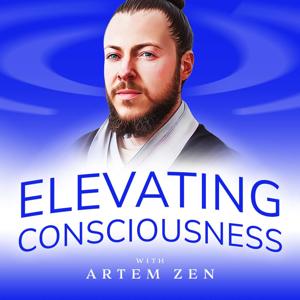
I'm Artem Zen — a dharma practitioner, artist, writer, facilitator, and podcaster.
I've spent the last decade in the trenches of inner work and human transformation — from psychedelic ceremonies and retreats in monasteries to therapy sessions and thousands of hours in contemplative practice, all while raising two children, running a business, and navigating disability.
My life has been devoted to creating offerings and facilitating conversations that help people embody wisdom and recognize sacredness in their everyday lives.
STAY CONNECTED:
Subscribe to my Substack to receive new episodes, in-depth articles, and access to community practice sessions - https://substack.com/@artemzen

2,584 Listeners
326 Listeners

26,236 Listeners

1,854 Listeners
629 Listeners
1,287 Listeners

12,673 Listeners
312 Listeners
271 Listeners
1,620 Listeners

1,033 Listeners

16,044 Listeners
862 Listeners

435 Listeners

8,809 Listeners