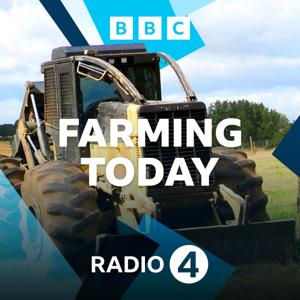
Farming Today

Farming Today

By BBC Radio 4Science
Download on the App Store
  • Favorites

    227

    Followers

  • Typical duration

    14 min

    per episode

Based on Podcast App listening data

Farming Today episodes

  • 18/05/2022 - dairy emissions, vet training, biodiversity audit and Weevil release
    The dairy industry has been committed to reducing the sector's greenhouse gas emissions by auditing the carbon footprint of each farm. But, due to the pressure of rising costs, it’s been agreed to delay those audits for another six months.
    The biggest biodiversity audit in the country has just been carried out on the North Norfolk coast. It’s taken more than a year and produced more than a million biological records of over ten thousand species.
    It's rare that a foreign species is introduced into the UK to fight off another which has taken hold, but after a decade of research, the government decided it would be safe to release South American Weevils to combat the serious invasion of the floating pennywort plant.
    And this week we're looking at staff shortages in the vet industry and the first vet school in Wales.
    Presented by Anna Hill and produced for BBC Audio by Caitlin Hobbs
    14 min
  • 17/05/22 - vets' mental health, global wheat prices and oilseed rape
    Rising costs and a volatile world market means farmers need to make significant decisions about how they plan ahead when planting crops. With India suffering from a blazing heatwave, its' government has now decided to temporarily halt exports of wheat as its supplies come under pressure, which has caused wheat prices worldwide to jump.
    And the war in Ukraine is also affecting prices. As a major producer of sunflower oils, disruption to supplies means the price of oil seed rape has seen a big increase.
    And this week we're talking about staff shortages in the vet industry, and the mental health challenges vets are facing.
    Presented by Anna Hill and produced for BBC Audio by Caitlin Hobbs
    14 min
  • 14/05/22 - The cost-of-living crisis, Seasonal worker conditions, Horseshoe bats
    The price of fuel, fertiliser and feed has risen significantly. We hear what impact that is having on free range egg producers and pig farmers - some of whom are being driven out of business.
    30,000 people are allowed come to the UK each year to work on fruit, veg and flower farms via the seasonal worker visa scheme. But some who come here say they are badly treated, with unreasonable expectations about how much they have to pick, insanitary living conditions and opaque contracts, particularly around pay. We hear from the Gangmasters and Labour Abuse Authority - which has had 103 people contact it about problems on farms in the past year.
    And there are signs the population of rare horseshoe bats is on the increase. We visit a farm in the Forest of Dean in Gloucestershire where special efforts are being made to encourage them.
    Presented by Charlotte Smith
    Produced for BBC Audio Wales & West of England by Heather Simons
    25 min
  • 13/05/22 Tree disease lab, New green tech hub for growers, The hungry gap
    DEFRA has opened a tree health laboratory in Surrey. Plant diseases, pests and invasive species are thought to cost the UK £1.7 billion per year. Scientists at the Forest Research lab in Alice Holt near Farnham say the £5.8 million facility will enable them to study both known and emerging threats from tree pests and diseases.
    An £11 million state-of-the-art research facility has opened in Kent. The Green Tech Hub for Advanced Horticulture has a giant glass house and 14 polytunnels. It aims to make food production more sustainable and resilient to climate change.
    The hungry gap is that time of year when traditionally fresh food was scarce. The winter crops are over, the new spring veg isn't ready. However, imports and growing under cover have enabled producers to extend the season. Yet producing crops out of season can bring its own consequences.
    Presenter: Caz Graham
    Producer: Rebecca Rooney
    14 min
  • 12/05/22 - seasonal worker exploitation, environmental watchdog report, fish foodbank and Balmoral show
    This week we’re talking about spring veg, and ask about one of the big issues facing farmers and growers - who is going to pick it? We’ve reported on problems attracting both people already based in the UK and seasonal workers from abroad onto British farms, especially since Brexit - and the impact of the war in Ukraine. 30,000 people are allowed to work on farms via the seasonal worker visa - but some who come here say that they are badly treated.
    England’s new Environmental Watchdog's first report into the government’s efforts to protect and improve the environment is out. The newly created Office for Environmental Protection - which also covers Northern Ireland - says ministers must take decisive action before some key tipping points are passed.
    We hear from the skipper of a Cornish charter boat, which is donating its catch to local people at a foodbank each week, and show season is underway. The Balmoral show in Northern Ireland has kicked off, with showing cattle, showjumping, sheep shearing and food...
    Presented by Charlotte Smith and produced for BBC Audio by Caitlin Hobbs
    13 min
  • 11/05/2022 – free range eggs, the interim EFRA chair, Horseshoe bats and asparagus
    Here on Farming Today we've been reporting on the rising costs farmers and food producers are facing. Now, British free range egg producers have said that without substantial price rises of 40 pence per dozen eggs, farmers will not be able to afford to keep their free range hens due to feed and fuel costs having risen so much, and have invited major retailers to a 'crisis summit'.
    The Environment, Food and Rural Affairs Select Committee has chosen Labour MP Geraint Davies as its' interim chair, and says a new substantive Chair will be voted in, "in due course".
    The horseshoe bat has seen a decline in its population in the twentieth century, which some attribute to intensive agricultural practices and others to roost disturbance. However, there are signs the population is now on the increase.
    And this week we're looking at spring vegetables, and today we're talking Scottish asparagus.
    Presented by Anna Hill and produced for BBC Audio by Caitlin Hobbs
    14 min
  • 09/05/22 - Pig farmers selling up, spring veg and Dumfries House
    After months of challenges in the wider pork supply chain, we hear from pig farmers selling up in the face of increased costs for feed and fuel.
    British grown spring vegetables are hitting the shelves - we hear how the industry is changing.
    And The Prince’s Foundation officially announces details on it’s plans for a new rural skills training centre at Dumfries House in Ayrshire.
    Presented by Charlotte Smith
    Produced for BBC Audio Bristol by Heather Simons
    12 min
  • 05/05/2022 - Farm Machinery and LAMMA
    We're at the farm machinery show LAMMA, which showcases the latest agricultural machinery services and equipment, and this year it's celebrating its' 40th anniversary.
    We hear from those attending about the rising costs despite farmers are facing and the impact this might have on affording farm machinery, the potential trade opportunities within the farm machinery sector and how agricultural machinery can offer a career to young entrants.
    Presented by Charlotte Smith and produced for BBC Audio by Caitlin Hobbs
    14 min
  • Delays to import checks, global vegetable oil shortage and farmers fighting pollution
    Checks on goods coming into the UK from the EU will no longer be introduced this year. Checks on our EXPORTS have been in place since January 2021, and IMPORT checks had been due to come in, in July - having been delayed three times already. This time though, the Brexit Opportunities Minister, Jacob Rees-Mogg, said the Government will now review how to implement the checks "in an improved way" and that "the new controls regime will come into force at the end of 2023" suggesting that goods entering the UK will face a very different inspection regime from those leaving the UK for the EU.
    The majority of the UK's sunflower oil comes from the fields of Ukraine and disruption to exports because of the war has led to shortages - with some supermarkets limiting how much sunflower oil customers are allowed to buy. Meanwhile, Indonesia has banned the export of it's palm oil to keep domestic prices there low...leading to a global vegetable oil shortage. That in turn has lead to an increased demand for alternatives - like rapeseed oil - and the price of oil seed rape, the crop it comes from, has shot up…good news for the farmers who grow it.
    And we meet a group of farmers trying to fight pollution from their land, and protect a chalk stream habitat.
    Presented by Caz Graham
    Produced for BBC Audio Bristol by Heather Simons
    25 min
  • 29/04/22 - import checks, biosolids and George Eustice on agroforestry and American animal welfare
    The government has announced a delay to import checks on goods coming into the UK from the EU; these checks were due to come in from July, having been delayed three times already. Last year a committee of MPs concluded that the lack of checks has undermined the competitiveness of British seafood and meat businesses in their home market and that there are concerns that this could have ‘serious implications for the spread of disease.
    The organic campaign group The Soil Association says trees are part of the answer to achieving the UK’s nature and net zero targets while also growing enough food. It suggests that growing trees as part of a farming system - alongside crops and livestock, brings many benefits - and held a conference on this topic, this week. DEFRA Secretary George Eustice spoke at the conference about agroforestry and whether he is concerned that companies might plant trees as a means of offsetting their carbon emissions. He had also just come back from America where he'd been discussing the differences between animal welfare standards in the UK and the US.
    And this week on Farming Today we're looking at water. We hear how biosolids - otherwise known as human sewage turned into fertiliser - can be treated to create an alternative to increasingly expensive manufactured fertilisers.
    Presented by Charlotte Smith and produced for BBC Audio by Caitlin Hobbs
    14 min

More shows like Farming Today

Global News Podcast by BBC World Service

Global News Podcast

7,599 Listeners

The Archers by BBC Radio 4

The Archers

1,111 Listeners

From Our Own Correspondent by BBC Radio 4

From Our Own Correspondent

374 Listeners

More or Less by BBC Radio 4

More or Less

880 Listeners

Newshour by BBC World Service

Newshour

1,048 Listeners

Wake Up to Money by BBC Radio 5 Live

Wake Up to Money

55 Listeners

Money Box by BBC Radio 4

Money Box

42 Listeners

The Martin Lewis Podcast by BBC Radio 5 Live

The Martin Lewis Podcast

119 Listeners

In Our Time by BBC Radio 4

In Our Time

5,527 Listeners

The Documentary Podcast by BBC World Service

The Documentary Podcast

1,803 Listeners

6 Minute English by BBC Radio

6 Minute English

1,807 Listeners

Learning English Conversations by BBC Radio

Learning English Conversations

1,041 Listeners

Last Word by BBC Radio 4

Last Word

49 Listeners

Gardeners' Question Time by BBC Radio 4

Gardeners' Question Time

284 Listeners

The Food Programme by BBC Radio 4

The Food Programme

262 Listeners

Scotland Outdoors by BBC Radio Scotland

Scotland Outdoors

246 Listeners

Ramblings by BBC Radio 4

Ramblings

162 Listeners

The Bottom Line by BBC Radio 4

The Bottom Line

36 Listeners

The Plodcast by Our Media

The Plodcast

110 Listeners

Gardening with the RHS by Royal Horticultural Society

Gardening with the RHS

257 Listeners

You're Dead to Me by BBC Radio 4

You're Dead to Me

3,338 Listeners

The Missing Cryptoqueen by BBC Sounds

The Missing Cryptoqueen

1,004 Listeners

Americast by BBC News

Americast

822 Listeners

The Farmers Weekly Podcast by Farmers Weekly

The Farmers Weekly Podcast

14 Listeners

The Bomb by BBC World Service

The Bomb

1,005 Listeners