
Sign up to save your podcasts
Or



Based on Podcast App listening data
Farmers were in London again to protest about the re-imposition of inheritance tax on farming and business assets of more than a million pounds - something announced last year. In her budget, the Chancellor made a change to transferring inheritance tax allowances between spouses, but farmers said it wasn't enough.
Presenter = Charlotte Smith
Conservationists have accused the government of turning its back on nature in the new planning bill which is making its way through parliament. The RSPB says the legislation is creating a new tried and untested process which will put nature and nature markets at risk.
We often talk about exports of produce like beef and dairy but exporting farm animal genetics is also big business. The industry estimates that around 70 per cent of the world's farmed poultry orginates from UK breeding stock, while UK cattle genetics are now exported to 100 countries around the world. A new agreement with Kenya will see sheep and goat genetics exported there. The UK Export Certification Partnership is a public-private grouping which promotes the export of livestock products, breeding stock and genetics.
All this week, we’re checking in with the dairy industry. Over the last 30 years, the size of the UK dairy herd has been gradually falling, while average milk yields, that's the number of litres a cow produces, has been steadily increasing. That increase is partly down to using new technology like on-demand robotic milking machines. We visit a herd of indoor cows in Wiltshire.
Presenter = Anna Hill
Despite a rise in the number of students taking up agriculture degrees over the last couple of years, not all courses are growing. The University of Nottingham is deciding whether to close its agriculture and business course at its Sutton Bonington campus. The University says applications for its farming courses have dropped, making them “less financially viable”. Students have started a petition to save the degree course.
Cases of bird flu are still on the rise across the country, with outbreaks in all four nations of the UK and housing orders for England, Wales and Northern Ireland are in place, meaning all poultry has to now be housed if the flock totals more than fifty birds. We hear from farmers at the Royal Welsh Winter Fair in Builth Wells.
All week we're looking at dairy farming. One family farm which has invested heavily in technology for the future is run by Rob Davies and his son Harry. Instead of selling the livestock, the farm in Herefordshire has built an aerobic digester to reduce energy costs, bought robots to milk the cows and grows all its own feed.
Presenter = Anna Hill
The latest Farm Business Income Survey from DEFRA shows average dairy farm incomes for 2024/25 had doubled year on year. The reality at this moment may feel very different on farms as the milk price rollercoaster is starting to rattle downwards, with some global dairy commodities tumbling. The Chairman of the Royal Association of British Dairy Farmers, Robert Craig, tells Charlotte Smith that the industry is becoming used to a cycle of rise and fall in milk prices but that ultimately there will be fewer people left in the industry at the end of this downturn.
We also dig deeper into what that Farm Business Income survey shows for other types of farming in England. Below the encouraging signs on the surface, for most sectors, incomes were buoyed up by diversification and agri-environment schemes in the last financial year.
And farmers on the Isle of Man are anxious about the future of veterinary care, as a major provider prepares to withdraw from farm animal practice on the Island.
Presenter: Charlotte Smith
Details on the relaunch of England's biggest agri-environment scheme will come in the first half of next year - so says the Secretary of State for the Environment, Emma Reynolds, who was speaking at the Country Land and Business Association's annual conference. The sustainable farming incentive or SFI, pays farmers for things like planting hedges and improving soils. It was suddenly closed to new applicants in March as it had run out of money. Details on what happens next were supposed to be announced in the summer. Some farmers say they've lost confidence in the system but Emma Reynolds told the conference that it is complicated and they want to get it right
England's farm business income figures for the last financial year have been released. All types of farms, with the exception of horticulture and pig farming, saw a year on year increase, though in 2023/4 farm incomes dropped considerably. Government payments to farmers in agri-environment schemes now make up an average of 30% of farm income, and many farms continue to lose money on the farming sides of their business.
The inmates who look after pigs at a prison farm in Kent.
Presenter = Charlotte Smith
A decline in demand for whiskey is being blamed for the closure and suspension of Scottish malting plants - something which farmers fear will also mean a decline in demand for barley. Maltsters process barley so it can be used in distilleries or brewing. Several plants have announced closures and redundancies, but the Maltsters Association of Great Britain says that although it has a been a challenging year, they are positive about the future.
The BBC Food and Farming Awards ceremony has taken place, with three strong finalists in the Farming Today and The Archers Farming for the Future category: Grazing Management who manage conservation grazing in Herefordshire; The Free Company, a farm and restaurant on a former dairy farm near Edinburgh; and Hugh Wragham who grows hemp in Northumberland. The winners were brothers Charlie and Angus Buchanan-Smith from The Free Company.
All this week we're considering farming across the world, as COP 30 continues. We speak to a first generation farmer who produces organic mushrooms as part of an agroforestry farm business in south Brazil. He says its important for farmers to be at COP to push for financing for agriculture which can combat climate change.
New rules on the size of oysters that can be landed on the River Fal in Cornwall have been introduced - part of a bid to protect future stocks of the shellfish. It's the first change in regulation on the size of native oysters dredged from the Fal in a hundred years.
Presenter = Charlotte Smith at
The use of antibiotics in treating livestock in the UK has fallen, according to a new report published by the Veterinary Medicines Directorate, which is a government agency. Using high levels of antibiotics in farming can lead to people developing resistance to life-saving antibiotics.
The Alliance to Save Our Antibiotics, which was set up to reduce antibiotic use in farm animals, through better livestock husbandry, has just published its own report into antibiotic drug use, particularly in pigs and poultry. It says poultry producers are still using too many ionophores, a kind of medicine to treat parasites, and it wants ionophores to be classified as antibiotics.
All week, we're taking a global perspective on farming as delegates at COP 30 in Brazil discuss food production and reducing its impact on the climate. One UK businessman has come up with a system for harvesting the straw left over from rice. It's usually allowed to rot in the fields, or it's burnt but Craig Jamieson has developed a special machine to harvest it and it's now being trialled in the Philippines.
We celebrate the farm business that's won the Future Farming award in the BBC's Food and Farming Awards.
Presenter: Anna Hill
A year on from a big farmers' rally in Whitehall, farmers again travel to London to lobby MPs about inheritance tax.
As COP 30 continues in Brazil, we look at imports of South American soy and its use for animal feed on UK farms. Brazil has a moratorium on cutting down rainforest to allow farmers to plant soya, but there's concern that pressure from big-business could reverse that protection. We speak to the Agricultural Industries Confederation.
A Welsh entrepreneur is working on an alternative source of protein - lanolin from sheep wool. She came up with the idea after meeting a shrimp farmer who fed the grease to his shellfish.
Presenter: Anna Hill
The price farmers get for wool is up, about 20% up from last year, but it still doesn't cover the cost of shearing the sheep.
We hear from a dairy farmer who is getting out: this year’s exceptionally hot summer and the resulting cost of feed for the animals has proved too much.
Farming fish rather than livestock is being seen by some as the answer to sustainable food security. China is the world's biggest farmed seafood producer, providing more than 60% of the world's farmed fish, and it's investing in bigger and more high tech fish farms.
Presented by Charlotte Smith and produced by Beatrice Fenton.
Eight weeks after taking up her post as DEFRA Secretary of State, Emma Reynolds has faced her first barrage of questions from the cross-party group of MPs at the EFRA select committee. MPs quizzed her about farming profitability, fishing policy, water pollution, border controls and illegal meat. They asked about environmental payments too and she acknowledged that mistakes had been made and lessons learned when the Sustainable Farming Incentive was suddenly suspended earlier this year.
A report by the House of Commons’ Welsh Affairs Committee is calling for the Government's inheritance tax on farmers to be halted, because it says the tax will have a detrimental impact on Welsh farming.
The Environment Agency's warned that unless we see some serious rain, England will be in drought next year. We find out how this year's lack of water has affected the potato harvest.
Mushroom growers face many challenges: rising energy costs; sourcing the staff to pick them; and finding alternatives to peat for growing the crop. We visit a family farm in Northern Ireland that's become one of the UK's biggest producers of organic mushrooms.
Truffle cultivation isn't usually associated with Scotland but milder, wetter summers are providing new opportunities, according to one professor who's developing new methods of cultivating truffles.
This year's apple harvest has been a bumper one, but with a small orchard on a small landmass, the family producing cider on Guernsey have had to find a creative way to supplement their crop.
Presenter = Charlotte Smith
From the publisher's feed
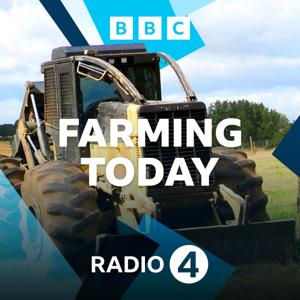
The latest news about food, farming and the countryside
Ranked by our users in the last 21 days

7,593 Listeners

1,084 Listeners

374 Listeners

880 Listeners

1,050 Listeners

55 Listeners

42 Listeners
121 Listeners

5,526 Listeners

1,804 Listeners

1,802 Listeners

1,037 Listeners

49 Listeners
285 Listeners

262 Listeners

245 Listeners
164 Listeners
36 Listeners
110 Listeners

256 Listeners

3,157 Listeners

1,004 Listeners

820 Listeners

14 Listeners

1,005 Listeners