
Sign up to save your podcasts
Or



Based on Podcast App listening data
Anna Hill finds out how new farming technology could mean more jobs, not fewer. A new report from The Institute for Agriculture and Horticulture says the expansion of artificial intelligence apps collecting data and providing real-time advice will mean recruiting and training more people, to give farmers technical support.
In Northern Ireland, stealing farm animals is being linked to organised crime, and it seems the current high stock values are making them even more attractive to criminals.
As arable farmers wait for their crops to ripen in the fields, many are watching grain prices carefully. Grain isn't just a domestic commodity, but is traded worldwide...and aspects like exchange rates, and President Trump's new tariffs make a big difference to the price.
And we visit the Scottish Association for Marine Science in Oban, where scientists are embarking on a new five-year international research project looking at the economics of extracting various products from seaweed, as well as assessing the climate resilience of different species...and even training up new seaweed farmers.
Presented by Anna Hill
A Scottish abattoir has closed with the loss of 90 jobs. Scotbeef at Inverurie has been shut. The company says an operational review concluded it was necessary to protect the long-term future of the business amid industry challenges. Earlier this year the number of cattle in Scotland fell to its lowest for a decade and farming groups called for government support to rebuild the national herd, warning that some abattoirs might close because they'd become uneconomic.
All this week, we’ll be talking about seaweed. At the Holkham estate in north Norfolk, a trial funded by the WWF and the Co-op foundation has been trying to prove that the use of seaweed based biostimulant can reduce the need for artificial nitrogen fertiliser, without affecting yields. If successful it could present a way for farms to reduce costs, and minimise the negative side effects of overusing fertilisers.
The cost of rural crime has fallen. New figures from the insurers NFU Mutual show a 16.5% fall last year - the costs are put at £44 million in comparison with £53 million the year before. The biggest fall is in the theft of agricultural vehicles, and the number of animals killed or injured in dog attacks was also down, by a quarter, but livestock theft remained high.
Presenter = Charlotte Smith
Livestock moving into Wales from England will have to be tested for the disease bluetongue from the first of July, after the Welsh Government decided not to join England in a nationwide restriction zone. Wales and Scotland have no cases of bluetongue so far this year and hope testing and vaccination will keep it out. But livestock organisations say it'll cause chaos at the borders with huge delays and financial losses for farmers.
Livestock moving from England to Wales will have to be tested from next month. The Welsh Government says that once the whole of England becomes a restricted zone for the bluetongue disease on the first of July, animals will have to test negative for the disease before they can go into Wales. There have been no cases of bluetongue in Wales, or in Scotland this year. There the government also decided earlier this month that animals should be tested if they're coming from a restricted zone.
As the UN Oceans summit in Nice draws to a close, it's hoped that more countries will ratify a High Seas Treaty and so bring it into force. This agreement was made two years ago to put 30% of international waters into marine protected areas by 2030. However even within those areas, bottom trawling is allowed. Bottom trawling is already banned in some English waters and the government is consulting on plans to extend that ban. We speak to Michael Kaiser professor of fisheries conservation at the Lyell centre at Heriot Watt University.
All week we've been following the journey from field to bread bin - and today we're at the millers. 85% percent of the wheat used for our bread is grown and milled in the UK. We import about 15 percent of bread wheat from Canada and Germany. We visit a miller in Essex who can trace his milling roots right back to the Domesday book.
Presenter = Charlotte Smith
Farmers say they're relieved that feared cuts to nature-friendly farming budgets didn't materialise during the chancellor's spending review. More money has been allocated to farming schemes, though Defra's budget itself is facing cuts of 2.7% in real terms. We speak to the Wildlife Trusts and the National Farmers' Union.
The biggest event in the arable farming calendar - Cereals - is being held in Lincolnshire. We speak to the host, and learn about new drone technology to help spray delicate crops.
And Defra has announced badger culls will continue in 11 areas of England. The Labour government has pledged to end them by the end of the parliament, instead stepping up vaccination of badgers and other measures. But the chief vet has advised it's too soon to end culling.
Presented by Charlotte Smith and produced by Sally Challoner.
There are calls for Wales and Scotland to join England in imposing a country-wide bluetongue restriction zone to try to contain the virus. Neither Wales nor Scotland currently have cases of the disease, which affects sheep, cattle and goats; if they don't join the restriction zone, livestock will effectively be banned from crossing the borders.
As the UN Ocean Conference continues in Nice, the Marine Conservation Society aims to remind us that all land and river-based pollution, including agricultural run-off, will end up in the ocean. They're calling for a more joined-up approach to farming and fishing more sustainably.
Scientists at Rothamsted Research have genetically modified an oil seed plant with a red flax to create fish feed that provides antioxidants and the red colour in salmon and shrimp. Though not authorised in the UK, the GM crop would be an alternative to the chemicals currently used.
And it's the second day in our journey of a UK loaf of bread from seed to slice. Today we're with a wheat farmer in Norfolk.
Presented by Anna Hill and produced by Sally Challoner.
Grimsby could become home to the UK’s first large-scale onshore salmon farm. A judicial review has upheld North East Lincolnshire council’s decision to grant it planning permission. An animal rights group had challenged the development on fish welfare grounds. However a high court judge ruled that animal welfare concerns could be a key planning consideration in future planning cases.
This week we’re following the journey of a loaf of bread, from seed, to the field, to the mill and eventually the shelf in the shop. The wheat used for bread has to be high in protein and have specific qualities to make good dough. It’s known as Group 1 Wheat. We visit a seed breeder in Cambridgeshire where bread-making varieties of wheat are developed.
Most commercial poultry farmers keep chickens for either egg-laying or meat production, and that specialisation is the way modern poultry farming has operated for decades. But does it have to? A group of farmers are now looking into the use of ‘dual-purpose’ heritage poultry breeds that can be used for both eggs and meat. They say that if these birds were farmed more widely it could also stop the cull of the male chicks which aren’t wanted in egg-laying flocks. Six farms are taking part in field trials run by the Innovative Farmers group.
Presenter = Caz Graham
Eggs up, wheat down: what’s made the most cash for farmers?
The Welsh government's plan to protect the environment, increase biodiversity and punish polluters.
And warnings of innovation brain drain without more investment in agri-tech.
Presented by Caz Graham and produced by Beatrice Fenton.
The government is unlikely to be able to cope with a severe outbreak of animal disease like Foot and Mouth, according to the National Audit Office. In a new report, it says key public bodies including the Department for Environment, Food and Rural Affairs and the Animal and Plant Health Agency, have been working so hard to manage outbreaks of diseases like avian flu over the last six years, that long term resilience is being undermined and there is no long-term strategy.
The artificial fertilisers that farmers put on their crops are generally produced using the energy-intensive Haber-Bosch method. The process has a large carbon footprint, but we find out about research to find a biological alternative to chemical fertiliser.
And we meet cattle foot trimmer, Dave Phillips from Dorset, who will be representing England at this year's World Foot Trimming Cup!
Presented by Anna Hill
From the publisher's feed
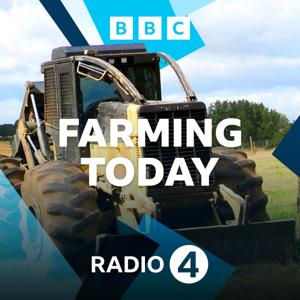
The latest news about food, farming and the countryside
Ranked by our users in the last 21 days

7,593 Listeners

1,084 Listeners

374 Listeners

880 Listeners

1,050 Listeners

55 Listeners

42 Listeners
121 Listeners

5,526 Listeners

1,804 Listeners

1,802 Listeners

1,037 Listeners

49 Listeners

285 Listeners

262 Listeners

245 Listeners
164 Listeners
36 Listeners

110 Listeners

256 Listeners

3,157 Listeners

1,004 Listeners

820 Listeners

14 Listeners

1,005 Listeners