
Sign up to save your podcasts
Or



Based on Podcast App listening data
A Westminster think tank has warned that internet-connected technology has the potential to be used by China to spy on the UK food system. The Coalition on Secure Technology describes itself as a cross-party group of policymakers and experts. It says that components which allow devices like tractors and crop monitoring drones to connect to mobile networks could present a security risk, with the majority of these 'Internet of Things' modules being made in China.
Think of English hop growing and you might think of Kent or Herefordshire, but Surrey was once famous for its hops, too. Now the only remaining commercial hop garden in Surrey has finished its final harvest. Climate change and economic pressures have made it unviable for Hampton Estate, at Puttenham, to carry on producing the traditional Fuggles hops that add bitterness to real ales.
All week we're exploring whether agriculture could become fossil-free, and asking how much progress farmers are making to reduce their fossil fuel use. Paul Baker icalls himself The Experimental Farmer on social media. He's been looking at soil microbes and how they can be made to work harder, so their nutrients are more available to crops, cutting the need for artificial fertilisers.
Presenter: Anna Hill
Every year, huge numbers of pheasant and partridge are raised across the UK for shoots, with around 40 million released into the countryside. Now the Government is launching a call for evidence to understand the welfare and environmental impact of the birds, which are kept in enclosures before their release.
As farmers decide how they're going to manage next year's crops, the cost of fertiliser and fuel will be in the mix. But what if you could farm without fertiliser or diesel? This week we'll be finding out how far the UK is moving towards fossil-free farming.
Presented by Anna Hill and produced by Beatrice Fenton.
As the UK experiences its worst ever outbreak of the livestock disease bluetongue, we find out how government vets and scientists are coping as they deal with thousands of cases. The trade union which represents them says morale is low and the workload is mountainous. They say more long term strategic planning is needed and better pay to address staff shortages.
How well prepared are we for a major threat to our food security? Not quite well enough, according to the National Audit Office report on resilience in England’s food supply chain.
Plans for data centres on farmland in Scotland.
Finding out exactly what species are in a river can be challenging, but environmental DNA sampling is a relatively new tool which can help. It can detect the presence of rare or invasive species by analysing genetic material in water.
The farm vet with a passion for dung beetles. She's teaching livestock farmers how to use fewer medicines to help protect the ecosystems and insects on their land.
There are only around eleven hundred calling male corncrakes in the UK, but that number may be about to grow.
Presenter = Anna Hill
How well prepared are we for a major threat to our food security? Not quite well enough, according to the National Audit Office, which is publishing a report later today on resilience in England’s food supply chain.
Why strawberry growers have found their plants are still producing healthy, even bumper crops much later than usual.
There are only around eleven hundred calling male corncrakes in the UK, but that number may be about to grow.
Presented by Caz Graham and produced by Beatrice Fenton.
The many pressures on land use are coming into sharper focus in Scotland where opposition is growing to a series of large AI data centres planned across the central belt, between Glasgow and Edinburgh. The ruling Scottish National Party’s national council is calling for a moratorium on building them. Most of the centres are to be built on open countryside, and farmers are among the people who have raised concerns. However the boss of one data centre company claims the centres could bring a boost to horticulture by using the heat they generate to warm glass houses.
While farmers across much of the UK are counting the cost of a poor harvest, it's a different story in The Outer Hebrides. We speak to a crofter from Uist who's just had one of his best years yet.
The state of the UK's rivers has been making the news - if not pollution, then drought, and, earlier this year, flooding. The Tweed is one of the world's most famous salmon rivers, flowing eastwards across the Scottish borders and Northern England. We've been finding out how conservationists and farmers are working together to ease the pressure climate change is putting on the river.
Presenter = Anna Hill
As the UK experiences its worst ever outbreak of the livestock disease bluetongue, we find out how government vets and scientists are coping as they deal with thousands of cases. The trade union which represents them says morale is low and the workload is mountainous. They say more long term strategic planning is needed and better pay to address staff shortages.
Scientists in Northern Ireland are using DNA methods to help identify the exact source of pollution in Lough Neagh. It's the fourth summer in a row that the lough has been blighted by blue green algae.
As the Bayeux Tapestry goes on display at the British Museum in London, BBC Radio 4 has a range of programmes inspired by the Normans. We hear from food producers in Normandy whose apple harvest and cheese making have been affected by drought and climate change.
Presenter = Caz Graham
Farming groups from around the country are pressing for what they are calling 'a government-backed, interest-free Keep Britain Growing Loan' which they say will help farmers maintain cashflow and fund next season’s crop production.
How using pasture sown with a diverse mix of grasses, legumes, and deep-rooted herbs and rotational grazing can help in times of drought.
Finding out exactly what species are in a river can be challenging, but environmental DNA sampling is a relatively new tool which can help. It can detect the presence of rare or invasive species by analysing genetic material in water.
Presented by Anna Hill and produced by Beatrice Fenton.
Anna Hill travels on a safari with a difference, across North Norfolk, to discover how dozens of farmers have joined together to create connected corridors for wildlife and farming. She explores four projects funded by FiPL (Farming in Protected Landscapes), follows a 26-mile mega-hedgerow across 14 farms; a 10 mile corridor of wildflower margins along a river bed; follows a new shepherdess moving a flock of sheep across contiguous arable farms to fertilise the soil; and sees the extraordinary natural hives for wild bees, which farmers have created to protect the species for years to come.
With the livestock disease bluetongue still spreading across the UK, we speak to a Dutch vet about how they coped with a massive outbreak there in 2023, and what we can learn.
The system for licensing firearms and shotguns in England and Wales is not fit for purpose and should be replaced to ensure public safety. That’s the conclusion of a report published today by His Majesty’s Inspectorate of Constabulary and Fire & Rescue Services.
When Sandi Thornton started growing lavender on her 30-acre farm in the south of the Lake District, some neighbours did raise a quizzical eyebrow. Two years on, the lavender beds are getting established and there’s a distinctly purple haze across part of Cumbria’s Lyth Valley.
With drought, climate change and many demands on land use, scientists and food producers are looking at the best crops to grow for the future, and that’s something we’ve been focusing on all this week too. Researchers at the University of Essex are using gene-editing technology to create dwarf cucumber plants better suited to indoor vertical farms and glasshouses.
Presented by Caz Graham and produced by Beatrice Fenton.
From the publisher's feed
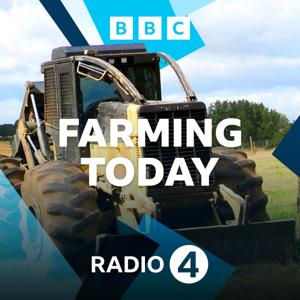
The latest news about food, farming and the countryside
Ranked by our users in the last 21 days

7,593 Listeners

1,084 Listeners

374 Listeners

880 Listeners

1,050 Listeners

55 Listeners

42 Listeners
121 Listeners

5,526 Listeners

1,804 Listeners

1,802 Listeners

1,037 Listeners

49 Listeners

285 Listeners

262 Listeners

245 Listeners
164 Listeners

36 Listeners

110 Listeners

256 Listeners

3,157 Listeners

1,004 Listeners

820 Listeners

14 Listeners

1,005 Listeners