
Sign up to save your podcasts
Or

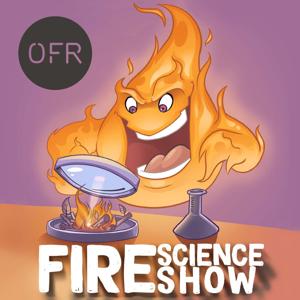


Today we go deep into how statistical data about fires is gathered, processed, and used around the world, and what are the ideas on how to improve this in the future. My guests represent the EU FireStat Project - Dr Mohamad El Houssami from Effectis and Dr Martina Manes from the University of Liverpool.
EU FireStat is a groundbreaking initiative that aims to fill data gaps and foster cross-European collaborations in the field of fire safety. The conversation takes a deep dive into the necessity for comparable fire statistics across Europe, illustrating the challenges that come with harmonizing terminology and data collection methods. We bring to light how these discrepancies between countries can influence the way we interpret vital definitions, like fires, fire deaths, or injuries. We also discuss the role of the quality assurance process in shaping the data and dissect the eight variables identified as a tier one priority in the EU FireStat Project survey.
If you would like to read about the EU FireStat Project, all the reports (including the final report) are available here.
If you would like to read the peer-reviewed version of their findings, please go for the papers:
And while we wait for the pan-European fire statistics database, you may want to look into statistics gathered by the CTIF Center for World Fire Statistics.
Fire Science Show is produced in partnership with OFR Consultants.
----
The Fire Science Show is produced by the Fire Science Media in collaboration with OFR Consultants. Thank you to the podcast sponsor for their continuous support towards our mission.
In today's episode, I have invited dr Eleni Asimakopoulou from the University of Central Lancashire to discuss her extensive expertise on fire behaviour of facades. In the talk, we will go through Elenis' experiments on ventilated facades (and clear out what they are and why we use them). We do discuss the complexities of testing facade systems. We traverse through the global testing landscape, comparing diverse methods ranging from the German DIN4102 to its American NFPA counterpart. We discuss the role of air entrainment related to test geometries, the implications of whether there's an opening, and the potential effects of a fire barrier in proximity to the fire load.
Our discussion takes a heated turn as we broach large-scale fire testing and modelling. We go into how tiny details can dramatically impact a facade system's performance and whether we will be able to reliably capture that with large-scale tests, small tests or modelling. We'll also discuss the future - machine learning, CFD, and finite element analysis which are revolutionizing fire testing. Lastly, we delve into the newest research and developments in facades, discussing the advent of tools for material properties analysis, and more.
Here is the link to the paper discussed in the episode: https://www.scopus.com/record/display.uri?eid=2-s2.0-85085977558
----
The Fire Science Show is produced by the Fire Science Media in collaboration with OFR Consultants. Thank you to the podcast sponsor for their continuous support towards our mission.
Balancing the cost and the potential to change a system in the future is a difficult act. Discover a new perspective on this aspect of fire safety systems with our guest, Jaime Cadena Gomez. We discuss the significance of longevity and sturdiness in these systems, bringing examples of technologies that have not withstood the test of time such as PFAS firefighting foams, and technologies that will rapidly enter our buildings such as Li-Ion storage for energy backups. Jaime offers intriguing insights into how engineers can future-proof designs without adding excessive burden to the design process, considering device lifecycles and their implications for a sustainable future.
In the talk, we break down the responsibilities and trade-offs in designing equipment that stands the test of time. We delve into the importance of the potential need for upgrades and modifications and evaluate that from the eyes of a fire safety engineer responsible for a strategy and a fire protection engineer responsible for choosing equipment.
We also take a deep dive into the intersection of compliance and innovation in fire prevention systems. We'll uncover the importance of creating a pathway for innovation within the frameworks of compliance—a conversation that promises to be both enlightening and engaging. Finally, reflect with us on the role of the safety engineer, the education they require, and the immense importance of understanding the technology they work with and its maintenance.
The inspiration to do this talk came from the "Mars Habitats" talk, which you can re-listen here: https://www.firescienceshow.com/qa5-brainstorming-fire-safe-mars-habitats-with-ruben-van-coile-jaime-cadena-gomez-and-szymek-matkowski/
----
The Fire Science Show is produced by the Fire Science Media in collaboration with OFR Consultants. Thank you to the podcast sponsor for their continuous support towards our mission.
When I heard that two legends of firefighting training Shan Raffel and CFBT Roy will be visiting my friend Szymon Kokot, I packed my stuff and went to meet them with a microphone and a ton of questions. What I received was a brilliant discussion on how firefighting instructors are trained - from the history of CFBT (Compartment Fire Behaviour Training) to modern approaches. Shan introduced his method for reading fire (BE SAHF - Building Environment Smoke Air-track Heat and Flame) and how it helps the decision-making process in the most stressful settings. Along the way, we discuss the critical soft character traits that make a fire instructor exceptional, and how the art of decision-making and critical thinking can be integrated into the complex realm of fire science.
As we wrap up, we emphasize the significant role of understanding fire behavior in handling emergency situations. We will also broach the topic of cold, gray smoke, a seemingly harmless phenomenon but one that poses a formidable danger. Learn why experienced instructors are key to imparting this knowledge and how Poland, under Szymon's leadership, has made significant strides in fire instruction.
Also, if you would like to read more, here is the most amazing collection of resources you can find online: https://eurofirefighter.com/downloads
Shan's book can be found at https://cfbt-int.com/manuals/ or at Amazon, or perhaps you may want to find the CFBT people in your country to make a worthy connection?! Through his website, you can also connect to organize instructor training in your country.
Cover picture credit: CFBT Intl https://cfbt-int.com/
Fire Science Show is sponsored by OFR Consultants, huge shoutout for their long-lasting support to our mission!
----
The Fire Science Show is produced by the Fire Science Media in collaboration with OFR Consultants. Thank you to the podcast sponsor for their continuous support towards our mission.
Have you ever wondered how the understanding of AI can revolutionize the field of civil engineering? Today I am discovering this together with our own AI trendsetter, MZ Nasser. His latest book "Machine Learning for Civil and Environmental Engineers: A Practical Approach to Data-Driven Analysis, Explainability, and Causality" is the focal point of our conversation, illuminating the significance of explainable AI and the concept of causality.
Our discourse with MZ dives straight into the practical applications of AI, and how it already has been used with a high degree of success. We go deep into the case study of understanding concrete spalling, perhaps one of the most complicated phenomena in structural fire engineering.
We also delve into the limitations of AI in engineering and fire safety, and how coding-free software and AI principles could potentially usher in a new era for civil engineers. We navigate the concept of causality and its application in diverse fields, from social sciences to fire statistics.
If you would like to learn more, MZ Naser runs his blog where you can find all of his work and a ton of bonus resources. Check it out here: https://www.mznaser.com/
----
The Fire Science Show is produced by the Fire Science Media in collaboration with OFR Consultants. Thank you to the podcast sponsor for their continuous support towards our mission.
What happens when fire meets a green facade? Tune in as we journey through the unexpected world of green facades and their interaction with fire. For the first time, I am sharing the story of how we built up an interest in this subject, first by my PhD student Jakub's burning question and a client's unique request for an office space resembling a jungle. For this job we have put green facades to the test with full-scale experiments, including the Polish facade method and Single Burning Item tests, considering the unique environmental conditions that buildings and their facades are exposed to.
In the episode, I walk you through our research and reasoning, as well as the design considerations. We'll explore the potential risks involved with green facades. Neglected maintenance and environmental factors can significantly affect the safety of these structures. We discuss the results of our full-scale experiment and the dangers of a neglected green facade.
If you wish to learn more, please follow here:
----
The Fire Science Show is produced by the Fire Science Media in collaboration with OFR Consultants. Thank you to the podcast sponsor for their continuous support towards our mission.
If someone ever tells you they have modelled fire spread for a commercial project, with 20 cm grids and using generic materials from (old) FDS database, please do me a favour and redirect them to this episode. Because modelling fire is a seriously challenging thing. And by modelling, I really mean it. Not to apply a surrogate source based on a statistical overview of how fires looked like in the past for fuels of this kind. Not to omit half of the phenomena because they are too hard and in cone they did not matter anyway... To really model the fire.
I have invited prof. Lukas Arnold from Bergishe University Wuppertal and Juelich Forszungszentrum to tap into how challenging modelling even simple materials may be. What are the feedback loops and phenomena one must account for, and how do different scales give us different parts of the answer we need?
If you would like to know more about Lukas efforts in modelling, please check two recent papers:
- Paper on cone calorimetry of different types of PMMA (the material we have discussed in the podcast episode)
- Paper on inverse modelling the pyrolysis kinetics - giving insight into how one obtains the material data you may need for modelling.
----
The Fire Science Show is produced by the Fire Science Media in collaboration with OFR Consultants. Thank you to the podcast sponsor for their continuous support towards our mission.
In this episode dr. Francesco Restuccia from Kings College London takes me on a journey through different types of batteries, and what fire challenges relate to them.
We discuss how the batteries burn, and how internal systems (Battery Management System) influence that behavior. From the size and type limitations to the potential perils of a cell thermal runaway, the fire spread in the whole batteries, and feedback loops that we need to understand to create safer systems. We'll also shed light on the contrasting battery lives of consumer electronics, laptops, and cars, as well as some challenges in the second life of batteries.
In the final leg of our journey, we will tackle the complex world of modeling batteries and their management systems, touching on the challenges of over-constraint equations and calculating heat release rates from off-gassing.
----
The Fire Science Show is produced by the Fire Science Media in collaboration with OFR Consultants. Thank you to the podcast sponsor for their continuous support towards our mission.
In the midst of horrible wildfire season around the globe, I have reached out to Prof. Albert Simeoni from Worcester Polytechnic Institute for some hands-on commentary on what is happening around, and why fires all over the globe are constantly on the front pages of mainstream media. I am not sure if I was ready for all the answers received (especially how media are biased to fires in certain parts of the world and pretty silent about others)... But they certainly are great food for thought in considering the current situation and where it may be heading.
In the episode, we have discussed what promotes disastrous wildfires, how one can estimate their damage, and how vanity metrics like the historical return period for fire may not be good enough for future preparedness. Changing climate, human expansion, popular "close to the wilderness" lifestyle, industrialization and abandonment of traditional agriculture - all are somewhat responsible for the "new normal".
Among the disappointing summary of current events, we have also found a bright light with Fire Protection Engineers being the missing link in the wildfire-urban interface and protecting homes and communities from fire disasters. And for this reason, this episode is well worth a listen for any FPE - you are more important than you think!
----
The Fire Science Show is produced by the Fire Science Media in collaboration with OFR Consultants. Thank you to the podcast sponsor for their continuous support towards our mission.
It is time for some engineering fundamentals in the show. This time in the fire fundamentals series we delve into the details of natural and powered smoke ventilators - what they are, how they work, how they are tested and what interesting mechanics impact their performance in fire.
I hope this episode is valuable for all engineers who would love to know how the devices they place in their design are tested and qualified for use in fire safety. It should also be a great way for fire scientists to broaden their horizons and learn about very intricate details of natural and powered vents, which you learn only through experience in the design.
If you enjoyed this episode, you may want to jump into:
Some of the papers advertised in the episode:
Fire Science Show podcast is produced in partnership with OFR Consultants
----
The Fire Science Show is produced by the Fire Science Media in collaboration with OFR Consultants. Thank you to the podcast sponsor for their continuous support towards our mission.
From the publisher's feed
78,375 Listeners

43,824 Listeners

31,973 Listeners
26,165 Listeners
30,720 Listeners

54 Listeners
5,082 Listeners
772 Listeners
491 Listeners

2,319 Listeners

3,019 Listeners
770 Listeners

132 Listeners
4 Listeners

1,129 Listeners