
Sign up to save your podcasts
Or

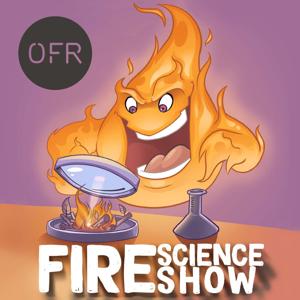


In this show, we have already ventured into the fascinating world of toxicity in fires, and I have promised you more. So today, I fulfil my word and invite you to another conversation with renowned fire toxicity expert Professor David Purser, who shares invaluable insights on measuring smoke and toxic products created in fires. From understanding mass loss concentration in a CFD analysis to exploring various test apparatus, discover how we can determine the yields and concentrations of toxic products in different fuels and conditions. Learn about the significance of the fuel/air mixture ratio (the equivalency ratio) and the need for defined combustion conditions to measure toxic product yields accurately.
On a practical side, you will learn about prof. Purser's experience working on the Mont Blanc tunnel investigation, where he used CFD analysis to study toxic product concentrations and yields in real-life fire scenarios. Professor Purser emphasizes that while exact solutions may not always be available, science and research can provide valuable insights into the toxic effects of fires.
Another, final episode on smoke toxicity with David Purser coming out next week. If you want to catch up on the previous episodes, you can find them here:
----
The Fire Science Show is produced by the Fire Science Media in collaboration with OFR Consultants. Thank you to the podcast sponsor for their continuous support towards our mission.
What makes an experiment truly groundbreaking, and how can researchers plan and execute such experiments in fire science? Join us as we chat with Professor Arnaud Trouve from the University of Maryland, a co-chair of the MaCFP group at the IAFSS, to uncover the answers to these burning questions. Arnaud offers valuable insights into the creation of a structured, repeatable, and accessible database of knowledge, and how to design experiments that will revolutionize fire science.
We dive into the challenges of gathering data from manufacturers who don't share their information and the difficulties in modelling phenomena like underventilated fires, flame spread, radiation and soot. Arnaud also emphasizes the importance of well-controlled, well-instrumented experiments in fire research, and the need for computer power to solve fundamental problems in fire science. Moreover, we discuss the MaCFP Workshop and the three different solvers that make up a fire model, touching on the importance of IAFSS's endorsement of MaCFP and the resources available to access the discussions from past workshops.
The main MaCFP repository can be found here and the GitHub here.
----
The Fire Science Show is produced by the Fire Science Media in collaboration with OFR Consultants. Thank you to the podcast sponsor for their continuous support towards our mission.
Ever wondered how scale modelling can provide invaluable insights into fire science? Join us for an enlightening conversation with Professor James Quintiere, as we delve into the fascinating world of scale modelling and its applications in both fire science and fluid mechanics research. You will discover how this powerful experimental technique has been used to develop correlations, understand complex phenomena, and even predict outcomes of full-scale experiments.
Together with prof. Quintiere we go from plume research to exploring the potential of scale modelling in investigative fire science, touching on its role in understanding smoke movement, pressurization effects, and venting strategies in buildings. Learn how a deep understanding of the underlying physics can lead to successful scale modelling, and how this technique can complement modern computational tools like CFD.
For resources:
And for simply some fun - the mentioned Mercedes-Benz museum smoke control - designed with scale modelling!
----
The Fire Science Show is produced by the Fire Science Media in collaboration with OFR Consultants. Thank you to the podcast sponsor for their continuous support towards our mission.
We all agree competencies are key to fire safety. We have discussed this. We have argued about this. We have come up with decent sets of core competencies, course curricula and numerous courses and modules that help us be competent in what we are doing. This podcast is to keep me and you competent in what we are doing.
But this is insufficient in the modern world. Because it is not just us who need to be competent. Today I've invited Dr Michael Woodrow from UCL to talk about what fire competencies mean for FSEs and for other stakeholders in the design process, with a very very strong emphasis on the architects. What is the difference between an architect that understands the fundamentals of fire safety, and one that wants to complete a box-ticking exercise? What those fundamentals actually are for someone who is not (and is not expected to be) an FSE? And how the changing UK post-Grenfell environment makes this discussion today more relevant than ever.
You need to listen to this episode and share it with your architect friends. And once you are done with it, you are probably interested in all this Fire Safe Design MArch discussed in the show. Here it is!
And while we are searching for great resources, here is Michael's paper on competencies, enjoy.
----
The Fire Science Show is produced by the Fire Science Media in collaboration with OFR Consultants. Thank you to the podcast sponsor for their continuous support towards our mission.
What is the Society of Fire Protection Engineers? I just got a really good answer from the Interim CEO Chris Jeleniwicz. It is our profession. It is us.
With this important definition sorted, we dig into what SFPE is doing (and more importantly - how it is doing). If you ever wondered what the SFPE Handbook writing process looks like and what will you find in the next edition, we may have some answers for you. If you wonder why SFPE is turning its guidelines into standards and how this future ecosystem will work - tune in. What is the role of the SFPE Foundation and how SFPE participates in building fire science? And by the way, you will also find out how society builds a holistic system of competencies, curricula, courses and educational resources.
I'm deeply connected with SFPE for many years, and it gave me a lot of joy to hear about the plans of CJ in how to guide this organization to success. And by the way, this success is OUR success, as SFPE is us.
If you would like to learn more about the history of SFPE, please check this website and the brilliant paper by David Lucht.
SFPE Events can be found here.
If you are interested in the activities of the SFPE Foundation, learn more here.
Fire Science Show is brought to you in partnership with OFR Consultants.
----
The Fire Science Show is produced by the Fire Science Media in collaboration with OFR Consultants. Thank you to the podcast sponsor for their continuous support towards our mission.
This week we cover the fundamentals of smoke flow (proliferation!), entrainment and smoke plumes. All the basics that impact the spread of the smoke in our buildings. You will learn:
If you would like to read up more, please resort to:
This podcast is brought to you in collaboration with OFR Consultants.
Thank you for sticking up to Fire Science Show for its 100th episode!!!
----
The Fire Science Show is produced by the Fire Science Media in collaboration with OFR Consultants. Thank you to the podcast sponsor for their continuous support towards our mission.
Do you have any idea how bad the tunnel fire will be if there is an EV involved?
That is a question I hear a lot, way more often than I would like. And usually, my answers do not get approval. I guess telling people "doesn't matter, passenger vehicles are not a concern" does not rank very well against all the media chaos related to challenges with these new energy carriers. Even today I've witnessed a random conversation of my father with a friend, where they discussed the future, EVs and how bad they may be in fires. It is hard to break through with some of the messages. Unfortunately, for those simple and reasonable claims, we need extraordinary proof.
Luckily, there are people who bring those proofs to us, so we finally can not only participate in meetings armed with data but also refer the peer-reviewed research and close the arguments. My today's hero is Prof. Peter Sturm from TU Graz, the leader in the BRAFA project on fires with new energy carriers (more about the project here). In their recent paper Fire tests with lithium-ion battery electric vehicles in road tunnels, they dive deep into fires of EVs in a road tunnel setting. We discuss why this setting is important to understand the consequences of the fire in the tunnel environment, and how their main conclusions were reached. You will also learn some about the new methods of extinguishing fires, as working alongside the firefighters was an important part of this project. Finally, in the podcast episode, we discuss how the results of this research may scale to larger vehicles, and what the consequences of low-probability high-consequence events such as an electrical bus fire may be.
If you would like to learn more about the crazy research facility Zentrum am Berg, you can do that here: https://www.zab.at/
Cover image by TU Graz, Lunghammer, reproduced from 10.1016/j.firesaf.2022.10369
Fire Science Show is produced in partnership with OFR Consultants.
----
The Fire Science Show is produced by the Fire Science Media in collaboration with OFR Consultants. Thank you to the podcast sponsor for their continuous support towards our mission.
This week in place of a normal episode I would like to share an interview I gave to my friend Kevin Sofen in his podcast. In this episode I am interviewed by Kevin on the science of fire, how I understand the built environment and the challenges it brings. Kevin asks me some really tough questions, like what the fire-safe world is, and how to innovate in space of the fire engineering. I have highly enjoyed this discussion, and if you have not heard it at the Smart Firefighting Podcast, I hope you will enjoy it as well here!
This podcast episode is the original content of the Smart Firefight Podcast, which was originally posted here: https://www.smartfirefighting.com/podcast/episode/351c46ad/episode-151-playing-with-fire-to-create-a-fire-safe-world-with-wojciech-wegrzynski
The episode is posted with the approval from Kevin, thank you so much for making this interview available for the Fire Science Show audience!
----
The Fire Science Show is produced by the Fire Science Media in collaboration with OFR Consultants. Thank you to the podcast sponsor for their continuous support towards our mission.
Innovation is a big world. A digital innovation sounds even bigger. But it is in fact our reality - we live in a world of constant change and "improvements". Many of those come to us in form of digital technologies, information processing or simply computer codes and tools. And I would say more often than not, these are not very helpful... If you share this point of view with me, you will rejoice in this podcast episode.
I have invited Michael Strömgren who is the Chief Innovation Officer at BRIAB to discuss his long experience with experimenting with the newest digital trends in the construction market. While investigating BIM, digital twins, IoT sensors and machine-interpreted codes we try to seek the reason why the construction industry is improving its efficiency only by 1-2% a year, and how those new tools and technologies could break the paradigm. Why we need to communicate more, and how the new tools allow for that. Finally, why systematic thinking is the way forward in the new 'normal' of modern civil engineering.
This podcast episode is produced with the support of OFR Consultants, the diamond sponsor of the Fire Science Show.
----
The Fire Science Show is produced by the Fire Science Media in collaboration with OFR Consultants. Thank you to the podcast sponsor for their continuous support towards our mission.
This episode is the 2nd part of interview with Professor David Purser, this year recipient of IAFSS'14 Emmons Plenary Lecture. If you have not seen it, I would highly encourage you to first listen to the Part 1, which sets the context of the discussion here.
In Part 1 we have talked a lot about the toxic hazards and how the production of toxicants has evolved together with fire loads. We have also gone quite deep into the toxicity of CO. In part 2, we cover the combined effects of asphyxiant gases and some of the HCN toxicity. We also distinguish between asphyxiants and irritants, discussing in depth how each of those work on the human body, and what are the physiological and pathological consequences of exposure. We also go quite deep into how tests on animals were carried, in consequence - what we know about the effects of these toxicants on the human body (and what we just assume...). We finish the episode with quite an engineering take on building useful models and progressing the toxicology further.
These two episodes. Seriously, maybe it is just me, but I feel this is some sort of pinnacle of how informative an informal chat in a podcast may be. I have just learnt more about toxicology than in 13 years of my professional career and in my formal education (maybe it was just bad, dunno...). Please apologize me if I am over-hyping this, but I am absolutely thankful to David for spending some of his time with me and teaching me all of this. I hope this will be useful for generations of fire engineers!
If somehow, you want more. There is more. I highly recommend reading David's chapters in the SFPE Handbook, as they are the most condensed pill of knowledge and references on toxicity that you can find anywhere. Here are the links:
https://link.springer.com/chapter/10.1007/978-1-4939-2565-0_62
https://link.springer.com/chapter/10.1007/978-1-4939-2565-0_63
----
The Fire Science Show is produced by the Fire Science Media in collaboration with OFR Consultants. Thank you to the podcast sponsor for their continuous support towards our mission.
From the publisher's feed
78,375 Listeners

43,824 Listeners

31,973 Listeners
26,165 Listeners
30,720 Listeners

54 Listeners
5,082 Listeners
772 Listeners
491 Listeners

2,319 Listeners

3,019 Listeners
770 Listeners

132 Listeners
4 Listeners

1,129 Listeners