
Sign up to save your podcasts
Or



in Episode 39 I had the pleasure to interview Bryan Klein from Thunderhead Engineering on some views and predictions for the near future of fire modelling. Even though it was only 1,5 year ago, some major things have already happened (release of Ventus - CONTAM GUI by Thunderhead) or snuck on us unseen as the large language model revolution.
In this episode we discuss mostly the things that have happened in recent months, and how they can change the potential for fire engineering. The list of talking points includes:
If anything on the list sounds interesting to you, I bet the whole episode will be fun for you!
This episode is a very nerdy catch-up between two fire engineers, but I also want you to be a part of this conversation. Let me know what you think are the things that will happen in next few years that will change the way how we engineer?
If you want to check out the trial of Ventus and see for yourself if CONTAM is something useful for your fire engineering routine, you can find the trial here: https://www.thunderheadeng.com/ventus
Fire Science Show is sponsored by OFR Consultants.
----
The Fire Science Show is produced by the Fire Science Media in collaboration with OFR Consultants. Thank you to the podcast sponsor for their continuous support towards our mission.
Most fire engineers would be aware of how openings like doors and windows, the stack effect, and even wind can significantly alter fire outcomes. But there is a considerable difference between knowing that it does, and knowing how much that changes fire growth, size and the internal building environment. I've invited FSRIs dr Craig Weinschenk to discuss his years of full-scale research on fire flows.
In this episode, we discuss different conditions that occur once the flow is established at windows, doors or through HVAC systems. How it affects the fire's growth and spread, and what firefighters need to consider when taking decisions on venting a burning building. We underscore the importance of compartmentalization, discussing how a simple action like leaving a door open can drastically impact fire behaviour and smoke movement.
Although it is a side topic in the episode, perhaps a very interesting discussion is on the battery-initiated fires, discussing the various failure modes that can trigger an overpressure event or a jet flame. We also explore what batteries change in the fire environment when they are victims and participants of the fire (rather than the source). I know many will be interested in this, here is also a good read by Craig on the subject.
As with every episode with FSRI, there is A TON of resources to go through. Our recommendations:
----
The Fire Science Show is produced by the Fire Science Media in collaboration with OFR Consultants. Thank you to the podcast sponsor for their continuous support towards our mission.
My knowledge about fire safety at sea was pretty limited, at best. I was planning this episode for a long time, and then the disastrous fire happened at a car carrier near the Netherlands coast. In light of these events, I've reached out to Bogdan Racięga of the Baltic Fire Laboratory, a Polish maritime fire safety expert to discuss this particular incident and to delve into the intricate aspects of fire safety regulations on marine vessels.
Bogdan explains and highlights the critical role of the International Maritime Organization in setting and enforcing fire safety standards, and the role of Class Societies in classifying and certifying these solutions for ships.
Ever wondered about the unique challenges of protecting specific areas on ships? In the episode, we discuss protection strategies for machinery, cargo spaces, cabin balconies and galley areas. We unpack those challenges and discuss the differences between separation and extinguishing systems, including the necessity for perfect cooperation between passive and active solutions. Discussing some tragic fires we consider what are the consequences of a delayed response when activating firefighting systems. And how does fire testing play into all this? Bogdan shares his expertise on these subjects, delving into the potential misuse of fire suppression systems and the importance of collaboration between manufacturers.
I've had a blast recording this and I hope you will also enjoy learning about the maritime fire safety!
----
The Fire Science Show is produced by the Fire Science Media in collaboration with OFR Consultants. Thank you to the podcast sponsor for their continuous support towards our mission.
Energy storage systems are vital systems in fuel transition and as a part of technology responding to the challenges of climate change. Not only for their capability to store energy but also for exploring strategies like peak shaving or allowing for more distributed energy generation. In this discussion, we consider them as fixed storage systems but also recognize that moveable load such as vehicles poses similar challenges.
Even though fire safety energy storage is still a part of academic discussion, at the same time it is a part of real-world projects, where fire safety strategy must be proposed with the scarce data and knowledge available. To discuss how this is delivered I have invited two Thornton Tomasetti engineers - Ali Ashrafi and Paweł Woelke.
We unpack the available sources of data, discuss the variability of energy storage device test results, and underscore the need for a risk-based approach. Discussing the approval process for new technologies, calling for adaptability and stakeholder engagement to define acceptable risk levels. An interesting topic is the balancing act between fire and explosion risks as well as the suppression strategies.
Even though we do not know everything about the fire safety of energy storage systems yet, we need to act to the best of our capacity. I hope this discussion helps you in working out a fire-safe solution for your building.
----
The Fire Science Show is produced by the Fire Science Media in collaboration with OFR Consultants. Thank you to the podcast sponsor for their continuous support towards our mission.
In this week's series covering experimental fire science, we venture into a recently finished Code Red project by ARUP, led by my today's guest Dr Panos Kotsovinos. The project was carried out in CERIB with the collaboration of the Imperial College London. History will tell if this experiment will change fire science, but I truly believe it is at least worth sharing!
The research was carried out on a large open-plan office (350m2) with a combustible CLT ceiling. It was a continuation of previous X-One and X-Two experiments on travelling fire behaviour carried out by Imperial College London in Poland (referred to here as the "Obora" experiments, listen to episode 27 of the show) but with an important difference - this time the ceiling was combustible. They were looking into how the introduction of the combustible ceiling will change the travelling fire behaviour, investigating variables such as the opening factor, the introduction of a low-pressure water mist system and partial encapsulation of the ceiling. The findings include observations related to fire spread, persistent smouldering fires, effects of the partial encapsulation and many many more which are discussed in detail in the show.
To learn more, please read the press release about the experiments here and most important - the papers:
- Fire dynamics inside a large and open-plan compartment with exposed timber ceiling and columns: CodeRed #01
- Impact of ventilation on the fire dynamics of an open-plan compartment with exposed timber ceiling and columns: CodeRed #02
- The Effectiveness of a Water Mist System in an Open-plan Compartment with an Exposed Timber Ceiling: CodeRed #03
- Impact of partial encapsulation on the fire dynamics of an open-plan compartment with exposed timber ceiling and columns: CodeRed #04
- Review of fire experiments in mass timber compartments: Current understanding, limitations, and research gaps
- Structural hazards of smouldering fires in timber buildings
- Flame spread characteristics in large compartments with an exposed timber ceiling
If you have any further questions to Panos please let me know, and I will gladly pass them on to him!
Fire Science Show is produced in partnership with OFR Consultants.
----
The Fire Science Show is produced by the Fire Science Media in collaboration with OFR Consultants. Thank you to the podcast sponsor for their continuous support towards our mission.
Ever wonder how scientists measure the intensity of a fire? Join us on this episode as we invite Dr. Matt Bundy from NIST. We discuss the intricacies of heat release rate, calorimetry, and how NIST is championing open data with their astonishing database.
You can learn more about the database here: https://www.nist.gov/blogs/taking-measure/new-nist-fire-calorimetry-database-available-answer-your-burning-questions
And find the database here: https://www.nist.gov/el/fcd
I've tried to make this conversation for everyone. If you never saw a calorimeter or have no idea how to measure fire, from this episode you will learn probably all you need to know. If you know everything about calorimetry, there is a ton of golden nuggets on how NIST runs their experiments, that are absolutely worth listening too.
In the podcast episode, we start deciphering the art of measuring fire characteristics - from using heat flux gauges, oxygen and mass loss calorimetry and what are the challenges to each of them. We then explore the NIST Fire Calorimetry Database, unveiling its evolution from a humble set of data to an open-access resource. Dr. Bundy shares invaluable insights into the development of this enriching database, which has metamorphosed into an extensive video collection system that records fire experiments. He also whets our curiosity about the potential expansion and collaborations lying on the horizon for this unique database.
Rounding off our discussion, we delve into the inner workings of the hosting process of the NIST Calorimetry Database, its data storage methods, and how it facilitates easy access to experiments. We also glimpse the future of fire studies as Dr. Bundy calls on the Fire Science Show community to suggest objects to burn for their calorimetry.
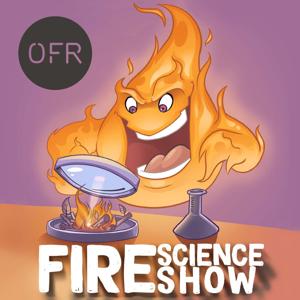
Cover image: frame extracted from this calorimetry supercut video credit to NIST and Matt Bundy
This podcast episode is sponsored by OFR Consultants.
----
The Fire Science Show is produced by the Fire Science Media in collaboration with OFR Consultants. Thank you to the podcast sponsor for their continuous support towards our mission.
In this episode, we uncover the intricate process of fire investigations with renowned combustion scientist and fire investigator, Dr. Richard J. Roby from Combustion Science and Engineering. With over five decades of experience in the field, Dr Roby helps us navigate the critical role of the scientific method in fire investigations.
From the analysis of burn scars to the testimony of eyewitnesses, we explore the fascinating world of fire investigations, where data, evidence, and hypotheses come together to reveal the truth. We'll delve deep into the NFPA 921 standards, which keep fire investigations current with the latest scientific discoveries. We also delve into fire modelling, a tool that allows us to test different hypotheses and explain the spread of a fire. We also tackle the complexities of fire investigation and the crucial factors that can influence the process, such as expectancy and confirmation bias. Dr Roby provides invaluable insights from his vast experience, discussing the changing materials used in buildings and how they affect fire investigation processes. Finally, we explore the importance of recorded evidence and eyewitness testimony in fire investigations, and how to identify and understand biases to produce reliable results.
If you would like to learn more, I believe the best place to look would be NFPA 921, which you can find and access here: https://www.nfpa.org/codes-and-standards/all-codes-and-standards/list-of-codes-and-standards/detail?code=921
----
The Fire Science Show is produced by the Fire Science Media in collaboration with OFR Consultants. Thank you to the podcast sponsor for their continuous support towards our mission.
This time we try out something new! Instead of interviewing experts on subjects of their expertise, this time I took world-class risk specialists for a brainstorming session. And while sitting together, we discussed something out of this world - the fire safety of Mars habitats.
This podcast episode is literally a recording of the conversation between the panellists, it is very unscripted and lightly edited. I really hope you will feel like a part of this conversation, and if you would like to voice your ideas - share them on socials or mail them directly to me. If you have ideas on future brainstorming sessions and who you would like to see at the table. please let me know!
In today's brainstorming session, the discussion is held between:
Background of the discussion: Our exciting and exploratory discussion revolves around the concept of a Mars habitat, examining the unique challenges of maintaining resources on Mars and unpacking how these factors influence the longevity of the structures. Fire can become a catastrophic disaster, especially in a volatile environment like Mars. Our conversation dives into the expense of safety solutions, and the potentially devastating implications of a fire on Mars.
----
The Fire Science Show is produced by the Fire Science Media in collaboration with OFR Consultants. Thank you to the podcast sponsor for their continuous support towards our mission.
If you ever wondered how to capture fires in photographs and videos so it is a real science, not just pretty pictures, this episode is for you. With dr Matt Hoehler we explore the world of visualization in fires - from just shooting the pictures, through composition and what is your target, to fancy techniques - water-cooling, blue light illumination and 360-degree shoots. We also discuss the role of audio in the further use of these pictures.
To watch for yourself how the magic works, check this NIST website:
https://www.nist.gov/news-events/news/2018/07/nist-unblinded-me-science-new-application-blue-light-sees-through-fire
And to see how BOB was applied, check it here:
https://www.nist.gov/el/fire-research-division-73300/national-fire-research-laboratory-73306/360-degree-video-fire
If you would like to learn more, here are some resources:
And one of our own:
----
The Fire Science Show is produced by the Fire Science Media in collaboration with OFR Consultants. Thank you to the podcast sponsor for their continuous support towards our mission.
And so we have reached the fourth and final episode featuring Professor David Purser, a leading expert in fire toxicity. In this episode, we explore the complexities of nitrogen in fires, the impact of fire retardants on fire atmospheres, and the long-lasting hazards related to the consurgents and carcinogenic properties of smoke.
We'll be discussing the different hazard zones associated with fire smoke and the potential risks they pose to people, buildings, and the environment. Discover how fire retardants can lead to higher yields of toxic products, and learn about the acute and chronic exposure risks of fire smoke in various scenarios. Professor Purser also shares his knowledge on the dangers of hazardous materials released in fires, such as organic nitrogen phosphorus materials, metals, mineral fibers, and radioactive polonium.
Lastly, we'll delve into the carcinogenic substances found in fire smoke and their classification by the International Agency for Research on Cancer (IARC). From hydrocarbons to ethylene oxide, we'll reveal the potential risks of these toxic compounds and their impact on our health.
If you would like to first catch up on previous episodes (highly recommended!):
----
The Fire Science Show is produced by the Fire Science Media in collaboration with OFR Consultants. Thank you to the podcast sponsor for their continuous support towards our mission.
From the publisher's feed
78,375 Listeners

43,824 Listeners

31,973 Listeners
26,165 Listeners
30,720 Listeners

54 Listeners
5,082 Listeners
772 Listeners
491 Listeners

2,319 Listeners

3,019 Listeners
770 Listeners

132 Listeners
4 Listeners
1,129 Listeners