
Sign up to save your podcasts
Or



Based on Podcast App listening data
Kate Adie introduces dispatches from Brazil, Taiwan, Zambia, Sweden and the USA.
On Sunday Brazilians vote in the final stage of their presidential election, and the slate offers a very clear choice. Meanwhile, the indigenous peoples of Brazil are facing a host of outside threats, as illegal gold miners flood into their traditional lands to seek their fortunes. While the mining process itself damages the forest, the social effects are also insidious. Katy Watson has been to the world's largest indigenous reserve, territory of the Yanomami people, to hear how the gold rush is playing out.
The issue of Taiwan's identity is one of the most vexed geopolitical questions around. On the Chinese mainland, there's no doubt - Taiwan is historically part of China and reunification should happen as soon as possible. On the island itself, most people have very different views. In Taipei, Zeinab Badawi considers the past, present and future of a possible flashpoint for regional conflict.
Food prices have been rising almost everywhere, in the wake of the war in Ukraine and several seasons of drought and natural disaster in many of the world's usual 'breadbaskets'. Some feel the effects far more keenly than others. In Zambia, the soaring cost of bottled gas and vegetable oil means even the simplest snack is now out of reach for some. Qasa Alom stopped off in a small town to talk about the price of potato chips with a woman who earns her living selling them from a stall.
Most stereotypes of Sweden revolve around ABBA and Ikea, a strong welfare state and political moderation. But the results of the most recent general election shook those certainties, as a far-right nativist party, the Sweden Democrats, gained over a fifth of the votes and became a key part of the new right-wing coalition in government. Matilda Welin's been wondering if it's time for Swedes and others to rethink what the country's really about.
Can the United States of America ever really make amends for the sins of its past? Paying reparations to the descendants of enslaved people was a central demand for the Black Lives Matter movement. Calculating the best way to pay out is a challenge to communities and institutions. Mike Wendling reports from Evanston, Illinois, on one scheme which has made some first steps.
Producer: Serena Tarling
Nigeria is suffering its worst flooding in a decade with 1.4 million people displaced and more than 600 killed. There are now concerns that the country may face catastrophic levels of hunger. The BBC’s West Africa correspondent, Mayeni Jones, visited flood-hit Kogi state and reflects on what her journey revealed about the state of the country.
The Netherlands is currently lurching from crisis to crisis - including a tense debate over how to accommodate thousands of asylum seekers. In recent weeks, judges ordered the Dutch government to raise the standards in the reception of refugees in line with the European minimum. Anna Holligan visited a reception centre in the country's rural north.
Many who fled Iran after the revolution in 1979 had to find their way in new countries, including Israel. Suzanne Kianpour met with a singer who left Iran for Israel as a child and spoke to her about how she managed to adjust to the different culture and her desire to build bridges between enemy countries.
Bhutan has kept its borders firmly closed for two and a half years. Now it’s re-opened to tourists, and an additional daily tourist tax is set to make it a much more exclusive. Locals who cater for less extravagant budgets are being hit hard, says Michelle Jana Chan.
it was just a normal Friday afternoon when tragedy struck the village of Creeslough in county Donegal in Ireland. An explosion at a petrol station killed ten people - with police describing it as a tragic accident. Members of the local community have pulled together in their grief with small acts of kindness, says Chris Page.
Presenter: Kate Adie
Producers: Serena Tarling and Ellie House
Production Coordinator: Iona Hammond
Editor: Emma Rippon
Photo credit: Ayo Bello, BBC
In Ukraine, rights groups are reporting growing numbers of missing civilians in areas occupied by Russia. Many are believed to have been taken to Russian prisons, but the husbands, wives and relatives are left behind, scouring news bulletins and online message boards in a desperate attempt to track them down. Bel Trew met some of them.
The past week has been one of contrasting emotions in Ukraine. The country celebrated a dramatic and unexpected development: an attack on a key bridge linking Russia with Crimea was seen as a major strategic blow to Vladimir Putin. But days later, Russia launched some of the most widespread missile attacks of the war. Paul Adams, says there is a lingering unease in Ukraine about Putin’s next move.
Presenter: Kate Adie
Protests in Iran, following the death in custody of a Kurdish woman, Mahsa Amini, are now in their fourth week despite the intensifying crackdown. Mahsa became a symbol of Iranian repression after her arrest by the morality police for allegedly wearing her hijab improperly. Anna Foster met members of Mahsa's family who live across the border in Iraqi Kurdistan.
Presenter: Kate Adie
A fight for survival is underway in Somalia as the country faces its worst drought in 40 years. Andrew Harding travelled to the southwestern city of Baidoa - one of the worst-affected areas in the country, where people are now flooding to in hope of finding humanitarian assistance.
The story of two teenage sisters who were raped and hanged in their village in the Indian state of Uttar Pradesh has shaken communities there. The case has also been complicated by spurious suggestions by local politicians that there was a religious motivation behind the killings. Geeta Pandy met the family of the victims.
Henry Wilkins is in Burkina Faso, where two coups have now taken place this year. The West African country lacks strong democratic institutions and the military have long been dominant. It’s also found itself increasingly embroiled in a new cold war rivalry between France and Russia.
Set in the hills north of Spoleto in the southern Appenines is the small Italian town of Montefalco. The local grape, the Sagrantino, is known to be one of the tougher varieties to make into wine. Ellie House met one vineyard owner in the region and learnt how the production process is still one based on trial – and a few errors.
Saudi Arabia’s been burnishing its credentials as host for the world’s biggest sporting events this year, with speculation its even lining itself up for an Olympic bid. Steve Bunce considers whether the presence of the world’s best athletes can really distract critical eyes, as the kingdom’s rulers might hope.
Presenter: Kate Adie
China’s communist party is preparing for a crucial meeting of the annual congress, which is expected to award President, Xi Jinping a third term in office. But amid the tightened security surrounding this event, economic storm clouds are gathering. And investigating and reporting on the effects of this downturn is becoming ever more tricky, as Stephen McDonnell has found.
Presenter: Kate Adie
Russian men have been flooding across the border to escape Vladimir Putin's military draft. Around 10,000 Russian citizens have been entering the republic of Georgia daily since the call-up was announced. Rayhan Demytrie has spoken to Russians crossing the border.
Brazilians will vote in the first round of presidential elections on Sunday. The front-runner is former leftist president Luiz Inacio Lula da Silva – currently, polls suggest he has a healthy lead over the incumbent far-right president, Jair Bolsonaro. Political observers say these will be the most closely watched elections since Brazil returned to democracy in 1989 - and some of the most polarised, as Katy Watson explains
Vladimir Putin’s announcement of a partial conscription to fight in the war in Ukraine was interpreted by many as an act of desperation. Within Russia, the news sparked protests by Russians who are against fighting a war they don’t believe in. Until now many Russians had continued with life almost as normal, unaffected by Putin’s so-called special operation. This week changed that, says Sarah Rainsford
From the publisher's feed
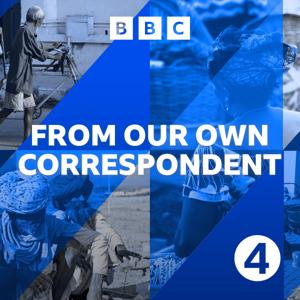
Insight, wit and analysis from BBC correspondents, journalists and writers from around the world
Ranked by our users in the last 21 days

7,568 Listeners

526 Listeners

873 Listeners

1,049 Listeners

287 Listeners

5,524 Listeners

1,808 Listeners

955 Listeners

2,107 Listeners

489 Listeners

111 Listeners

46 Listeners

729 Listeners

238 Listeners

161 Listeners

71 Listeners

662 Listeners

344 Listeners

233 Listeners

307 Listeners

3,215 Listeners

733 Listeners

77 Listeners

826 Listeners

3,023 Listeners

517 Listeners

628 Listeners

377 Listeners

231 Listeners
27 Listeners

59 Listeners

74 Listeners

72 Listeners