
Sign up to save your podcasts
Or



Based on Podcast App listening data
The Taliban takeover in Afghanistan has serious implications for global security. Western governments are concerned about the prospect of more attacks on their own turf. But there’s also particular worry that jihadist movements in Africa and Asia could gain ground. Might the news from Kabul attract new recruits to their ranks – especially in those places where international forces have been deeply involved in fighting them back? The various armed groups allied with Al Qaida and the Islamic State across the Sahel and east Africa have been wreaking havoc for more than a decade now. Andrew Harding has reported on many of those wars, and recent events have brought back vivid memories… and hard questions…
In Afghanistan itself, some among the Taliban now in charge of the country again have grievances of their own, after losing relatives and comrades killed in airstrikes and night raids over the past twenty years. So how will they rule, and treat their old enemies? Kate Clark was the BBC correspondent in Kabul in the final years of the last Taliban regime, where she witnessed the fall of the city in 2001 – and she has done so again in 2021. She’s seen rulers come and go – and how after each change of regime, cycles of revenge have been fed, prolonging the conflict. After a week of chaos, she considers a longer view of four decades of war.
Reporting from Israel often inevitably revolves around the politics of Israeli-Palestinian conflict. Even the basic, day-to-day issues – town planning, health care, education – are complicated by this central problem. So imagine the challenge of policing in such a divided setting. For some time, Palestinian citizens of Israel have reported rising violence within their communities – not politically motivated, but driven by organised crime. The mobsters’ trade in drugs and weapons, and their vendettas, have blighted many areas – and left many families bereaved. Yolande Knell has spoken to several families trying to cope with the aftermath.
In Spain, paying the rent is often a political issue – and there’s a long history of squatting. After the property crash of 2008, many families fought to stay on in homes that did not belong to them, because they couldn’t afford their mortgages any more. In cities like Barcelona, while prices slumped, speculators moved in and bought up buildings at knock-down prices. Thousands of flats are still standing empty. Some have been illegally occupied by people who just can’t afford a market rent and needed a roof over their heads. But not all squatters actually live in the homes they take over. Criminals have spotted an opportunity: why not just move into a property and demand a ‘ransom’ of thousands of Euros from the owner before they will leave? Linda Pressly recently met a man who claimed to be a professional extortionist in Barcelona…
And Patrick Muirhead takes a gruelling hike in the Seychelles, on the trail of its fabled Jellyfish Tree. It’s not just rare, but a botanical mystery: no-one yet understands how it manages to reproduce. In the teeth of climate change and rapid development for the islands' tourism industry, there are fears the species may not last much longer. If a proposed dam is built to supply water for the growing population of Mahé island, it could engulf one of the last remaining outcrops of the plant.
Producer: Polly Hope
It’s been a week of searing and surreal images from Afghanistan after the Taliban’s lighting takeover of Kabul. The spectacle of an official Taliban news conference, televised live from the capital on Tuesday, was proof of how just how fast events have moved. The Taliban leadership may have promised forgiveness, reconciliation and protection of women’s rights. But the mood is fearful and there are still thousands of Afghans desperate to get out of the country by any means possible. Lyse Doucet has been hearing from many of them.
As the West’s twenty-year mission to Afghanistan comes to an end, there are questions around the world about how the international intervention, and the new political structures set up after 2001, went so desperately wrong, so fast. Paul Adams has also been covering events and searching his own memories of time spent with foreign forces in the country for clues.
The latest earthquake in Haiti has inflicted more losses on a nation that’s endured plenty of them. The shocks and aftershocks last Saturday caused at least 2,200 deaths, injured more than 12,000 people and destroyed tens of thousands of homes. After the far more devastating quake back in 2010, more than 200,000 Haitians ended up living in squalid encampments in the capital, Port au Prince. This time around, the plan is to encourage survivors to stay put and rebuild, rather than run to already overburdened cities. James Clayton has been to some of the worst-affected areas in the southwest of the country.
Imagine that one ordinary day you find out that - although you feel perfectly normal - you’re officially dead. That’s the experience of a surprising number of people across India. Thousands of men and women who are very much alive are being registered as dead, often by their own relatives who are angling to inherit their property. Covid restrictions prevented Chloe Hadjimatheou from going to India to investigate in person - but she’s been on the trail of these extraordinary stories. Finding out how easily this could happen to anyone brought home to her the extraordinary power which bureaucrats can have...
The cultural history of Paris has a vivid streak of lowlife as well as high art. From Edith Piaf, the “little sparrow” belting out songs on street corners, to Gavroche, the plucky but doomed urchin of Les Miserables – there’s often a deep affection for those characters who must live by their wits on the streets. But the city’s wiles and its tricksters have caused many an unsuspecting visitor to come unstuck. Some come away with more vivid memories of time spent in police stations, embassies and travel agents, trying to untangle their misadventures, than of great meals or cultural highlights. Christine Finn’s been keeping an eye out and her wits about her ...
Producer: Polly Hope
Greece has been ravaged by almost six hundred wildfires in recent weeks. Thousands of firefighters have struggled to contain the raging flames which have destroyed hundreds of thousands of hectares of land; more than 60,000 people so far have had to flee their homes to safety. The Greek government has promised compensation payments for those affected and a massive drive to reforest the burnt areas “We saved lives, but we lost forests and property”, the Prime Minister admitted this week, calling it ‘an ecological catastrophe’. Bethany Bell reports from Athens, the island of Evia and the Peloponnese.
Across Afghanistan, the country’s national army and security forces have been losing ground to the Taliban. The insurgents’ fighters have pushed forward and major provincial capitals including Herat, Kunduz and Zaranj have now been taken over. The Taliban also announced they were in control of the town of Ghazni, only 93 miles from Kabul. Before they moved into the centre of Kandahar, in the south, Shelly Kittleson had managed to get into the city.
Since a rare outbreak of street protests in Cuba a month ago, its government has been arresting and jailing many of those who dared take part. Cubans are also still suffering the triple impact of a Covid surge, a serious economic crunch and frosty relations with the Biden administration in the USA. Power cuts and shortages only add to the discontent. Will Grant recently returned to the island after a while away, and sensed a definite change in the atmosphere.
Amid Libya’s civil wars, rival governments and militia groups, there are also foreign players: backers, influencers and fighters. One particular group of Russian mercenaries, operating in the east, has been accused of war crimes against civilians. Allegations that the group has links to the Russian government have been strongly denied by President Vladimir Putin himself. Nader Ibrahim has been investigating connections between Russia and Libya for a long time and recently heard a fascinating story one night in Tripoli.
Would you rent out a holiday hut which was built for a leading Nazi collaborator? Perhaps surprisingly, it’s something you can do in Norway. During the Second World War, the Germans installed a local sympathiser as the country’s leader: Vidkun Quisling. His surname itself has become a synonym for a lackey, traitor or bootlicker. The Scottish writer and novelist Ben McPherson has lived in Norway for many years, and he was surprised to learn Quisling’s summer cabin in the fjords was available for bookings …
Producer: Polly Hope
The repressive tactics of the Belarusian state have been back in the news this week – and all over the map. The Olympic Games in Tokyo were shaken by sprinter Krystina Timonovskaya’s row with her coaches – she ended up seeking asylum in Poland. In Ukraine, the head of a group helping Belarusian emigres was found hanged in a park in Kyiv; his death is still being investigated. In Belarus itself, it’s nearly a year since the disputed election of August 2020 - which sparked mass protests over the result. Since then the government of Aleksandr Lukashenko has been going after people who were involved in the demonstrations with every means to hand. This week, one of the main ‘faces’ of the protests went on trial. Sarah Rainsford was in Minsk and has been speaking to family and friends of Maria Kolesnikova.
In Nigeria, the mass abduction of children has become a tragically recurring kind of news story: eighty taken in one incident, over 120 in another – just in the past few months. But it’s not just crime which is destabilising Nigeria right now. There is the continuing insurgency of the jihadist group Boko Haram in the north, and a crop of separatist movements around the country. As Mayeni Jones reports, the insecurity is now touching even people who’d previously managed to shield themselves from the worst:
It sounds like the stuff of a military dictatorship: troops will be out on the streets, enforcing a curfew, with people forbidden to leave their homes except on essential business. But this is Sydney, Australia - where yet another lockdown has been enforced, in in an effort to halt a surge in Covid cases. Different parts of this vast country have adopted their own rules – but one thing all parts of Australia share is a reverence for the traditional character of the “larrikin” – a rebellious, anti-establishment type who doesn’t take kindly to rules or regulations of any sort. So, Phil Mercer asks, how has a larrikin-loving nation reacted to such draconian measures?
Costa Rica gets a lot of good press for its efforts to preserve nature. It’s got an extraordinary array of micro-climates and species, and it's a leading voice in international efforts to tackle climate change. So it's also a hotspot for nature tourists – from bird spotters to those who want to wander into a real live rainforest. But not everything about Costa Rica’s government is green – and not all its life forms are friendly. Michelle Jana Chan went for a night walk which shed light on all sorts of wonders… and horrors.
Producer: Polly Hope
The political crisis which broke out in Tunisia last weekend is still simmering. Of all the countries in North Africa and the Middle East which toppled their dictators a decade ago, only Tunisia emerged as a full, multi-party democracy. Its free and fair elections, featuring candidates and groups of all ideological stripes, have been an exception in the wider region since then. But discontent has still mounted over the state of the economy, pandemic response and police tactics. Plenty of Tunisians don't necessarily see their country as a model for others - and President Kais Saied’s recent moves to freeze Parliament and remove the Prime Minister were welcomed by many. Rana Jawad explores why the situation looks rather different from Tunis.
Next week it will be a year since the chemical explosion that devastated the Lebanese capital, Beirut. It was one of the largest non-nuclear blasts in history – which killed more than 200 people and left more than 300,000 homeless. One of the worst-hit neighbourhoods was the close-knit district of Karantina, right next to the port. Survivors who’ve gone back to their rebuilt homes there hope that its special character can be preserved. But there are also some visionary, larger-scale proposals to redevelop the city – and as Tim Whewell found, the new plans might not leave room for everyone.
This November, Barbados is planning to celebrate its 55 years of independence and become a republic – meaning the Queen will no longer be its head of state. It’s seen as a turning point in the country’s history - and a chance for Barbados to move even further on from its colonial past. Other historic legacies may be harder to unpick, though. Barbados was Britain’s first slave-holding society abroad; and the economic impact, and the debts, of the slavery era are still much discussed across the Caribbean. Zeinab Badawi recently visited a surviving 17th century mansion in the north of this island, which is now a museum.
The UNHCR estimates that there are probably at least ten million individuals worldwide with no identity or nationality documents issued by any country. For them, the most basic challenges – registering a birth, getting childhood inoculation or exam certificates, applying for jobs or loans - can be insurmountable. But some countries are now deciding to make it easier to get legal status. In Kenya, hundreds of people from a Shona-speaking religious community with roots more than a thousand miles south, in Zimbabwe, were recently given a fresh chance. Vivienne Nunis saw several moments of pure joy at a ceremony to grant them citizenship.
There’s never been a summer Olympic Games quite like Tokyo's... and Covid restrictions also apply to the journalists who are meant to cover the event. Their task is even more important when the crowds of spectators aren’t around to witness the sporting triumphs at first hand – but this time they definitely can’t just wander around looking for athletes to speak to. Or soak up the atmosphere inside the Olympic village or on the streets of Tokyo. Alex Capstick has covered more sporting contests than he’d care to remember – but this time it’s different…
Producer: Polly Hope
The repressive tactics of the Belarusian state have been back in the news this week – and all over the map. The Olympic Games in Tokyo were shaken by sprinter Krystina Timonovskaya’s row with her coaches – she ended up seeking asylum in Poland. In Ukraine, the head of a group helping Belarusian emigres was found hanged in a park in Kyiv; his death is still being investigated. In Belarus itself, it’s nearly a year since the disputed election of August 2020 - which sparked mass protests over the result. Since then the government of Aleksandr Lukashenko has been going after people who were involved in the demonstrations with every means to hand. This week, one of the main ‘faces’ of the protests went on trial. Sarah Rainsford was in Minsk and has been speaking to family and friends of Maria Kolesnikova.
In Nigeria, the mass abduction of children has become a tragically recurring kind of news story: eighty taken in one incident, over 120 in another – just in the past few months. But it’s not just crime which is destabilising Nigeria right now. There is the continuing insurgency of the jihadist group Boko Haram in the north, and a crop of separatist movements around the country. As Mayeni Jones reports, the insecurity is now touching even people who’d previously managed to shield themselves from the worst:
It sounds like the stuff of a military dictatorship: troops will be out on the streets, enforcing a curfew, with people forbidden to leave their homes except on essential business. But this is Sydney, Australia - where yet another lockdown has been enforced, in in an effort to halt a surge in Covid cases. Different parts of this vast country have adopted their own rules – but one thing all parts of Australia share is a reverence for the traditional character of the “larrikin” – a rebellious, anti-establishment type who doesn’t take kindly to rules or regulations of any sort. So, Phil Mercer asks, how has a larrikin-loving nation reacted to such draconian measures?
The city-state of Singapore is officially a multi-racial, multi-faith nation with a strong ethos of unity across ethnic or religious lines. Nearly three-quarters of its people are of Chinese descent, just over a tenth are Malay, and Indians make up just under a tenth. As the country gears up to celebrate its National Day, there’s a lot of rhetoric about equal rights and a single purpose. But some people from minority groups feel discrimination and prejudice are widespread. Sharanjit Leyl explores the public's attitudes.
Costa Rica gets a lot of good press for its efforts to preserve nature. It’s got an extraordinary array of micro-climates and species, and it's a leading voice in international efforts to tackle climate change. So it's also a hotspot for nature tourists – from bird spotters to those who want to wander into a real live rainforest. But not everything about Costa Rica’s government is green – and not all its life forms are friendly. Michelle Jana Chan went for a night walk which shed light on all sorts of wonders… and horrors.
Producer: Polly Hope
The political crisis which broke out in Tunisia last weekend is still simmering. Of all the countries in North Africa and the Middle East which toppled their dictators a decade ago, only Tunisia emerged as a full, multi-party democracy. Its free and fair elections, featuring candidates and groups of all ideological stripes, have been an exception in the wider region since then. But discontent has still mounted over the state of the economy, pandemic response and police tactics. Plenty of Tunisians don't necessarily see their country as a model for others - and president Kais Saied’s recent moves to freeze parliament and remove the prime minister were welcomed by many. Rana Jawad explores why the situation looks rather different from Tunis.
Next week it will be a year since the chemical explosion that devastated the Lebanese capital, Beirut. It was one of the largest non-nuclear blasts in history – which killed more than 200 people and left more than 300,000 homeless. One of the worst-hit neighbourhoods was the close-knit district of Karantina, right next to the port. Survivors who’ve gone back to their rebuilt homes there hope that its special character can be preserved. But there are also some visionary, larger-scale proposals to redevelop the city – and as Tim Whewell found, the new plans might not leave room for everyone.
This November, Barbados is planning to celebrate its 55 years of independence and become a republic – meaning the Queen will no longer be its head of state. It’s seen as a turning point in the country’s history - and a chance for Barbados to move even further on from its colonial past. Other historic legacies may be harder to unpick, though. Barbados was Britain’s first slave-holding society abroad; and the economic impact, and the debts, of the slavery era are still much discussed across the Caribbean. Zeinab Badawi recently visited a surviving 17th century mansion in the north of this island, which is now a museum.
The UNHCR estimates that there are probably at least ten million individuals worldwide with no identity or nationality documents issued by any country. For them, the most basic challenges – registering a birth, getting childhood inoculation or exam certificates, applying for jobs or loans - can be insurmountable. But some countries are now deciding to make it easier to get legal status. In Kenya, hundreds of people from a Shona-speaking religious community with roots more than a thousand miles south, in Zimbabwe, were recently given a fresh chance. Vivienne Nunis saw several moments of pure joy at a ceremony to grant them citizenship.
There’s never been a summer Olympic Games quite like Tokyo's... and Covid-19 restrictions also apply to the journalists who are meant to cover the event. Their task is even more important when the crowds of spectators aren’t around to witness the sporting triumphs firsthand – but this time they definitely can’t just wander around looking for athletes to speak to. Or soak up the atmosphere inside the Olympic village or on the streets of Tokyo. Alex Capstick has covered more sporting contests than he’d care to remember – but this time it’s different…
Producer: Polly Hope
The destructive power of water is often underestimated… until it’s too late. Large areas of Europe and China are still reeling from the damage left by some of their worst floods for decades. Across Belgium, the Netherlands and Germany, there were over 200 deaths and billions of euros' worth of damage done. Now there are questions over whether this disaster will make voters more concerned about the effects of climate change. Although the Netherlands was least affected by the latest floods, water management is an existential threat for such a low-lying country. Anna Holligan has seen the worry – as well as the wreckage - on the ground there and in Germany.
Brazil’s President Jair Bolsonaro was recently briefly admitted to hospital after intestinal problems made him hiccup uncontrollably. He appears to have recovered and has been out and about, talking to the media and to the public. But his political worries are not over – in fact they’re only growing more acute. Many of his former allies are beginning to peel away. The country’s Senate is now investigating his government’s record of decision-making on Covid, from refusing to lock down to failure to procure medical supplies and vaccines. There are allegations swirling of corrupt vaccine-purchasing deals. Yet Mr Bolsonaro can still count on solid support from some of those who helped to elect him. Orla Guerin heard from them in Brasilia.
The war between Armenia and Azerbaijan for control of Nagorno Karabakh, is over - for now. The conflict there has flared up repeatedly over more than thirty years, with both countries insisting that the region is legally and historically theirs. In late 2020 Azerbaijan launched a lightning offensive – and came out on top this time around, capturing towns and territory with significant help from its regional ally, Turkey. Colin Freeman recently returned to one town which he’d last seen at the centre of a fierce battle.
South Africa is counting the costs of a mass outbreak of looting and destruction. In and around the cities of Johannesburg and Durban, businesses and homes were burned and ransacked. The police were fiercely criticised in some places for not doing enough to stop the violence. As well as criminal investigation, the country is now also doing plenty of soul-searching about the root causes of such widespread chaos. Gregory Mthembu-Salter and his family share the national concern, as his wife’s side of the family live where the looting was worst, in Kwa Zulu -Natal.
The Mexican state of Sinaloa is deeply enmeshed in the drug trade. Profits from organised crime are an important driver of the local economy, especially in the state’s capital. In Culiacán , luxury cars can often be seen cruising the streets. Restaurants, bars, and designer fashion outlets all depend on the cash brought in from narcotics. And there's another expensive consumer fixation fuelled by narco culture – widespread plastic surgery. Linda Pressly talked to one of the city’s busy cosmetic surgeons.
Producer: Polly Hope
In the eastern Mediterranean there are far fewer refugees and migrants arriving by boat than in recent years - but the moral dilemmas of dealing with migration are still acute. In Greece, the government of Prime Minister Kyriakos Mitsotakis has tightened its asylum laws, built new walled camps and pushed back boats at sea. Over his reporting career, Fergal Keane has followed many global waves of migrants and refugees, from their home countries, along their journeys and to their various end points. A recent visit to the Greek islands got him thinking about the big picture again.
Life has been good to King Mswati III of Eswatini. He has ruled over a small, peaceable country for decades as an absolute monarch. But his historic privileges are now in question. It seems some of his people have had enough; recently protests and looting broke out, and were met with a violent response. At least twenty seven people have been killed. Shingai Nyoka has met the King in person, and talked to some of his restive subjects.
The situation in the Tigray region of Ethiopia is still looking grim. Apart from the armies of Ethiopia and Eritrea and the armed forces of the TPLF, armed forces from other regions of Ethiopia have also become involved. Outside observers have warned of a possible impending famine. But it’s been very hard for journalists to find out exactly what’s happening inside Tigray itself, as the Ethiopian government has tightly controlled access. Fred Harter managed to get there earlier this year, and since then he’s been trying to keep up with events from afar.
In France this week, President Macron sent signals of a distinctly tougher official approach to vaccination. From now on, if you can’t produce a pass showing you're Covid-safe, daily life could become significantly more complicated. Hugh Schofield wonders whether the French may secretly like a bit of strong-arming from their leader.
Over the long months of lockdown many people have taken to walking with new fervour – particularly when it was the only legitimate pretext for leaving the house. In Transcarpathian Ukraine, Nick Thorpe recently joined a group of local enthusiasts who are assembling their own route for a very long hike indeed - a new footpath winding 250 miles through the mountains from the Slovak to the Romanian border.
Producer: Polly Hope
From the publisher's feed
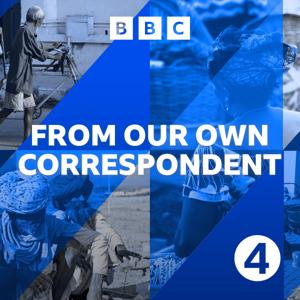
Insight, wit and analysis from BBC correspondents, journalists and writers from around the world
Ranked by our users in the last 21 days

7,563 Listeners

525 Listeners

872 Listeners

1,048 Listeners

288 Listeners

5,525 Listeners

1,808 Listeners
955 Listeners

2,106 Listeners

491 Listeners

111 Listeners

46 Listeners

729 Listeners

239 Listeners

161 Listeners

71 Listeners

654 Listeners

344 Listeners

233 Listeners

309 Listeners

3,209 Listeners

746 Listeners

78 Listeners

832 Listeners

3,049 Listeners

517 Listeners

628 Listeners

378 Listeners

230 Listeners
27 Listeners

58 Listeners

74 Listeners

72 Listeners