
Sign up to save your podcasts
Or


Send us a text
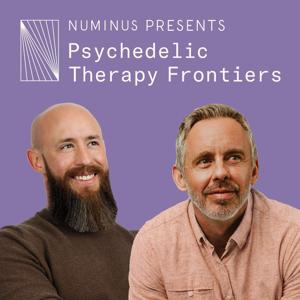
In this episode of the Psychedelic Therapy Frontiers podcast Dr. Steve Thayer and Dr. Reid Robison are joined by Dr. Gül Dölen MD, PhD. Gül is an associate professor of neuroscience at the Johns Hopkins University School of Medicine and a pioneer and world leader of psychedelics research. She earned her MD, PhD at Brown University and the Massachusetts Institute of Technology (MIT), where she carried out seminal work on critical periods, learning and memory, and the pathogenesis of autism. You can learn about her current work at dolenlab.org.
In today’s interview, Gul teaches us about critical learning periods and social reward learning. She clarifies what it really means when we say psychedelics cause “neuroplasticity” and explains the difference between metaplasticity and hyperplasticity. We talk about the possibility that psychedelics are the “master key” that unlocks various kinds of critical periods and what that means for treating psychiatric, neurodevelopmental, and even motor dysfunction like that found in stroke patients. She provides a neuromechanistic explanation for the phenomenology of a psychedelic trip and makes a case for the critical importance of psychotherapy in combination with psychedelic use for people who are seeking healing or behavior change.
*This episode originally aired 08/15/23
Learn more about our podcast at https://numinusnetwork.com/learn/podcast/
Learn more about psychedelic therapy training opportunities at https://numinusnetwork.com/training/
Learn more about our clinical trials at https://www.numinusnetwork.com/research
Learn more about Numinus at https://numinusnetwork.com/
Email us at [email protected]
Follow us on Instagram:
https://www.instagram.com/drstevethayer/
https://www.instagram.com/innerspacedoctor/
https://www.instagram.com/numinushealth/
 View all episodes
 By Numinus Network

4.9
169169 ratings
Send us a text
In this episode of the Psychedelic Therapy Frontiers podcast Dr. Steve Thayer and Dr. Reid Robison are joined by Dr. Gül Dölen MD, PhD. Gül is an associate professor of neuroscience at the Johns Hopkins University School of Medicine and a pioneer and world leader of psychedelics research. She earned her MD, PhD at Brown University and the Massachusetts Institute of Technology (MIT), where she carried out seminal work on critical periods, learning and memory, and the pathogenesis of autism. You can learn about her current work at dolenlab.org.
In today’s interview, Gul teaches us about critical learning periods and social reward learning. She clarifies what it really means when we say psychedelics cause “neuroplasticity” and explains the difference between metaplasticity and hyperplasticity. We talk about the possibility that psychedelics are the “master key” that unlocks various kinds of critical periods and what that means for treating psychiatric, neurodevelopmental, and even motor dysfunction like that found in stroke patients. She provides a neuromechanistic explanation for the phenomenology of a psychedelic trip and makes a case for the critical importance of psychotherapy in combination with psychedelic use for people who are seeking healing or behavior change.
*This episode originally aired 08/15/23
Learn more about our podcast at https://numinusnetwork.com/learn/podcast/
Learn more about psychedelic therapy training opportunities at https://numinusnetwork.com/training/
Learn more about our clinical trials at https://www.numinusnetwork.com/research
Learn more about Numinus at https://numinusnetwork.com/
Email us at [email protected]
Follow us on Instagram:
https://www.instagram.com/drstevethayer/
https://www.instagram.com/innerspacedoctor/
https://www.instagram.com/numinushealth/

1,865 Listeners

2,625 Listeners

2,508 Listeners
1,385 Listeners

562 Listeners
504 Listeners
309 Listeners

1,624 Listeners
600 Listeners

282 Listeners

1,048 Listeners
472 Listeners

264 Listeners

1,087 Listeners
230 Listeners