
Sign up to save your podcasts
Or

By PRX
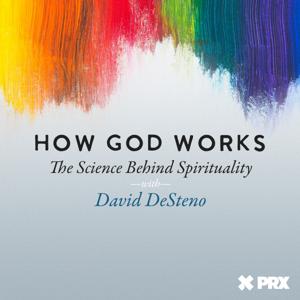
While religion and science often seem at odds, there’s one thing they can agree on: people who take part in spiritual practices tend to live longer, healthier, and happier lives. The big question i
... more

4.8
178178 ratings


The podcast currently has 120 episodes available.
The most played episodes among Podcast App listeners.
These days, it seems like advice for how to “find your purpose” is everywhere. But what if purpose isn’t some hidden answer waiting to be found? And what if anxiously searching for our one true calling actually makes it harder to live with purpose? On this episode, we explore some other approaches to the problem. Clinical psychologist Ross White tells us about how psychological flexibility can help us form purpose over time, and stay connected to it, even as our lives change. And we talk to philosopher Edward Slingerland about what early Chinese thinkers like Confucius and Zhuangzi would have made of our modern obsession with inventing a meaningful path from scratch. Ross White is an Honorary Professor of Clinical Psychology at Queen’s University, Belfast and the Founding Director of Strive2Thrive. He is the author of the book The Tree That Bends: How a flexible mind can help you thrive, as well as the article “Your purpose isn’t something you find, it’s something you form.” Edward Slingerland is a Professor of Philosophy at the University of British Columbia and a Visiting Professor in the Department of Religion at Dartmouth. He is the author of many books, including Trying Not to Try and the forthcoming title, Learning to See: Literature, Moral Perception and Early Confucian Virtue Ethics. Find out more about his work on his website.

How God Works will be back with all new episodes in September. In the meantime, we're excited to feature an episode from our friends at Oh God Now What, hosted by Niala Boodhoo. * In the debut episode, "Voting Your Morals," host Niala Boodhoo welcomes public theologian Curtis Chang and Rabbi Jill Jacobs. Using their expertise as religious thought leaders, they help us navigate aligning beliefs with how we vote. And they offer perspective and tools for strengthening democracy outside of high-stakes elections. Chang is the Executive Director of Good Faith, which helps politically ‘homeless’ Christians navigate a deeply divided world. Rabbi Jacobs is the CEO of T’ruah, which empowers rabbis and cantors to lead Jewish communities in advancing democracy and human rights.
Join us for Season 11 of How God Works, starting next week!
As humans increasingly turn to AI for moral guidance and answers to life’s biggest questions, the lines between technology and religion are blurring—even leading some in Silicon Valley to wonder if AI might have a spiritual life of its own or be destined to change the world’s religious landscape. What does the impulse to see a god in the machine reveal about our enduring hunger for meaning, belonging, and spiritual growth? Dave explores these questions and more with psychologist Paul Bloom, author Elizabeth Oldfield, and theologian Paolo Benanti in a discussion recorded live at the 2026 Aspen Ideas Festival. Paul Bloom is a professor of psychology at the University of Toronto and the Brooks and Suzanne Ragen Professor Emeritus of Psychology at Yale University. He's also the author of seven books, including his latest “Psych: The Story of the Human Mind.” Elizabeth Oldfield hosts “The Sacred” podcast, dedicated to conversations about being human, finding wisdom, building a more tolerant society, and what spirituality and religion might offer in answer to those questions. She is also the author of Fully Alive: Tending to the Soul in Turbulent Times. Paolo Benanti is a professor of moral philosophy at Luiss Guido Carli University in Rome and a professor of technology ethics at Seattle University. A Franciscan priest and leading global voice on AI ethics, he advises the Vatican on emerging technologies and the rise of generative AI and chatbots.
We’ve all done things we’re not proud of. But why do some people seem to struggle so much more than others when it comes to avoiding harmful behavior? And what does it mean for how we think about blame and accountability if the answer has something to do with our genes? On this episode, we’re rethinking sin from the perspective of behavioral genetics. We’ll talk to psychologist Kathryn Paige Harden about the surprising ways ancient religious debates are still shaping modern science, what genetics can actually tell us about why we fall short, and what it all means for how we think about accountability and repair, both for ourselves and as a society. Kathryn Paige Harden is a Professor of Psychology at the University of Texas at Austin, where she directs the Developmental Behavior Genetics lab and serves as Director of Clinical Training. She is the author of Original Sin: On the Genetics of Vice, the Problem of Blame, and the Future of Forgiveness, and The Genetic Lottery: Why DNA Matters for Social Equality. Learn more about her work on her website. Also mentioned on this episode: Elaine Pagels, author of Adam, Eve, and the Serpent Robert Sapolsky, author of Behave: The Biology of Humans at Our Best and Worst and Determined: A Science of Life Without Free Will Elizabeth Oldfield, author of Fully Alive: Tending to the Soul in Turbulent Times and former How God Works guest.
The podcast currently has 120 episodes available.

43,392 Listeners

2,579 Listeners

10,513 Listeners
3,322 Listeners
10,151 Listeners

12,737 Listeners
2,513 Listeners

1,027 Listeners
5,095 Listeners
1,900 Listeners
14,322 Listeners

3,345 Listeners

1,095 Listeners

10,838 Listeners
31 Listeners