
Sign up to save your podcasts
Or

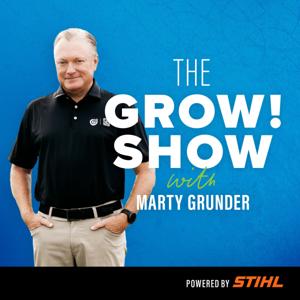

In this episode, Marty Grunder and executive coach Chris Psencik explore how small, consistent actions compound into extraordinary results. Drawing from Captain Michael Abrashoff's leadership principles in "It's Your Ship," they break down practical applications across the Four P Framework: Platform, People, Process, and Profits. The conversation emphasizes that success in the landscape industry comes from mastering the details that most people overlook.
Marty's Desk Pad
⭐️⭐️⭐️⭐️⭐️ Leave a Review for the Grow Show!
️⭐️⭐️⭐️⭐️⭐️ Subscribe to Our Youtube Channel!
Episode Timestamps
01:58 - Introducing Chris Psencik
03:50 - The Importance of Little Things in Business
05:00 - Book Discussion: Creating Owners & Leaders
08:37 - The Four P Framework
10:00 - Platform: Speed and Execution
14:49 - People: Training and One-on-Ones
18:01 - Process: Systems and Efficiency
18:54 - Proactive Client Engagement
20:02 - Analyzing and Improving Proposals
21:16 - Maximizing Software Utilization
22:19 - Bite-Sized Profit Strategies
23:22 - Overcoming Sales Challenges
25:17 - The Importance of Peer Groups
30:28 - Success Through Attention to Detail
33:40 - Sign Up for GROW 2026!
Key Learnings
Speed Kills (In a Good Way): When a customer is ready to buy, they have Google, ChatGPT, and a list of competitors at their fingertips. The companies that respond fastest win. Chris shared how many businesses complain about needing more sales when the real problem is response time. The calls are coming in. The return speed is the bottleneck.
Marty's Take: "Good things come to those who wait, but only the things left behind by those who didn't. Seize the day. What are you waiting for?"
Create Owners, Not Employees: Captain Abrashoff's transformation of the USS Benfold offers a blueprint for landscape companies. He turned a failing ship into one of the Navy's most productive by pushing decision-making down, creating clarity, and building relationships at every level. The key insight: you cannot scale by micromanaging. You scale by creating people who think and act like owners.
Chris's Perspective: "So many people think they can just white-knuckle those companies and grab their bootstraps and get their hands dirty. But once a company reaches a certain size, it takes successful people to really do that."
Leverage the Wins: Recognition does not require elaborate systems. A shout-out with a Payday candy bar. Acknowledging someone in a team meeting who embodied a core value. These small moments reinforce culture more than any policy manual. The mistake most companies make is not capitalizing on things going well.
Example from Marty: When a crew member spotted a drainage issue, reported it, and helped close a $3,800 sale, that story became a teaching moment about what "speed kills" means in practice.
Train When You Have Time, Execute When You Don't: Chris highlighted how Curtis Atkinson uses the winter months strategically. Instead of viewing slow seasons as downtime, he treats them as preparation time. His team enters spring ready to execute rather than scrambling to figure things out when revenue opportunities are highest.
The Principle: "Think with the end in mind. Where do we need to get? We need revenue. When do we want it? First and second quarter. What do I not want to be doing when my team should be outside pushing opportunities? Sitting in the office training."
One-on-Ones Are Non-Negotiable: Marty emphasized that skipping one-on-ones to "save time" is a false economy. Without a structured forum for team members to raise issues, leaders open themselves to constant interruptions. The meeting creates a container for problems to be solved on a schedule rather than putting out fires all day.
Key Questions to Ask: What did you struggle with last week? Where were the roadblocks? How can I help remove them?
Analyze Your Wins and Losses Annually: Chris shared his December ritual: reviewing every proposal, every closed deal, every lost opportunity. The goal is pattern recognition. If you proposed $250,000 in enhancements and the client approved $5,000, that conversation needs to happen now, not when you lose them next year.
Chris's Challenge: "If you, as a salesperson, are thinking that you don't have time to do those things, then you're not truly spending enough time focused on the relationship."
The First Quarter Wins the Year: Both Marty and Chris agreed: the seeds of success or failure are planted in Q1. By the time April and May arrive, it is too late to be asking "how do I get more sales?" The relationships, the pipeline, the preparation should already be in place.
Marty's Advice: "You should be out now making calls, getting in touch. People do business with people they know, like, and trust. Work on the relationships now. Yes, you're competing with Santa Claus, but you can still see people and develop relationships."
Relationships Matter at All Levels: Gene Freeman's philosophy at Complete Landsculpture became a recurring theme. This is not just about customer relationships. It is about relationships with team members, vendors, and the community. The companies that understand this create customers for life because clients never have a reason to shop around.
The Core Framework
How you do one thing is how you do anything. If you care about the details and the bite-size things, you will be successful. The little things are the big things.
Marty's Four P Framework provides the structure for applying this philosophy across every area of your business:
Platform: Your vision, mission, core values, and unique value proposition. Start every meeting with these. Recognize people who embody them.
People: Your team, vendors, subcontractors, consultants. Invest in training during slow seasons. Conduct regular one-on-ones.
Process: Systems that enable ordinary people to do extraordinary things. Maximize your software. Review and refine annually.
Profits: The byproduct of clarity on where you are going, the right people, and scalable processes. Focus on individual job costing, not just macro profitability.
Reflection Questions
Resources:
ACE Peer Groups
Virtual Sales Bootcamp
Grunder Landscaping Field Trips
The Grow Group
Grunder Landscaping
Marty Grunder LinkedIn
 View all episodes
 By Marty Grunder
5
4242 ratings
In this episode, Marty Grunder and executive coach Chris Psencik explore how small, consistent actions compound into extraordinary results. Drawing from Captain Michael Abrashoff's leadership principles in "It's Your Ship," they break down practical applications across the Four P Framework: Platform, People, Process, and Profits. The conversation emphasizes that success in the landscape industry comes from mastering the details that most people overlook.
Marty's Desk Pad
⭐️⭐️⭐️⭐️⭐️ Leave a Review for the Grow Show!
️⭐️⭐️⭐️⭐️⭐️ Subscribe to Our Youtube Channel!
Episode Timestamps
01:58 - Introducing Chris Psencik
03:50 - The Importance of Little Things in Business
05:00 - Book Discussion: Creating Owners & Leaders
08:37 - The Four P Framework
10:00 - Platform: Speed and Execution
14:49 - People: Training and One-on-Ones
18:01 - Process: Systems and Efficiency
18:54 - Proactive Client Engagement
20:02 - Analyzing and Improving Proposals
21:16 - Maximizing Software Utilization
22:19 - Bite-Sized Profit Strategies
23:22 - Overcoming Sales Challenges
25:17 - The Importance of Peer Groups
30:28 - Success Through Attention to Detail
33:40 - Sign Up for GROW 2026!
Key Learnings
Speed Kills (In a Good Way): When a customer is ready to buy, they have Google, ChatGPT, and a list of competitors at their fingertips. The companies that respond fastest win. Chris shared how many businesses complain about needing more sales when the real problem is response time. The calls are coming in. The return speed is the bottleneck.
Marty's Take: "Good things come to those who wait, but only the things left behind by those who didn't. Seize the day. What are you waiting for?"
Create Owners, Not Employees: Captain Abrashoff's transformation of the USS Benfold offers a blueprint for landscape companies. He turned a failing ship into one of the Navy's most productive by pushing decision-making down, creating clarity, and building relationships at every level. The key insight: you cannot scale by micromanaging. You scale by creating people who think and act like owners.
Chris's Perspective: "So many people think they can just white-knuckle those companies and grab their bootstraps and get their hands dirty. But once a company reaches a certain size, it takes successful people to really do that."
Leverage the Wins: Recognition does not require elaborate systems. A shout-out with a Payday candy bar. Acknowledging someone in a team meeting who embodied a core value. These small moments reinforce culture more than any policy manual. The mistake most companies make is not capitalizing on things going well.
Example from Marty: When a crew member spotted a drainage issue, reported it, and helped close a $3,800 sale, that story became a teaching moment about what "speed kills" means in practice.
Train When You Have Time, Execute When You Don't: Chris highlighted how Curtis Atkinson uses the winter months strategically. Instead of viewing slow seasons as downtime, he treats them as preparation time. His team enters spring ready to execute rather than scrambling to figure things out when revenue opportunities are highest.
The Principle: "Think with the end in mind. Where do we need to get? We need revenue. When do we want it? First and second quarter. What do I not want to be doing when my team should be outside pushing opportunities? Sitting in the office training."
One-on-Ones Are Non-Negotiable: Marty emphasized that skipping one-on-ones to "save time" is a false economy. Without a structured forum for team members to raise issues, leaders open themselves to constant interruptions. The meeting creates a container for problems to be solved on a schedule rather than putting out fires all day.
Key Questions to Ask: What did you struggle with last week? Where were the roadblocks? How can I help remove them?
Analyze Your Wins and Losses Annually: Chris shared his December ritual: reviewing every proposal, every closed deal, every lost opportunity. The goal is pattern recognition. If you proposed $250,000 in enhancements and the client approved $5,000, that conversation needs to happen now, not when you lose them next year.
Chris's Challenge: "If you, as a salesperson, are thinking that you don't have time to do those things, then you're not truly spending enough time focused on the relationship."
The First Quarter Wins the Year: Both Marty and Chris agreed: the seeds of success or failure are planted in Q1. By the time April and May arrive, it is too late to be asking "how do I get more sales?" The relationships, the pipeline, the preparation should already be in place.
Marty's Advice: "You should be out now making calls, getting in touch. People do business with people they know, like, and trust. Work on the relationships now. Yes, you're competing with Santa Claus, but you can still see people and develop relationships."
Relationships Matter at All Levels: Gene Freeman's philosophy at Complete Landsculpture became a recurring theme. This is not just about customer relationships. It is about relationships with team members, vendors, and the community. The companies that understand this create customers for life because clients never have a reason to shop around.
The Core Framework
How you do one thing is how you do anything. If you care about the details and the bite-size things, you will be successful. The little things are the big things.
Marty's Four P Framework provides the structure for applying this philosophy across every area of your business:
Platform: Your vision, mission, core values, and unique value proposition. Start every meeting with these. Recognize people who embody them.
People: Your team, vendors, subcontractors, consultants. Invest in training during slow seasons. Conduct regular one-on-ones.
Process: Systems that enable ordinary people to do extraordinary things. Maximize your software. Review and refine annually.
Profits: The byproduct of clarity on where you are going, the right people, and scalable processes. Focus on individual job costing, not just macro profitability.
Reflection Questions
Resources:
ACE Peer Groups
Virtual Sales Bootcamp
Grunder Landscaping Field Trips
The Grow Group
Grunder Landscaping
Marty Grunder LinkedIn
4,423 Listeners
1,337 Listeners
16,839 Listeners
2,191 Listeners
2,300 Listeners

45 Listeners
731 Listeners
2,664 Listeners
1,166 Listeners

166 Listeners

11 Listeners
26 Listeners

14 Listeners
25 Listeners
14 Listeners