
Sign up to save your podcasts
Or



Join Us for a GLC Field Trip (Dayton, OH)
Connect with Fellow ACE Members at ACE Connect (Tucson, AZ - November 17-20, 2026)
Master Aspire Software at the GLC Aspire Workshop (Dayton, OH - August TBD & December 2-3, 2026)
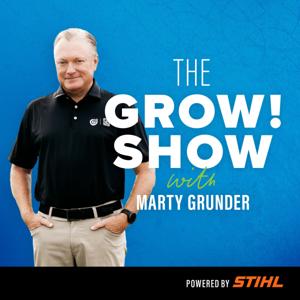
Episode #187: In this bonus episode of The GROW! Show Marty Grunder breaks down how landscape professionals should be planning their equipment needs for 2027, and why that plan should always start with the business plan.
BOBYARD is an AI-powered takeoff and estimating platform that automates the most time-consuming parts of bidding work. Contractors report up to 65% reduction in takeoff time and 3-5x more bids submitted per estimator.
⭐️⭐️⭐️⭐️⭐️ Leave a Review for the Grow Show!
️⭐️⭐️⭐️⭐️⭐️ Subscribe to Our Youtube Channel!
Key Learnings
Reflection Questions
Additional Resources:
BOBYARD
Aspire
Exmark
ACE Peer Groups
Virtual Sales Bootcamp
Grunder Landscaping Field Trips
The Grow Group
Grunder Landscaping
Marty Grunder LinkedIn
Join Us for a GLC Field Trip (Dayton, OH)
Connect with Fellow ACE Members at ACE Connect (Tucson, AZ - November 17-20, 2026)
Master Aspire Software at the GLC Aspire Workshop (Dayton, OH - August TBD & December 2-3, 2026)
Episode #186: In this episode of The GROW! Show, Marty Grunder sits down with GROW! 2027 hosts Rob and Jessie Shrieve of Coastal Shores Landscape to talk about their journey from starting small to building a thriving company centered around great people, strong leadership, and premium service.
BOBYARD is an AI-powered takeoff and estimating platform that automates the most time-consuming parts of bidding work. Contractors report up to 65% reduction in takeoff time and 3-5x more bids submitted per estimator.
⭐️⭐️⭐️⭐️⭐️ Leave a Review for the Grow Show!
️⭐️⭐️⭐️⭐️⭐️ Subscribe to Our Youtube Channel!
Key Learnings
Reflection Questions
Additional Resources:
BOBYARD
Aspire
Exmark
ACE Peer Groups
Virtual Sales Bootcamp
Grunder Landscaping Field Trips
The Grow Group
Grunder Landscaping
Marty Grunder LinkedIn
Join Us for a GLC Field Trip (Dayton, OH)
Connect with Fellow ACE Members at ACE Connect (Tucson, AZ - November 17-20, 2026)
Master Aspire Software at the GLC Aspire Workshop (Dayton, OH - August TBD & December 2-3, 2026)
Episode #185: In this bonus episode of The GROW! Show, Vince Torchia walks through the fundamentals of financial planning for the year ahead. He breaks down how to set a realistic revenue target using historical performance, determine the right mix of services, evaluate your sales and production capacity, and plan for margins, overhead, profit, and cash flow.
BOBYARD is an AI-powered takeoff and estimating platform that automates the most time-consuming parts of bidding work. Contractors report up to 65% reduction in takeoff time and 3-5x more bids submitted per estimator.
⭐️⭐️⭐️⭐️⭐️ Leave a Review for the Grow Show!
️⭐️⭐️⭐️⭐️⭐️ Subscribe to Our Youtube Channel!
Key Learnings
Reflection Questions
Additional Resources:
BOBYARD
Aspire
Exmark
ACE Peer Groups
Virtual Sales Bootcamp
Grunder Landscaping Field Trips
The Grow Group
Grunder Landscaping
Marty Grunder LinkedIn
Join Us for a GLC Field Trip (Dayton, OH)
Connect with Fellow ACE Members at ACE Connect (Tucson, AZ - November 17-20, 2026)
Master Aspire Software at the GLC Aspire Workshop (Dayton, OH - August TBD & December 2-3, 2026)
Register for GROW! 2027 Annual Conference (Savannah, GA - February 17-19, 2027)
Episode #184: In this episode of The Grow Show, Marty Grunder sits down with Bill Rosell, Director of Production Operations at Grunder Landscaping Co., to break down what an effective production meeting actually looks like. They share how the GLC team uses weekly meetings to improve communication, plan ahead, coordinate crews and equipment, address safety and scheduling issues, and catch problems before they reach the jobsite.
BOBYARD is an AI-powered takeoff and estimating platform that automates the most time-consuming parts of bidding work. Contractors report up to 65% reduction in takeoff time and 3-5x more bids submitted per estimator.
⭐️⭐️⭐️⭐️⭐️ Leave a Review for the Grow Show!
️⭐️⭐️⭐️⭐️⭐️ Subscribe to Our Youtube Channel!
GLC Production Meeting Agenda Meeting Template
Key Learnings
The Purpose Is to Make Production Run Better: Not to have a meeting. Not to get everyone in a room. If people leave without knowing where they're going, what equipment they need, or what problems are coming, you had a gathering, not a meeting.
Different Meetings Have Different Purposes: Don't try to accomplish everything in one big meeting. You'll end up with 25 people listening to a conversation that applies to three of them.
Start With the Mission Statement: Every GLC production meeting begins with the mission statement. It anchors the room in why we're here before we get into what we're doing.
Have the Right People in the Room, Only While You Need Them: Zach (fleet assistant) presents his fleet updates first so he can leave and start his day. He doesn't need to sit through personnel discussions that don't involve him.
Meetings Should End in Laughter: Bill's number one sign of a great meeting is when it ends in laughter. Direction and clarity are the two must-haves, but laughter is what tells you people leave energized.
Team Leaders Look at Today and Tomorrow. Group Leaders Look 2 Weeks Out: Great group leaders are not walking in every morning asking "what do I need to do today?" They knew last night. Bill wants group leaders looking two weeks out on equipment and materials.
Sales and Production Cannot Live on an Island: Bill attends the first 20 minutes of every sales meeting. If production has a hole, sales needs to know. If sales has a monster project coming, production needs to know. Bill's job is to help sales know: whatever you sell, we can get it done.
Break Big Projects Into Small Ones: A 3,000-hour job is overwhelming until you break it into phases. Then it becomes a series of 50-60 hour jobs. Team members can see progress and see the end in sight.
Know What Stresses Your People: Bill knows what stresses Gaston, so he takes those things off his plate. On big projects, Bill stays the main point of communication early on to protect his group leader from being overwhelmed.
One-on-Ones Every Other Week: Bill schedules face-to-face one-on-ones every other week. Sometimes Teams, sometimes phone, sometimes a luncheon. It benefits Bill just as much as the group leader because he sees firsthand who is stressed and where he can step in.
Text Doesn't Cut It: If you text someone "how's it going?" they will say "great." That doesn't tell you anything. Call them or go see them. It's the only way to actually know.
Set the Schedule Board by 4:00 PM the Day Before: Salespeople know, clients get automated notifications, team leaders can check the notes at night and think through tomorrow. The next morning rolls out smoothly because the work happened yesterday.
Chaos in the Morning Means Chaos All Day: The morning rollout only looks smooth because of everything set up the night before. The board is set. Trucks are parked in the same spots. Names are on the trucks. Materials are staged.
Don't Confuse Meeting Length with Communication Quality: Bill's meetings never go over an hour. Marty's sales meetings target 45 minutes. Why? Because we want people selling, not sitting.
Keep It Simple. Prioritize and Execute: If a production meeting is running too long, Bill wonders what production actually looks like in the field. The whole point of the meeting is to make the field better.
Reflection Questions
Additional Resources:
BOBYARD
Aspire
Exmark
ACE Peer Groups
Virtual Sales Bootcamp
Grunder Landscaping Field Trips
The Grow Group
Grunder Landscaping
Marty Grunder LinkedIn
Join Us for a GLC Field Trip (Dayton, OH)
Join Us for GROW! Snow 2026 (Dayton, OH - September 21-23, 2026)
Connect with Fellow ACE Members at ACE Connect (Tucson, AZ - November 17-20, 2026)
Master Aspire Software at the GLC Aspire Workshop (Dayton, OH - August TBD & December 2-3, 2026)
Register for GROW! 2027 Annual Conference (Savannah, GA - February 17-19, 2027)
Episode #183: In this episode of The Grow Show, Emily Lindley shares how Grunder Landscaping Company evaluates its marketing channels, which efforts are worth the investment, and which ones need to be cut. The goal isn't to market everywhere. It's to give every channel a clear job and build a plan that supports where your company is headed.
BOBYARD is an AI-powered takeoff and estimating platform that automates the most time-consuming parts of bidding work. Contractors report up to 65% reduction in takeoff time and 3-5x more bids submitted per estimator.
⭐️⭐️⭐️⭐️⭐️ Leave a Review for the Grow Show!
️⭐️⭐️⭐️⭐️⭐️ Subscribe to Our Youtube Channel!
Key Learnings
Every Channel Needs One Clear Job: Ask what specific job that channel does for your business. Design build leads? Lawn care leads? Residential maintenance? If the job isn't clear anymore, cut it or shrink it.
Balance the Jobs Across Your Marketing Mix: Make sure you have enough coverage for every line of business, and that no one service line is eating all the attention.
Residential Design Build Drives Broadcast Marketing: It's easier to drive inbound leads for design build than for commercial or maintenance. The strategy at Grunder: capture a design build client, then convert them into a maintenance client.
Postcards Still Work (When Timed Right): Start with an aggressive spring push. Every other week for design build, every other week for lawn care, alternating so mailing list recipients get a card weekly for 6-8 weeks. Capture spring demand or you won't make it up later in the year.
Email Is the Best Marketing Channel Right Now: Grunder is seeing 40% open rates. Marketing Pro integrates with Aspire, so lists stay current with actual maintenance and lawn care route data. Every other week, March through November, with rotating seasonal messaging.
Skip the Rigid Newsletter Template: Templates feel stale and restrict what you can say. Instead, rotate messaging by season: design build in spring, mosquito fogging in summer, aeration/overseeding in fall.
Small Add-Ons Add Up: Mosquito fogging is a great example. Techs are already on the property. No extra drive time. It's profitable per stop and adds real value for the client. Small services stack up over the year.
Time Add-On Emails to the Application Route: Send the mosquito fogging pitch BEFORE the tech goes out for the round, not mid-round. Otherwise you're asking your team to backtrack.
Social Media Is About Consistency, Not Perfection: Post consistently so prospects can verify you're a real, polished company when they Google you. Paid social gets zip code targeted and overlaid on postcard drop zones. That's reinforcement, not redundancy.
Door Hangers Work in Neighborhoods You Already Serve: Neighbors of active jobs, HOAs where you maintain the common areas, streets with existing maintenance stops. Brand reinforcement is the win here.
Don't Ring Doorbells: Emily's rule is simple. Drop the door hanger and go. No knocking, no doorbells, especially not at 8 PM. Your brand is being felt every time someone interacts with your marketing.
SEO Is the Sleeper Channel for Commercial: SEO works for residential too, but it's one of the few marketing tactics that actually generates commercial maintenance leads. Publish blogs targeting real search terms every other week. Don't over-rely on AI writing, it gets flagged.
As You Grow, Your Marketing Mix Has to Shift: What Grunder spent as a percentage of revenue at $5M is different from what makes sense at $17M with a 50/50 commercial/residential split. Commercial growth requires business development budget, not just broadcast marketing.
Interest Does Not Equal Budget: You'll get pitched constantly. Home magazines, streaming ads, community sponsorships. Being interested is not the same as it being the right investment. Discipline in what you say no to is as important as strategy in what you say yes to.
Reflection Questions
Additional Resources:
BOBYARD
Aspire
Exmark
ACE Peer Groups
Virtual Sales Bootcamp
Grunder Landscaping Field Trips
The Grow Group
Grunder Landscaping
Marty Grunder LinkedIn
Join Us for a GLC Field Trip (Dayton, OH)
Join Us for GROW! Snow 2026 (Dayton, OH - September 21-23, 2026)
Connect with Fellow ACE Members at ACE Connect (Tucson, AZ - November 17-20, 2026)
Master Aspire Software at the GLC Aspire Workshop (Dayton, OH - August TBD & December 2-3, 2026)
Register for GROW! 2027 Annual Conference (Savannah, GA - February 17-19, 2027)
Episode #182: It's easy to feel good about business when the crews are busy and the schedule is full, but what does your schedule look like 30, 60, or 90 days from now? This week on The Grow Show, Marty Grunder talks about the importance of staying ahead of your workload and continuing to sell even when business is busy. He shares where your team should be looking for opportunities, how to make the most of the clients and proposals you already have, and why now is the time to start thinking about next spring.
BOBYARD is an AI-powered takeoff and estimating platform that automates the most time-consuming parts of bidding work. Contractors report up to 65% reduction in takeoff time and 3-5x more bids submitted per estimator.
⭐️⭐️⭐️⭐️⭐️ Leave a Review for the Grow Show!
️⭐️⭐️⭐️⭐️⭐️ Subscribe to Our Youtube Channel!
Key Learnings
Your Schedule Is a Sales Scorecard: Do not look at your sales pipeline. Look at your production schedule board. What is actually sold and on the calendar 30, 60, 90, and 120 days out? A pipeline filled with proposals nobody's going to buy isn't a pipeline. It's a filing cabinet.
Nothing Happens Until Someone Sells Something: No sales, no work for production, no invoices for accounting, no gross profit, no reinvestment. Spring conditions your team to become order takers. Fall reveals whether you have order takers or order makers.
Order Takers Wait. Order Makers Create: When leads slow down, the order taker asks when marketing is going to do more. The order maker asks what proposals to revisit, what properties need enhancements, and what phase two or phase three opportunities exist.
Start With People Who Already Know You: It is far easier to sell to someone who has done business with you than to create something new. Do not just call and ask if they need anything. Walk the property, take pictures, and send unsolicited quotes with recommendations.
A Good Doctor Doesn't Ask What Procedure You Want: They diagnose and recommend. A professional landscape salesperson does the same. Your clients hired you because you know more about landscaping than they do, so act like it.
Revisit Every Proposal You Did Not Sell: A no six months ago is not a no today. Timing changes. Do not send a "just checking in" email. Give them a specific reason to respond - a scheduling opening, a seasonal window, a follow-up on the exact conversation you had.
Sell the Season You're In: Your clients don't live and breathe landscaping. They don't know what makes sense in October, November, and December. That's your job. Build a fall campaign around 2-3 specific services you want to sell.
Break the Number Down: A $2M goal sounds intimidating. Break it into weekly targets per salesperson. $10K per week per salesperson is believable and manageable. Small numbers compound. $5K in enhancement work per week for 50 weeks is $250K.
Hunt Where You Already Work: Route density matters. Travel time doesn't get paid. If you're maintaining one commercial property, what's around it? If you've installed three residential projects in a neighborhood, how many neighbors drive by every day?
Closed Mouths Don't Get Fed: Ask for referrals. Ask for Google reviews. When a client tells you your team did a great job, that's the moment. It's not begging. Your best clients know people just like themselves.
Don't Just Fill Fall. Sell Spring Now: Commercial clients work on budgets. Residential clients are making plans. There is a world of difference between entering spring hoping the phone rings and entering spring knowing you already have eight weeks of production sold.
Run a Sales Meeting That Actually Manages Sales: Not a storytelling contest. What was the goal, what did we sell, where are the holes, which proposals stalled, who owns the next action? Sales cannot live on an island. Production needs to know what's coming.
Don't Destroy Your Margins Just to Stay Busy: When people get nervous about the schedule, they discount, take work outside their service area, and sell to bad-fit clients. Busy and profitable are not the same thing. Every dollar is not the same.
Marty's Fall Sales Playbook (8 Actions):
Reflection Questions
Additional Resources:
BOBYARD
Aspire
Exmark
ACE Peer Groups
Virtual Sales Bootcamp
Grunder Landscaping Field Trips
The Grow Group
Grunder Landscaping
Marty Grunder LinkedIn
Join Us for a GLC Field Trip (Dayton, OH)
Join Us for GROW! Snow 2026 (Dayton, OH - September 21-23, 2026)
Connect with Fellow ACE Members at ACE Connect (Tucson, AZ - November 17-20, 2026)
Master Aspire Software at the GLC Aspire Workshop (Dayton, OH - August TBD & December 2-3, 2026)
Register for GROW! 2027 Annual Conference (Savannah, GA - February 17-19, 2027)
Episode #181: Spring may feel far away, but the best landscaping companies are preparing for it right now. In this episode of The Grow Show, Marty Grunder shares how landscape professionals can use the fall season to strengthen their teams, improve performance, and build a training program that sets them up to hit the ground running next spring.
BOBYARD is an AI-powered takeoff and estimating platform that automates the most time-consuming parts of bidding work. Contractors report up to 65% reduction in takeoff time and 3-5x more bids submitted per estimator.
⭐️⭐️⭐️⭐️⭐️ Leave a Review for the Grow Show!
️⭐️⭐️⭐️⭐️⭐️ Subscribe to Our Youtube Channel!
Key Learnings
Spring Training Starts in the Fall: If you wait until January or February to start training, you're not building a program. You're panicking. Right now you have the most valuable thing possible: evidence of what your team knows and what they don't.
Train What You See Right Now: Training doesn't need a classroom, a PowerPoint, or a four-course breakfast. When you see a mistake, don't just fix it. Teach it. The habit every leader should build is saying "I saw something today we can teach from."
Keep a Running List of What Went Wrong: Start a note on your phone called "What We Need to Train On." Every mistake, every near miss, every cringe moment. By the end of the year you'll have 20 to 30 items. That's your training calendar.
Do Not Confuse Telling With Training: Telling is one-way. Training is two-way. The framework is Tell Me, Show Me, Let Me Do It, Check Me. Most managers stop at "I told him." That's why the same mistakes keep happening.
Use Your Best People as Trainers: The person who loads a truck perfectly, prunes correctly, or closes out jobs well should be teaching others. Two big wins: you multiply your trainers, and the person teaching gets sharper too.
Capture Your Best People Before Winter: Your best team leaders have knowledge that isn't written down anywhere. Get your phone out. Ask them to show you how they do it. Record five-minute videos. Do two a week and you'll have 20 videos before winter.
Train on the Things That Make or Lose Money: Team members often don't understand how the company actually makes money. Teach productivity. Teach why forgetting a tool and driving 20 minutes back to the shop costs three man-hours. Those little lessons change behavior.
Train Your Leaders Differently: When someone becomes a crew leader, their job changes. Now they're leading people. Teach them how to start the morning, correct someone properly, coach the slowest person, handle a conflict, and close out a job. You can't promote someone Friday and expect them to lead on Monday.
Finish This Year by Getting Better: Take the last 6 to 10 weeks of the season and pick one skill each Monday. Fifteen minutes. Reinforce it during the week. You'll be better at Christmas than you are today.
Build Your Winter Training Calendar Right Now: Before Thanksgiving, put your January and February training dates on the calendar. Who's teaching, what's being taught, who needs to attend, how long, and what standard. What gets scheduled gets done.
Do Not Make Spring Orientation Your First Training: Build day-one and first-week orientation now. What must someone know before operating equipment? What are your core values? What does a finished job look like? Training without a standard is just someone's opinion.
Inspect What You Expect: Training isn't over when the class ends. It's over when the behavior changes. If you trained on trailer safety Monday, inspect trailers Tuesday. Your team notices what management pays attention to.
Make Training Part of Your Culture: Training shouldn't be an event. It should be who you are. When your best people are constantly teaching the next 15, you're building an organization that can scale.
Marty's Fall Training Challenge:
Reflection Questions
Additional Resources:
Greenius - Training platform for landscape professionals
BOBYARD
Aspire
Exmark
ACE Peer Groups
Virtual Sales Bootcamp
Grunder Landscaping Field Trips
The Grow Group
Grunder Landscaping
Marty Grunder LinkedIn
Join Us for a GLC Field Trip (Dayton, OH)
Join Us for GROW! Snow 2026 (Dayton, OH - September 21-23, 2026)
Connect with Fellow ACE Members at ACE Connect (Tucson, AZ - November 17-20, 2026)
Master Aspire Software at the GLC Aspire Workshop (Dayton, OH - August TBD & December 2-3, 2026)
Register for GROW! 2027 Annual Conference (Savannah, GA - February 17-19, 2027)
Episode #180: What would happen if you let another landscaping company owner run your company? We launched this new part of our ACE Peer Group Program earlier this year with the ownership of Coastal Greenery switching places with ownership of Malone's Landscaping. In this episode, the group that swapped places talks about what they learned from getting fresh eyes on their company and also spending a week running another landscaping company. They talk about all the hot button issues: managing teams, technology, branding, overhead costs, and much more.
BOBYARD is an AI-powered takeoff and estimating platform that automates the most time-consuming parts of bidding work. Contractors report up to 65% reduction in takeoff time and 3-5x more bids submitted per estimator.
⭐️⭐️⭐️⭐️⭐️ Leave a Review for the Grow Show!
️⭐️⭐️⭐️⭐️⭐️ Subscribe to Our Youtube Channel!
Guests:
Resources Mentioned:
Key Learnings
You Cannot See Your Own Business Clearly From Inside Your Own Business: No matter how sharp you are, you walk past things every day. An outside set of eyes will see in 15 minutes what you have missed for years.
Peer-to-Peer Learning Beats Zoom Every Time: The value of the CEO Swap wasn't in the ideas exchanged, it was in the one-on-one meetings with each other's team members. There's no hiding, no deferring, and no shortcut when you're on site.
Sense of Urgency Is Often the Missing Ingredient: Coastal Greenery already knew about their account manager churn issue. The Malones pointed it out and drove accountability, which turned a slow-burn problem into four new hires and two internal promotions.
Compensation Plans Have to Match Ambitions: If you want to be the destination workplace in your region, your comp plan for critical roles like account management has to be the best. People are the biggest line on the P&L. Treat it as an investment, not an expense.
The Best Talent Already Has a Job: They're not looking. If you want to recruit them, you have to build a business worth switching to. Nice comp is table stakes.
Small Standards Reveal the Real Standards: If not everyone is wearing branded uniforms, you don't have a uniform standard. If your safety rules aren't enforced, you don't have safety standards. Standards you don't uphold become suggestions.
Clear Career Paths Change Culture: Coastal Greenery has a physical board with every team member's photo, their current position, and the next role they're working toward. When people know exactly what "next" looks like, engagement changes.
Tech Spaghetti Slows You Down: Every growing business ends up with a stack of software plugins bolted together. Simplify. The best software is the one your team actually uses. Switching won't fix a usage problem.
Good Managers Make Good Decisions With Good Information: If you don't have dashboards, KPIs, and metrics that show what's working, you're guessing. Every property, every project, every dollar of fertilizer should be trackable.
Celebrate the Team Constantly: Malone's has built a culture of celebration that Coastal Greenery is now copying. Coastal Greenery has built a level of detail and standards that Malone's is now copying. Both companies got better because both were willing to steal what worked.
Vulnerability Is What Makes Feedback Land: Jeffrey Johns didn't tell Malone's team what to do. He told them what he had messed up and what he learned. That's why people listened.
The Value Isn't the Visit, It's the Execution: A great idea list doesn't improve a company. Doing something about it does. What separates ACE members from everyone else is action.
Reflection Questions
Additional Resources:
BOBYARD
Aspire
Exmark
ACE Peer Groups
Virtual Sales Bootcamp
Grunder Landscaping Field Trips
The Grow Group
Grunder Landscaping
Marty Grunder LinkedIn
Join Us for a GLC Field Trip (Dayton, OH)
Join Us for GROW! Snow 2026 (Dayton, OH - September 21-23, 2026)
Connect with Fellow ACE Members at ACE Connect (Tucson, AZ - November 17-20, 2026)
Master Aspire Software at the GLC Aspire Workshop (Dayton, OH - August TBD & December 2-3, 2026)
Register for GROW! 2027 Annual Conference (Savannah, GA - February 17-19, 2027)
Episode #179: Marty Grunder breaks down the $2 million trap, the point where the hustle that built your company stops working. He walks through six areas where landscape businesses commonly get stuck as they grow, from broken systems and wrong hires to weak delegation, unclear structure, loose finances, and too few developed leaders.
BOBYARD is an AI-powered takeoff and estimating platform that automates the most time-consuming parts of bidding work. Contractors report up to 65% reduction in takeoff time and 3-5x more bids submitted per estimator.
⭐️⭐️⭐️⭐️⭐️ Leave a Review for the Grow Show!
️⭐️⭐️⭐️⭐️⭐️ Subscribe to Our Youtube Channel!
Key Learnings
What Got You Here Will Not Get You There: Getting to two million is about hustle. Growing beyond it is building a company.
The Owner Becomes the Bottleneck: Too many clients, jobs, and decisions eventually flow back to one overwhelmed person.
Your Systems Break First: If something happens only because someone remembers to do it, it needs a system.
You Make the Wrong Hires: Your best salesperson is not automatically your best sales manager. Leadership is different.
Three Reasons People Fall Short: They were not trained, they lack capacity, or they carry a bad attitude.
The Owner Will Not Delegate: Doing it yourself today signals you do not trust your team to grow.
Delegation Is Not Abdication: Give clear responsibilities, clear expectations, and the authority to make real decisions.
Structure Always Follows Strategy: A good org chart answers one question. Who owns what?
Financial Discipline Becomes Critical: Sales are vanity if there is no profit left at the end.
You Cannot Scale Yourself, Only Leaders: Develop managers who can think, decide, and solve problems without you.
Reflection Questions
This Week's Homework
Write down everything that still has to go through you. That is your bottleneck list.
Identify one system living inside someone's head, document it, and build a system for it.
Identify one person who could become a stronger leader in the next twelve months and start developing them now.
Additional Resources:
BOBYARD
Aspire
Exmark
ACE Peer Groups
Virtual Sales Bootcamp
Grunder Landscaping Field Trips
The Grow Group
Grunder Landscaping
Marty Grunder LinkedIn
Join Us for a GLC Field Trip (Dayton, OH)
Join Us for GROW! Snow 2026 (Dayton, OH - September 21-23, 2026)
Connect with Fellow ACE Members at ACE Connect (Tucson, AZ - November 17-20, 2026)
Master Aspire Software at the GLC Aspire Workshop (Dayton, OH - August TBD & December 2-3, 2026)
Register for GROW! 2027 Annual Conference (Savannah, GA - February 17-19, 2027)
Episode #178: In this short, tactical episode of The Grow Show, Vince Torchia shares the three things every landscape leader should be focused on right now: access, awareness, and action. With a month and a quarter left in 2026, Vince gives you a quick filter to run your business through so you can finish the year strong and set yourself up for a great 2027.
BOBYARD is an AI-powered takeoff and estimating platform that automates the most time-consuming parts of bidding work. Contractors report up to 65% reduction in takeoff time and 3-5x more bids submitted per estimator.
⭐️⭐️⭐️⭐️⭐️ Leave a Review for the Grow Show!
️⭐️⭐️⭐️⭐️⭐️ Subscribe to Our Youtube Channel!
Key Learnings
Access: What did you not have access to earlier this year that would have made your life easier now? Missing reports, vendor portals, margin data, or client information. Identify the gaps and put a plan in place to fix them.
Leaders Often Lose Access as Companies Grow: As businesses scale and add team members, CEOs and senior leaders sometimes lose access to information they used to have at their fingertips. Get it back.
The Thursday Night Test: If you're laying in bed on Thursday night wondering if Mrs. Jones has paid, you should not have to text someone to find out. Access the data yourself in real time.
Awareness: Are the key people in your organization aware of everything they need to be aware of? Team members, peers, clients, vendors. If it's a maybe for you, it's a no for them.
We All Think We Communicate More Than We Actually Do: Take that as an opportunity to get better, not a criticism. Zoom out. Put things in writing. Make people aware.
Good News, Bad News, It's Just News: Do not sit on information because you're worried about how it will land. Get over the hump, have confidence in what you're doing, and make people aware.
Action: With a month and a quarter left, there's still time to make real progress. Meetings, emails, texts, huddles. Whatever gets it moving.
Action Begets Action: Momentum is real. Crossing something off the list feels good. Building momentum with your team feels even better.
Reflection Questions
Additional Resources:
BOBYARD
Aspire
Exmark
ACE Peer Groups
Virtual Sales Bootcamp
Grunder Landscaping Field Trips
The Grow Group
Grunder Landscaping
Marty Grunder LinkedIn
From the publisher's feed

4,377 Listeners
1,340 Listeners
16,846 Listeners
2,199 Listeners
2,294 Listeners

45 Listeners

729 Listeners

2,643 Listeners
1,169 Listeners
163 Listeners
11 Listeners
26 Listeners

15 Listeners
27 Listeners
14 Listeners