
Sign up to save your podcasts
Or



David Fryburg, M.D., is the President and co-founder of Envision Kindness, a nonprofit organization that promotes kindness, compassion, joy, and love through kindness media. Dr. Fryburg is also the author of a blog series entitled “The Science of Kindness,” which is distributed by Psychology Today and other outlets. In his previous work, David led teams of scientists from academia, government, and industry to solve problems in how we measure or diagnose disease for the Foundation for the National Institutes of Health Biomarkers Consortium. Fryburg was previously a faculty member of the University of Virginia as well as the global head of translational medicine for cardiovascular, metabolic, and endocrine diseases at Pfizer. He is a graduate of Johns Hopkins University, Albert Einstein College of Medicine, and trained at the University of Texas Southwestern Medical School and Yale University.
Today, David joins me to share his story and talk about the power of kindness. We discuss a doctor’s duty to know patients intimately, and we note that patients sometimes come for a listening ear more than for medical expertise. We talk about the power of the news and the contagious nature of emotion, and David introduces the concept of the visual diet. We talk about why and how we can transcend language in spreading kindness and good news. David explores the question of why we are kind to one another and posits that kindness is necessary for the survival of our species. We talk about the dangers of toxic stress and the threefold benefits of kindness. We talk about the need for kindness to oneself, and we discuss the importance of dispelling the ego.
“Everybody needs to feel like they matter.”– Dr. David Fryburg
“Just as you are what you eat, you are what you see.”– Dr. David Fryburg
This week on In the Doctor’s Chair
In the Doctor’s Chair
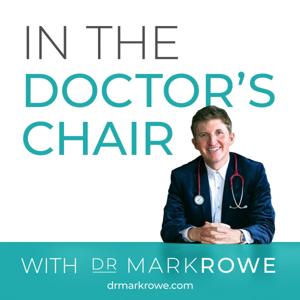
Thanks for listening to In the Doctor’s Chair, the show where you’ll hear conversations that share life lessons, health habits, and leadership practices that focus on positive psychology, lifestyle medicine, and ways for you to live with more vitality.
If you enjoyed this episode, please subscribe to the show and leave a comment wherever you listen to your podcasts.
For more resources to help you to live with more vitality, please visit my website.
Apple Podcasts I TuneIn I Google Play I Stitcher I Spotify
The post Dr David Fryburg, Endocrinologist ‘Pro-Social Acts, Like Kindness, Are the Key to Happiness.’ appeared first on Mark Rowe.
Elaine O’Brien, Ph.D., MAPP is one of the most informed academics on the intersection of the Science of Happiness and Human Movement Science. Elaine is a speaker, writer, and Certified Health Coach. She is one of the first people in the world to earn a Master’s degree in Applied Positive Psychology, under Dr. Martin Seligman. Dr. O’Brien then earned a Ph.D. in the Psychology of Human Movement in 2015. She also studied Positive Psychology Across Cultures at the University of Oslo. In addition to decades of pioneering work in the power of positive movement, fitness science, and well-being, Dr. O’Brien has led organizations and helped tens of thousands of people move toward vibrant health, greater fitness, and resilience. Dr. O’Brien leads people to manage stress and post-traumatic growth, and she is a member of the International Positive Psychology Association (IPPA) Leader Team. She will present “Transcendent Movement: SHAPES” at the IPPA Evidence in Action Conference, and she is writing a new book about “Positive Movement, Flourishing Lives.”
Today, Elaine joins me to talk about positive movement. We talk about what it is and why it’s powerful. We discuss the positive contagion uplift effect of positive movement and note that even a small amount of regular movement can build up and make a difference. Elaine shares the power of a supportive community and the importance of love and understanding.
“There’s an aspect of fitness that has a protective factor.”– Dr. Elaine O’Brien
This week on In the Doctor’s Chair
In the Doctor’s Chair
Thanks for listening to In the Doctor’s Chair, the show where you’ll hear conversations that share life lessons, health habits, and leadership practices that focus on positive psychology, lifestyle medicine, and ways for you to live with more vitality.
If you enjoyed this episode, please subscribe to the show and leave a comment wherever you listen to your podcasts.
For more resources to help you to live with more vitality, please visit my website.
Apple Podcasts I TuneIn I Google Play I Stitcher I Spotify
The post Dr Elaine O’Brien PhD on Resilient and Pre-silient Wellbeing; Fitness as a Buffer in Life. appeared first on Mark Rowe.
Broadcaster, entrepreneur, and human rights campaigner Norah Casey was formerly a Dragon in the popular television series Dragons’ Den and is a well-known radio and TV personality. She is the author of Spark!, the presenter of several TEDx talks, and the creator of Planet Woman, a digital learning platform that seeks to empower women. She serves on the European Board and is a Global Ambassador for Vital Voices, as well as the founder of the Women’s Irish Network and a member of the International Women’s Forum. In addition to owning Harmonia Publishing Ltd., the journalist and former nurse holds many awards including but not limited to the Woman of the Decade Award, the Publisher of the Year award (five times), and the Lord Mayor of Dublin Award. Her work can be viewed at norahcasey.com.
Today, Norah talks with me about courage and the willingness to face your fears. We talk about how adversity can deliver post-traumatic growth with new perspectives, and we discuss how resilience can come from taking risks, once you’re less afraid of failing than you are of succeeding. We also explore the positive contagion impact and the power of giving your time and energy.
“It’s not really what I’ve done in life–it’s what life has done to me that has defined me. Some of the events devastated me, but it didn’t destroy me.”– Norah Casey
This week on In the Doctor’s Chair
In the Doctor’s Chair
Thanks for listening to In the Doctor’s Chair, the show where you’ll hear conversations that share life lessons, health habits, and leadership practices that focus on positive psychology, lifestyle medicine, and ways for you to live with more vitality.
If you enjoyed this episode, please subscribe to the show and leave a comment wherever you listen to your podcasts.
For more resources to help you to live with more vitality, please visit my website.
Apple Podcasts I TuneIn I Google Play I Stitcher I Spotify
The post Norah Casey on Courage and the Willingness to Face your Fears appeared first on Mark Rowe.
Today, we live in a society where kindness is often looked down on as a weakness. But in reality, kindness–which stems from the Golden Rule–has benefits that are spiritual, physical, and mental.
In this episode, I talk about why kindness is an essential part of a lifestyle of vitality. I share the concrete benefits of being kind and compassionate toward others, benefits which are mental, physical, and spiritual. I share research on why, when you’re kind, you actually make the world a better place. I explain why, contrary to being a sign of weakness, kindness increases your resilience. Finally, I share a poem on kindness.
“When you seek to find the best in others, you also bring out the best in yourself.”– Dr. Mark Rowe
This week on In the Doctor’s Chair
In the Doctor’s Chair
Thanks for listening to In the Doctor’s Chair, the show where you’ll hear conversations that share life lessons, health habits, and leadership practices that focus on positive psychology, lifestyle medicine, and ways for you to live with more vitality.
If you enjoyed this episode, please subscribe to the show and leave a comment wherever you listen to your podcasts.
For more resources to help you to live with more vitality, please visit my website.
Apple Podcasts I TuneIn I Google Play I Stitcher I Spotify
The post Kindness – A Key for Vitality appeared first on Mark Rowe.
Dylan Moran boxed for Ireland as an amateur, becoming a kick-boxer for a few years where he won Irish, European, and World titles before turning to professional boxing in 2017. Born in 1994, Moran started boxing at age five. The Waterford native earned his first professional victory in his debut against Chris Jenkinson in Manchester, England. In just over a year, Moran stepped into the boxing ring on six different occasions, winning all of his outings. By March of 2019, Dylan Moran boasted an impressive record of 10-0. This earned him an American contract including a fight against Dennis Okoth. This resulted in a loss by TKO for Moran in the third round. It was a tough loss for Dylan to swallow. He noted that boxing is the loneliest sport in the world, and he almost decided to quit. Eventually, he found the motivation to continue. Now, with a Pro record of 16-1 and driven by personal conviction, Dylan believes he’s on the verge of the big title fights.
Today, Dylan joins me to share his story. He talks about the effect of COVID on his boxing career and shares a life-changing experience. He stresses the importance of both a great team and a mindset of constant learning. We discuss the power of grit, and Dylan opens up about his struggles with mental health. We talk about the power of positivity and of living in the now, and Dylan notes that he’s found happiness in the small things rather than the big, material ones. He shares his passion for boxing and notes the value of being mentally prepared for the downs in life so they don’t hit you as hard. Dylan also notes that he doesn’t think he’ll ever have it all figured out, and that’s okay because having more to learn is part of what it means to be human.
“My attitude is, these guys can be better than me, they can be more talented than me–but they’re not going to work harder than me.”– Dylan Moran
“The day you think you know it all is the day you start to lose.”– Dylan Moran
This week on In the Doctor’s Chair
In the Doctor’s Chair
Thanks for listening to In the Doctor’s Chair, the show where you’ll hear conversations that share life lessons, health habits, and leadership practices that focus on positive psychology, lifestyle medicine, and ways for you to live with more vitality.
If you enjoyed this episode, please subscribe to the show and leave a comment wherever you listen to your podcasts.
For more resources to help you to live with more vitality, please visit my website.
Apple Podcasts I TuneIn I Google Play I Stitcher I Spotify
The post Boxer Dylan Moran’s unwavering commitment to his journey. appeared first on Mark Rowe.
After a busy day of work, it’s important to take time to de-stress for your health. That’s why I’ve recently started to prescribe walks as a therapeutic tool because it is so effective at helping people destress. Spending time in nature is important for everyone. As we spend more and more time in front of a computer screen, we need to remember that sometimes we need to disconnect. Being in nature is a great way to relax, but it also has many different health benefits.
Today, I discuss the importance of spending time out in nature, and how it can have a positive impact on your general health. I share recent studies that demonstrate how having nature close by can help reduce anxiety and depression. I talk about how having 30 minutes of natural light a day can help reset your internal clock and help you get better sleep. I also talk about how spending time in nature can help your curiosity and help boost your creativity.
“So it really turns out that the environment you spend your time in can have such a health-enhancing our health depleting impact on your wellbeing. And I really want to make this case for spending more time in nature.”– Dr. Mark Rowe
This week on In the Doctor’s Chair
In the Doctor’s Chair
Thanks for listening to In the Doctor’s Chair, the show where you’ll hear conversations that share life lessons, health habits, and leadership practices that focus on positive psychology, lifestyle medicine, and ways for you to live with more vitality.
If you enjoyed this episode, please subscribe to the show and leave a comment wherever you listen to your podcasts.
For more resources to help you to live with more vitality, please visit my website.
Apple Podcasts I TuneIn I Google Play I Stitcher I Spotify
The post The Health Benefits of Nature appeared first on Mark Rowe.
Dr. Rhonda Cornum holds a Ph.D. in Biochemistry and Nutrition. She is a surgeon and urologist. A distinguished war veteran holding the rank of brigadier general, she has earned honors including the Purple Heart, the Bronze Star, and the Army Service Medal. She served in the Army during the Gulf War when she was captured by Iraqi forces. She is a pioneer in resilience training.
Today, Rhonda shares her story. She emphasizes the importance of gratitude and of finding the good news in every bad story. She shares her grandfather’s influence on her and why he is her biggest hero. She explains why she does not think that her experience as a POW was traumatic for her, despite being adverse. She notes that to give a failure permanent influence on your life is a choice. She discusses why a victim-centered culture fails to cultivate self-sufficient, stoic people with strong coping skills. She points out that cognitive behavioral therapy should be practiced preventatively as well as reactively, and she talks about her comprehensive soldier fitness training program. She re-emphasizes the importance of gratitude, and she shares her three greatest life lessons. We also talk about the interaction between habits and choices, as well as the difference between inability and unsuccessfulness.
“You may not be successful, but that’s a different thing than you’re unable, and it’s a sure bet if you don’t try you’re unable.”– Dr. Rhonda Cornum
This week on In the Doctor’s Chair
In the Doctor’s Chair
Thanks for listening to In the Doctor’s Chair, the show where you’ll hear conversations that share life lessons, health habits, and leadership practices that focus on positive psychology, lifestyle medicine, and ways for you to live with more vitality.
If you enjoyed this episode, please subscribe to the show and leave a comment wherever you listen to your podcasts.
For more resources to help you to live with more vitality, please visit my website.
Apple Podcasts I TuneIn I Google Play I Stitcher I Spotify
The post Former POW & Retired Army General Dr Rhonda Cornum on Resilience & Life ‘An Unending Opportunity’. appeared first on Mark Rowe.
High blood pressure, or hypertension, is incredibly common in the western world. Huge percentages of people suffer from it, and many don’t know they have it or don’t get help. This is a pity, because hypertension is, in many cases, highly preventable through a positive lifestyle.
Today, I talk about what high blood pressure is, scientifically. I talk about different possible variances in blood pressure and how we can tell when to be worried. I offer statistics about people who suffer from high blood pressure, and I note that, despite the fact that it’s often without symptoms, it can have disastrous consequences. I discuss these consequences, and I talk about the link between high blood pressure and being overweight. I give several suggestions for lifestyle changes that can help you avoid or lower high blood pressure, such as the Dash Diet, an increase in potassium, and exercise. I also note the importance of good sleep and of knowing your blood pressure numbers.
“Make sure you know what your blood pressure is because knowledge is power, health is wealth, and lifestyle can be your best possible medicine.”– Dr. Mark Rowe
This week on In the Doctor’s Chair
In the Doctor’s Chair
Thanks for listening to In the Doctor’s Chair, the show where you’ll hear conversations that share life lessons, health habits, and leadership practices that focus on positive psychology, lifestyle medicine, and ways for you to live with more vitality.
If you enjoyed this episode, please subscribe to the show and leave a comment wherever you listen to your podcasts.
For more resources to help you to live with more vitality, please visit my website.
Apple Podcasts I TuneIn I Google Play I Stitcher I Spotify
The post High Blood Pressure – What it is, Why it Matters, and How We Treat it. appeared first on Mark Rowe.
Professor James Pennebaker is a renowned psychologist and the region centennial chair of psychology at the University of Texas. Professor Pennebaker has done extensive research on the benefits of expressive writing, and in this episode, he joins me to talk about his findings.
Today, James shares how he got into his research. He discusses the science behind how writing things down can have a positive impact on both mental and physical health. He explains why he believes that most people can benefit from just three or four days at a time of this type of writing, and he explains its goal. We talk about what expressive writing is, and what it isn’t. He shares what boredom in your writing can tell you about yourself and your situation. We discuss the different scientific health benefits
“The writing is for you, and you alone.”– Professor James Pennebaker
This week on In the Doctor’s Chair
In the Doctor’s Chair
Thanks for listening to In the Doctor’s Chair, the show where you’ll hear conversations that share life lessons, health habits, and leadership practices that focus on positive psychology, lifestyle medicine, and ways for you to live with more vitality.
If you enjoyed this episode, please subscribe to the show and leave a comment wherever you listen to your podcasts.
For more resources to help you to live with more vitality, please visit my website.
Apple Podcasts I TuneIn I Google Play I Stitcher I Spotify
The post Prof James Pennebaker, Personal Growth & Expressive Writing appeared first on Mark Rowe.
From the publisher's feed

24 Listeners

124 Listeners

60 Listeners
35 Listeners
5 Listeners

55 Listeners

1 Listeners

91 Listeners

37 Listeners

1 Listeners
8 Listeners

32 Listeners

63 Listeners
22 Listeners
0 Listeners