
Sign up to save your podcasts
Or



Based on Podcast App listening data
This week we reach into the archive for one of the most popular episodes of Inner Cosmos.
Why do birds and bees choose different flowers? Why do mammals' eyes seem to be optimized for moving around at night, and what does that have to do with hairless humans getting angry? What does any of this have to do with road signs, camouflage, mantis shrimp, the sun, the dress that broke the internet, and women who can see more colors than you can?
Is your personality written into the circuitry of your brain? With brain disease, can someone lose who they are without realizing it? What happens when the person changing is the only one who can't see it? What does it mean to love someone whose personality has become unrecognizable? If you carried a genetic mutation that would alter your brain in the near future, would you want to know? Join Eagleman with bestselling author Robert Kolker to discuss these questions in the context of his new book about frontotemporal dementia, The Vanishing Family.
How do you get trillions of cells to collaborate as the single organism that we call you? Does that kind of cooperation create opportunities for hijacking -- for example, is cancer a form of "cellular cheating"? Can we take the lessons learned from biology and apply them to understanding politics? And what do models of cooperation tell us about building and living with AI? Join Eagleman with evolutionary biologist and cooperation theorist Athena Aktipis to understand cooperation and competition from cells to societies to our technological future.
This week we reach into the archive for one of the most popular episodes of Inner Cosmos.
Why do brains dream, and why are dreams so bizarre? Why doesn't your clock work in your dreams? And even though you spend much of your working day looking at your cell phone and computer – why do they almost never make appearances in your dream content? Is dream content the same across cultures and across time? Are dreams experienced in black & white, or in color? Are dreams the strange love child of brain plasticity and the rotation of the planet? What is the relationship between schizophrenia and dreaming? In the future, will we be able to read out the content of somebody's dream? Join Eagleman this week to learn why and how we spend a fraction of our sleep time locked in different realities, swimming in plots which aren't real but which compel us entirely nonetheless.
What's a feeling for? What is jealousy measuring and motivating? Why do both awe and grief slow us down? What happens when ancient emotions meet dating apps and like buttons? Does the intensity of a feeling decide which part of you takes control? Can understanding an emotion loosen its grip? Today we sit down with evolutionary psychologist Robert Kurzban to understand the logic behind the our varied panoply of emotions.
Can your smartwatch detect subtle changes before you feel them? Might a continuous glucose monitor pick up on things you didn’t know about yourself? Could a drop of blood map your future health? Why does your personal baseline matter more than a population average? Could AI decode the massive signaling networks of your body? Does seeing your own data change your behavior? Join Eagleman with Michael Snyder, Stanford professor of genetics and a pioneer in massive personal data, to understand what happens when healthcare moves from a snapshot of your body to a movie.
Why do two people facing the same choice feel different urges? How much effort hides behind resisting a cookie? Why can the brain keep wanting something long after pleasure fades? Can a molecule crank down the volume of your internal radio? Does a biological understanding of behavior reduce responsibility, or does it deepen compassion? And how would your life change if your loudest urge went quiet? Today Eagleman examines free will through the lens of eating disorders, with guest Paige Gordon, an author and former model who spent decades suffering an invisible internal battle.
What happens when we start birthing babies on Mars? Might a Martian human become unable to survive on Earth because of differences in microbes and gravity? How much of your body is shaped by the details of this planet? Will radiation accelerate human evolution on Mars? Could living on Mars eventually create a new species of human? Could Mars change the way humans dream? Would a Martian child find Earth's oceans as strange and awe-inspiring as we find another planet? Could two branches of humanity become too different to recognize each other? Today we’re joined by Scott Solomon, evolutionary biologist and author of the book “Becoming Martian: How Living in Space Will Change Our Bodies and Minds”.
Is AI thinking things it never says aloud? How would we know if a large language model were having a subjective experience? Is there a way to read the 'thoughts' of an LLM? Human brains seem to have a 'global workspace' -- what would it mean if we discovered that AI has something similar? Can you reach inside an LLM to change one of its 'thoughts'? Join Eagleman with Anthropic interpretability researcher Jack Lindsey to talk about what might be going on inside the mind of Claude.
Could there be a better form of government than the one we have now? As we enter an AI-powered world, when might we choose an AI leader? Will your grandchildren ever vote for a human president, who comes with a political party & the weaknesses of a human, or will they vote for a system that has a jaw-dropping capacity to extract patterns from vast rivers of data, simulate millions of possible futures, & govern with a deeper wisdom than a human could naturally possess? Will we all have personal AI agents that know our strongest political opinions, such that we finally achieve (for the first time at scale) a direct democracy rather than a representative one? Join Eagleman as he explores the future of an AI leader (pros & cons) and where he thinks we’re inevitably heading.
From the publisher's feed
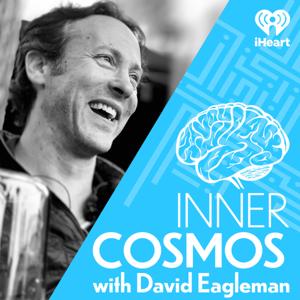
Neuroscientist and author David Eagleman discusses how our brain interprets the world and what that means for us. Through storytelling, research, interviews, and experiments, David Eagleman tackles…
Ranked by our users in the last 21 days
21,780 Listeners

78,291 Listeners

31,916 Listeners

43,352 Listeners
14,356 Listeners
5,658 Listeners

26,240 Listeners

939 Listeners
6,429 Listeners

4,659 Listeners
924 Listeners

11,943 Listeners

244 Listeners
4,172 Listeners

2,360 Listeners
8 Listeners

8 Listeners

352 Listeners

63 Listeners

250 Listeners
2,011 Listeners

142 Listeners

237 Listeners

1,551 Listeners

839 Listeners

63 Listeners

277 Listeners

159 Listeners

1,036 Listeners

18 Listeners

192 Listeners
1,622 Listeners

59 Listeners

34 Listeners

26 Listeners