
Sign up to save your podcasts
Or

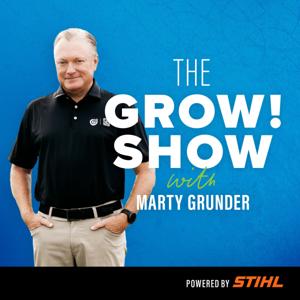

In this episode, Marty Grunder and Vince Torchia talk about the leadership traits they look for when adding to the team at Grunder Landscaping Co, how they manage planning conversations, and how great leaders push each other to get better.
⭐️⭐️⭐️⭐️⭐️ Leave a Review for the Grow Show!
️⭐️⭐️⭐️⭐️⭐️ Subscribe to Our Youtube Channel!
Episode Chapters:
00:00 - Episode Intro
01:03 - The Importance of Kindness in the AI Era
01:53 - Leadership Challenges and Concepts
03:01 - The Art of Effective Communication
07:15 - Procrastination & Decision-Making in Business
08:41 - The Value of Clear Vision and Mission
13:43 - Real World Leadership Examples
15:52 - Field Trips And Leading By Examples
18:10 - The Importance of Recognition
20:10 - Handling Tough Situations
25:38 - Team-Centric Leadership
29:03 - Please Share & Subscribe
Resources:
Virtual Sales Bootcamp
Grunder Landscaping Field Trips
The Grow Group
Grunder Landscaping
Marty Grunder LinkedIn
Stihl
Show Notes:
The Five Leadership Hot Buttons
1. A Leader is Someone Who Can Return a Serve
The Tennis/Pickleball Metaphor: Leadership requires the ability to engage in back-and-forth dialogue, not just receive orders.
What This Means:
Leaders need people they can "volley" with intellectually
Simply saying "okay" to every idea creates no productive exchange
Great conversations involve building on ideas: "Here's how I see that playing out from a production team perspective..."
You need people smarter than you in specific areas to grow
The Balance: Knowing when to stop volleying and take action. Some leaders love endless discussion; others cut conversations too short. Effective teams find the rhythm between exploration and execution.
Organizational Impact: Without people who can engage meaningfully, growth stagnates. Companies need administrators for order-taking, but leaders for strategic development.
2. "I've Never Done That Before" - Overthinking and Procrastination
The Problem: Analysis paralysis prevents growth and opportunity capture.
Root Cause Analysis:
Procrastination typically stems from lack of clear organizational filters
Companies without clear vision, mission, values, and strategy can't quickly evaluate opportunities
Fear of failure leads to endless "what if" scenarios instead of action
The Solution Framework:
Develop clear organizational filters for decision-making
Ask: "Does this align with our strategy? Does it go through our filters? Can we execute this quickly?"
Create systems that allow rapid yes/no decisions
Real Example: Marty's Cincinnati expansion happened because his team (Vince and Seth) provided the confidence and framework to move beyond "I've never done that before" thinking.
3. What You're Doing Speaks So Loudly I Can't Hear What You're Saying
The Challenge of Distributed Teams: Unlike a grocery store manager who can walk the entire operation in 30 minutes, landscape companies have teams scattered across multiple job sites with minimal supervision.
Leading by Example Systems:
Maintain high standards at headquarters (tucked shirts, clean trucks, organized spaces)
The principle: "How we do anything here represents how we do anything on a job site"
If you don't properly maintain your own workspace, how can you be trusted with client properties?
Recognition Practices:
Catch people doing things right, not just correcting problems
Regular team meetings for public recognition
Personal notes and acknowledgments for consistent performers
The Connection: Team members understand that headquarters standards directly translate to job site excellence.
4. How Do You Perform When It Gets Tough?
The "Don't Let Them See You Sweat" Principle: Leaders are constantly observed, and their emotional state affects the entire team's performance.
Managing Leadership Pressure:
Understand that your mood immediately impacts team morale
Have trusted advisors (like Vince to Marty) for processing frustrations privately
Avoid discussing cash flow problems or personal financial stress with the team
Use techniques like delaying difficult conversations until you can respond thoughtfully
When to Show Intensity: There are appropriate times to "up the ante" - like Marty's example of laying out all the metal items that damaged equipment because team members weren't following procedures.
The Support System: Leaders need people they can call at the end of tough days to process challenges without undermining team confidence.
5. When You Make It About You, You Lose; When You Make It About the Team, You Win
Language and Mission Alignment:
Shift from "I" language to "we" language consistently
Make decisions based on team benefit, not just owner benefit
The team can immediately detect when leaders are being self-serving versus team-focused
Practical Applications:
Mission statements should focus on creating opportunities for team growth
Leaders should engage in tasks they expect from others (Marty cleaning bathrooms)
Avoid monopolizing conversations or making everything about the owner's perspective
The Detection Factor: Teams have an uncanny ability to sense authentic versus self-interested leadership. Consistent demonstration of team-first thinking builds genuine followership.
Practical Implementation Framework
For Business Owners:
Develop Clear Filters: Create vision, mission, values that enable rapid decision-making
Build Volleying Partners: Hire and develop people who can intellectually engage, not just execute
Establish Support Systems: Have trusted advisors for processing leadership challenges
Model Expected Behaviors: Demonstrate the standards you expect from others
Use Team-Focused Language: Consistently speak in terms of collective benefit
For Emerging Leaders:
Practice engaging in meaningful dialogue rather than just agreeing
Develop comfort with uncertainty while maintaining decision-making capability
Build emotional regulation skills for high-pressure situations
Focus on team outcomes rather than personal recognition
Seek mentors who can provide honest feedback and support
Cultural and Operational Impact
The Nice People Philosophy: In an increasingly impersonal world, treating people with kindness and respect becomes a competitive advantage and foundational business practice.
Scalability Insight: As companies grow (Grunder went from $4.5M to projected $18M), the need for these leadership principles intensifies because direct oversight becomes impossible.
The Recognition System: Regular team meetings, individual acknowledgments, and systematic appreciation prevent good performers from feeling taken for granted.
 View all episodes
 By Marty Grunder
5
4242 ratings
In this episode, Marty Grunder and Vince Torchia talk about the leadership traits they look for when adding to the team at Grunder Landscaping Co, how they manage planning conversations, and how great leaders push each other to get better.
⭐️⭐️⭐️⭐️⭐️ Leave a Review for the Grow Show!
️⭐️⭐️⭐️⭐️⭐️ Subscribe to Our Youtube Channel!
Episode Chapters:
00:00 - Episode Intro
01:03 - The Importance of Kindness in the AI Era
01:53 - Leadership Challenges and Concepts
03:01 - The Art of Effective Communication
07:15 - Procrastination & Decision-Making in Business
08:41 - The Value of Clear Vision and Mission
13:43 - Real World Leadership Examples
15:52 - Field Trips And Leading By Examples
18:10 - The Importance of Recognition
20:10 - Handling Tough Situations
25:38 - Team-Centric Leadership
29:03 - Please Share & Subscribe
Resources:
Virtual Sales Bootcamp
Grunder Landscaping Field Trips
The Grow Group
Grunder Landscaping
Marty Grunder LinkedIn
Stihl
Show Notes:
The Five Leadership Hot Buttons
1. A Leader is Someone Who Can Return a Serve
The Tennis/Pickleball Metaphor: Leadership requires the ability to engage in back-and-forth dialogue, not just receive orders.
What This Means:
Leaders need people they can "volley" with intellectually
Simply saying "okay" to every idea creates no productive exchange
Great conversations involve building on ideas: "Here's how I see that playing out from a production team perspective..."
You need people smarter than you in specific areas to grow
The Balance: Knowing when to stop volleying and take action. Some leaders love endless discussion; others cut conversations too short. Effective teams find the rhythm between exploration and execution.
Organizational Impact: Without people who can engage meaningfully, growth stagnates. Companies need administrators for order-taking, but leaders for strategic development.
2. "I've Never Done That Before" - Overthinking and Procrastination
The Problem: Analysis paralysis prevents growth and opportunity capture.
Root Cause Analysis:
Procrastination typically stems from lack of clear organizational filters
Companies without clear vision, mission, values, and strategy can't quickly evaluate opportunities
Fear of failure leads to endless "what if" scenarios instead of action
The Solution Framework:
Develop clear organizational filters for decision-making
Ask: "Does this align with our strategy? Does it go through our filters? Can we execute this quickly?"
Create systems that allow rapid yes/no decisions
Real Example: Marty's Cincinnati expansion happened because his team (Vince and Seth) provided the confidence and framework to move beyond "I've never done that before" thinking.
3. What You're Doing Speaks So Loudly I Can't Hear What You're Saying
The Challenge of Distributed Teams: Unlike a grocery store manager who can walk the entire operation in 30 minutes, landscape companies have teams scattered across multiple job sites with minimal supervision.
Leading by Example Systems:
Maintain high standards at headquarters (tucked shirts, clean trucks, organized spaces)
The principle: "How we do anything here represents how we do anything on a job site"
If you don't properly maintain your own workspace, how can you be trusted with client properties?
Recognition Practices:
Catch people doing things right, not just correcting problems
Regular team meetings for public recognition
Personal notes and acknowledgments for consistent performers
The Connection: Team members understand that headquarters standards directly translate to job site excellence.
4. How Do You Perform When It Gets Tough?
The "Don't Let Them See You Sweat" Principle: Leaders are constantly observed, and their emotional state affects the entire team's performance.
Managing Leadership Pressure:
Understand that your mood immediately impacts team morale
Have trusted advisors (like Vince to Marty) for processing frustrations privately
Avoid discussing cash flow problems or personal financial stress with the team
Use techniques like delaying difficult conversations until you can respond thoughtfully
When to Show Intensity: There are appropriate times to "up the ante" - like Marty's example of laying out all the metal items that damaged equipment because team members weren't following procedures.
The Support System: Leaders need people they can call at the end of tough days to process challenges without undermining team confidence.
5. When You Make It About You, You Lose; When You Make It About the Team, You Win
Language and Mission Alignment:
Shift from "I" language to "we" language consistently
Make decisions based on team benefit, not just owner benefit
The team can immediately detect when leaders are being self-serving versus team-focused
Practical Applications:
Mission statements should focus on creating opportunities for team growth
Leaders should engage in tasks they expect from others (Marty cleaning bathrooms)
Avoid monopolizing conversations or making everything about the owner's perspective
The Detection Factor: Teams have an uncanny ability to sense authentic versus self-interested leadership. Consistent demonstration of team-first thinking builds genuine followership.
Practical Implementation Framework
For Business Owners:
Develop Clear Filters: Create vision, mission, values that enable rapid decision-making
Build Volleying Partners: Hire and develop people who can intellectually engage, not just execute
Establish Support Systems: Have trusted advisors for processing leadership challenges
Model Expected Behaviors: Demonstrate the standards you expect from others
Use Team-Focused Language: Consistently speak in terms of collective benefit
For Emerging Leaders:
Practice engaging in meaningful dialogue rather than just agreeing
Develop comfort with uncertainty while maintaining decision-making capability
Build emotional regulation skills for high-pressure situations
Focus on team outcomes rather than personal recognition
Seek mentors who can provide honest feedback and support
Cultural and Operational Impact
The Nice People Philosophy: In an increasingly impersonal world, treating people with kindness and respect becomes a competitive advantage and foundational business practice.
Scalability Insight: As companies grow (Grunder went from $4.5M to projected $18M), the need for these leadership principles intensifies because direct oversight becomes impossible.
The Recognition System: Regular team meetings, individual acknowledgments, and systematic appreciation prevent good performers from feeling taken for granted.

4,424 Listeners
1,336 Listeners

16,842 Listeners
2,221 Listeners
2,294 Listeners

45 Listeners
733 Listeners

2,660 Listeners
1,170 Listeners
166 Listeners

11 Listeners
26 Listeners

14 Listeners

25 Listeners
14 Listeners