
Sign up to save your podcasts
Or



Based on Podcast App listening data
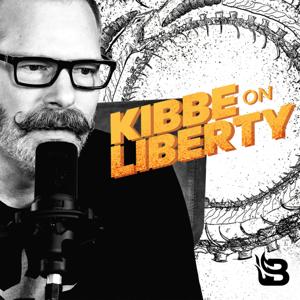
Matt Kibbe is joined by Scott Horton, editorial director of Anti-War.com, to talk about why peace is such a difficult sell in Washington, D.C. While politicians like Barack Obama and Donald Trump campaign on a platform of non-intervention, once they get into office, very little seems to change. Part of the reason for this is a military-industrial complex dating back to World War II, with strong incentives to keep growing the military forever. In a sense, it no longer matters what the American people want or how they vote, because Congress answers to a higher authority—the Pentagon.
Matt Kibbe is joined by economist Donald Boudreaux to try to come to grips with the complete lack of rational risk assessment Americans have displayed with respect to the COVID-19 pandemic. Instead of responding to the virus proportionally to its risk, we’ve chosen to ignore the existence of tradeoffs and take unprecedented measures to lock down the economy. Even many libertarians, who tend to be skeptical of government power and sensitive to unintended consequences, have seemingly forgotten their principles due to a fear that is wildly disproportionate to the actual danger.
Matt Kibbe sits down with author and economist Peter Schiff to talk about why Donald Trump lost, what to expect from the Joe Biden administration, and the dangers of unconstrained government spending. With fewer people willing to purchase government bonds and more debt than ever, the Federal Reserve will have no choice but to print more money than ever before. In addition to being a hidden tax on the poor, this could well lead to the kind of runaway inflation that has destroyed countries like Venezuela. Schiff explains what you can do to protect yourself from the coming currency crisis.
Brad Polumbo, opinion editor at the Foundation for Economic Education, joins Matt Kibbe to assess Joe Biden’s first speech as president and the policy agenda he has laid out so far. Unsurprisingly, Biden is signing a flurry of executive orders to undo much of what the Trump administration accomplished, and this reveals the pitfalls of governing unilaterally rather than working with Congress to pass legislation. Anything Trump did by executive order can be just as easily undone by Biden, just as anything Biden does now can be reversed by the next president. The result is an unstable and unpredictable regulatory environment, and that’s no way to run an economy.
Matt Kibbe is joined by Corey DeAngelis, director of school choice at the Reason Foundation, to discuss the shocking failure of government schools to meet the needs of parents and students during the coronavirus lockdowns. The result has been a surge in support for school choice programs, allowing tax dollars to follow the students directly rather than being tied to institutions that, for the most part, refuse to open. DeAngelis explains why teachers’ unions and education bureaucrats are so dead set against allowing any form of choice for America’s students. It’s not about what’s good for the children; it’s about maintaining a government monopoly.
Matt Kibbe sits down with economist Robert Lawson to talk about his Economic Freedom Index, an annual ranking of the world’s freest — and most unfree — economies. Lawson has discovered over the years that countries with lots of economic freedom tend to have better civil liberties and political freedoms as well. While oddballs like Hong Kong and Singapore do exist, the correlation is quite strong, meaning that if you care about free speech, democracy, and the ability to marry who you want, it’s a good idea to support low taxes, light regulations, and free trade as well.
Matt Kibbe sits down with Rep. Chip Roy (R-Texas) to talk about the deep political and social divisions running through the country that erupted into violence last week at the U.S. Capitol. Roy argues that frustration over the election is partly a proxy for a whole range of other frustrations Americans are feeling—and that the only solution is federalism and decentralization. As long as one side is trying to impose its will on the other from the top down, polarization, extremism, and even violence will only get worse.
Matt Kibbe is joined by Brian Nichols, host of The Brian Nichols Show, to discuss the failures of libertarians to effectively market ideas. In his day job as manager of a sales team, Nichols has learned that the best way to communicate with people is not to tell them what you think they should know, but to listen to their problems, answer their questions, and establish yourself as a source of trusted information others can turn to in times of doubt. By becoming less aggressive and more open, libertarians could go a lot farther towards making inroads with the average American looking for answers to problems, like government lockdowns, that are actively affecting their ability to live and prosper.
Matt Kibbe is joined by Rep. Tulsi Gabbard (D-Hawaii) and Rep. Thomas Massie (R-Ky.) to discuss their bipartisan bill to repeal the Patriot Act and enact major reforms to protect Americans’ privacy rights. The legislators from both parties recognize the need to safeguard against intelligence agencies that operate in secret without respect for the Fourth Amendment and other important constitutional protections that stand between us and tyranny.
Matt Kibbe is joined by the entire Free the People staff to celebrate another year fighting for freedom. The group discusses work they have done on criminal justice reform, pushing back against critical race theory and, most importantly, combatting the narrative of authoritarian lockdowns that have dominated 2020. Despite recommendations from Fauci and others, it’s never been more important to gather with your loved ones to rejoice that this miserable year is finally ending.
From the publisher's feed
Ranked by our users in the last 21 days
227,532 Listeners
26,010 Listeners
37,295 Listeners
465 Listeners
21,057 Listeners
10,434 Listeners

890 Listeners
4,773 Listeners
8,196 Listeners
21,175 Listeners

5,847 Listeners

24,778 Listeners

79 Listeners

212 Listeners
46,045 Listeners
604 Listeners
50 Listeners

332 Listeners

403 Listeners

72 Listeners

440 Listeners