
Sign up to save your podcasts
Or



Based on Podcast App listening data
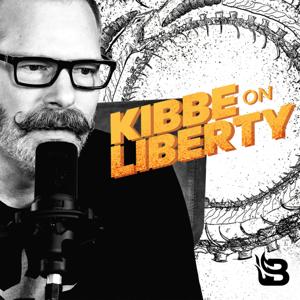
Three weeks into the Trump administration's war with Iran, the path toward a clean victory is looking narrower and narrower. And with an ever-shifting series of objectives, it's not even clear what such a victory would look like. Matt Kibbe is joined by Scott Horton, executive director of the Libertarian Institute, to discuss where the war goes from here and whether there is even a coherent strategy at play. After failing to enact meaningful regime change and with low public approval ratings for this military action, a best-case scenario would probably involve Trump simply declaring victory and bringing our troops home. However, Iran is unlikely to allow that resolution to happen and is likely to keep inflicting pain on American military bases as a deterrent to future bombings. The good news is that, as was demonstrated in 2013 with Barack Obama's abortive strikes on Syria, the American people have the power to influence foreign policy if they make their voices loud enough, especially on the eve of the midterm congressional elections.
After premising his 2024 campaign on the promise of no new wars, President Donald Trump is taking military action in Iran that has already cost over a thousand civilian lives. Matt Kibbe is joined by Kelley Vlahos, editor in chief of Responsible Statecraft and a senior adviser at the Quincy Institute, to discuss the confusing rationale for this war and the best-case scenario Americans can hope to see. The administration has succeeded in killing the ayatollah, only to replace him with his more radical son, so any pretense of liberating the Iranian people seems farcical. Moreover, there appears to be no strategic plan or exit strategy to avoid turning this war into an Iraq-style quagmire. The best we can hope for is that Trump declares victory and pulls out before more lives are lost, but even in that case the reversal of one of his key campaign promises is likely to cost the Republicans badly in the midterm elections.
Following the removal of Nicolás Maduro in Venezuela, the cat is out of the bag on the U.S. government’s use of covert energy weapons to stop soldiers dead in their tracks. Matt Kibbe is joined by independent journalist Steve Baker, who has been investigating the history and current status of these weapons, which use subsonic sound waves and microwaves to produce profound physical distress in targets, up to and including stopping a heart. What’s even more concerning is the prospect of these weapons being deployed on American citizens to disrupt peaceful protests without outside observers being able to tell that the attacks are taking place.
As U.S. forces move closer to Iran, it appears more and more likely that the Trump administration is planning military action against the country for the second time in a year. Matt Kibbe is joined by Cato research fellow Jon Hoffman to discuss why the president has turned his back on his campaign promises not to start any new wars, why open conflict with Iran would be a disaster for the U.S., and why the wishes of the Israeli government seem to be more important than putting America first.
The release of millions of formerly classified pages related to Jeffrey Epstein is giving Americans an inside look into a web of collusion and deception that spans multiple countries, agencies, and administrations. Matt Kibbe is joined by Mike Benz, executive director of the Foundation for Freedom Online, to take a deep dive into the links between the military, wealthy individuals like Bill Gates, and the public health apparatus that gave us the COVID-19 pandemic. The deeper you dig, the worse it gets. But there’s a bright spot in all this: The transparency we’re now getting, thanks to the efforts of Rep. Thomas Massie (R-Ky.), is allowing the American people to finally see what’s been going on behind the curtain, and that knowledge is the first step toward reform.
The most recent Super Bowl featured a dazzling and expensive display of military patriotism. While this may be pleasing to some viewers, it’s important to realize that such spectacles are a deliberate propaganda effort on the part of the military-industrial complex. Matt Kibbe is joined by Abigail Hall, co-author of "How to Run Wars," to discuss the ways in which the government tries to make its foreign policy palatable to the average citizen, including funneling huge amounts of taxpayer money into Hollywood, music, and the NFL. Consumers of this entertainment are being sold a pro-war agenda without realizing it and are even financing these programs with their taxes.
The Justice Department just dropped another 3 million pages of documents related to Jeffrey Epstein, hoping to satisfy critics who have been demanding transparency on the Epstein files since Donald Trump’s election. There’s just one problem: The documents conceal the only thing people care about — the names of the perpetrators — while recklessly outing innocent victims. Matt Kibbe and Rep. Thomas Massie (R-Ky.) discuss whether this botched release is the result of incompetence or malice, whether these emails contain any smoking guns, and what can be done to force further releases from the administration that campaigned on being the most transparent in history.
America was built on the idea of limited government and personal freedom, but as the nation has expanded and taken on the role of the world's policeman, these founding ideals have eroded into something resembling the empires of previous eras. Matt Kibbe and Judge Andrew Napolitano discuss how the desire to engage in nation-building, to acquire colonies, and to have a military presence all over the world necessarily entails sacrificing the Constitution, sound money, and our national values. As the U.S. government grows more and more imperial, it becomes less and less American.
In the aftermath of two high-profile shootings related to immigration enforcement in Minnesota, many freedom-loving Americans are concerned about the government's disregard for civil liberties and the cavalier use of deadly force by agents who lack adequate training. Regardless of one's position on immigration, the optics are not good for Republicans, who will soon have to face the midterm elections. Matt Kibbe sits down with investigative journalist Jim Bovard to discuss the conduct of federal agents, as well as the parallels between the recent shootings and the 1992 Ruby Ridge incident, in which the FBI shot and killed several members of the Weaver family.
With the ousting of Nicolás Maduro, the future of the Venezuelan government is an open question. Will we see a mere continuation of the Maduro regime, which left the country economically devastated, or will we instead see the kind of fundamental reforms that have worked so well for Javier Milei in Argentina? Matt Kibbe is joined by Ian Vásquez, Vice President of International Studies at the Cato Institute, to discuss the next steps for the Trump Administration. In a best-case scenario, Trump would work with Nobel Peace Prize winner Maria Corina Machado to bring libertarian reforms to Venezuela, putting the country back on the path towards the kind of freedom and prosperity it enjoyed prior to Hugo Chavez's socialist takeover.
From the publisher's feed
Ranked by our users in the last 21 days

227,562 Listeners
26,015 Listeners
37,295 Listeners
472 Listeners

21,067 Listeners
10,435 Listeners

889 Listeners
4,772 Listeners
8,196 Listeners
21,174 Listeners

5,847 Listeners

24,785 Listeners

79 Listeners

212 Listeners

46,055 Listeners

603 Listeners
50 Listeners

332 Listeners

402 Listeners

72 Listeners

440 Listeners