
Sign up to save your podcasts
Or

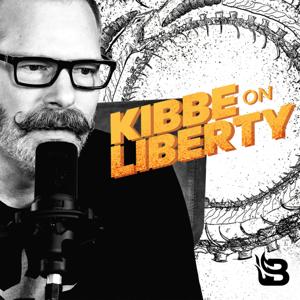


Based on Podcast App listening data
In the wake of President Trump’s sudden military action in Venezuela, ousting Nicolás Maduro and asserting U.S. control over the country, at least temporarily, much of the debate has centered around the wisdom and legality of Trump’s actions. Matt Kibbe argues that while unilateral military action by the president is certainly unconstitutional, the more important question is what happens next. Free the People has a long history of pointing out the evils of the socialist regime led by Maduro and his predecessor, Hugo Chavez, and yet history teaches us that regime-change wars invariably make things worse rather than better. As Maduro’s vice president assumes control for the time being, there remain many questions about what the plan is going forward, whether it involves installing new leadership or a boots-on-the-ground military occupation by U.S. forces, or whether the country will simply be left to its own devices from here on out. The answers to these questions will determine much about the future faced by the Venezuelan people.
On the eve of 2026, Matt Kibbe takes a look back at the first year of Donald Trump's second term as president of the United States. Trump was swept into office by an extraordinary coalition of tech enthusiasts, disaffected Democrats, and even libertarians, all of whom expected big things in return for their support. Trump promised to drain the swamp, end foreign wars, cut spending, and free Ross Ulbricht. These selected segments from this year's "Kibbe on Liberty" guests trace Trump's progress on all these issues, from the heady days of Elon Musk's Department of Government Efficiency to the bitter parting of ways between Trump and conservative lawmakers like Thomas Massie and Marjorie Taylor Greene, as well as how these issues will affect Republicans in the looming 2026 midterm elections.
One of the most precious things COVID lockdowns took from us was the ability to gather, to socialize, and of course to drink together. Matt Kibbe sits down for a beer with Thomas Pacchia, the founder and CEO of PubKey, a Bitcoin-friendly establishment with locations in New York and Washington, D.C. Pacchia explains the importance of Bitcoin, not as part of an investment portfolio, but as a medium of exchange protected from the government’s manipulation of the money supply. His bars aim to offer a low barrier to entry for new and inexperienced Bitcoin users to start treating the technology as an actual currency, while at the same time encouraging community and friendship among like-minded individuals.
You can check out more about PubKey on their website: https://www.pubkey.bar/
You better not shout, you better not cry, you better not pout, I'm telling you why: The Epstein files are coming to town! Following the near-unanimous passage of Kentucky Republican Rep. Thomas Massie's discharge petition, the Trump Justice Department has until midnight on December 19 to finally make the Epstein files public. Will the administration follow through, or will Pam Bondi and pals attempt some last-minute shenanigans? Matt Kibbe sits down with Thomas Massie to discuss what happens next and whether the recently reopened investigation into Epstein's case has a chance of thwarting the will of the people.
With the arrest of a suspect for placing the January 6 pipe bombs, the FBI would like to consider the case closed. But Rep. Thomas Massie (R-Ky.) says not so fast! Matt Kibbe sits down with his favorite congressman to discuss the myriad unanswered questions about why law enforcement officers were able to find the bombs so quickly, why they stopped looking after finding two of them, and why the Biden FBI apparently declined to prosecute this suspect for more than four years. Did Kash Patel and Dan Bongino finally get their man, or is he a patsy meant to take the fall and get the public to stop asking questions?
The Supreme Court is currently hearing a case to decide whether the Trump administration has the power to impose tariffs on a whim, without the approval of Congress. Trump wants this power as a negotiating tool, but he fails to consider the fact that future administrations will be able not only to overturn his orders but to impose far more onerous ones of their own. Matt Kibbe talks with John Vecchione, senior litigation counsel for the New Civil Liberties Alliance, about the dangers of executive power overriding the legislative branch of government. Do we really want a system that would allow a future President AOC to unilaterally tax gas-powered cars out of existence or levy selective tariffs on anything she deems bad for the environment? Republicans always seem to forget that they will not be in charge forever, and with the midterm elections fast approaching, their time in the majority may be ending sooner than they think. This is all the more reason why they should use this opportunity to govern responsibly instead of setting dangerous legal precedents that will empower their enemies in just a few years.
The right to keep and bear arms is one of the most sacred and unique features of the American system of government, allowing citizens to defend themselves not only against criminals, but against potential tyranny as well. Yet in spite of this fact, the corporate press is determined to misrepresent the statistics on gun violence in order to push for stricter gun control laws. John Lott, Senior Litigation Counsel NCLA, sits down with Matt Kibbe to tell the real truth about guns and gun owners, such as the fact that almost all mass shootings occur in gun-free zones, that armed citizens prevent thousands of crimes every year, and that gun registries disproportionately impact the poorest Americans. In almost all cases, the attempts to disarm Americans are built on emotion, not data.
When Javier Milei was first elected president of Argentina in 2023, no one was really sure whether his populist, free-market policies would work to fix the nation's struggling economy. Two years later, he has made tremendous strides, as reflected in Argentina's 2025 legislative elections, in which Milei's party received a clear mandate from the masses. Matt Kibbe sits down with Agustin Etchebarne, director-general at Fundación Libertad y Progreso, to discuss why Milei has become so popular and why he has been so successful in presenting the ideas of Austrian economics to his voters.
Freedom of speech may be under assault in America, but that's nothing compared with what's going on in the United Kingdom, where police are arresting 33 people every day for social media posts. Matt Kibbe sits down with Reem Ibrahim, head of media for the Institute of Economic Affairs, to discuss how Britain has become so authoritarian, the difference in attitude between the British and American public, and whether there is any hope for the nation that gave us the Magna Carta to embrace liberty again.
After calling out the neocons like Jeb Bush and John McCain and building his campaign on promises of peace and putting America first, President Trump is now flirting with the idea of intervening in Venezuela to take out Nicolás Maduro, using the specter of drug cartels as a pretense. Matt Kibbe is joined by Cato Institute fellow Brandan Buck to explain why this would be a really bad idea. U.S. intervention is what led to the rise of Chavez and Maduro in the first place. Combine that with our nation's history of catastrophic nation-building experiments and the fundamental impossibility of central planning, and it's clear that America's power would be far better used in trying to improve the lives of our own citizens.
From the publisher's feed
Ranked by our users in the last 21 days

227,562 Listeners
26,015 Listeners
37,295 Listeners
472 Listeners
21,067 Listeners
10,435 Listeners

889 Listeners
4,772 Listeners
8,196 Listeners
21,174 Listeners

5,847 Listeners

24,785 Listeners

79 Listeners

212 Listeners
46,055 Listeners
603 Listeners
50 Listeners

332 Listeners

402 Listeners

72 Listeners

440 Listeners