
Sign up to save your podcasts
Or



Based on Podcast App listening data
Lucy Worsley travels back in time to revisit the unthinkable crimes of 19th century murderesses from the UK, Australia and North America.
In this episode Lucy is joined by Evy Poumpouras, former special agent with the Secret Service, where she protected five US presidents as part of the Presidential Protective Division.
Lucy and Evy investigate the case of Mary Surratt, a 42 year-old widow, mother and pious Catholic who was arrested in April 1865 for conspiring to assassinate President Abraham Lincoln. He had been shot by former actor John Wilkes Booth while watching a play at Ford’s Theatre in Washington DC. One of the most sensational trials in US history followed, with prosecutors pushing for death sentences for everyone involved in the murder.
Lucy and Evy want to find out why the authorities were so sure that Surratt was involved in the assassination. They want to know what her story tells us about the lives of women at the close of the American Civil War. And they ask what happens when women step outside the domestic sphere and dare to get involved in protest and politics?
To find out more about the background to the Civil War and Lincoln’s assassination, Lucy asks Dr Nikki M Taylor, Professor of History at Howard University Washington DC, to go to Ford’s Theatre and to the Surratt House Museum, formerly Mary’s Surratt’s tavern in Maryland. Mary Surratt, she discovers, was a slave-holder and, like John Wilkes Booth, was horrified by Lincoln’s intention to end slavery and enfranchise African Americans.
Mary Surratt is an elusive and divisive woman. Lucy wants to know if she was a devoted mother attempting to make her way in the world - or a hard-hearted conspirator, a slave-holder and fanatical Confederate trying to reignite the civil war.
Produced in partnership with the Open University
Producer: Jane Greenwood
A StoryHunter production for BBC Radio 4
New episodes will be released on Wednesday wherever you get your podcasts. But if you’re in the UK, listen to the latest full series of Lady Killers first on BBC Sounds. BBC Sounds - Lady Killers with Lucy Worsley - Available Episodes: http://bbc.in/3M2pT0K
Lucy Worsley, Professor Rosalind Crone and barrister Nneka Akudolu KC take a look behind the scenes of Lady Killers.
They shine a light on the detective work required to build the cases of these infamous murderesses, how evidence is pieced together, and how we can hear what these Victorian women are really trying to tell us about their lives.
Nneka shares insights into her work specialising in complex crimes: murder, drug trafficking and serious sexual offences, and how she uses evidence to build a case in the courtroom.
Produced in partnership with the Open University.
Producer: Emily Hughes
A StoryHunter production for BBC Radio 4
New episodes will be released on Wednesday wherever you get your podcasts. But if you’re in the UK, listen to the latest full series of Lady Killers first on BBC Sounds. BBC Sounds - Lady Killers with Lucy Worsley - Available Episodes: http://bbc.in/3M2pT0K
Lucy Worsley travels back in time to revisit the unthinkable crimes of 19th century murderesses from the UK, Australia and North America.
In this episode, Lucy is joined by Dr Gwen Adshead, for many years a consultant psychiatrist and psychotherapist at Broadmoor Hospital.
They investigate the case of Frances Kidder, a 25-year-old woman unhappily married to a much older man, who is accused of murdering her stepdaughter Louisa in Kent in 1867.
We all know the stories of Cinderella and Snow White – evil stepmothers badly treating their innocent stepdaughters. So when, one evening in August 1867, Louisa Kidder fails to return from a walk with her stepmother Frances across the lonely wetlands of Romney Marsh, Frances has some explaining to do.
Lucy is also joined by historian Rosalind Crone, Professor of History at the Open University. She has uncovered numerous reports from local magistrates’ courts which reveal the violence and discord of the Kidder household. Lucy and Rosalind travel to Hythe in Kent where Frances married her violent husband, to Romney Marsh where Louisa disappeared, and to Maidstone Gaol where Frances awaited trial.
Lucy wants to know what actually happened to Louisa on that August evening. Is Frances a wicked stepmother or herself the victim of a troubled and violent home?
Produced in partnership with the Open University
Producer: Jane Greenwood
A StoryHunter production for BBC Radio 4
New episodes will be released on Wednesday wherever you get your podcasts. But if you’re in the UK, listen to the latest full series of Lady Killers first on BBC Sounds. BBC Sounds - Lady Killers with Lucy Worsley - Available Episodes: http://bbc.in/3M2pT0K
Lucy Worsley travels back in time to revisit the unthinkable crimes of 19th century murderesses from the UK, Australia and North America.
In this episode Lucy is joined by the Right Honourable Dame Siobhan Keegan, the Lady Chief Justice of Northern Ireland, who was one of the first women High Court judges in Northern Ireland.
They explore the case of mother and daughter Jane and Ann Boyd, from a poor family living in Holywood near Belfast, whose lives are turned upside down when 19-year-old Ann is dismissed from her job as a domestic servant because she is pregnant and unmarried.
We worry a lot about lack of privacy today, about the invasiveness of social media, but Lucy discovers that in mid 19th century rural Ireland, in a very religious community, there was absolutely no privacy. The Boyd’s neighbours and extended family were in and out of each other’s houses all day, observing every detail of each other’s lives.
So when Ann goes into labour in the Boyd’s cottage, there is no way that Jane is going to be able to keep her daughter’s baby a secret.
Lucy is also joined by historian Rosalind Crone, Professor of History at the Open University. They travel to the Ulster Folk Museum near Holywood and discover the awful truth about how the shame of illegitimacy drove hundreds of Irish women every year to desperate measures to conceal their unwanted pregnancies.
Lucy wants to know what it was like trying to deal with an illegitimate pregnancy in a highly religious, judgemental society. How did the mid 19th century criminal justice system deal with women like Jane and Ann Boyd, and what might happen to women in a similar situation today?
Produced in partnership with the Open University
Producer: Jane Greenwood
A StoryHunter production for BBC Radio 4
New episodes will be released on Wednesday wherever you get your podcasts. But if you’re in the UK, listen to the latest full series of Lady Killers first on BBC Sounds. BBC Sounds - Lady Killers with Lucy Worsley - Available Episodes: http://bbc.in/3M2pT0K
It’s the 14th September 1896, just a short distance from Brisbane, on Australia’s east coast, and the sun is rising on Minjerribah Island, the ancestral land of the Aboriginal and Torres Strait ‘Quandamooka People’. It’s an area rich in Aboriginal culture. It’s also a colonised area, steeped in racism and division, and this is where the murder of six year old ‘Cassey’ takes place.
To investigate this tragic crime and its contemporary resonances, Lucy Worsley is joined by Guest Detective Vanessa Turnbull Roberts. Vanessa is a proud Bundjalung Widubul-Wiabul First Nations woman, a Law Graduate and recipient of the Australian Human Rights Medal for her work around the adoption laws and forcible removal of First Nations children.
Lucy hears that our case begins at ‘Myora Mission School’, an institution set up by white settlers who wish to establish a ‘reformatory’ for Aboriginal children. In reality, it’s part of a wider ‘management’ system aimed at controlling the First Nations population. The children are being trained in domestic duties to work as servants for white families. There’s also evidence that some of the children – including six-year-old Cassey - have been forcibly taken from their homes.
While the children are under the supervision of their matron – a Danish settler called Marie Christensen – Cassey is killed. Marie’s cruel and fatal actions are witnessed by First Nations women Budlo Lefu, Topsy Mcleod and Polly Roberts who bravely speak out on Cassey’s behalf.
Professor Rosalind Crone from the Open University travels to Australia to visit the site of the Mission School and meet local tribal elders.
As the tragic murder unfolds, Vanessa explains that the subject which really underpins everything in this case, is Australia’s ‘Stolen Generations’, the forced removal of Aboriginal and Torres Strait Islander children from their families and communities. Although this began during the earliest days of white settlement, Vanessa – herself, a survivor of the ‘Family Policing System’ – reveals, it is not a thing of the past.
Produced in partnership with the Open University.
Producer: Nicola Humphries
A StoryHunter production for BBC Radio 4
With thanks to The Minjerribah Moorgumpin Elders-In-Council and North Stradbroke Island Museum on Minjerribah
New episodes will be released on Wednesday wherever you get your podcasts. But if you’re in the UK, listen to the latest full series of Lady Killers first on BBC Sounds.
Lucy Worsley travels back in time to revisit the unthinkable crimes of 19th century murderesses from the UK, Australia and North America.
This episode sees Lucy traverse London, hot on the heels of Maria Manning, the so-called Lady Macbeth of Bermondsey, a woman who confounds expectations of respectable Victorian England.
Maria shocked the nation in 1849, when she conspired with her husband to kill her lover, before stealing the dead man’s money and making a break for freedom on the all-new intercity rail network. She’s the inspiration for a key character in Charles Dickens' famous proto-detective novel Bleak House and her fate leads to a pivotal change in the law.
To untangle this remarkable story, Lucy is joined by international literary superstar Kate Mosse, author of historical fiction novels including the Joubert Family Chronicles and founder-director of The Women’s Prize for Fiction.
Lucy also visits the scene of the crime and recreates Maria’s escape across the capital with Lady Killers’ in-house historian Professor Rosalind Crone from the Open University. They uncover a bizarre trail of evidence, including the huge stash of belongings Maria deposited at London Bridge Station as she fled London, which included 28 pairs of stockings, 11 petticoats, a teapot, an apron and several items of bloodstained clothing.
Together, the team ask why the buttoned-up Victorians had such an appetite for grisly tales of lust, crime and punishment. Are the same impulses behind today’s fascination with true crime? Can we respect Maria’s independent spirit and sharp mind, despite what she did? Does she deserve her place in history?
Produced in partnership with the Open University
Producer: Sarah Goodman
A StoryHunter production for BBC Radio 4
New episodes will be released on Wednesday wherever you get your podcasts. But if you’re in the UK, listen to the latest full series of Lady Killers first on BBC Sounds. BBC Sounds - Lady Killers with Lucy Worsley - Available Episodes: http://bbc.in/3M2pT0K
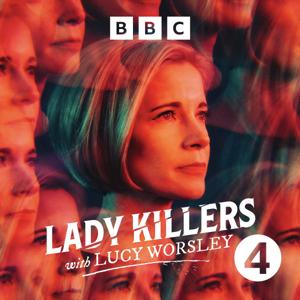
Lady Killers With Lucy Worsley is a smash hit historical true-crime podcast.
Join Lucy and a team of female detectives as they investigate the ordinary lives - and extraordinary crimes - of women in the past from a contemporary feminist perspective.
In this series, Lucy revisits the unthinkable crimes of murderesses including Mary Surratt, accused of conspiring to assassinate a U.S. President and Maria Manning the so-called ‘Lady Macbeth of Bermondsey’.
Each episode focuses on a true story and sees Lucy take an in-depth look at the crime, how it was received at the time, and how it compares with what happens today.
Throughout the series, she is joined by an all-female detective team to dig deeper into the social issues and circumstances that helped to create these murderesses. This series our guest detectives include: barristers, a psychiatrist, an indigenous rights advocate, a former U. S. Secret Service agent, and a best selling Gothic novelist.
Along with our in house historian, Rosalind Crone, Lucy retraces the steps of women who kill from more than 100 years ago travelling across England and to Northern Ireland to take a peek at the lives of our Lady Killers. We also visit the U.S. and Australia.
A whole new series of Lady Killers with Lucy Worsley is coming soon.
Produced in partnership with the Open University.
A StoryHunter production for BBC Radio 4.
If you're in the UK, listen to the newest episodes of Lady Killers first on BBC Sounds: https://bbc.in/3M2pT0K
Lucy Worsley, Professor Rosalind Crone and lawyer and comedian Sikisa Bostwick-Barnes discuss the wicked crimes of the last four Lady Killers in this series. They examine their treatment by the criminal justice system and ask whether there are parallels with women’s experiences today. Together they examine gender, prejudice and racial bias.
They explore the major changes for women over 100 years from 1823 to 1923. From raising hemlines to the campaign for women’s suffrage and opportunities in the world of work. They examine how changes in society filter through to the justice system, and reflect on the changing nature of how we consume information and the cult of celebrity - from early newspapers, pamphlets and cheap sheets to social media today.
Producer: Emily Hughes
A StoryHunter production for BBC Radio 4
Lucy Worsley investigates the historical crimes of women from a contemporary, feminist perspective.
In this episode, Lucy is joined by Dr Katherine Ramsland, a professor of forensic psychology at DeSales University, to visit Massachusetts in New England, USA and discover how one nurse became a notorious serial killer.
Lucy and Katherine discuss Jane’s case and the impact it had on the relatively new profession of nursing. Lucy also wants to know how Jane Toppan compares to serial killers today.
We think of nurses as caring, virtuous and we trust them with our life. Jane Toppan will make you think twice.
Producer: Hannah Fisher
A StoryHunter production for BBC Radio 4
Lucy Worsley investigates the historical crimes of women from a contemporary, feminist perspective.
By 1881, Catherine is a life insurance broker and also a widow. Margaret is married, but her husband, Thomas Higgins, falls ill and dies. Thomas has life insurance policies so, after his death, Margaret and Catherine receive a generous payment. But Thomas’ death doesn’t make sense to his brother Patrick, who calls for a post mortem. Traces of arsenic are detected in the body and Margaret is arrested. But as the police arrive, Catherine escapes. She disappears into the warren of Liverpool’s streets and ends up in the east of the city.
After ten days on the run, Catherine is found and brought to trial with her sister. Did the sisters work together, or was one of them pressuring the other? Were the sisters actually part of a female syndicate, murdering people for monetary gain?
Lucy asks how similar this is to investigations today. Do close knit communities in cities still help each other evade the police?
A StoryHunter production for BBC Radio 4
From the publisher's feed
Lucy Worsley investigates women from the past being put on trial from a feminist perspective.
Ranked by our users in the last 21 days

7,624 Listeners

519 Listeners
1,044 Listeners

286 Listeners

5,482 Listeners

2,111 Listeners
219 Listeners

12,662 Listeners
349 Listeners
743 Listeners
233 Listeners
473 Listeners
321 Listeners
3,224 Listeners

2,532 Listeners
1,893 Listeners
2,053 Listeners

72 Listeners
727 Listeners
1,391 Listeners
629 Listeners
502 Listeners
1,135 Listeners
395 Listeners

384 Listeners
242 Listeners
59 Listeners
117 Listeners
74 Listeners
71 Listeners