
Sign up to save your podcasts
Or



Based on Podcast App listening data
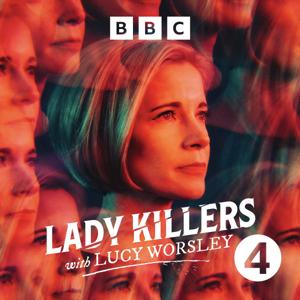
Lucy Worsley investigates the crimes of Victorian women from a contemporary, feminist perspective.
This time, Lucy explores the case of Hannah Mary Tabbs, who was very good at being very bad.
An African-American woman living in Philadelphia in the 1880s, Hannah Mary was arrested after the discovery of the headless, limbless torso of her lover, Wakefield Gaines.
With the help of Philadelphian historian Annie Anderson, Lucy discovers what life was like for African-American women living in the city only two decades after the end of slavery. Social reformers, keen to promote their interests, encouraged black women to adopt high moral standards of temperance, modesty, deference, and strict sexual mores.
But as Lucy discovers with Professor Kali Nicole Gross who has written a book about the case, Hannah Mary Tabbs was having none of this. She lived life on her own terms, blurring her identity, lying when it suited her and intimidating others to turn a blind eye to her affair with a man 10 years her junior.
We hear Hannah Mary’s own words as she tried to talk her way out of trouble by attempting to shift blame to the man co-accused of killing her lover.
To gain a contemporary perspective, Lucy and Kali ask how reliable the confessions extracted from black suspects by white police officers are, even now. To what extent is racial profiling relevant to this case? And what does this case say about the relationship between the black and white communities in the US?
And, we find out what really happened to Wakefield Gaines at the hands of Hannah Mary Tabbs.
Producer: Jane Greenwood
A StoryHunter production for BBC Radio 4
Lucy Worsley investigates the crimes of 19th century women in the UK, North America and beyond from a contemporary, feminist perspective.
Here, Lucy tells the story of the murderess Esther Lack and asks whether she was a cold-blooded child killer, or a loving mother driven to despair by poverty and ill health.
In the early hours of the morning at the 22nd of August 1865 John Lack, a nightwatchman at a warehouse on the south bank of the River Thames, walked the short distance back to his home, three tiny, overcrowded rooms in a squalid alley called Skin Market Place, and discovered a scene of unimaginable horror.
His wife Esther had taken his razor and cut the throats of their three youngest children, Christopher aged ten, Eliza aged six and baby Esther who was just two.
Lucy visits London’s South Bank with historian Rosalind Crone to get a sense of Esther’s life and the desperate circumstances that led her to kill her own children. She had given birth to 12 children over 20 years and six of them, including a set of triplets, died in infancy. Friends and family described her as a decent woman and a loving mother, but she was nearly blind, and was suffering from fits and infections.
To gain a contemporary perspective on the Esther Lack case, Lucy talks to Dr Gwen Adshead, a forensic psychiatrist and psychotherapist who has a particular interest in mothers who harm or kill their children.
Lucy asks what might have been Esther’s state of mind when she committed this horrendous crime. Are mothers who kill their children usually mentally ill? What modern understanding of neonatal mental health can we bring to this case?
And is there a link between poverty and harm to children that remains to this day?
Producer: Jane Greenwood
A StoryHunter production for BBC Radio 4
Lucy Worsley investigates the crimes of Victorian women from a contemporary, feminist perspective.
This time, Lucy visits County Durham in North East England, to reinvestigate the woman known as Britain’s first female serial killer. Mary Ann Cotton was accused of murdering her stepson in 1872, after telling the local grocer that she was sure her stepson will die soon. When her stepson died a few days later, the police were called in.
Following a rushed post-mortem and inquest, Cotton seemed to have got away with it - his death was declared a case of natural causes. But more tests and a second post mortem revealed that her stepson had been poisoned. Mary Ann Cotton was arrested, put on trial, and sentenced to be hanged. She maintained her innocence right up until she was led to the gallows.
Although convicted of one murder, historians now believe that Mary Ann Cotton killed up to 21 people.
Lucy visits Beamish, the Living Museum of the North, to see the unsuspecting murder weapon, and Cotton’s former home in West Auckland, to see where she last lived.
Alexandra Wilson, an author and barrister who has practiced in both family and criminal law, talks Lucy through the legal implications of the case, including whether she would represent Cotton today.
Lucy asks if Mary Ann Cotton was a cold and calculated killer, or a desperate and vulnerable mother in need of an income from insurance payouts.
Historian Rosalind Crone puts the story into the context of the Victorian era. Was Mary Ann Cotton just trying to better herself? And why was it so easy for her to remain undetected for so long?
This is a case that highlights the domestic role of women and how they could, theoretically, get away with murder.
Producer: Hannah Fisher
A StoryHunter production for BBC Radio 4
Lucy Worsley investigates the ordinary lives and extraordinary crimes of Victorian women accompanied by a team of female detectives.
Baby farming was almost an acceptable practice in the 19th century, seen as a necessary solution to deal with the 50,000 babies that were born illegitimately each year. The shame and economic burden of caring for a child forced many unmarried mothers to enlist the services, for a fee, of a baby farmer, who promised a safe and loving home for infants. Tragically, some of them were unscrupulous, taking the money and getting rid of the children.
Lucy is joined by former detective Jackie Malton, who was the inspiration for the TV series Prime Suspect, and in-house historian Rosalind Crone as they follow in the footsteps of the Victorian detectives who painstakingly tracked our baby killer.
The case began with the discovery of a body in the river and Jackie and Ros revisit the scene of the crime. They also examine original evidence at the Thames Valley Police Museum, in Reading.
Lucy asks what kind of society turned a blind eye to these baby farmers. And crucially, did women really have a choice, when their childcare options were so limited?
Producer: Julia Hayball
In this episode of Lady Killers, Lucy Worsley and Dr Rosalind Crone look back and discuss the first four cases and the issues and themes they share.
Together they look again at the alleged poisoners Florence Bravo and Madeleine Smith, who were said to have killed their respective husband and lover. They delve deeper into the story of the American heiress Lizzie Borden, accused of murdering her father and stepmother and discuss the teenage servant, Grace Marks who was jailed for killing her master and his lover in Canada.
They analyse the role class and gender may have played in these cases, look at why three out of the four were never found guilty of anything and discover how the choice of murder weapons was seen to reflect their gender and spark a national moral panic. Then Lucy and Ros turn their expertise onto the most important question of all, did they get away with murder?
Producer: Alex Baxter
A StoryHunter production for BBC Radio 4
Lucy Worsley investigates the ordinary lives and extraordinary crimes of Victorian women.
This story is about a young servant, Grace Marks, accused of two brutal murders that generated enormous attention in the new world of Upper Canada in 1843. In that time and in that place, murders were rare - and rarer still was a female murderer.
Grace Marks and stable boy James McDermott went on the run, ending up in Lewiston, New York after their employers Thomas Kinnear and his housekeeper, Nancy were found dead. Grace insisted she didn't kill them and was forced by James McDermott to run away with him. But when Grace was arrested she was even wearing the clothing of the woman she was accused of murdering.
Lucy examines the evidence, including duelling confessions from the accused, with the help of psychological scientist and host of the Bad People podcast, Dr Julia Shaw.
They ask if the 16-year-old housemaid who had worked in five different houses in three years could be responsible for the violent killings.
We also hear from historian Susan Houston from York University, Toronto, who has written about the case and discusses the legal and social environment that is stacked against Grace.
In the case made famous by Margarent Atwood in Alias Grace, we speculate on what happened and ask if Grace would have been treated differently if she had more power. Or was she actually a naïve 16-year-old caught up in the doomed plot of a disgruntled stable boy? You decide….
Producer: Sandra Bartlett
A StoryHunter production for BBC Radio 4
On a hot August day in 1892, a wealthy Massachusetts couple, Andrew and Abby Borden, were hacked to death during broad daylight in their home in the small industrial city of Fall River.
Lizzie Borden, Andrew’s daughter from his first marriage, was arrested for double homicide. The trial gripped the nation – especially Victorian women who pack the courtroom to watch proceedings, in what one reporter described as a sea of calico and lace – referring to the female interest that bridges social divides.
But what does a wealthy white woman accused of murder reveal about the growing immigrant population, swirling politics and dark underbelly of Fall River, New England and beyond? Was the trial as much a battle for what kind of America would dominate in an age of deep-seated tensions? Could a woman of such standing be allowed to be seen as culpable of such a crime? Why, despite an avalanche of circumstantial evidence pointing to Lizzie as the culprit, was she acquitted, only to be judged forever after as guilty by the court of public opinion and in the realms of American folklore?
In this latest episode of Lady Killers, Lucy Worsley meets with journalist Erin Moriarty, who reinvestigates the case from a modern legal standpoint. They examine the differences in how women in such a case were treated back then, compared with what happens today.
And lawyer and historian Cara Robertson - who has written a book on the case - tours Fall River, examining exhibits from the trial and visiting the Borden family house.
We see how this case helps us understand the life of wealthy Victorian women, how they are perceived and their role in American society.
Producer: Diane Hope
Lucy Worsley investigates the crimes of Victorian women from a contemporary, feminist perspective.
In this episode, Lucy explores the case of a young lady called Madeleine Smith. Part of high society in Glasgow in the 1850s, she was living the ideal life, attending balls and concerts, promenading around the shopping districts and spending her summers at her family’s large country home.
But she was hiding a shameful secret - a clandestine love affair with a man ten years her senior and well below her station. His name was Pierre Emile L’Angelier, a warehouse clerk from Jersey. They met, wrote letters to each other regularly, and soon their relationship turned intimate. But when he found out she was soon to be married to a suitable match arranged by her parents, things turned sour.
While Madeleine was burning the letters she received from Pierre Emile, he kept hers and threatened to send them to her father to expose their relationship. In a panic, Madeleine begged to meet so he could return her letters.
On the evening of 22nd March 1857, Pierre Emile left his lodgings, allegedly to visit Madeleine. When he returned home, he became ill and died of arsenic poisoning. Police traced Madeleine through an entry in his diary, and she was arrested. She was put on trial for his murder and her letters, intended only for the eyes of her lover, were read out for all to hear.
Presenter Lucy Worsley is joined by award-winning crime writer Denise Mina to piece together this curious case. Was Madeleine a manipulative young woman who wanted a bit of fanciful fun before marriage? Or was she naïve and innocent, swept off her feet by a controlling older man? And was she guilty? Or was the outcome of her trial determined by her class, gender and societal expectations of women?
Together with historian Rosalind Crone from the Open University, they visit the alleged scene of the crime to investigate if Madeleine could have possibly poisoned Pierre Emile L’Angelier that fateful evening in 1857. Lucy and Rosalind also visit some of Madeleine’s real letters at the Mitchell Library in Glasgow learning that, perhaps, a younger upper middle class Victorian lady may not have been as prim and proper as history would have us believe.
Producer: Hannah Fisher
A StoryHunter production for BBC Radio 4
Lucy Worsley investigates the crimes of Victorian women from a contemporary, feminist perspective.
In the first case in the series, Lucy explores the story of Florence Bravo, the woman at the heart of one of the most sensational unsolved murder cases of the Victorian era, and asks whether she was a ruthless poisoner or an abused wife.
Lucy visits The Priory, Florence Bravo’s grand house in Balham where, on 21st April 1876, after three days of agony, her young husband Charles died of poisoning. They had been married for only five months but the relationship was already under strain - Charles was jealous of the much older doctor Florence had been involved with before their marriage, he was frustrated that he had only limited control of her large fortune, both of them were drinking heavily, and Florence had suffered two miscarriages in close succession.
Lucy meets historian Rosalind Crone at the nearby pub where an inquest was held into Charles Bravo’s death. This case became known as The Balham Mystery and was a Victorian media sensation, with pages of coverage every day in the respectable broadsheets, tabloids and penny dreadfuls. An intimidating, all-male environment, Lucy and Rosalind discover how the inquest into Florence’s husband’s death degenerated into an inquiry into her sexual morality, and they wonder what Victorian women made of Florence’s story. And we hear Florence’s own words as she tried to defend herself at the inquest into her husband’s death.
To gain a contemporary perspective on the Florence Bravo case, Lucy talks to the leading barrister Sasha Wass QC, who has worked on many high-profile cases including those of Rosemary West, Johnny Depp and Rolf Harris. Lucy wants to know why Florence’s accusations about her husband’s cruelty were ignored by the inquest. Would Florence have been treated differently had there been women in the police force, in her legal team, on the jury and in the press? Why do women in criminal investigations continue to undergo ‘trial by media’?
And, crucially, in a case that has never been solved, did she do it?
If you like what you hear, the whole series will be available to listen to from the 25th of July wherever you listen to podcasts. Or you can hear it right now in the UK – before anywhere else – first on BBC Sounds.
Producer: Jane Greenwood
A StoryHunter production for BBC Radio 4
Join Lucy Worsley and a team of female detectives as they investigate the crimes of Victorian women from a contemporary, feminist perspective. If you like what you hear, the whole series will be available to listen to from the 25th of July wherever you listen to podcasts. Or you can hear it right now in the UK – before anywhere else – first on BBC Sounds.
From the publisher's feed
Lucy Worsley investigates women from the past being put on trial from a feminist perspective.
Ranked by our users in the last 21 days

7,624 Listeners

519 Listeners

1,044 Listeners

286 Listeners

5,482 Listeners

2,111 Listeners
219 Listeners

12,662 Listeners

349 Listeners
743 Listeners

233 Listeners
473 Listeners

321 Listeners
3,224 Listeners

2,532 Listeners
1,893 Listeners
2,053 Listeners
72 Listeners
727 Listeners
1,391 Listeners
629 Listeners
502 Listeners
1,135 Listeners
395 Listeners

384 Listeners
242 Listeners
59 Listeners
117 Listeners
74 Listeners
71 Listeners