
Sign up to save your podcasts
Or

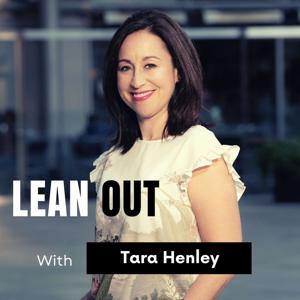


In 2008, at the age of 44, Tara's guest on today’s program left Yale University, where he taught English, and became a full-time writer. In the years since leaving academia, he’s amassed an impressive body of work — much of it challenging the status quo.
Tara knew she had to talk to him when she read his excellent essay in UnHerd, “Escaping American tribalism,” about his defection from the progressive left.
William Deresiewicz is an essayist and cultural critic, and the author of Excellent Sheep: The Miseducation of the American Elite and the Way to a Meaningful Life. His latest book is out this month. It’s called The End of Solitude: Selected Essays on Culture and Society, and it is a collection of standout pieces from the past few decades. In it, he writes: “To be an individual, the years have taught me, takes a constant effort. These essays are an offering to those who wish to be one, too.”
You can find Tara Henley on Twitter at @TaraRHenley, and on Substack at tarahenley.substack.com
When Dave Chappelle’s recent show at First Avenue in Minneapolis was cancelled amid protests, it reignited the debate around cancel culture, with all of the old arguments resurfacing once again.
So the timing could not have been better for Tara's guests on today’s podcast, who published a comprehensive essay that same week on Substack, titled “Cancel Culture: It’s real and on the rise, on the left and the right.” The piece examines the dominant myths about this phenomenon — and debunks them.
Jeff Snyder is professor of educational studies at Carleton College, and Amna Khalid is a history professor there, as well as the host of the Banished podcast on Substack.
You can find Tara Henley on Twitter at @TaraRHenley, and on Substack at tarahenley.substack.com
Since the sexual revolution, women’s lives have undergone dramatic changes. The dominant narrative is that liberal feminism has freed women in profound ways. So why does data show that women’s happiness has actually declined?
Tara's guest on the podcast today argues that the sexual revolution has, in fact, failed women.
Louise Perry is a British writer and activist. She’s a columnist at The New Statesmen and a features writer for The Daily Mail. Her brilliant debut is called The Case Against the Sexual Revolution: A New Guide to Sex in the 21st Century.
You can find Tara Henley on Twitter at @TaraRHenley, and on Substack at tarahenley.substack.com
For many journalists, it’s a point of pride to consume as much media as possible, as much of the time as possible. We think this makes us informed, better at our jobs.
So it caused a stir last week when American journalist Amanda Ripley admitted, in The Washington Post no less, that she’s been avoiding the news for years — like an increasing number of Americans, and Canadians. And, it turns out, journalists.
Amanda Ripley’s piece is titled, “I stopped reading the news — is the problem me, or the product?” In it, she poses a question that few have been willing to ask. And that is: “If so many of us feel poisoned by our products, might there be something wrong with them?”
Amanda Ripley is a contributor to the The Washington Post and The Atlantic. Her most recent book is High Conflict: Why We Get Trapped and How We Get Out.
You can find Tara Henley on Twitter at @TaraRHenley, and on Substack at tarahenley.substack.com
How do we arrive at truth? Tara's guest on the podcast today argues that it is through reality-based communities — in government, media, the law, and science and academia — which collectively determine truth through trial and error, rules and norms, and discussion and debate. All together, he calls this system “the constitution of knowledge.”
But this system is under threat, he says, from both the right and the left. On the right, through the flooding of the public sphere with what's called a "fire hose of falsehoods." And on the left, through cancel culture. (You can find his useful cancel culture checklist here.)
Jonathan Rauch is a journalist and author in Washington, D.C. He’s a senior fellow at the Brookings Institution and a contributing writer at The Atlantic. His latest book is The Constitution of Knowledge: A Defense of Truth.
You can find Tara Henley on Twitter at @TaraRHenley, and on Substack at tarahenley.substack.com
Those on the political left have long seen free speech as a core tenet — so it’s been bizarre for many of us to watch the left abandon it, and, in many cases now even campaign against it.
Tara's guest on the podcast today has written a new piece for Tablet Magazine arguing that, in fact, this trend is not particularly new. The essay is titled “Who Really Benefits From the First Amendment?,” and it takes a look back in history at attacks on free speech originating on the left — and stresses that the left needs to remember that free speech is essential for minority rights.
Nadine Strossen is the former national president of the American Civil Liberties Union, and a professor emerita at New York Law School. Her most recent book is Hate: Why We Should Resist It with Free Speech, Not Censorship.
You can find Tara Henley on Twitter at @TaraRHenley, and on Substack at tarahenley.substack.com
How do you regulate the Internet? It’s a question that the federal government in Canada is in the process of trying to answer. But its approach is generating controversy, with several bills raising concerns around freedom of expression.
Bill C-11, the Online Streaming Act, was recently rushed through the House of Commons in a remarkable manner that led one Conservative MP to call it an “affront to democracy.” And Tara's guest on the podcast today says a subsequent ruling from the CRTC — the Canadian Radio-television and Telecommunications Commission — on a CBC/Radio-Canada segment is a “freedom of expression wake up call.”
Michael Geist is a law professor at the University of Ottawa, the Canada Research Chair in Internet and e-Commerce Law, and a member of the Centre for Law, Technology and Society. He’s also a host of the Law Bytes podcast.
NOTE: This podcast was recorded on July 5. Today, the CBC responded to the CRTC ruling, stating, “We simply do not accept the CRTC’s interference in journalism in Canada.” Also, as Michael Geist notes on his blog today, Bill C-11 has now become a trade issue between the United States and Canada.
You can find Tara Henley on Twitter at @TaraRHenley, and on Substack at tarahenley.substack.com
If you’re a fiction reader and you’ve noticed that novels are getting more political — and more overtly aligned with the progressive political project in particular — there’s a reason for this. Big publishing houses are increasingly hiring what are called “sensitivity readers,” to vet authors’ work to ensure that it doesn’t cause offence.
Tara's guest on the podcast today has written a piece about this trend for Reason Magazine. It’s titled “Sensitivity Readers Are the New Literary Gatekeepers,” and it argues that overzealous language policing on race and gender is shaping the publishing industry in profound ways.
Kat Rosenfield is an American culture writer, a columnist at UnHerd and the co-host of the Feminine Chaos podcast. She’s also a novelist; her most recent book is No One Will Miss Her.
You can find Tara Henley on Twitter at @TaraRHenley, and on Substack at tarahenley.substack.com
For all of the mainstream media’s coverage of Donald Trump, there’s not a very deep understanding of the Republican Party under that president, or, indeed, the forces that led up to his election. In the liberal press, there just has not been that much curiosity about the nuances of the American conservative movement — and the historical and political forces driving it. But Tara's guest on the program today says the history of the American right is actually a rich and complex one, with numerous diverse factions vying for dominance.
Matthew Continetti is a fellow at the American Enterprise Institute and the founding editor of The Washington Free Beacon. He’s also the author of a new book, The Right: The Hundred Year War for American Conservatism.
Matthew Continetti joins Tara today for a history lesson on the American right — and how that history can help us understand the populist wave now underway in Canada.
You can find Tara Henley on Twitter at @TaraRHenley, and on Substack at tarahenley.substack.com
As the pandemic winds down, another public health emergency rages — and it is not getting as much attention. We're speaking, of course, about the opioid crisis. Theresa Tam, Canada’s chief medical officer of health, recently tweeted that the latest data shows that in 2021, 7,560 people died of opioid-related overdose. On average, 21 people died and 17 were hospitalized every day.
Tara's guest on the program today penned an opinion piece in the Vancouver Sun in 2020 warning that our pandemic response could escalate the crisis. Sadly, he has been proven right.
He is a former criminal justice advisor to Prime Minister Stephen Harper who underwent a transformation in his views, becoming a passionate advocate for the decriminalization of drugs, for a safe supply, and above all, for more empathy and compassion for Canadians struggling with addiction. Benjamin Perrin is a professor at the University of British Columbia’s law school. He’s also the author of Overdose: Heartbreak and Hope in Canada’s Opioid Crisis.
You can find Tara Henley on Twitter at @TaraRHenley, and on Substack at tarahenley.substack.com
From the publisher's feed

2,277 Listeners
2,889 Listeners

902 Listeners
796 Listeners

36 Listeners
617 Listeners

3,837 Listeners
181 Listeners
804 Listeners

816 Listeners

18 Listeners
8,430 Listeners
12 Listeners

32 Listeners

60 Listeners