
Sign up to save your podcasts
Or

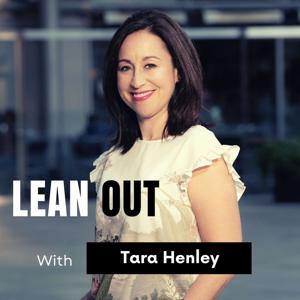


The realignment of left and right is something we talk about a lot on this podcast, as we try to make sense of the current moment. This political shakeup is producing new politics, new alliances, and new conversations.
To keep up with the pace of such shifts, Lean Out is now expanding to two episodes a week, to better document these developments in real time. Tara will still be interviewing an author every week, but now she'll also be interviewing a journalist — about a newly-published piece that’s making waves in the culture.
This week we ask: What happens when a man of the right hits a leftist labour conference?
We’ll be discussing a provocative new piece, “What the Right Doesn’t Get About the Labor Left.”
Sohrab Ahmari is a founder and editor of Compact Magazine, a new radical American journal. He’s a prominent conservative commentator and the author of several non-fiction books, including The Unbroken Thread: Discovering the Wisdom of Tradition in an Age of Chaos.
You can find Tara Henley on Twitter at @TaraRHenley, and on Substack at tarahenley.substack.com
Last week, amid growing pressure, the Canadian government suspended vaccine mandates for domestic and outbound international air and rail travel — as well as for the federal civil service and the federally regulated transportation sectors. But this debate is far from over, as the government stated that it will not hesitate to reimplement vaccine mandates in the future.
The question is: Is such a policy backed by science? A recent peer-reviewed paper in the BMJ Global Health medical journal argues that vaccine mandates are, in fact, scientifically questionably — and likely to do more societal harm than good. Tara's guest today is the lead author on that paper, and he hopes to trigger a broader public conversation about pandemic policy.
Kevin Bardosh is a Canadian social and political scientist and an expert in global public health. He’s an affiliate assistant professor at the University of Washington, an honorary lecturer at the Edinburgh Medical School, and has worked on Zika control in Haiti and on Ebola in Africa. He joins Tara today to talk about the unintended consequences of COVID-19 vaccine policy.
You can find Tara Henley on Twitter at @TaraRHenley, and on Substack at tarahenley.substack.com
There was big news out of the United States last week for those who follow the ongoing debate over the state of free speech. FIRE, the preeminent free speech organization for higher education, is expanding beyond campus. And the organization has been renamed the Foundation for Individual Rights and Expression.
Tara's guest on the podcast today says its expanded mandate is a result of 2020, the worst year for free speech in his entire career. And he wants us all to think deeply about why free speech is worth defending.
Greg Lukianoff is a free speech lawyer and the president and CEO of FIRE. He’s also a documentary producer and a New York Times bestselling author. Most recently, he co-authored, with Jonathan Haidt, The Coddling of the American Mind: How Good Intentions and Bad Ideas Are Setting Up a Generation for Failure. Greg Lukianoff joins Tara for a wide-ranging conversation about free speech, viewpoint diversity, cancel culture — and how to survive the culture wars.
You can find Tara Henley on Twitter at @TaraRHenley, and on Substack at tarahenley.substack.com
The pandemic, as we know, has been a different experience for different people. Some of us, the laptop class, isolated and worked from home. But others of us, the essential workers, were out there every day doing the work that it took to keep society from collapsing. The stories of the working class have often gone untold, but Tara's guest on the podcast today has dedicated himself to interviewing working people — on his podcast, in his reporting, and in his new book. And he believes their experiences deserve to be heard, and remembered, and thought about.
Maximillian Alvarez is a writer and editor based in Baltimore. He’s the host of the Working People podcast, a show about the lives of the working class. He’s also the editor-in-chief of the Real News network, and covers labor for Breaking Points with Krystal Ball and Saagar Enjeti. Maximillian Alvarez’s new book is called The Work of Living: Working People Talk About Their Lives and the Year the World Broke.
You can find Tara Henley on Twitter at @TaraRHenley, and on Substack at tarahenley.substack.com
“Men and women exist. Occasionally, we even like each other. We exist because of these two simple truths.” These are the opening lines of a powerful new book that dives into the crisis in contemporary heterosexuality. It’s been called a “feminist defence of masculinity,” and it is a clear-headed and compassionate look at where we’ve gone wrong. Nina Power is a British writer, philosopher, and fellow Substacker. She’s also a senior editor at the new American journal of radical politics, Compact Magazine. Nina Power’s latest book is What Do Men Want? Masculinity and Its Discontents. She joins Tara for a conversation about how we think and talk about men – and how we might begin to heal the rift between the sexes.
You can find Tara Henley on Twitter at @TaraRHenley, and on Substack at tarahenley.substack.com
Some months ago, Tara discovered a podcast that gripped her from its very first episode. That podcast is Banished, from Substack’s Booksmart Studios, and it is a deeply thoughtful and nuanced look at the rising tide of censorship and intolerance. Its host is a remarkable academic who is fiercely committed to open inquiry. Amna Khalid is an historian and a professor at Carleton College. She is a prolific writer of essays, often with her colleague Jeff Snyder, on the big issues of our time — including academic freedom, free speech, diversity, equity, and inclusion initiatives, and the controversy over Critical Race Theory in the classroom. Amna Khalid joins Tara to talk about how her early years in Pakistan fuelled her hunger for free expression, why she speaks out about intellectual conformity on campus, and where she gets her hope from.
You can find Tara Henley on Twitter at @TaraRHenley, and on Substack at tarahenley.substack.com
Many of us have had the feeling over the last few years that things were just not adding up, that the narratives in the mainstream media simply were not making sense. Well, my guest on the podcast today had that experience earlier than most, years back, with online feminism – and it sowed the seed that became her most recent book.
Meghan Daum is an essayist and the author of six books. She’s a former opinion columnist with the Los Angeles Times, and the host of weekly interview podcast, The Unspeakable. Her latest book is The Problem With Everything: My Journey Through the New Culture Wars, and it was recently released in paperback in Canada, with a new introduction. Meghan joins Tara for a wide-ranging conversation, to talk about the excesses of #MeToo, about cancel culture, about Elon Musk, and about the rise of heterodox thought.
You can find Tara Henley on Twitter at @TaraRHenley, and on Substack at tarahenley.substack.com
How free is Canada as a country? It’s a question that Tara's guest on the podcast today tackled in a book, back in 2020. He concluded that our freedom was actually pretty precarious. Philip Slayton is a Canadian lawyer and a former dean of law at Western University. He’s also a former president of PEN Canada, and a bestselling author. His latest book is Nothing Left To Lose: An Impolite Report on the State of Freedom in Canada. Philip joins Tara today for a lively, state-of-the-nation conversation, looking at how the pandemic, growing economic inequality, and the use of the Emergencies Act to quash the trucker protests impacted freedom in this country.
You can find Tara Henley on Twitter at @TaraRHenley, and on Substack at tarahenley.substack.com
“We’re liberated, and we’re miserable.” That’s a title of a chapter in Chrisine Emba’s new book, Rethinking Sex: A Provocation – and one a lot of people can relate to. The Sexual Revolution held lots of promises of freedom and liberation, but in many ways it just hasn’t delivered. We’re in the midst of a sex recession, marriage is in decline, and a recent Pew survey found that nearly half of American adults say that dating has gotten harder for most people over the last 10 years. Women know this. Men know this, too. But many are not willing to talk about it publicly. Because to critique where the West has landed on sex and intimacy is to critique feminism, and to question the overreach of #MeToo. Add to that, to focus on relationships between men and women is to risk offending the progressive consensus – which sees the whole conversation as reinforcing heteronormative discourse. Christine Emba is an opinion columnist and editor at The Washington Post. She joins Tara today to talk about the mess between men and women, and how we might get out of it.
You can find Tara Henley on Twitter at @TaraRHenley, and on Substack at tarahenley.substack.com
When Antonio Michael Downing set out to write his memoir, he gave himself some written instructions: “Tell it plainly, let the sweet be sweet, let the sour be sour, let the truth ring its own bell.” This led to his critically-acclaimed book Saga Boy: My Life of Blackness and Becoming. In it, the Canadian author and musician recounts his childhood in Trinidad, and what he learned about humanity adjusting to life in various cities and towns in Ontario, in Brooklyn, New York, and out on tour. Antonio Michael Downing is one of our country’s most talented writers and thinkers. He joins me today for a wide-ranging conversation about his life story, fatherhood and masculinity, the crisis between men and women, the culture wars – and why he believes we need more robust public discussion and debate.
You can find Tara Henley on Twitter at @TaraRHenley, and on Substack at tarahenley.substack.com
From the publisher's feed
2,277 Listeners
2,889 Listeners

902 Listeners
796 Listeners

36 Listeners
617 Listeners

3,837 Listeners

181 Listeners

804 Listeners

816 Listeners

18 Listeners

8,430 Listeners
12 Listeners

32 Listeners

60 Listeners