
Sign up to save your podcasts
Or

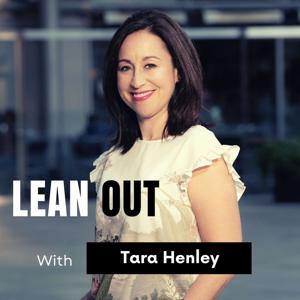


Tonight, in London, England, a group of writers and thinkers will gather to debate a key cultural question: “Is woke dead?” And tomorrow, the inaugural conference of a new centre for social science kicks off. Academics will gather to talk through the intellectual origins of this movement and its politics, psychology, and driving interests, to establish it as a field of study, and to delve into overlooked topics and perspectives. Our guest on the program is the man behind both of these events, and he joins us to share his thinking on the post-progressive era — and what it might mean for Canada going forward.
Eric Kaufmann is a Canadian academic and author. He’s a professor of politics at the University of Buckingham, and director of its Centre of Heterodox Social Science.
You can find Tara Henley on Twitter at @TaraRHenley, and on Substack at tarahenley.substack.com
As Tara puts the finishing touches on her next book, on declining trust in the media, we wanted to bring you a few encore interviews that have helped shaped her thinking on the media — including today’s episode.
Since the election win for Donald Trump, we are seeing a renewed sense of scorn for Republican voters in parts of the mainstream media. The Guardian’s Rebecca Solnit, for example, writes in her column that “our mistake was to think we lived in a better country than we do.” Our guest on today’s program doesn’t see it that way. She’s a lefty Democrat who moved from Park Slope, Brooklyn, to Trump country — and she writes that the gift of living in a rural county is that “I keep finding reasons to see my political adversaries as human.”
Larissa Phillips runs the Honey Hollow farm in upstate New York. She’s the founder of the Volunteer Literacy Project, and her essay for The Free Press is, “Whatever Happens, Love Thy Neighbor.”
You can find Tara Henley on Twitter at @TaraRHenley, and on Substack at tarahenley.substack.com
As Tara puts the finishing touches on her next book, on declining trust in the media, we wanted to bring you a few encore interviews that have helped shaped her thinking on the media — including today’s episode.
The period often referred to as The Great Awokening is winding down now, and we’re starting to get a better understanding of what happened. My guest on today’s program argues that we have seen these kinds of social justice-styled movements before in American history — and that they are in fact driven by, as he puts it, “frustrated erstwhile elites condemning the social order that failed them and jockeying to secure the position they feel they deserve.”
Musa al-Gharbi is an American sociologist and an assistant professor in the School of Communication and Journalism at Stony Brook University. His book is We Have Never Been Woke: The Cultural Contradictions of a New Elite.
You can find Tara Henley on Twitter at @TaraRHenley, and on Substack at tarahenley.substack.com
In this turbulent era, for many of us there is a moment in every day when anxiety steals over us. We pause, and in that rare period of stillness, the fears surface — but sometimes, if we’re lucky, so too do the reflections and the insights. Our guest on today’s program has called this interlude “the catastrophe hour,” and she’s just published a book of essays that beautifully captures it.
Meghan Daum is an American essayist and the host of the Unspeakable Podcast. Her latest book is The Catastrophe Hour.
You can find Tara Henley on Twitter at @TaraRHenley, and on Substack at tarahenley.substack.com
Now that the dust has settled on the Canadian federal election, we can pause for a moment and assess where we are at as a country. What lessons can we take from the election results? Our guest on today’s program has been polling Canadians for decades — and he says that we are now a divided nation.
Darrell Bricker is the CEO of Ipsos Public Affairs. He’s also the author of six bestselling books, including, with John Ibbitson, The Big Shift: The Seismic Change in Canadian Politics, Business, and Culture and What It Means for Our Future. His recent essay for The Hub is titled “Victory Without Unity.”
You can find Tara Henley on Twitter at @TaraRHenley, and on Substack at tarahenley.substack.com
One of the most polarizing policies of the pandemic era was the extended school closures. Critics have now been validated, with The New York Times reporting that “a growing body of research shows that pandemic school closures came at a steep cost to students” — while doing little to stop the spread of the virus. Our guest on the program today is a journalist who’s just published a deep dive investigation into the flawed decision-making behind these controversial closures.
David Zweig is an American journalist and author. His latest book is An Abundance of Caution: American Schools, the Virus, and a Story of Bad Decisions.
You can find Tara Henley on Twitter at @TaraRHenley, and on Substack at tarahenley.substack.com
Last week, at the English-language election debate, the leaders’ press scrums were cancelled after tensions between media outlets erupted into shouting in the press room, and other confrontations. This incident is a distressing example of how polarized our press has become. But of course, we are not the first country to grapple with this dynamic. My guest on the program today lived through political polarization in Venezuela — and he has some important lessons to share.
Victor Febres is an Atlanta-based journalist and videographer. He’s also a former activist for peaceful conflict resolution.
You can find Tara Henley on Twitter at @TaraRHenley, and on Substack at tarahenley.substack.com
As election day nears, Lean Out continues to highlight the issues that we feel have not received enough attention in this news cycle. My guest on the program today is a physician who serves on death review committee with Ontario’s Office of the Chief Coroner. In today’s emotional interview, we take a close look at medical assistance in dying, or MAiD — and her concerns about how it’s playing out in practice.
Ramona Coelho is a family doctor, and a founding member of Physicians Together With Vulnerable Canadians. She’s a senior fellow at the Macdonald-Laurier Institute, and has just co-edited a new book, titled Unravelling MAiD in Canada: Euthanasia and Assisted Suicide as Medical Care.
You can find Tara Henley on Twitter at @TaraRHenley, and on Substack at tarahenley.substack.com
We are in the final week of the Canadian federal election. And while Trump’s trade policy has received much coverage this election season, our housing crisis has been less of a priority for the legacy press. We at Lean Out happen to think this is the most important issue in the country — and so, on today’s program, our guest is here to answer every question you’ve ever had on the crisis, and how we got here.
Mike Moffatt is a Canadian economist, the founding director of the Missing Middle Initiative, and co-host of the Missing Middle podcast. Mike Moffatt returns to the program, today on Lean Out.
This episode was taped last week, before the release of the Liberal platform and the Conservative announcement of its housing plan.
You can find Tara Henley on Twitter at @TaraRHenley, and on Substack at tarahenley.substack.com
For some time now, writers and thinkers outside this country have been asking me: What happened to Canada? Our guest on the program today has asked this question himself, in a new book that takes a deep dive into our decline — and arrives just in time for the federal election.
Tristin Hopper is a columnist and reporter for The National Post, based in Victoria, B.C. His new book is Don’t Be Canada: How One Country Did Everything Wrong All At Once.
You can find Tara Henley on Twitter at @TaraRHenley, and on Substack at tarahenley.substack.com
From the publisher's feed
2,277 Listeners
2,889 Listeners
902 Listeners
796 Listeners
36 Listeners
617 Listeners

3,837 Listeners
181 Listeners
804 Listeners
816 Listeners

18 Listeners
8,430 Listeners
12 Listeners
32 Listeners

60 Listeners