
Sign up to save your podcasts
Or

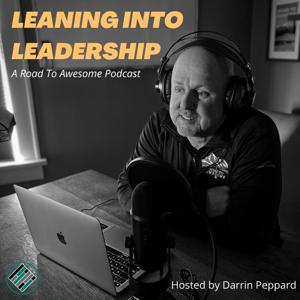


What does it mean to face life's most difficult storms rather than run from them? And how do the challenges we experience personally shape the way we show up as leaders?
In this powerful and deeply personal episode of Leaning Into Leadership, Darrin sits down with longtime friend, fellow University of Wyoming doctoral graduate, and retired high school principal Craig Woodall, author of Overcome.
Craig spent 30 years in public education, including his final 12 years as principal of Rocky Mountain High School in Colorado. But his story extends far beyond the hallways of a school. On September 11, 2001, Craig lost his brother in the attacks on the World Trade Center. That unimaginable loss, followed by the deaths of his parents and years of navigating grief, fundamentally changed his understanding of himself, his purpose, and his leadership.
In this conversation, Craig shares how he learned to stop avoiding grief and begin building the capacity to carry it. He talks about the daily habits that helped him rediscover purpose, the importance of taking care of ourselves while caring for others, and why some of the most powerful leadership lessons come from our most difficult experiences.
Darrin and Craig also explore the difference between two kinds of leaders: the "Here I Am" leader who enters a room focused on themselves, and the "There You Are" leader who enters looking for opportunities to connect, support, and serve others.
The conversation takes another powerful turn as Craig shares the buffalo analogy that helped shape his philosophy of overcoming adversity. Rather than running from an approaching storm, buffalo turn toward it and face it together. It's a lesson Craig carried into his leadership during the COVID-19 pandemic, when a strong school culture, consistent communication, and a shared sense of purpose helped his staff navigate extraordinary uncertainty.
Craig also reflects on two unforgettable stories from Overcome: his visits to Guantanamo Bay to observe proceedings related to the September 11 attacks, and the final phone conversation he shared with his brother just days before the tragedy.
This is an episode about grief, certainly. But more than that, it's about hope, resilience, relationships, and the extraordinary capacity we have to grow through the challenges life puts in front of us.
In this episode, you'll hear about:
A leadership takeaway
Every person we lead is carrying something. We may not know what it is, and we may never fully understand its weight. But when we shift our attention from making our presence known to recognizing the needs of those around us, we create the conditions for connection, trust, and stronger leadership.
The goal isn't to avoid every storm. It's to build the capacity, relationships, and courage to face those storms together.
Connect with Craig Woodall
Visit CraigWoodall.com to learn more about Craig, explore his book Overcome, watch his TED Talk, and connect with him about speaking, coaching, and leadership.
Connect with Darrin
Learn more about leadership coaching, speaking, and the Road to Awesome at DarrinPeppard.com.
Episode sponsors
HeyTutor: Supporting schools and districts with high-impact, in-person tutoring in literacy and math. Learn more at HeyTutor.com.
Curriculum Leadership Institute (CLI): Helping districts create aligned, sustainable curriculum systems through collaborative, relationship-based partnerships. Learn more at cliweb.org
What happens when the person everyone turns to needs someone to turn to?
October is National Principals Month, and Dr. Darrin Peppard is sharing one of his most personal leadership stories yet.
During his years as a high school principal, Darrin once drove to the top of a mountain for one simple reason: he needed somewhere he could scream. It was a moment that reflected the emotional weight of leading a school, carrying confidential information, navigating difficult decisions, and supporting an entire school community.
In this special solo episode of Leaning Into Leadership, Darrin explores the invisible backpack every principal carries and the important leadership work that often goes unnoticed.
Drawing from his experiences as a principal, superintendent, and leadership coach, he shares three examples of the unseen work that makes an extraordinary difference: the conversations nobody hears, the decisions nobody understands, and the moments nobody remembers.
But this episode isn't simply about the challenges of principalship. It's a celebration of the relationships, collective purpose, and privilege that make the work so meaningful.
In this episode:
A question worth considering:
Who helps the person everybody else comes to for help?
Whether you're currently serving as a principal, supporting school leaders, or remembering a principal who made a difference in your life, this episode is a reminder that some of the most important leadership work happens when nobody is watching.
During National Principals Month, take a moment to recognize someone whose leadership has made a difference. Be specific. Tell them about the conversation, decision, or moment that mattered.
They might have no idea you still remember.
This Episode Is Sponsored by Curriculum Leadership Institute and by HeyTutor
We're excited to welcome Curriculum Leadership Institute (CLI) as our newest sponsor!
Darrin has personally worked with CLI twice during his educational leadership career, first as a principal and again as a superintendent. CLI partners with districts to build sustainable curriculum systems, strengthen alignment, and provide teachers with the clarity they need to succeed.
New districts can receive a 5% discount on their first year of service by mentioning Leaning Into Leadership.
Learn more at https://cliweb.org or email [email protected].
HeyTutor partners with schools and districts to provide high-impact, in-person tutoring in literacy and math, helping students receive targeted academic support.
Learn more at https://heytutor.com.
Keep leaning into leadership, keep making a difference, and have a Road to Awesome week!
What separates a group of talented people from a truly great team?
In Episode 301 of Leaning Into Leadership, Darrin sits down with executive coach and global educator Gaby Jordan to explore what it takes to build what she calls champion teams—teams grounded in connection, honesty, trust, and a shared commitment to something bigger than themselves.
Gaby brings a unique perspective to leadership. After practicing law for 15 years in Midtown Manhattan, she transitioned into business, executive coaching, and eventually education. Today, her work spans corporate organizations and educational settings from K–12 schools to universities. Across all of those environments, she has discovered one important constant: leadership is always human work.
Darrin and Gaby dig into why relationships matter so much to team performance. High-performing teams don't have to be made up of best friends, but people do need to know one another, understand one another, and be willing to have honest conversations. Gaby shares how learning someone's origin story—and even acknowledging our own vulnerabilities and imperfections—can completely change the way a team works together.
They also explore one of the biggest threats to healthy teams: the stories we create in our own heads. Darrin shares a story from his school leadership days about a colleague whose "thinking face" he initially interpreted as frustration or disagreement. That simple misunderstanding becomes a powerful example of how easily assumptions can turn into narratives—and how those narratives can quietly damage relationships.
Gaby introduces the idea of Champion Conversations, intentional conversations designed to help people address unresolved issues rather than carrying old transgressions forward. She explains why teams sometimes need to clear the air before they can create a meaningful vision for the future.
The conversation also explores agency, vulnerability, silos, honesty, and why leaders can't simply pile a new strategy on top of unresolved team dysfunction. As Gaby puts it, you can't create a compelling future "on top of the muck."
If you lead a school, district, organization, department, or leadership team, this episode is an important reminder: the strength of your strategy will always be limited by the strength of the people trying to execute it together.
In this episode:
Connect with Gaby Jordan
Learn more about Gaby's education work through Human Better EDU. You can also find Gaby on LinkedIn and Instagram and learn more about her corporate leadership work through Source Elements Group.
This Episode Is Sponsored by HeyTutor
HeyTutor partners with schools and districts to provide high-impact, in-person tutoring in literacy and math, giving students targeted support alongside the work of classroom teachers.
Learn more about how HeyTutor can support student learning in your school or district at HeyTutor.com
Three hundred episodes.
For this milestone edition of Leaning Into Leadership, I wanted to do something different. Instead of looking back by myself, I invited six incredible leaders—and people who have become an important part of my own journey—to join me for a conversation about leadership, growth, relationships, and the people who help us become better versions of ourselves.
Joining me for Episode 300 are Jason Ryan, Katie Kinder, Todd Bloomer, Bentli Lewis, Josh Tovar, and Brandon Beck. Every one of them has appeared on the podcast before. More importantly, every one of them has challenged me, encouraged me, taught me something, and sharpened the iron along the way.
We start with a simple question: What are you learning about yourself as a leader right now?
That opens the door to a powerful conversation about moving from solving problems to developing people, learning to lead through influence, building leadership capacity in others, staying close to the work, adapting when circumstances change, and recognizing that leadership is always a long game.
We also dig into how leaders continue to sharpen the iron. The answers range from surrounding yourself with people who challenge your thinking and intentionally building your network, to reading, listening, taking care of yourself, prioritizing family, staying curious, seeking feedback, and remaining humble enough to recognize that what worked yesterday may not work tomorrow.
Then we turn the tables and look back at Leaning Into Leadership itself. Each guest shares an episode or conversation that has stayed with them—and hearing what they chose reminded me why I started this podcast in the first place.
What began as an opportunity to grow a platform has become something much more meaningful: a place for me to learn alongside some remarkable people.
We close with a lightning round built around three questions every leader should consider:
That final question may be the most important one of the entire episode.
Leadership rarely happens alone. Somewhere along the way, someone sees something in us. They encourage us. Challenge us. Open a door. Invite us to the table. Sometimes they see our potential before we do.
Episode 300 is a celebration, but it is also a reminder of what leadership is really about: people, relationships, growth, and creating opportunities for others to become more than they thought possible.
To every guest who has joined me over these first 300 episodes and every listener who has spent part of their week with Leaning Into Leadership—thank you.
300 down. We’ve got way more than 300 to go.
This Episode Is Sponsored by HeyTutor
HeyTutor partners with schools and districts to provide high-impact, in-person tutoring in literacy and math, giving students targeted support alongside the work of classroom teachers.
Learn more about how HeyTutor can support student learning in your school or district at HeyTutor.com
What if flourishing at work didn't require a massive life overhaul?
In this episode of Leaning Into Leadership, Darrin welcomes back speaker, educator, and soon-to-be author Phil Januszewski for a high-energy conversation about happiness, relationships, and the small choices that can make demanding work more sustainable.
After 20 years in the classroom, Phil stepped away from teaching to speak full time — or, as he puts it, he “quit my job to help other teachers not quit theirs.” His work now takes him across the country helping educators and other service-oriented professionals feel less tired and more inspired. His upcoming book, Too Damn Happy, draws from his own experiences along with positive psychology to explore practical ways people can flourish even in challenging, high-pressure environments.
Darrin and Phil dig into the idea of “building in the good stuff.” Instead of waiting until after work or the weekend to do the things that fill us up, Phil challenges us to intentionally put small moments of joy into the workday itself. A song. A quick walk outside. A two-minute conversation with someone you care about. These aren't dramatic changes; they're small deposits that can make the work more sustainable.
They also explore what happens when we give away our natural gifts. Those gifts aren't necessarily talents you can put on a résumé. They might be humor, listening, cooking, creativity, energy, calm, or simply being willing to admit when you don't know something. When we bring more of ourselves into our work and share those gifts with others, we create opportunities for connection — and give others permission to do the same.
That leads Darrin and Phil into an important conversation about relationships. We spend a lot of time talking about educators getting to know their students, but relationships are a two-way street. When adults appropriately allow others to see who they really are, they can open the door for trust, vulnerability, and genuine human connection. And students are also watching how the adults around them interact with one another.
Phil closes by sharing how he's leaning into leadership right now: giving his gifts and connecting great people with other great people. For him, leadership isn't simply about doing his own work well. It's about helping other people thrive too.
In this episode:
This Episode Is Sponsored by HeyTutor
HeyTutor partners with schools and districts to provide high-impact, in-person tutoring in literacy and math, giving students targeted support alongside the work of classroom teachers.
Learn more about how HeyTutor can support student learning in your school or district at HeyTutor.com
What if resistance isn’t something leaders need to overcome?
In Episode 298 of the Leaning Into Leadership Podcast, Darrin sits down with Becca Silver, CEO and founder of The Whole Educator and author of The Resistance Solution, for a powerful conversation about what is really happening when educators push back against change.
Becca challenges leaders to stop labeling people as “resistant” and instead recognize that resistance is an experience people move through. Rather than relying on compliance, consequences, or generic advice like “build better relationships,” she introduces a human-centered approach that helps leaders understand the unmet needs underneath resistance.
Drawing from her own experience as a teacher who resisted change, an instructional coach who initially struggled to create change, and eventually a leadership coach who became highly effective at working with educators experiencing resistance, Becca shares the research behind her five Catalyst Mindsets.
Darrin and Becca explore:
One of the most practical takeaways from the conversation is something leaders can implement immediately: be crystal clear about what is non-negotiable and where people have the agency to exercise their professional judgment.
When people understand where they have voice, choice, and the ability to make a meaningful impact, leadership can begin moving beyond compliance and toward genuine ownership.
Becca also shares how she is personally leaning into leadership through shared leadership—developing others to lead the work rather than building something that depends entirely on her.
Connect with Becca SilverBecca Silver is the CEO and founder of The Whole Educator and author of The Resistance Solution. Her work helps instructional coaches and educational leaders navigate resistance to change through a human-centered approach.
Learn more about Becca, The Resistance Solution, the Resistance Solution Community, her Book Study Facilitator Training, and the Coaching the Whole Educator podcast through The Whole Educator.
This Episode Is Sponsored by HeyTutor
HeyTutor partners with schools and districts to provide high-impact, in-person tutoring in literacy and math, giving students targeted support alongside the work of classroom teachers.
Learn more about how HeyTutor can support student learning in your school or district at HeyTutor.com
What happens when growth doesn’t solve your problems—but actually makes them bigger?
In Episode 297 of Leaning Into Leadership, Dr. Darrin Peppard sits down with entrepreneur, Marine veteran, and business leader Ron Nussbaum for a conversation about entrepreneurship, problem solving, challenging the status quo, and what it really takes to build something that matters.
Ron shares the story behind BuilderComs and the realization that changed the way he thought about growth: if you scale your organization without solving the problems already inside it, you’re simply scaling those problems too.
That lesson reaches far beyond entrepreneurship.
Darrin and Ron explore why leaders sometimes become comfortable tolerating things that are merely “okay,” why challenging the status quo doesn’t mean changing everything, and why one of the most important questions a leader can ask is, “What problem are we actually trying to solve?”
Ron also shares the thinking behind Ask a Shop Owner, a platform designed to give small business owners actionable guidance and accountability when they encounter real-world business challenges.
The conversation closes with an important reality about entrepreneurship and leadership: every meaningful pursuit involves trade-offs. The goal isn’t to avoid them. It’s to intentionally choose the trade-offs that move you toward the life, organization, and outcomes you actually want.
In this episode:
Ron’s challenge is simple but powerful: don’t accept a problem simply because everyone else has learned to live with it. Challenge it. Solve it. Then scale the solution.
This Episode Is Sponsored by HeyTutor
HeyTutor partners with schools and districts to provide high-impact, in-person tutoring in literacy and math, giving students targeted support alongside the work of classroom teachers.
Learn more about how HeyTutor can support student learning in your school or district at HeyTutor.com
What if the goal of great teaching isn’t getting students to comply, but creating the conditions where they genuinely want to engage?
In this episode of Leaning Into Leadership, Dr. Darrin Peppard sits down with educator, school leader, author, and founder of Terry Leadership Group, Kendall Terry, for a conversation about what happens when schools stop focusing primarily on what teachers are doing and start paying closer attention to what students are actually learning.
Kendall shares his experience helping build Clayton-Bradley Academy from its early years and the unique opportunity that came with designing educational systems from the ground up. Rather than inheriting decades of “this is how we’ve always done it,” Kendall and his colleagues were able to ask a different question: What does research tell us about how the brain learns, and how should that change what happens in our classrooms?
That question eventually helped shape the Learning-Centered School Model, where the learner—not the teacher, the curriculum, or the test—is at the center of instructional decisions. Kendall and Darrin explore what that actually looks like in practice, from something as simple as welcoming every student into the classroom to making learning relevant, interactive, safe, and meaningful.
The conversation then moves into Kendall’s BRACE Framework, five conditions that can dramatically influence engagement:
B — Belonging: Students and teachers need to know they are valued and that their voices matter.
R — Relevance: Learners need to understand what they are learning and why it matters.
A — Agency: Students and teachers need autonomy, ownership, and opportunities to create, try, fail, and try again.
C — Challenge: Learning should stretch people appropriately while providing the support necessary for success.
E — Engaged Response: Learning isn’t a one-and-done transaction. Students need opportunities to respond, receive feedback, revisit their thinking, and continue until they reach mastery.
For school leaders, BRACE also provides another powerful opportunity: shifting classroom walkthroughs and instructional feedback away from simply looking for compliance and toward identifying the conditions that produce authentic student engagement. As Kendall points out, students can comply because they don’t want to get in trouble—or they can engage because the learning experience is meaningful enough that they actually want to participate. Those are very different outcomes.
Darrin and Kendall also dig into SMART habits and an important leadership truth: goals give us a destination, but habits determine whether we ever get there.
The challenge isn’t deciding that we want greater belonging, stronger engagement, or improved student achievement. The challenge is determining what we will actually do on a Tuesday afternoon when the fire drill just ended, students are bouncing off the walls, and the big strategic goal is the furthest thing from our minds.
Kendall suggests starting incredibly small. Want to increase belonging? Build the habit of greeting every student by name. Then connect the behavior to a predictable trigger: If class is beginning, then I will greet every student who enters my classroom by name.
Small. Repeatable. Intentional.
And over time, potentially transformational.
Finally, Kendall answers the question every guest on Leaning Into Leadership receives: How are you leaning into leadership right now?
His answer is one every leader should consider: listening.
Not listening while preparing the next response. Not listening long enough to tell someone why they're wrong. But listening with the genuine intention of understanding another person's perspective, experience, and situation.
Because belonging begins when people believe their voice actually matters.
In This EpisodeConnect with Kendall Terry:
Terry Leadership Group and the BRACE resources are available through Kendall's website, and he also shares his work on LinkedIn, Facebook, and Instagram.
This Episode Is Sponsored by HeyTutor
HeyTutor partners with schools and districts to provide high-impact, in-person tutoring in literacy and math, giving students targeted support alongside the work of classroom teachers.
Learn more about how HeyTutor can support student learning in your school or district at HeyTutor.com.
Leadership comes with expectations. Be steady. Be available. Support your people. Make the difficult decisions. Carry the pressure.
But what happens when the person everyone looks to for support needs support too?
In this episode of Leaning Into Leadership, Darrin sits down with organizational psychologist, former therapist, and author Melissa Doman for an honest and practical conversation about leadership mental health, communication, emotional intelligence, and what sustainable leadership actually looks like.
Melissa challenges the idea that leaders should simply absorb the pressure that comes with the role. Instead, she argues that organizations need to humanize leaders and give them permission to communicate their needs, acknowledge their capacity, and access the same resources they are expected to provide for everyone else.
Darrin and Melissa explore the popular idea that “leaders eat last” and why servant leadership can become unhealthy when leaders interpret service as sacrificing themselves for everyone around them. Sustainable leadership requires leaders to care for others and manage their own emotional and cognitive capacity.
The conversation gets incredibly practical as Melissa introduces the idea of communicating capacity — being able to tell your team honestly where you are and what you can realistically handle. If you're operating at 30 or 40 percent on a particular day, your team doesn't need you to pretend you're at 100. They need clarity about what they can expect from you.
Darrin and Melissa also discuss:
Melissa also shares insights from her book Cornered Office: Why We Need to Talk About Leadership Mental Health, along with the upcoming Wiley re-release of Yes, You Can Talk About Mental Health at Work: Here's Why (and How to Do It Really Well).
And because this is Leaning Into Leadership, the conversation somehow also includes salsa dancing, inflatable Velociraptors, ABBA…and the first-ever Chewbacca impression in podcast history. Well, at least in this podcast's history.
About Melissa DomanMelissa Doman is an organizational psychologist, former therapist, author, speaker, and consultant who teaches organizations, leaders, and employees the practical skills needed to talk about mental health, communication, and team dynamics at work. Her clients range from global organizations to professional sports teams, mid-sized companies, and small businesses around the world.
Her latest book, Cornered Office: Why We Need to Talk About Leadership Mental Health, explores the often-overlooked emotional and cognitive realities of leadership and challenges organizations to include leaders in conversations and systems designed to support workplace mental health.
Connect with MelissaWebsite: melissadoman.com
LinkedIn: Melissa Doman
Instagram: @thewanderingmel
Mentioned in This EpisodeCornered Office: Why We Need to Talk About Leadership Mental Health (link)
Yes, You Can Talk About Mental Health at Work: Here's Why (and How to Do It Really Well) — re-releasing from Wiley on September 29, 2026.
This Episode Is Sponsored by HeyTutor
HeyTutor partners with schools and districts to provide high-impact, in-person tutoring in literacy and math, giving students targeted support alongside the work of classroom teachers.
Learn more about how HeyTutor can support student learning in your school or district at HeyTutor.com.
The beginning of a school year brings an energy that is hard to match. The building is ready, staff members are reconnecting, priorities have been established, and leaders walk into the year determined to lead with clarity and intentionality.
Then the students arrive.
Suddenly the emails pile up, meetings fill the calendar, parent concerns emerge, staffing challenges demand attention, and the urgent begins competing with what you said mattered most.
In this special midweek episode of Leaning Into Leadership, Dr. Darrin Peppard challenges school leaders to recognize five common leadership traps that can quietly derail their best intentions during the opening weeks of school.
Darrin explores why presence is different from simply being visible, how the Cycle of Chaos can allow urgency to rewrite your priorities, and why communicating something once doesn't mean people understand it. He also challenges leaders to stop solving every problem themselves and to recognize the important difference between giving someone grace and simply avoiding a necessary conversation.
The five leadership traps:
At the center of the episode is one question every school leader should consider as the year gets underway:
Is the leader you're becoming in September the same leader you intended to be at the beginning of August?
You probably won't lose your school year in the first few weeks. But you can establish habits during those weeks that you'll spend the rest of the year trying to undo.
Be intentional now. Protect what matters. And go have a Road to Awesome year.
In This Episode“You can't recognize what you never see.”
“Your calendar is going to tell the truth about your priorities long before your mission statement ever will.”
“Don't confuse delivering a message with creating clarity.”
“Don't just solve problems. Build problem-solvers.”
“What we tolerate teaches a lesson.”
“Clarity early is almost always easier than making corrections later.”
This Episode Is Sponsored by HeyTutorHeyTutor partners with schools and districts to provide high-impact, in-person tutoring in literacy and math, giving students targeted support alongside the work of classroom teachers.
Learn more about how HeyTutor can support student learning in your school or district at HeyTutor.com.
From the publisher's feed

2,260 Listeners
10,760 Listeners

2,413 Listeners

123 Listeners

21,046 Listeners

13,968 Listeners

1,205 Listeners

2,421 Listeners

1,733 Listeners

441 Listeners

640 Listeners

1,433 Listeners
636 Listeners
176 Listeners

8,466 Listeners