
Sign up to save your podcasts
Or

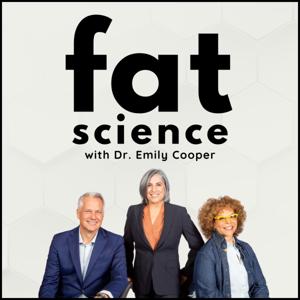

This week on Fat Science, Dr. Emily Cooper, Mark Wright, and Andrea Taylor answer listener questions about BMI cutoffs, weight cycling, metabolic adaptation, trauma, GLP-1 differences, and why some people gain weight on ultra-low calories. Dr. Cooper explains what’s really happening inside the metabolic system and why individualized treatment—not dieting—creates sustainable change.
Key Questions Answered
Key Takeaways
1. BMI rules don’t reflect metabolic truth.
A mid-20s BMI can still mask significant dysfunction, especially with weight cycling.
2. Weight cycling is metabolically stressful.
Repeated losses/regains increase visceral fat, insulin abnormalities, and cardiovascular risk.
3. Obesity is a multi-hormonal disease.
Most people need pharmacology plus sleep, fueling, and movement—not restrictive dieting.
4. Metabolic adaptation is powerful.
Under-fueling lowers thyroid output, suppresses fat-burning, and slows metabolism dramatically.
5. After bariatric surgery or on GLP-1s, frequency matters.
Frequent, nutrient-dense snacks protect muscle, metabolism, and energy.
6. Set point changes with better signaling.
GLP-1s and related therapies help the brain accurately detect weight and lower the defended level.
7. Genetics often mean lifelong support.
Family patterns of obesity usually indicate long-term need for metabolic medication.
8. Trauma amplifies metabolic risk.
Childhood trauma disrupts IGF-1, sleep, stress hormones, insulin, leptin, and ghrelin.
9. Medications can cause weight gain—GLP-1s can help counteract it.
Steroids, mood meds, hormonal agents, and more can be metabolically unfriendly.
10. “Newer” isn’t always better.
Some people respond poorly to the GIP component in Mounjaro/Zepbound. Individual physiology rules.
Dr. Cooper’s Actionable Tips
Notable Quote
“Obesity isn’t a willpower problem. It’s a metabolic disease, and when the underlying system is supported, the body finally has permission to change.” — Dr. Emily Cooper
Links & Resources
Fat Science is your source for breaking diet myths and advancing the science of true metabolic health. No diets, no agendas—just science that makes you feel better. The show is informational only and does not constitute medical advice.
 View all episodes
 By Dr Emily Cooper

4.6
154154 ratings
This week on Fat Science, Dr. Emily Cooper, Mark Wright, and Andrea Taylor answer listener questions about BMI cutoffs, weight cycling, metabolic adaptation, trauma, GLP-1 differences, and why some people gain weight on ultra-low calories. Dr. Cooper explains what’s really happening inside the metabolic system and why individualized treatment—not dieting—creates sustainable change.
Key Questions Answered
Key Takeaways
1. BMI rules don’t reflect metabolic truth.
A mid-20s BMI can still mask significant dysfunction, especially with weight cycling.
2. Weight cycling is metabolically stressful.
Repeated losses/regains increase visceral fat, insulin abnormalities, and cardiovascular risk.
3. Obesity is a multi-hormonal disease.
Most people need pharmacology plus sleep, fueling, and movement—not restrictive dieting.
4. Metabolic adaptation is powerful.
Under-fueling lowers thyroid output, suppresses fat-burning, and slows metabolism dramatically.
5. After bariatric surgery or on GLP-1s, frequency matters.
Frequent, nutrient-dense snacks protect muscle, metabolism, and energy.
6. Set point changes with better signaling.
GLP-1s and related therapies help the brain accurately detect weight and lower the defended level.
7. Genetics often mean lifelong support.
Family patterns of obesity usually indicate long-term need for metabolic medication.
8. Trauma amplifies metabolic risk.
Childhood trauma disrupts IGF-1, sleep, stress hormones, insulin, leptin, and ghrelin.
9. Medications can cause weight gain—GLP-1s can help counteract it.
Steroids, mood meds, hormonal agents, and more can be metabolically unfriendly.
10. “Newer” isn’t always better.
Some people respond poorly to the GIP component in Mounjaro/Zepbound. Individual physiology rules.
Dr. Cooper’s Actionable Tips
Notable Quote
“Obesity isn’t a willpower problem. It’s a metabolic disease, and when the underlying system is supported, the body finally has permission to change.” — Dr. Emily Cooper
Links & Resources
Fat Science is your source for breaking diet myths and advancing the science of true metabolic health. No diets, no agendas—just science that makes you feel better. The show is informational only and does not constitute medical advice.

9,216 Listeners
8,633 Listeners
336 Listeners

145 Listeners

617 Listeners

48 Listeners

1,640 Listeners
393 Listeners
380 Listeners

1,198 Listeners

231 Listeners

200 Listeners

364 Listeners

87 Listeners

82 Listeners