
Sign up to save your podcasts
Or

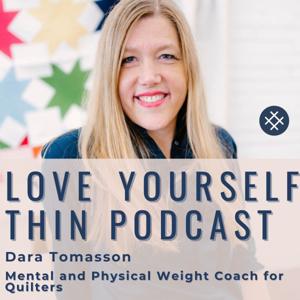


When was the last time you felt truly happy—without having to earn it, work toward it, or complete a task first? In this episode, Dara Tomasson, The Quilters Coach, challenges the idea that happiness is something we must deserve or achieve. She walks through a powerful mindset shift that will change the way you approach joy and self-worth.
You'll also hear an inspiring win from a member of Dara's Love Yourself Thin program, who is learning to break free from blame and shame around weight regain. Plus, Dara introduces a simple yet transformational tool to help you stop living with conditional happiness and start embracing the present moment.
What You'll Learn in This Episode:
The "When I ___, then I ___" trap and how it keeps you from true happiness
Why waiting for external achievements (weight loss, retirement, awards) to feel happy doesn't work
A personal story about how Dara's attachment to home renovations affected her self-worth
How shifting your perspective can bring immediate relief and joy
The power of curiosity and self-compassion in your weight loss and life journey
Member Win Spotlight: A Love Yourself Thin member shares her breakthrough: instead of blaming her husband or shaming herself for regaining weight, she is exploring the deeper emotional connections behind it. This shift in perspective has been life-changing!
Join the Love Yourself Thin Membership: If you're ready to lose weight in a way that lasts—without dieting, shame, or relying on willpower—this membership is for you. You'll learn life coaching tools to:
Understand why you overeat or feel exhausted all the time
Set boundaries and say yes to yourself without guilt
Achieve permanent weight loss through mindset and emotional work
Break free from the cycle of external validation
Special Offer: Dara offers a 20 pounds down in 90 days money-back guarantee when you join Love Yourself Thin.
Final Thoughts: Happiness doesn't come after the weight loss, the promotion, or the renovation—it starts with the way you think about yourself right now. Take control of your happiness today, and stop waiting for an external milestone to give you permission to feel good.
Resources & Links:
Join Love Yourself Thin here: www.daratomasson.com/LYT
Follow Dara on Instagram: www.instagram.com/daratomasson
Listen to more podcast episodes: www.daratomasson.com/podcast
If you loved this episode, be sure to subscribe and leave a review! Let's help more quilters break free from conditional happiness and start truly living.
Do you ever find yourself reaching for food out of habit rather than hunger? Maybe you're out running errands, and that Dairy Queen calls your name, or after a long, exhausting day, you hear the Ben & Jerry's in your freezer beckoning. These foods may offer comfort in the moment, but they aren't solving the real problem.
In this episode, Dara Tomasson, professional quilter turned life coach, explores why breaking up with food is so difficult. She shares insights into the neuroscience behind cravings, why our brains are wired to seek food for comfort, and how we can start rewiring those patterns for lasting change.
Dara also discusses how patterns of emotional eating develop, how they impact our health, and what we can do to create healthier habits. She highlights a client's inspiring journey—at 63, she has lost 70 pounds and is continuing her transformation by shifting her mindset and reducing self-shame.
If you've ever wondered why it's so hard to break free from food cravings, this episode is for you.
Key Topics Covered:The emotional connection to food and why certain foods seem irresistible
How our brain's "motivational triad" influences eating habits (seeking pleasure, conserving energy, avoiding pain)
Why food cravings are often about comfort, not hunger
How refined sugars and processed foods create a cycle of dependency
Real-life client success story: overcoming emotional eating and losing weight sustainably
Understanding how habits are formed and why willpower alone isn't enough
The importance of rewiring subconscious patterns to create lasting change
Dara has created a helpful worksheet to guide you through breaking free from emotional eating. Download it from the show notes to get the most out of this episode!
Click HERE to access the worksheet
Next Steps:Join the Love Yourself Thin Membership: Get personalized coaching and weekly support to help you transform your relationship with food and weight loss.
One-on-One Coaching: If you're ready for deeper support, Dara has opened up four spots for private coaching. Don't wait—these spots fill up fast!
Subscribe & Review: Love the podcast? Subscribe and leave a review to help more quilters find this valuable content.
Website: daratomasson.com
Instagram: @daratomasson
Facebook: Love Yourself Thin Community
Let's break up with food patterns that no longer serve us and start creating a life where we feel in control, confident, and free!
In part two of this series on GLP-1 drugs, Dara Tomasson discusses alternatives to these weight loss medications and shares her concerns about their long-term effects. She emphasizes the importance of addressing the root causes of weight gain through life coaching tools rather than seeking quick fixes with unknown side effects.
Key Points
✅GLP-1 is a naturally occurring hormone produced in the small intestine that regulates blood sugar, digestion, and appetite
✅While GLP-1 medications may be effective, we don't yet have long-term data on potential side effects
✅Historical weight loss drugs have often had dangerous consequences that weren't immediately apparent
✅Basic weight loss science: weight loss occurs when we're in a calorie deficit, allowing our bodies to use stored fat
✅Starting at age 30, we lose 3-5% of muscle mass, which accelerates during menopause (sarcopenia)
✅Many weight issues stem from unhealthy coping strategies developed in childhood
Dara's Two Key Messages
✨Your worth as a human has nothing to do with your body size, appearance, or material possessions ✨
🫶🏻Your relationship with yourself is key to making lasting changes 🫶🏻
Visit Dara's website to learn more or book a call - https://daratomasson.com/contact/
Get this week's worksheet HERE: https://podcast.daratomasson.com/worksheets
Check out more episodes HERE: https://podcasts.apple.com/ca/podcast/the-quilters-coach-podcast/id1579236362
Welcome to the Quilter's Coach Podcast!
In this thought-provoking first installment of a two-part series, Dara Tomasson explores the controversial topic of GLP-1 weight loss medications (Ozempic, Wegovy, Mounjaro). While acknowledging potential benefits, she shares her concerns about unknown long-term side effects and discusses why addressing the root causes of weight gain may be more effective than medication.
Key Points
✨GLP-1 is a naturally occurring hormone produced in our gut and brain that helps regulate blood sugar, digestion, and appetite
✨GLP-1 medications are synthetic versions that last longer in the body than natural GLP-1
👍🏻Benefits include potential weight loss (15-20% of body weight), improved blood sugar control, and reduced cardiovascular risk
👎Concerns include unknown long-term effects, cost ($400-$1000/month), muscle loss, and various side effects
Dara's Perspective as a Weight Loss Coach
Many weight issues stem from emotional causes rather than just physical ones. Weight gain can be linked to trauma, lack of coping strategies, and difficulty processing emotions. Sustainable weight loss comes from addressing underlying issues and learning healthy coping mechanisms Dara advocates for "losing weight with your brain" rather than quick pharmaceutical fixes.
Resources Mentioned
Interview with author John Harry about Ozempic dangers
Mel Robbins' interview with a female hip replacement surgeon - watch it HERE
Webinar on the history of weight loss drugs
Coming Next
Part 2 will cover how to improve gut health and develop mental skills and tools for sustainable weight management.
Grab this week's episode worksheet HERE
Watch this episode on YouTube
Check out other episodes HERE
Welcome to The Quilter's Coach Podcast, Episode 192! Today, we're challenging the common misconception of self-care as only external indulgences like manicures and shopping. True self-care is about taking care of your whole self—physically, emotionally, and mentally. If you've ever felt unsure about what real self-care looks like, you're in the right place.
Understanding Self-CareSelf-care is the intentional act of nurturing yourself in a holistic way. We are complex humans with physical, emotional, and mental needs. Ignoring any of these areas leads to suffering. Athletes excel not just because of physical training but because they have mental coaches who equip them with strategies and tools.
Are you giving yourself the same level of care and strategy?
The Velcro Problem: Taking on Others' BurdensMany caregivers and nurturers struggle with setting boundaries, leading to emotional exhaustion. We often take on other people's problems as if they are our own, weighing ourselves down.
Example: A client shared how she now has a dedicated space to sit and process emotions instead of carrying them like Velcro.
The challenge: How much responsibility do you have for others versus yourself?
Redefining Self-Care: A Powerful DefinitionSelf-care is treating yourself with the same unconditional love and gentle attention you'd give a baby. Just as you wouldn't shame a baby for being hungry or tired, you shouldn't judge yourself for needing rest, emotional support, or nourishment.
Ask yourself: Are your self-care habits meeting your deeper needs or just covering up stress?
Good, Better, Best: Evaluating Your Self-Care ChoicesLike shopping categories, self-care can be evaluated as good, better, best. Example: Shopping may be a good self-care tool, but does it provide deep, lasting nourishment? The more we question and refine our self-care strategies, the more clarity we gain on what truly works.
Practical Self-Care Strategies Physical Self-Care:Prioritize sleep (7-8 hours)
Eat nourishing foods (Example: kiwis for digestive health)
Wear comfortable, well-fitting clothes
Engage in relaxing activities like soaking in a hot tub or sitting by a fire
Nurture friendships and social connections (Example: Choosing to engage in conversations at a basketball tournament rather than sitting alone)
Set boundaries to avoid overextending yourself emotionally
Create small moments of joy (Example: Playing with a child at the playground)
Learn new things (Example: Exploring YouTube University, reading fiction, trying a new hobby)
Reduce gossip and negativity—observe how you handle difficult situations
Take an inventory: Are you managing your thoughts well, or are you stuck in unhelpful patterns?
Reflect on the past few days:
Did you get enough sleep?
How much screen time did you have?
Did you have meaningful conversations?
Did you nourish yourself physically, emotionally, and mentally?
Be an observer of your habits—no judgment, just awareness.
Think of your time like money—if each hour were a dollar, how would you spend it?
Prioritize:
Sleep (7-8 hours)
Eating well
Emotional connection
Mental stimulation
Balance is key. Where are you overspending or neglecting?
The more you invest in your self-care, the more it will improve your overall well-being. Like a garden, what you nourish will grow. Prioritize your own mental, emotional, and physical health.
Self-care isn't selfish—it's essential for living the life you truly want.
Take a moment today to reflect: What does real self-care look like for you?
Thank You for Listening!
If this episode resonated with you, share it with a friend!
Want more tools and support? Join my membership and learn how to truly care for yourself.
Follow me on Instagram for more insights on self-care and personal growth.
Do you struggle with understanding or even identifying your emotions? Many of us grew up without truly learning about emotions—we were handed a cookie when we felt sad or told to stop crying instead of being taught how to process feelings. In this episode, Dara Tomasson breaks down true emotions vs. indulgent (or pretend) emotions and why this distinction is key to creating permanent change in your life.
You'll learn: ✅ What emotions actually are (hint: they're just vibrations in your body!) ✅ The difference between real emotions and indulgent emotions like overwhelm, worry, and procrastination ✅ How indulging in emotions keeps you stuck in patterns of self-sabotage ✅ Why emotional intelligence is the key to weight loss, overcoming perfectionism, and stopping people-pleasing
Dara also shares a powerful client story of a woman who went from self-sabotage to stepping into her dream of starting a long-arm quilting business—all by learning how to process her emotions.
If you've ever found yourself stress-eating, scrolling mindlessly, or avoiding difficult decisions, this episode will give you the tools to start truly feeling instead of reacting.
👉 Ready to break free from emotional overwhelm and create lasting change? Book a call with Dara and take the next step toward transformation.
Listen now and start winning with your emotions today! 🎧✨
Watch this video on YouTube
Grab this week's worksheets HERE
Listen to more episodes HERE
Are you constantly filtering yourself, worried about what others might think? In this powerful episode, Dara Tomasson addresses the common struggle of dimming your light to make others comfortable.
Key Points:
Why we learned to prioritize others' opinions
The myth of "hurting others' feelings"
How self-sabotage protects us from shining
Understanding emotional adulthood
Featured Tool: The Balance Scale Exercise Learn how to:
Identify your positive achievements
Recognize self-sabotaging behaviors
Understand your "happiness set point"
Break free from people-pleasing patterns
Client Example:
Successful quilter holding back from sharing: • Finished projects • Travel adventures • Weight loss journey All due to fear of making others feel bad
Important Truth: You cannot control how others feel. Their reactions are based on their thoughts, not your actions.
March 2025 Theme: Overcoming Overwhelm April 2025 Theme: Building Resilience & Conflict Resolution
Ready to stop dimming your light? Book a free 25-minute coaching session with Dara.
Remember: What you think about yourself matters more than what others think about you.
Watch this video on YouTube
Get the worksheets HERE
Listen to more episodes HERE
Do you feel like you've given up on making goals? Maybe you're afraid to set them because checking in on them feels even worse than not making them at all. If you've ever felt stuck in a cycle of setting goals, losing motivation, and then beating yourself up over it—this episode is for you!
Dara dives into the real reason we struggle with goal-setting and follow-through, why self-sabotage happens, and how to break the cycle. Plus, she's sharing a powerful mindset tool that has helped countless women inside her membership finally take control of their goals without fear, shame, or overwhelm.
🔹 What You'll Learn in This Episode: ✔️ Why we avoid setting goals (and how to shift that mindset) ✔️ The "Board Meeting" strategy to manage your inner dialogue and fears ✔️ How to set realistic goals that actually stick ✔️ A simple 4-day challenge to help you rebuild trust in yourself
💡 Game-Changing Takeaway: Your brain needs direction, just like a GPS. When you set a goal, you're telling your brain where to go. But roadblocks will always pop up—it's how you respond to them that makes the difference. Learn how to work with your brain instead of against it!
🎯 Ready to Take Action? Decide on one small goal for the next four days. Maybe it's doodling for five minutes, cutting fabric for a quilt, or drinking more water. Track it, check in, and notice which "board members" (self-doubt, fear, motivation, commitment) try to take over. Awareness is the first step to real change!
📣 Let's Connect! ✨ Tag Dara on social media and share your biggest takeaway from this episode! ✨ Got a question? Send it in—she might answer it in a future episode!
🎧 Hit play and let's start setting goals without the self-sabotage! 🚀
Bonus: Want to go deeper? Sign up for Dara's FREE class to learn how to rewire your brain and change your inner dialogue for good. Join the Facebook group to get a code and join the Masterclass for free.
🎧 Listen now and start leading yourself with kindness!
Grab this week's episode worksheet HERE.
Watch this episode on YouTube.
Checkout other Episodes HERE.
Episode 188. Being the Boss
Do you find yourself being overly self-critical, always focusing on what you did wrong? In this episode, Dara Thomason helps you reframe your inner dialogue by exploring the kind of boss you are to yourself—and the kind of boss you want to be.
In This Episode:✅ Why our brains naturally focus on the negative—and how to shift that pattern ✅ Different boss styles (from workaholic to empathetic) and how they shape your self-talk ✅ How to stop being a micromanager, perfectionist, or critic to yourself ✅ Actionable steps to become a supportive, encouraging boss in your own life
💡 Key Takeaway: The way you speak to yourself impacts your confidence, motivation, and success. Changing your internal leadership style can transform your quilting, your creativity, and your life.
Bonus: Want to go deeper? Sign up for Dara's FREE class to learn how to rewire your brain and change your inner dialogue for good. Join the Facebook group to get a code and join the Masterclass for free.
🎧 Listen now and start leading yourself with kindness!
Grab this week's episode worksheet HERE.
Watch this episode on YouTube.
Checkout other Episodes HERE.
From the publisher's feed

11,880 Listeners

2,081 Listeners

6,681 Listeners

53 Listeners

369,372 Listeners

218 Listeners
122 Listeners

3,628 Listeners
330 Listeners
219 Listeners

29,036 Listeners

45 Listeners
325 Listeners
365 Listeners

2,101 Listeners