Mama Shrink
Download on the App Store

Mama Shrink episodes

  • Episode 1: Navigating Adoption During Covid-19
    I never thought that I would be starting the Soulful Adoption Podcast with this topic. The whole world is dealing with COVID-19 today but not everyone is dealing with it like you are. If you are a mom-to-be going through the adoption process during this pandemic, please know that you are not alone.
    I want to be able to support you through this time by offering you my own personal knowledge and psychological training through this podcast. We are going to talk about dealing with adoption during COVID-19. I hope that it helps you in some way to put you on the right track during this trying time.
    23 min
  • Episode 33 - Mama Shrink Signing Off
    In this episode I am going to be sharing with you some big changes that are about to happen on Mama Shrink.
    I have loved doing the Mama Shrink podcast. It has been fulfilling and wonderful sharing advice with people. I’ve also gotten great feedback that it has helped them and that means the world to me. However, in the online world, it’s important to focus on a particular niche. And for the longest time I’ve wanted to serve Mamapreneurs. But, it’s also a flooded market and a very hard market to reach.
    This is why I’ve decided to switch gears this 2020 and it’s what I’m going to talk about in this episode of Mama Shrink.
    16 min
  • Episode 32 - How To Help Someone with an Eating Disorder
    This is the last part of my series on discussing eating disorders. Today I’ll be talking about helping and supporting people in recovery. I’ll be discussing things that you should and shouldn’t say to people who have gone through an eating disorder
    Most often than not, people don’t get what recovering individuals are going through. People in recovery are very sensitive to their environment, things that are being said to them, and comments they receive. And that’s the part I really want to focus on today because it can set back people in recovery.
    If you are a parent, partner or child of someone who has an eating disorder - these are the things that are important to remember.
    23 min
  • Episode 31 - Do you have an eating disorder?
    Last week, I talked about my journey with anorexia nervosa. Today, I’m going to dive into the 3 main types of eating disorders and give you some facts, statistics and things to look out for in case you have an eating disorder or know someone who does.
    Eating disorders are all really about control. It’s also about feeling anxiety, loneliness and depression. Food becomes a source of comfort and it’s always there. Once you have an eating disorder, you’ll always have it.
    I am doing a 3-part series on this topic because I know that it is super important. I want people to be aware of it and be able to help themselves or people who they know who have these disorders.
     
    [06:50] The hardest part of recovery is when the symptoms aren’t active because everyone in the outside world thinks you’re okay but inside that’s not how it feels.
    [10:31] A lot of people who suffer with eating disorders don’t ever get help or they die before they get help.
    [11:45] 30 million people of all ages and gender suffer from an eating disorder in the United States. Once every 62 minutes, 1 person dies because of an eating disorder.
    [12:42] Anorexia Nervosa has the highest mortality rate out of any eating disorder. Bulimia Nervosa and Binge Eating Disorder also have high mortality rates. Suicide is a very common thing that can happen with an eating disorder.
    [12:46] 13% of women over age 50 engage in eating disorder behavior.
    [16:58] 5.5% of women and 4% of men in the military have an eating disorder.
    [20:40] 1 in 5 people with anorexia will die of suicide.
    [26:09] 50% of people who have an eating disorder usually have other psychological diagnosis.
    [28:33] DSM 5 says that for Anorexia is #1 you need to have the restriction of energy intake leading to signifcant low body weight and the context of age, sex, developmental history and physical health. Significantly low weight is defined as weight that is less than minimally normal for children and adolescents and less than is minimally expected.
    [33:50] #2 criteria is the intense fear of gaining weight or becoming fat or persistent behavior that interferes with weight gain even though their body weight is low.
    [36:04] #3 criteria is the disturbance in the way one's body shape is experienced and undue influence of body weight or shape in their self evaluation and the lack of recognition or seriousness of the current low body weight.
    [41:21] Anorexia can be the restricting type or the binge-purge type.
    [43:00] Bulimia Nervosa definition in the DSM 5 is you have to have both of the following: 1) eating in a discrete period of time within usually a 2 hour period an amount of food that is larger than what most individuals would eat in a similar period of time under the same circumstances. 2) this is followed by a lack of control during the episode and compensatory behavior to prevent weight gain.
    [50:09] Bulimia is more common than anorexia.
    [51:39] Bulimia usually has a comorbid disorder. There’s a higher rate of people with bulimia with substance abuse disorder, mostly alcohol.
    [53:35] Binge Eating Disorder in the DSM 5 is eating a discrete period of time in any 2 hour period as an example amount of food that’s definitely larger than what most people would eat in one period of time under similar circumstances. There’s a lack of control in the eating or how much one is eating.
    Links:
    When food is love by Geneen Roth
     
    Mama Shrink Website
    Mama Shrink Facebook Page
    1 hr 9 min
  • Episode 30 - My Journey with Anorexia Nervosa
    For the longest time, I've been wanting to do a series of episodes on eating disorders. I specialize in this area and I feel that it’s a really important topic that I want to give it justice. If you’ve listened to some of my previous episodes, you already know that I’ve dealth with an eating disorder, too, when I was young. I know how it feels and I want to share it’s seriousness with you in the hopes that you or someone you know will be helped or will reach out for help.
    This will be a 3 part episode where I talk about my journey, the different eating disorders and some statistics. I want to share with you things like what you need to do to help someone, what you shouldn’t say, the setbacks people with eating disorders experience, and so much more.
    57 min
  • Episode 29 - 20 Things I have Learned in my 48 Years of Life
    As a tribute to my upcoming birthday, I've decided to talk about growing older. In my 48 years of existence on this planet, I share with you the top 20 things I have learned in my journey in hopes that it will get you to think about your own life, what you value, and things to consider as you move forward in life.
    Before I start the episode, I’d like to let you know that I am looking for just a few people to do some 1-on-1 coaching. We will dive deep and change your mindset. If you are interested you can email me at [email protected]
    54 min
  • Episode 28 - Do I Need A Psychologist or a Coach
    In today’s episode, I am going to be sharing with you my thoughts on a question I have gotten so many times: What is the difference between working with a psychologist or working with a coach. I am a clinical psychologist and a coach, so I can speak to both.
    30 min
  • Episode 27 - Good and Bad Therapy, How to Find the Right Therapist
    Mamas, it is so important to have a good therapist for yourself and for your children if either of you need one. You shouldn’t settle for a therapist just because it’s convenient, they accept your insurance, or because you’ve worked with someone forever and don’t want to start over. 
    In this episode, I’m going to be talking to you about what you need to look for and what you should want regarding good and bad therapy.
    I’m going to give you some tips and tricks on how to know for sure that the therapist you’re seeing is the right fit for you and your family.
    [03:33] A lot of times, people continue going to the same therapist because they get comfortable but they’re not really finding that they’re having any change. On the other hand, therapists also have to check how much a client is working in the session or in between sessions. 
    [04:01] A good therapist should educate people on what therapy is and it is not something that should last forever. The goal of therapy is to get the person functioning again, to help them find relationships outside the therapy session that serve them, and to find ways for them to improve. This could vary depending on the person and what diagnosis they are suffering with.
    [06:18] It’s important to know the differences between psychiatrists, clinical psychologists, licensed social workers and the qualifications they have. 
    [14:38] Some red flags to look for in therapy: if you are not feeling safe and comfortable; you should feel heard - make sure the person is listening to you; you should feel that your therapist likes you; you shouldn’t leave a session feeling embarrassed or shameful; make sure that progress is being made; you want someone who challenges you a bit; make sure that the therapist is professional; the therapist should not seem anxious, distracted or uncomfortable; the therapist should be approachable and you feel completely supported by them; you should not feel like you have to take care of your therapist; your therapist should never touch you or cross a boundary where they are sexual towards you or wanting you to be their friend.
    [24:47] The things you should look for in a therapist that will be a good fit for you: ask other people what they’ve heard about the practice; go to a someone who specializes in what you need help on; look at the therapeutic style they have; make sure  your personality fits your therapist, that you are connected with them and you feel safe with them; you need to see results; their feedback should be practical and emotionally in tune with what you’re dealing with; therapist needs to understand what you are looking for and what you want to accomplish; you want to feel they’re listening to you and that they remember your story; you should feel like they’re interested in what you’re saying; you should be able to ask questions to them; they should check in on your progress; they believe you can change; make sure they’re keeping up with new treatments, evidence and continuing education; you want to feel safe in their office; therapist should have done their own therapy. 
    [39:16] What to look for in therapists for children: make sure they have experience working with children; that they are connected with your child’s pediatrician should any issues arise; parents have to participate in therapy with their children. 
     
    Links:
    Places to find therapists online:
    Psychology Today
    48 min
  • Episode 26 - The Eight Year Old Blues
    In today’s episode I want to jump into something a little less heavy than what I’ve talked about last week. Well, it’s still kind of heavy for me and maybe for some of you moms listening.
    Lately, I’ve noticed a huge transition in my son from turning 7 to 8. But in this episode I will discuss how to not take this personally (even as I cry in the bathroom) and understand the changes they are going through as well. I will end today by discussing warning signs of something more serious that may be going on with your child.
    33 min
  • Episode 25 - Raising Children of a Different Race
    I want to dive deeper into the topic of adoption and share with you my own experience of raising children of a different race than my husband and I. This often gets flagged as a very heated topic and I have resisted discussing it until now, but it important and I always I promise to be authentic with all of you.
    Let me start by saying, “Happy Gotcha Day Thomas!” In honor of my favorite day, the discussion of adoption is perfect. After listening to the episode, please let me know your thoughts and if you know anyone who has gone through transracial adoption, please have them listen to this and connect with me.
    [03:30] “Gotcha Day”, adoptive parents often celebrate this as it is the day we bring our child home. It is also the day a birth mother decided to do the most brave, courageous, selfless, and loving thing. To me, adoption is the most loving gift in the whole world. It is important for your child who has been adopted to know what a happy day Gotcha Day is. In our home we celebrate Gotcha Day as the day ever.
    [06:50] Different states have different processes for adoption. Waiting periods can vary from a few days to a month. We have to go through a whole range of things in the adoption world that are pretty scary and uncertain.
    [09:33] If you are a parent raising children of a different race, you have to do your homework, be sensitive and be culturally aware of the differences. We attended a camp for white parents raising African American children. There were pros and cons to this experience. I would say the greatest pro was that our boys got to see other families that looked like ours. The whole concept of the camp was beautiful but the conversations got a bit sad and hurt my heart sometimes.
    [15:40] When you are a transracial family, you sometimes don’t know where you fit in. We have faced racial discrimination and for people to say that racism does not exist, does not know what they are talking about.
    [18:30] Then besides the skill color issue, we also have to deal with language people use with our family. Such as saying the term “real parents” instead of “birth parents.” If you are an adoptive parent and you hear someone ask, “Who are their real parents?”, that crushes your soul. Please be mindful of terms and language that is used when speaking to adoptive parents.
    [19:35] People think and want to believe that color doesn’t matter. I also want to believe this to be true, but unfortunately it does matter. As my kids grow older I have to teach them how it is to be a brown man in this world and all the things that come along with it. We are lucky because we live in a small community with a good group of friends where people look out for our boys, but the reality is that our community is mostly white.
    [21:25] One of the things I’ve had to do a lot is politely educate others. We get asked a lot if our boys are twins, “real” brothers, and where they’re from. And as our boys are growing up and understanding more, I need to protect them more. The sad thing is that if my boys were white, I don’t think anyone would ask these questions.
    [24:23] We’ve experienced covert racism. We do still live in a world of white privilege and believe that we still need to talk about the fact that race is an issue.
    [28:30] With adoption you always have to be ready with questions, reactions or things that might happen with your children. It’s a beautiful journey but also a hard one. It is not easy to see your child want to wipe away their brown skin and be white.
    [35:05] One of the things my husband and I want to create is a place where white parents raising kids of a different race can get together and feel accepted. We know how important that is for our children. If you know of anyone who is also looking for this, please have them reach out to me.
    Links:
    Mama Shrink Website
    Mama Shrink Facebook Page

    44 min

About Mama Shrink

From the publisher's feed

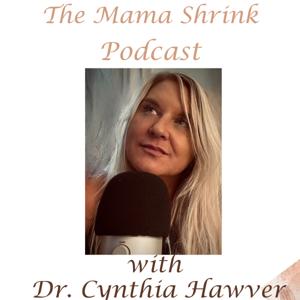
The Mama Shrink Podcast with Dr. Cynthia Edwards-Hawver is a raw, compassionate space for midlife moms navigating the emotional aftermath of toxic relationships, narcissistic abuse, divorce, and burnout.

More shows like Mama Shrink

Change My Relationship by Karla Downing

Change My Relationship

30 Listeners

Trauma Survivors Unite: Christian Emotional Recovery by Rachel Leroy

Trauma Survivors Unite: Christian Emotional Recovery

18 Listeners

The Covert Narcissism Podcast by Renee Swanson, Bleav

The Covert Narcissism Podcast

37 Listeners

Breaking Free from Narcissistic Abuse by Kerry McAvoy, Ph.D.

Breaking Free from Narcissistic Abuse

294 Listeners

The Divorce Course Podcast by Laura & Lyn

The Divorce Course Podcast

31 Listeners