Mama Shrink
Download on the App Store

Mama Shrink episodes

  • Setting Boundaries

    Have you ever found yourself constantly drained by toxic relationships and overwhelmed by obligations? What if I told you there's a powerful tool to change this cycle?

    In this episode, I dive deep into the art of setting boundaries – a crucial skill that can transform your life. I share my insights as a certified coach, discussing why people often resist change and explaining the connection between boundaries and self-worth. I emphasize that we teach people how to treat us, and provide practical examples of how to communicate assertively, even in challenging situations. We explore the fear of disappointing others, the liberating power of saying "no," and the need to prioritize our own well-being.

    The essence of setting boundaries lies in understanding that we can't change others, only ourselves. People tend to resist change unless forced by a significant event. We need to teach others how to treat us by modeling self-respect. Assertiveness, can often be mistaken for aggressiveness, which is actually not true. A crucial aspect is to consider both our rights and the other person's rights when being assertive. Setting boundaries isn't about being selfish; it's about preserving our energy and mental health. Practicing the art of saying "no" and evaluating requests that life places on us daily, can lead to life-changing transformations.

    Boundaries are the essential foundation for balanced relationships and self-care. Learning to set boundaries involves becoming assertive and recognizing that disappointment from others is natural but manageable. The impact of setting boundaries can be profound, leading to healthier connections and a more fulfilling life.

    Key Takeaways:

    • Boundaries teach others how to treat us and are essential for self-care.
  • Saying "no" with grace and love can be transformative.
  • Prioritize your time, delegate, and stop overcommitting to prevent burnout.
  • Resources:

    Take my free mama burnout quiz at www.mamaburnout.com and become part of my mama community. Once you’re on my list, you will receive valuable weekly content designed for moms over 40 and you’ll be in the know on how we can work together.

    39 min
  • Mama Self-care

    Have you ever wondered how you can truly take care of your kids while ensuring you

    take care of yourself?


    Hey there, it's Dr. Cynthia Hawver, and in this episode of the Mama Shrink Podcast,
    we're diving deep into a topic close to my heart: self-care for moms. As a licensed
    psychologist and certified coach, I've witnessed the struggles many moms face in
    balancing their own needs with the demands of parenting. While I'm not a substitute for
    mental health care, I'm here to discuss the importance of self-care and how it directly
    impacts your role as a mother.


    We kick off by exploring the guilt that often accompanies the idea of self-care. Contrary
    to popular belief, prioritizing self-care isn't selfish; it's essential. I emphasize that
    neglecting self-care can actually lead to feelings of emptiness and burnout, inadvertently making us less available to our loved ones.


    During this episode, I tackle the issue of judgment and perfectionism. I share my
    personal experiences as a people pleaser, highlighting the fear of what others might
    think when we take time for ourselves. The truth is, it's okay to let go of these worries
    and set a positive example for our children by demonstrating self-care.


    We then delve into the challenge of finding time for self-care. I urge you to question the
    belief that there's never enough time and to recognize that if something truly matters, we can make time for it. Remember, making time for self-care doesn't have to be
    complicated – even a few minutes a day can make a significant difference.


    The heart of this episode centers around the concept that self-care is a gift – a gift to
    yourself, your family, and your children. The key takeaways are simple but profound: let
    go of guilt and "shoulds," challenge the fear of judgment, release the pursuit of
    perfection, and make even small moments of self-care a priority. By nurturing yourself,
    you're setting the foundation for a healthier and happier life for both you and your loved ones.


    Key Takeaways:

    • Self-care is not selfish; it's necessary for effective parenting.
  • Guilt, judgment, and perfectionism often hinder self-care efforts.
  • Making time for yourself is a crucial aspect of maintaining well-being.
  • Small acts of self-care can have a significant impact on mental health.
  • Prioritizing self-care sets a positive example for your children.
  •  

    Resources:

    • Mama Shrink Podcast: Website
  • Dr. Cynthia Haver's Website: http://www.drcynthiah.com
  • Connect with Dr. Cynthia on Social Media: @dr.cynthiahawver
  • National Suicide Crisis Line https://988lifeline.org/ - Call or text 988 if you're struggling with a mental health issue.
  • 26 min
  • I’m Back!

    Have you ever experienced a time when life's challenges piled up like a mountain, leaving you wondering how you'd ever find your way back to happiness?

    In this episode, I'm sharing my personal journey through a tumultuous period that reshaped my entire life. As I reflect on my return to podcasting after a hiatus marked by unexpected events, I delve into the raw and unfiltered emotions I experienced during this time. From the onset of the COVID pandemic, which forced my psychology practice online, to the loss of my beloved rescue dog and, heartbreakingly, the passing of my mother and stepfather within months of each other, life threw its weight at me. I take you through my reactions, my responsibilities, and the toll it all took on my mental, emotional, and physical well-being.

    Amid the chaos, my initial optimism about navigating the pandemic transformed into a mental and emotional rollercoaster. The challenges of homeschooling, adapting my practice, and facing the reality of my own mortality after losing my mother to Covid lead to a total life makeover and taking big action. I share my experience with 3rd degree burnout and how I am getting out. This episode also touches on the lasting impact Covid has taken on our children.

    The loss of my mother hit me like a tidal wave. Despite the complicated relationship we shared, the shock of losing my mom was profound. And on top of this loss was the inability to grieve as I was thrust into the daily demands of caring for my step father, caring for my  young children, and running my psychology practice.

    Through these trials, I've learned valuable lessons that I hope to share. Firstly, seeking therapy is essential, especially during times of grief and difficulty. Secondly, self-care is crucial, but there are moments when it may not be enough to combat burnout. Lastly, recognizing the need to address burnout and seek support is a powerful step towards recovery. The hard part is that burnout is hard to see while you are in it and that is where I come in. It took a life crisis of losing my mom to wake me up and start healing from the decade of burnout I had been living in.


    Key Takeaways:

    • Life's challenges can accumulate, leading to burnout and emotional strain.
  • Grief and loss impact everyone differently, even in complex relationships.
  • Balancing care for oneself, family, and work requires acknowledging personal limits and seeking help.
  • Burnout is not easy to recognize and comes in three stages. Older moms starting a family are at higher risk due to being in a “sandwich situation.”
  •  

    Resources:

    • For skilled therapy during times of difficulty, consider seeking help from licensed professionals.
  • If you want to see which stage of burnout you are in, take my free burnout quiz at www.mamaburnout.com
  • 26 min
  • I’m Back!
    Have you ever experienced a time when life's challenges piled up like a mountain, leaving you wondering how you'd ever find your way back to happiness?
    In this episode, I'm sharing my personal journey through a tumultuous period that reshaped my entire life. As I reflect on my return to podcasting after a hiatus marked by unexpected events, I delve into the raw and unfiltered emotions I experienced during this time. From the onset of the COVID pandemic, which forced my psychology practice online, to the loss of my beloved rescue dog and, heartbreakingly, the passing of my mother and stepfather within months of each other, life threw its weight at me. I take you through my reactions, my responsibilities, and the toll it all took on my mental, emotional, and physical well-being.
    Amid the chaos, my initial optimism about navigating the pandemic transformed into a mental and emotional rollercoaster. The challenges of homeschooling, adapting my practice, and facing the reality of my own mortality after losing my mother to Covid lead to a total life makeover and taking big action. I share my experience with 3rd degree burnout and how I am getting out. This episode also touches on the lasting impact Covid has taken on our children.
    The loss of my mother hit me like a tidal wave. Despite the complicated relationship we shared, the shock of losing my mom was profound. And on top of this loss was the inability to grieve as I was thrust into the daily demands of caring for my step father, caring for my  young children, and running my psychology practice.
    Through these trials, I've learned valuable lessons that I hope to share. Firstly, seeking therapy is essential, especially during times of grief and difficulty. Secondly, self-care is crucial, but there are moments when it may not be enough to combat burnout. Lastly, recognizing the need to address burnout and seek support is a powerful step towards recovery. The hard part is that burnout is hard to see while you are in it and that is where I come in. It took a life crisis of losing my mom to wake me up and start healing from the decade of burnout I had been living in.
     
    Key Takeaways:
    Life's challenges can accumulate, leading to burnout and emotional strain.
    Grief and loss impact everyone differently, even in complex relationships.
    Balancing care for oneself, family, and work requires acknowledging personal limits and seeking help.
    Burnout is not easy to recognize and comes in three stages. Older moms starting a family are at higher risk due to being in a “sandwich situation.”
     
    Resources:
    For skilled therapy during times of difficulty, consider seeking help from licensed professionals.
    If you want to see which stage of burnout you are in, take my free burnout quiz at www.mamaburnout.com
    22 min
  • Episode 7: Three People You Need In Your Corner When Going Through Adoption
    Going through the adoption process isn’t a walk in the park. It can be filled with stress and anxiety as much as it is filled with excitement and love. And to help you navigate this journey, you will need to have certain individuals who can help you.
     
    This is why I truly recommend having three important people in your “team” to help you go through the process as informed, knowledgeable, and sane as possible.
     
    If you’re going through the adoption process right now, already start to ook for people who are willing to support you in this journey. It won’t be easy because you’ll need to fit the right fit for you. So starting early will be an advantage on your end.
     
     
    When you are
    [04:14] The first thing that is really important is to have a good paediatrician. Look for someone who is willing to accept you and a partner that is relevant to be part of this process with you.
    [05:24] Having a paediatrician can help you be properly informed about medical things that can come up during the adoption process.
    [10:15] The second person you will also need is a counselor or psychologist for yourself that understands infertility and adoption. Someone you can talk to and process your feelings with and help manage your stress and anxiety during this time will be beneficial for you. This person can really help support you in your journey.
    [13:13] The third person is a private attorney outside of an agency or, if you’re working with an attorney, having another attorney who specializes in adoption law in your team is important too. Adoption is a risk. Someone who can help you understand and guide you through the laws and rights you need to know.
    [15:47] When you are going through this you are going to be emotionally vulnerable and wanting that baby very much. Having these three people to guide you will be so important. You are emotionally invested going through this and you need people on the outside who understand the other pieces of it that are hard to look at when all you want to do is become a mom.
     
    5 Day intensive workshop on Navigating the Adoption Process
    Cynthia Hawver Website
    Cynthia Hawver Facebook
    Cynthia Hawver Instagram
    Cynthia Hawver LinkedIn
    Freebie: The Top 10 Things I Wish I Knew When Going Through The Adoption Process
    20 min
  • Episode 6: Open vs Closed Adoption
    One of the most important concepts you need to think about when going through the adoption process is whether you want to have an open adoption, semi-open adoption, or a closed adoption. In this episode, I’m going to tell you more about it and the things you need to consider when making this very big decision.
    You need to figure out what’s going to be best for you, your child and your future. This is not an easy decision for people to make because there are so many considerations you have to think about. It’s important that you are able to equip yourself with knowledge. Read and research about it.
    It’s okay to have mixed feelings, that’s normal. But make sure that what you’re going to be okay with the choice you make because it’s going to affect you and your child for the rest of your lives.
    [07:47] In open adoptions, there’s a fully open relationship. It can be really open where you have contact with the birth mother or family on a weekly basis. The birth and adoptive families can exchange information, names, or even have get togethers.
    [07:59] In semi-open adoptions the communications go through an agency such as sending letters, pictures every so often. Sometimes, it can also be arranging meetings with the birth family. The agency serves as the mediator between the birth and the adoptive families.
    [09:43] Closed adoptions are more rare. There is no contact, information or exchange of anything. This mostly happens with international adoptions because children come from orphanages. But sometimes there are records on the birth family. Closed adoptions are very rare now in the United States.
    [11:14] At the time of the adoption, birth mothers or parents decide what kind of adoption they want. This was originally not put into law until recently. It has been made part of the legal adoption agreement because some people have not been following through on what they originally talked about.
    [12:25] You have to know what kind of adoption you’re okay before adopting. Adoption and agreements are not a one size fits all model.
    [14:50] Some moms love open adoption but there are others who feel threatened by it. On the adoptive mom’s side, it can cause a lot of stress and anxiety.
    [16:15] If you are entering into the adoption process, ask yourself what your comfort level is. You have to be okay with what you decide on because you have to live with it for the rest of your life.
    [17:57] Adoption is always a journey. What’s best for a child may be different from a teenager’s. This is why we can’t have a one size fits all model because you want to have an open dialogue with your child as they grow.
    [18:40] It is important to tell your child that they are adopted and to talk about it from a young age.
    [20:42] In closed adoptions, sometimes there’s really no choice. It’s either they were adopted internationally or their birth mother or parents don’t want to have contact. It is sometimes hard for children as they grow older to not be able to understand where they come from, who their birth parents are. At some point, a child will want to know these things. To not have this information is really difficult on a kid.
    [21:56] In a semi open adoption, there are also cases where birth mothers don’t want to have contact. WIth agencies, you can still send photos and they still keep records of the birth mother’s name. At some point in time, your child will still have access to that.
    [24:20] As a psychologist, I come from the philosophy of everyone has a different experience because we’re always going to look out for the best interest of the child.
    [25:28] When you are filling out the paperwork and deciding what adoption is right for you, consider these things - what you want and what you are comfortable with. These are hard decisions to make. Read about it, do you research, and make your decision based on the best interest of the child.
     
    Links:
    Cynthia Hawver Website
    Cynthia Hawver Facebook
    Cynthia Hawver Instagram
    Cynthia Hawver LinkedIn
    30 min
  • Episode 5: Coping With Mother’s Day
    Mother’s day is just around the corner. In this episode I want to talk about coping with this holiday through infertility, through the decision to adopt, and the waiting process. I know that this can be a very difficult time. It can feel overwhelming because it is a big reminder of something we really want to have in our life but don’t.
    The biggest message I can leave you with today is that it’s okay to have feelings of grief and allow yourself to feel the space to have these emotions, in whatever way feels best to you.
    29 min
  • Episode 4: What type of adoption is the best fit for you?
    There are several different ways you can go about adopting a child. You need to go within yourself and see what feels right for you. There are many things to consider so try to base it on what feels best for you.
    In this episode, my goal is to get you more in touch with the best adoption type for you and how you go about figuring that out. Adoption is a lifelong commitment and you want to make sure it’s the right one.
    29 min
  • Episode 3: How do you know if Adoption is Right For You?
    One of the questions I get quite often when working with women dealing with infertility is how to know if they’re ready to adopt. It’s a hard question. A very personal decision and one that no one truly should or can answer but you.
    In this episode, I want to give you things to think about and hold in your heart as you make the decision of adoption. I’ll be sharing how I got to this decision and things that I’ve heard from women on how they got to that point.
    22 min
  • My Adoption Journey
    In today’s podcast I want to share my personal story and journey of how I became a mama. This is my holiday miracle and the one I am always most grateful so it felt good to share it on a day that is all about giving thanks. I get asked a lot about adoption, especially when people see us with our 2 boys who are both bi-racial.
    55 min

About Mama Shrink

From the publisher's feed

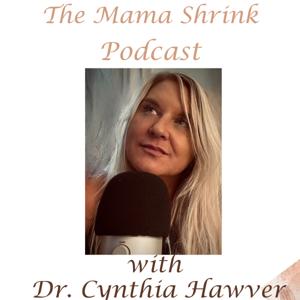
The Mama Shrink Podcast with Dr. Cynthia Edwards-Hawver is a raw, compassionate space for midlife moms navigating the emotional aftermath of toxic relationships, narcissistic abuse, divorce, and burnout.

More shows like Mama Shrink

Change My Relationship by Karla Downing

Change My Relationship

30 Listeners

Trauma Survivors Unite: Christian Emotional Recovery by Rachel Leroy

Trauma Survivors Unite: Christian Emotional Recovery

18 Listeners

The Covert Narcissism Podcast by Renee Swanson, Bleav

The Covert Narcissism Podcast

37 Listeners

Breaking Free from Narcissistic Abuse by Kerry McAvoy, Ph.D.

Breaking Free from Narcissistic Abuse

294 Listeners

The Divorce Course Podcast by Laura & Lyn

The Divorce Course Podcast

31 Listeners