
Sign up to save your podcasts
Or

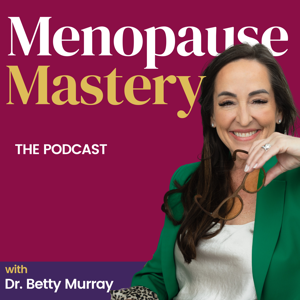


Based on Podcast App listening data
Concerned about the effects that iodine, bromine, fluoride, and chlorine can have on your body? In this episode, Betty explains the halides and their connection to thyroid function.
Nowadays, this topic is fairly common. For instance, we need to detox from them, we need to take doses of iodine, fluoride in toothpaste is bad for you, and chlorine in the pool can cause thyroid dysfunction. But what's really true and what's a misconception?
Betty will answer all of these questions and more by showing you what the most accurate research says. By using her broad experience as a functional medicine practitioner, you'll finally know everything you need to know about halides and the thyroid.
Get ready for a heaping dose of knowledge and clarity! After this episode, you'll know that halides are not so scary after all.
Key Topics/Takeaways:
Memorable Quotes:
"I wouldn't worry a ton of chlorine other than the effect of it on your skin and lungs." (8:02, Betty)
"Bromine is number one an essential nutrient, and also number two, not truly something that is going to alter iodine's function at the thyroid." (11:39, Betty)
"Fluoride out of all the halides is the only one that we know disrupts thyroid function at super physiological doses, above five milligrams a day" (12:38, Betty)
Website
Living Well Dallas
Hormone Reset
Betty Murray
Socials
So what the heck is really going on with the libido during menopause?
In this episode, Betty talks all about menopause, the loss of sex hormones, and why women lose their libido as they age.
She'll walk you through the physiological and psychological effects of menopause and how that's connected to a woman's libido. Not only that, but she'll give you some easy tools to boost your libido no matter how old you are.
Turns out, you don't need to lose your sexuality in the second season of life. In fact, this can be your opportunity to be freer than ever while having a killer libido!
Key Topics/Takeaways:
Resources:
Take this quiz to uncover your major dominant hormonal imbalance!
Julva Revitalizing Cream
Dry Farm Wines
Memorable Quotes:
"Libido takes a nose dive for women long before we get to menopause." (1:29, Betty)
"For women, if we don't feel connected, if we don't feel appreciated, if we don't feel the right feelings inside, we're not gonna have a lot of sexual interest." (2:05, Betty)
"For most people, particularly women that have too much on their to-do list, sex becomes a to-do list item rather than something that you look forward to." (7:57, Betty)
"I truly believe that sexuality is something that should continue through our adult, and I don't like using the word senior, but our second season of life." (19:41, Betty)
Website
Living Well Dallas
Hormone Reset
Betty Murray
Socials
Upper Airway Resistance Syndrome (UARS) is the often misunderstood sleep problem that you may be dealing with, particularly if you are one of those people that wake up in the middle of the night and have interrupted sleep or daytime sleepiness and brain fog.
In this episode, Betty gives insight into what UARS is, how it differs from OSA, and the importance of getting this problem resolved sooner rather than later.
Surprisingly, correcting this issue allows for your weight-loss to become easier, as well as allows your blood pressure, headaches, IBS, and other things to all get better.
Listen now for more insight into what may be fracturing your sleep!
Key Topics/Takeaways:
Memorable Quotes:
"People that have upper airway resistance syndrome will suffer with metabolic disorders; i.e., leads to weight gain and metabolic changes like insulin resistance and risk for diabetes, and cardiovascular consequences. So it actually causes strain on the heart." (3:31)
"Women are more likely to be diagnosed with upper airway resistance syndrome because of our structural smallness. We are smaller in size and stature. The other things that can lead to this is placement of the jaw and how your teeth align and the alignment of the palette." (4:28)
"So the important thing to know here is that this is not gonna be the person that's sputtering and wheezing, and sounds like a freight train. They may not be making noise at all. Like I said, it often gets missed because no one says anything about their breathing problems or what's really going on." (12:24)
"Obviously, the sleep study is very important. But one of the other ways you can look at it is a cone beam scan. So a cone beam scan is a scan of your head. Many sophisticated dentists, particularly the ones that do this kind of work, have one in their office." (17:36)
"This is not just a, I wanna sleep better - It's a quality of life. And then long term cardiovascular consequences. So, if this is going on, you've gotta get it fixed." (21:20)
Connect with Betty Murray:
Website
Living Well Dallas
Hormone Reset
Betty Murray
Socials
Betty is fully exposed as she shares the results of her DNA test with raw honesty. You'll learn exactly how she's wired and designed.
To help her interpret, The DNA Company founder Kashif Khan joins her and brings with him his immense knowledge. (To find out more about Kashif and his company, go back to episode 15 for his interview!)
They'll discuss the different DNA markers that affect the brain and more specifically, how Betty's dopamine levels and neurotransmitters play a role in the way she acts, learns, and behaves.
With this real-life example of the benefits a DNA test can bring you, you'll be able to decide if taking one is right for you!
Key Topics/Takeaways:
Memorable Quotes:
"You're really good at developing the neural pathways, that transfer information, which means you're really good at developing new skills, which speaks to this multi-hat-wearing entrepreneur." (8:42, Kashif)
"Call it the drama queen response, you're quite the opposite." (10:03, Kashif)
"About 50% of what you're meant to clear and block is getting in." (14:39, Kashif)
"You have the very unique and rare worst possible fat metabolism." (18:01, Kashif)
"It's not that you're hungry and you need food. It's that when you eat food, you just need a lot of different stuff." (21:22, Kashif)
Connect with Betty Murray
Certified Nutritionist & Functional Medicine Certified Practitioner
CEO & Founder, Living Well Dallas Functional Medicine Center
Website
Living Well Dallas
Hormone Reset
Betty Murray
Socials
In recent years, there has been an explosion of infertility among young people. In fact, some might call it an epidemic.
This week, Betty speaks with author, health coach, and fertility expert Sarah Clark about why young people are having so much trouble getting pregnant.
Sarah will authentically share her story of being diagnosed with premature ovarian failure at the ripe age of 28. You'll discover her road to accepting the diagnosis and finally having children.
You'll learn that while many might jump into chemicalized treatments, if you find and treat the root causes, your natural fertility can be recovered.
Taking a mind-body-spirit approach, she'll help you get unstuck from the diagnosis and view fertility in a whole new way.
Key Topics/Takeaways:
Where to Find Sarah Clark:
FabFertile.com
FertilityDietFreebie.com
@fabfertileinc
Memorable Quotes:
"Typically the only option is donor eggs. No one's looked at those missed healing opportunities and there's so many things we can do to optimize pregnancy success." (8:20, Sarah)
"That diagnosis can get embedded in our soul." (12:02, Sarah)
"88% of Americans are considered to be insulin resistant, cuz it's riding right along with obesity, which is directly correlated to fertility problems." (24:00, Betty)
"If you're dealing with infertility, there's something outta balance, something for you to look at and examine and to get help with." (28:26, Sarah)
"There's no negative side effects for you taking the time right now to work on your health." (32:54, Sarah)
"Your body is a garden and your garden is jacked up full of weeds with some really crappy soil. So you've gotta re-nourish that garden and it takes a little bit." (34:08, Betty)
Website:
Living Well Dallas
Hormone Reset
Betty Murray
Socials:
Sleep is one of the most important options and lifestyle changes that we can make to help your body recover.
However, when women go into menopause, they have some very particular changes that affect sleep. In fact, as we get into our 40s and 50s, at least 40% of women have ongoing sleep issues.
In this episode, Betty shares some of the most common sleep issues and explores the underlying causes. From yoga to a daily routine, she'll also give you some of her favorite tips for improving the quality of sleep.
She'll also give her take on sleep meds—are they actually effective?
If you struggle with sleep at all, Betty will hand you the solutions you need.
Key Topics/Takeaways:
Connect with Betty Murray
Certified Nutritionist & Functional Medicine Certified Practitioner
CEO & Founder, Living Well Dallas Functional Medicine Center
Website
Living Well Dallas
Hormone Reset
Betty Murray
Socials
Get ready to feel inspired. In this special episode, Betty shares her story and how she ended up in the field of functional medicine.
At one point, Betty was completely burnt out, exhausted, losing her hair, and suffering from thyroid problems. She hated her body and was tired of the unhelpful advice that her doctors gave her.
Betty healed herself so she could heal others. Today, she is healthier than ever and has found a way to individualize the treatment of her patients so that they don't waste any time. A lot went into her becoming the Certified Nutritionist and Functional Medicine Practitioner that she is today. Not beginning this career until she was well into her 40s, she is living proof that the second season of life could be the most powerful one of all.
Betty's story of finding both her life mission and functional medicine will help you embrace your own unique beauty.
Key Topics/Takeaways:
Connect with Betty Murray
Certified Nutritionist & Functional Medicine Certified Practitioner
CEO & Founder, Living Well Dallas Functional Medicine Center
Website
Living Well Dallas
Hormone Reset
Betty Murray
Socials
Do you ever worry about the chemicals in your food or the products you use daily?
In this episode, Betty talks about endocrine disruptors and the many symptoms that they cause. Walking you through the top 12, she will help you identify what in your life might have harmful chemicals.
She'll explain the symptoms of endocrine disruptions, from cancer to autoimmune conditions. Betty will also teach you how to reduce your risk and remove toxins from your environment.
Betty leaves you with an inspiring message of putting your money elsewhere so endocrine disruptors can finally be wiped from the world.
Key Topics/Takeaways:
Connect with Betty Murray
Certified Nutritionist & Functional Medicine Certified Practitioner
CEO & Founder, Living Well Dallas Functional Medicine Center
Website
Living Well Dallas
Hormone Reset
Betty Murray
Socials
Dr. Aimie Apigian, MD, MS, MPH, is board certified as a medical physician in both preventative and addiction medicine. She holds double Master's degrees in biochemistry and public health, and is the leading medical expert on addressing stored trauma in the body through her signature model and methodology, the biology of trauma - a new lens that courageously uplevels old methods of trauma work by reverse engineering trauma's effect on the nervous system and body on a cellular level.
Dr Aimie specializes in trauma, attachment and addictions after having personal experience in foster parenting, adopting, and having her own health issues as a result of childhood trauma and life experiences. In addition to her medical studies, she has sought out trauma therapy training since 2015.
Dr Aimie joins Certified Nutritionist Betty Murray to explain the different experiences that every person has with trauma, and how regardless of the event itself trauma can become part of all of our lives. She also discusses healing trauma through discovering your attachment style, in order to understand why you feel unsafe and triggered.
Takeaways:
[4:02] How Dr. Aimie handles healing and working with the trauma in her own life as well as patients' lives, and how disconnecting trauma can be
[12:45] How watching or experiencing someone else's loss and trauma can trigger your own, sometimes without you even realizing it
[15:51] Dr. Aimie discusses becoming addicted to our sense of fear or anger as emotional releases as a result of trauma patterns
[17:50] Why some people become thrill seekers after experiencing trauma and as a result of boredom
[20:37] Dr. Aimie discusses the biology that predisposes someone to trauma and leads to diseases in adulthood
[23:40] How attachment styles relate to trauma, and are developed very early in life
[26:43] The difference between going into a potentially traumatic event with a well-balanced body vs. having a nutrient/hormone imbalance
[32:40] Dr. Aimie's experiences in medical school, which shaped how she practices medicine and deals with trauma today
Mentioned in This Episode:
Twitter:
"Any time that the body is experiencing overwhelm - that's actually trauma."
"It really has so much less to do with the event itself than just the state of our system going into the event."
"We talk about the issues being in your tissues."
"Trauma is not the beginning, it's actually the end result, and we can reverse engineer that."
Dr. Farah Sultan, MD is double board certified in family medicine as well as functional and regenerative medicine, and she has trained and worked in three continents including the UK, India and US. She is medical director and CEO of Vitality Wellness and MedSpa, and is the founder of Mandala Method. She is also an international award winning speaker and expert in sleep and hormone balance, and has helped thousands of women regain their sleep, energy and youthfulness without the use of addictive prescription medications.
Dr. Farah sits down with Certified Nutritionist Betty Murray to discuss sleep and sleep issues. She dives into the complex relationship between changing hormones during menopause and losing sleep throughout the night, as well as how to preserve and improve sleep quality without prescriptions or melatonin.
Takeaways:
[3:34] Why sleep problems are so prevalent in women
[5:15] Dr. Farah's experience with increasingly restless sleep patterns as she has aged
[6:50] The 'feedback loop' - hormone balance gets worse as sleep gets worse
[8:25] Why circadian rhythm is one of the most important sleep hygiene issues to correct, and how to regulate it
[12:25] How controlling certain factors in your environment like light levels and temperature can improve the amount of deep, restful sleep you get
[16:49] The role that the hypothalamus plays in keeping us awake at night
[22:49] Dr. Farah's methods for checking and prescribing hormones to patients
[26:32] Smalls adjustments, including changing eating habits and consuming lavender or magnesium supplements, that can improve quality of sleep
Mentioned in This Episode:
Twitter:
"No matter how hard you're trying, if you're not sleeping well, that could really be harming your natural surge of growth hormone which occurs during deep sleep."
"There are many other things you can incorporate into your daily schedule that can help up the parasympathetic and vagal tone, and that can really make a difference."
"There are so many things we can do proactively in our forties so that we don't end up in our eighties with dementia."
From the publisher's feed
Ranked by our users in the last 21 days

1,071 Listeners
442 Listeners
19 Listeners
982 Listeners
223 Listeners

641 Listeners

333 Listeners
130 Listeners
617 Listeners
1,140 Listeners
506 Listeners

116 Listeners

1,676 Listeners
213 Listeners
69 Listeners