
Sign up to save your podcasts
Or

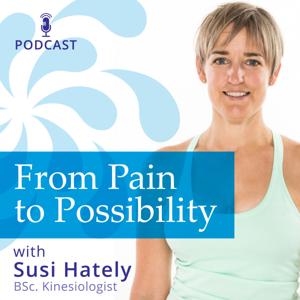

In this episode, I introduce a concept that has been reshaping the way I work with clients and train teachers: moving beyond a muscle-focused approach and learning to observe how the body actually coordinates movement. I talk about why trying to "fix" tight or weak muscles can sometimes lead to confusion and limited results, and how much of this comes from the fact that we can't directly see muscle engagement. Instead of guessing, I explain how shifting our focus to segmental movement allows us to work with something more observable, measurable, and ultimately more effective.
I also walk through how this perspective changes the way we assess and guide movement, using real examples from my work. By asking better questions—what's moving, what shouldn't be, and what's missing—we can uncover the true drivers behind dysfunction and pain. This approach not only creates clearer outcomes but also empowers clients to better understand their own bodies, improve their proprioception, and actively participate in their progress.
 View all episodes
 By Susi Hately

4.8
1818 ratings
In this episode, I introduce a concept that has been reshaping the way I work with clients and train teachers: moving beyond a muscle-focused approach and learning to observe how the body actually coordinates movement. I talk about why trying to "fix" tight or weak muscles can sometimes lead to confusion and limited results, and how much of this comes from the fact that we can't directly see muscle engagement. Instead of guessing, I explain how shifting our focus to segmental movement allows us to work with something more observable, measurable, and ultimately more effective.
I also walk through how this perspective changes the way we assess and guide movement, using real examples from my work. By asking better questions—what's moving, what shouldn't be, and what's missing—we can uncover the true drivers behind dysfunction and pain. This approach not only creates clearer outcomes but also empowers clients to better understand their own bodies, improve their proprioception, and actively participate in their progress.

12,912 Listeners

10,522 Listeners

11,865 Listeners

209 Listeners

1,876 Listeners

1,260 Listeners
12,754 Listeners

14,880 Listeners

8,748 Listeners

3,457 Listeners
5,478 Listeners

41,321 Listeners

1,114 Listeners

19,524 Listeners

8,873 Listeners