
Sign up to save your podcasts
Or

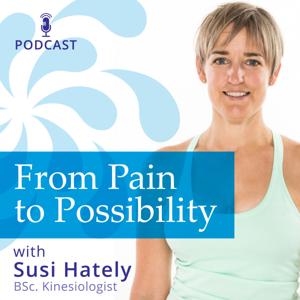


In this episode, I break down the transition from getting out of pain into moving back into the rest of your life—a concept I call Model Two. Building on the foundation of pattern recognition and pattern retraining from Model One, I explore how to help clients navigate the crucial window between baseline recovery and returning to full, complex activity without falling back into doubt or flare-ups.
I discuss how to rethink progress when symptoms return, distinguishing between a true setback and a need for greater movement complexity. Whether you're a practitioner looking to guide clients through adding load, variability, and speed, or an individual wanting to resume activities like running, golf, or yoga, I walk through a practical five-question roadmap to assess readiness, build component movements, and use reconnection strategies to cultivate long-term movement confidence.
In this episode, I begin a two-part series focusing on how to navigate the shift from being in pain to returning to full, active living. I break down Model One: Pattern Recognition and Pattern Retraining, sharing how to work with clients—or yourself—when persistent pain is the primary concern. Drawing from my own journey as a yoga therapist, I explore how building self-trust, understanding key movement signals, and fostering awareness are essential to getting out of pain.
I delve into the powerful relationship between hope, possibility, and doubt, and explain why listening to a client's story and using a body diagram are the most crucial starting points. You'll learn why starting where the client wants to focus builds essential internal trust, how to identify compensatory patterns, and why paying attention to "yellow lights" and "whispers" can prevent pain from returning. By mastering these foundational steps, you can create long-lasting change and lay the groundwork for returning to complex, loaded movement.
In this episode, I'm joined by CIYT graduate Angie Howden Duke for a deep dive into what it truly takes to get out of persistent, long-term pain. Angie shares her personal journey of overcoming 15 years of chronic neck, shoulder, and physical pain through consistent movement exploration and therapeutic yoga. Together, we discuss the transformative power of being a movement detective—shifting away from quick-fix diagnoses and rigid protocols to focus on presence, acute observation, and deep client-practitioner connection.
We also explore the unique structure of my certification cohort, designed specifically to mentor health professionals and experienced practitioners. From integrating business tools to honoring the yogic principle of asteya (non-stealing) by allowing clients the space to navigate their own healing journey, this episode offers rich insights for anyone looking to deepen their movement practice or elevate their therapeutic skills.
In this episode, I am joined by certification trainee Arzina Merji to discuss what happens when you shift your approach to pain from looking for a quick, magic fix to understanding movement patterns. Just two months into her certification program, Arzina shares her journey of overcoming two decades of severe wrist degeneration and pain without relying on constant bracing or heavy loads. We dive into how addressing compensation patterns, refining biomechanics, and listening to the body's subtle whispers can yield dramatic results for both teachers and clients.
We also explore how these same principles apply in a virtual setting. Arzina breaks down how she helped a client eliminate knee, mid-back, and groin pain entirely over Zoom by connecting the dots between hip and shoulder movement. Whether you are a practitioner looking to deepen your client work or someone navigating your own physical limitations, this conversation offers a fresh, empowering perspective on pain, healing, and what is truly possible at any age.
In this episode, I sit down with Functional Synergy graduate Lindsay Savage to explore how movement professionals can integrate diverse training backgrounds into a cohesive, highly effective practice. Lindsay shares how bringing together over 1,000 hours of certifications helped her bridge the gap between logic and intuition to deliver more deliberate client results.
We discuss how refining simple biomechanical components—like working with non-linear movement planes and "The Power of the Pits"—can reduce bracing patterns, ease pain, and support clients with mobility challenges or conditions like Parkinson's. Lindsay also breaks down her concept of "Spontaneous Core" and explains how a structured, hands-on practicum builds teaching confidence while creating a sustainable, income-generating business.
In this episode, I sit down with yoga therapist and program graduate Austin Chason to explore what life looks like post-certification and how core yoga therapy principles work in real-world clinical settings. We talk about how learning to truly trust what you see—and cultivating deep personal presence—can transform both physical pain and mental health.
Austin shares how he uses body-based yoga therapy in an intensive outpatient setting to support high-acuity mental health clients, neurodivergent individuals, and trauma survivors. We dive into how physical ease leads to mental stability, helping clients relieve chronic pain, regulate their nervous systems, and re-establish safety within their bodies.
In this episode, I share key insights from my conversations with trainees and graduates about what sets Functional Synergy Yoga Therapy apart from other C-IAYT accredited programs. I break down how focusing on clinical reasoning, assessment skills, and individualized movement patterns allows practitioners to move beyond rigid templates and general protocols to truly meet clients where they are.
I also explore our unique approach to persistent pain—moving past symptoms to address neuromuscular retraining, sensorimotor loops, and compensatory patterns. Whether you're looking to refine your clinical skills, build your intuition into actionable observation, or grow a sustainable, part-time business that supports your retirement, this episode offers a look into what's possible when you learn to think like a movement detective.
In this episode, I explore a recent paper published in Frontiers in Systems Neuroscience titled "The Body Does Not Keep Score: Trauma, Predictive Coding, and the Restoration of Metastability." I break down how this research challenges Bessel van der Kolk's famous metaphor that the body "stores" trauma, offering instead a neuroscience lens focused on prediction error and brain flexibility. Rather than viewing trauma as something physically trapped in fascia or muscle, we look at how the brain becomes rigidly fixed in predicting danger—and what it actually takes to update those predictions.
I also connect these scientific concepts directly to what I see clinically in my biomechanics and yoga therapy practice. I share how introducing small, objective movement changes creates a "prediction interruption" that helps clients break out of binary thinking around pain and relief. By acting as a movement detective and tuning into the body's subtle "yellow lights" and "whispers," you can create novel sensorimotor experiences that give the nervous system the concrete evidence it needs to move from persistent pain into real possibility.
In this episode, I explore a common challenge that movement teachers and practitioners face: what to do when a client lacks physical awareness or struggles to describe what they are feeling. I explain why body awareness is essential for creating lasting, transformational change rather than just temporary pain relief. By breaking down the difference between relief as an initial event and change as an ongoing process, I highlight why meeting clients at their current level of awareness is the key to helping them retrain their movement patterns effectively.
I also dive into the two main reasons clients struggle with bodily awareness—a simple lack of movement literacy or a lack of mental and physical bandwidth—and share practical, gentle strategies to cultivate it. Using my "teaspoon vs. cup" metaphor, I demonstrate how small, non-judgmental cues and distal points of focus can help build a client's awareness over time. By shifting away from a performance mindset and inviting simple observation, we can empower our clients to move out of pain and build sustainable progress.
In this episode, I explore why searching for a single "problem muscle" or quick-fix diagnosis often leads to a dead end when dealing with persistent pain. Drawing on my early career at a chronic pain center—and over three decades of working with clients—I break down how our culture's "pain on, pain off" light-switch mentality prevents us from tuning into the body's subtle spectrum of signals.
I share real-world stories illustrating how solving pain rarely comes down to isolating a single area, whether it's an ankle adjustment releasing a tight shoulder, or a knee improving without ever touching the joint itself. Using David Butler's model of DIMs (Danger In Me) and SIMs (Safety In Me), I explain how to reframe your pain, move away from symptom-chasing, and step into a "movement detective" mindset to uncover patterns, restore ease, and shift your body from pain to possibility.
From the publisher's feed
12,890 Listeners
10,508 Listeners

11,781 Listeners

209 Listeners

1,852 Listeners

1,258 Listeners
12,710 Listeners

14,899 Listeners

8,527 Listeners

3,419 Listeners
5,474 Listeners

41,388 Listeners

1,095 Listeners

19,273 Listeners

8,792 Listeners